
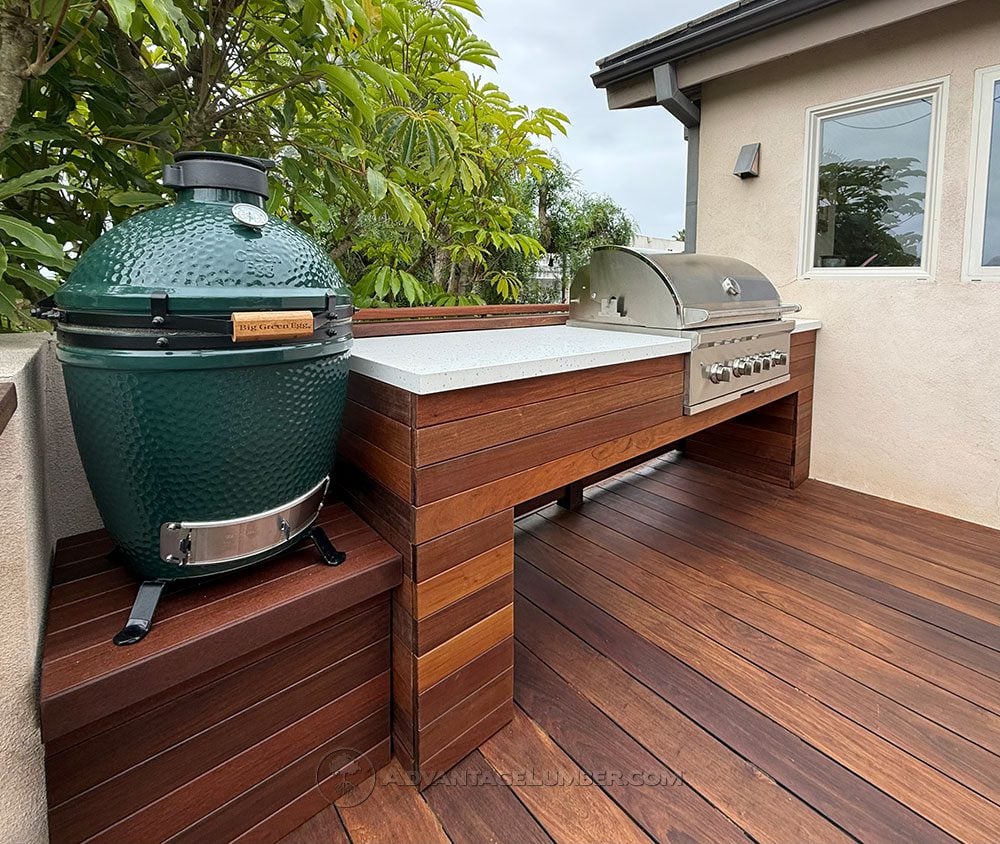
Nothing says summer like firing up the grill and spending time outside with family and friends. But after the burgers are gone and the grill cools down, you may notice something you weren’t planning for – a dark grease spot on your deck.
Whether it’s bacon, burgers, steak, or vegetables brushed with oil, BBQ grease can leave behind stubborn stains if it isn’t cleaned up quickly.
The good news? Most grease stains can be removed with a few simple steps, and even older stains can often be improved with the right deck cleaner.
Quick Answer
If you spill BBQ grease on your deck:
- Blot up excess grease immediately. Don’t wipe it around.
- Sprinkle baking soda or another absorbent material over the stain.
- Let it sit for 15 – 30 minutes.
- Sweep it away.
- Wash the area with warm water, mild dish soap, and a soft-bristle brush.
- Rinse thoroughly.
For older or more stubborn stains, a wood deck cleaner may be needed to restore the appearance of the deck.
Why BBQ Grease Can Stain Decking
Grease behaves differently than most food spills. Instead of simply sitting on the surface, oils can soak into porous materials or cling to textured decking.
The longer grease remains on the deck, the more dirt it attracts, making the stain even more noticeable over time. That’s why it’s always best to clean grease spills as soon as possible.
Removing Grease from Hardwood Decking
Hardwood decking, including Ipe, Cumaru, Tigerwood, Garapa, and Teak, is naturally dense and durable, but grease can still leave a visible mark if left untreated.
Step 1: Absorb the Grease
Before adding water, cover the stain with an absorbent material such as:
- Baking soda
- Cornstarch
Allow it to sit for about 30 minutes before sweeping or vacuuming it away.
Step 2: Clean the Area
Mix warm water with a few drops of a grease-cutting dish soap.
Using a soft-bristle brush, gently scrub with the grain of the wood.
Avoid using:
- Steel wool
- Wire brushes
- Harsh solvents
- Household bleach
These products can damage the wood or leave discoloration behind.
Step 3: Rinse Well
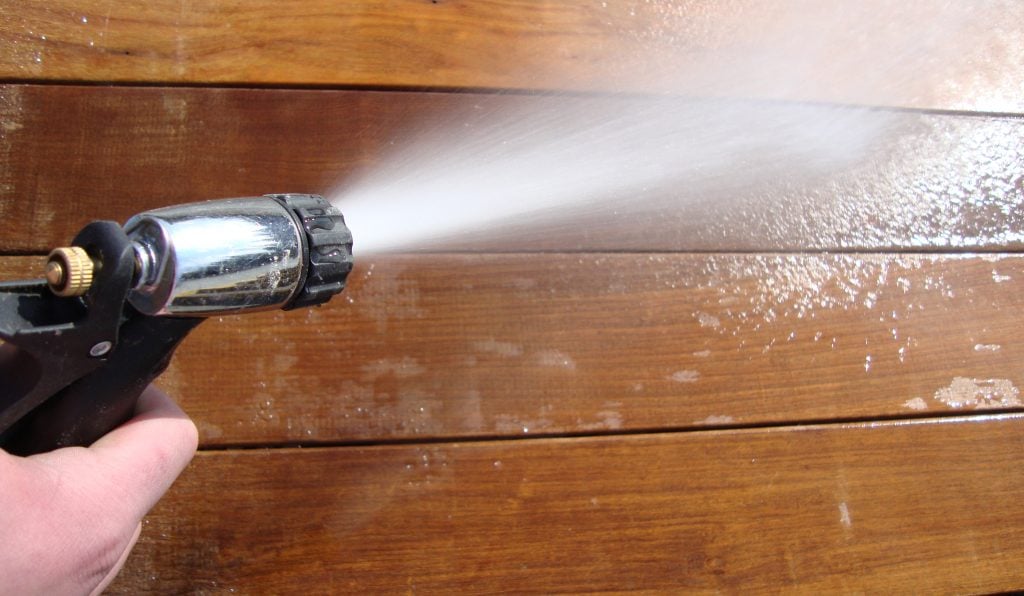
Rinse the area thoroughly with clean water and allow it to dry completely.
When Mild Soap Isn’t Enough
If the grease has been sitting for several days or if multiple cookouts have left your deck looking dull a dedicated hardwood deck cleaner can often produce better results than household cleaners alone.
A quality cleaner helps lift embedded dirt, grease, food residue, mildew, and other contaminants while restoring the wood’s natural appearance.
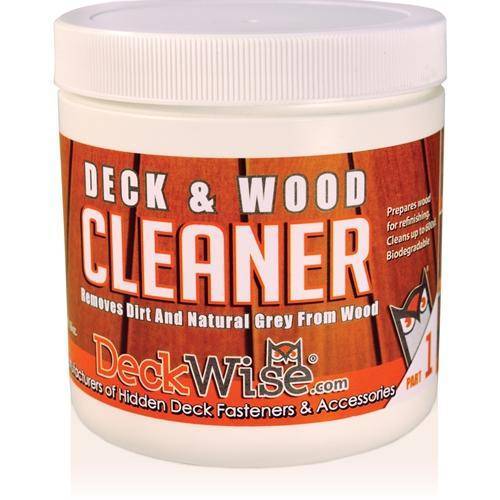
For hardwood decks, DeckWise Hardwood Deck Cleaner and Brightener is designed specifically for exterior hardwood species and works well as part of regular deck maintenance.
To clean your deck:
- Sweep away dirt and debris.
- Wet the deck with clean water.
- Mix the cleaner according to the directions.
- Apply the cleaner to the deck.
- Allow the cleaner to remain on the surface for up to 15 minutes, keeping the wood wet.
- Scrub with the grain using the bristle brush.
- Rinse thoroughly with clean water.
For best results, always test any cleaner in a small, inconspicuous area first.
Cleaning Grease from Composite and PVC Decking
Composite and PVC decking generally don’t absorb grease the same way hardwood does, making cleanup a little easier.
For most spills:
- Remove excess grease.
- Wash with warm water and mild dish soap.
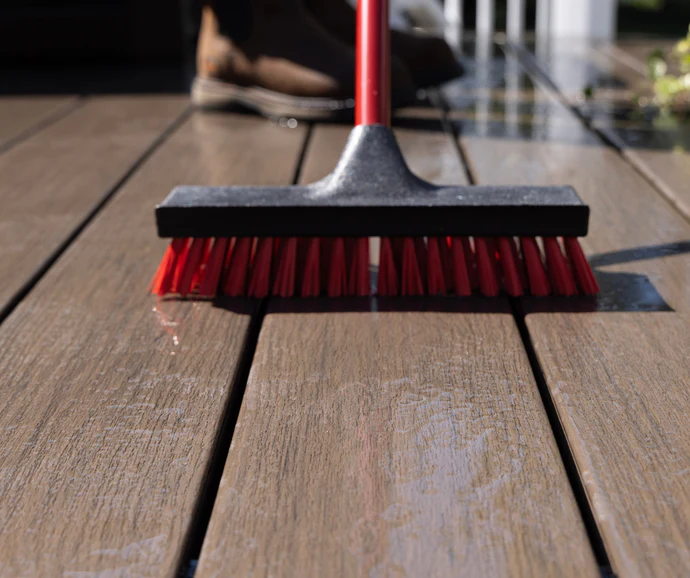
- Scrub gently with a soft-bristle brush.
- Rinse thoroughly.
If the stain remains, check your decking manufacturer’s recommendations before using specialty cleaners, as approved products can vary by brand.
Mistakes to Avoid
When cleaning grease from decking, avoid these common mistakes:
- Waiting too long. Fresh stains are much easier to remove than old ones.
- Using a pressure washer at high pressure. Excessive pressure can damage wood fibers or composite surfaces.
- Using bleach to remove grease. Bleach disinfects, but it doesn’t effectively dissolve oils.
- Using metal brushes or abrasive pads. These can scratch both hardwood and composite decking.
- Using gasoline, acetone, or harsh degreasers. Strong chemicals can damage the decking surface and surrounding finishes.
Preventing Future BBQ Grease Stains
The best way to deal with grease stains is to keep them from happening in the first place.
A few simple habits can make a big difference:
- Place a grill mat beneath your BBQ.
- Empty grease trays before they overflow.
- Use drip pans when cooking greasy foods.
- Clean up spills as soon as they happen.
- Give your deck a quick rinse after large cookouts if food or grease has splattered onto the boards.
A few minutes of cleanup after grilling can help keep your deck looking its best all season long.
Frequently Asked Questions
Can BBQ grease permanently stain a deck?
Not usually. Fresh grease stains are often easy to remove. Older stains may require a dedicated deck cleaner and some additional scrubbing.
Can I use Dawn dish soap on my deck?
Yes. A mild grease-cutting dish soap is a good first step for removing fresh grease stains from hardwood, composite, and PVC decking.
Should I pressure wash grease stains?
Pressure washing alone typically won’t remove grease because oil doesn’t dissolve in water. Clean the stain first, then rinse with water if needed.
Will rain wash away grease stains?
Unfortunately, no. Rain may spread the grease or cause dirt to stick to it, making the stain more noticeable over time.

Enjoy the BBQ – Not the Cleanup
Grilling season is meant to be enjoyed, and a little grease doesn’t have to ruin the look of your deck. By cleaning spills promptly and using the right products, you can remove most BBQ grease stains before they become permanent.
If your hardwood deck needs a deeper refresh after a busy summer of cookouts, a thorough cleaning can help restore its natural beauty and prepare it for continued enjoyment.
Ready to Keep Your Deck Looking Its Best?
Whether you’re maintaining an exotic hardwood deck or planning your next outdoor project, Advantage Lumber offers premium decking materials and maintenance products to help your investment look beautiful for years to come.
