
Composite decking has come a long way over the past two decades. Modern boards are more durable, more realistic looking, and require far less maintenance than traditional softwood decks. But not all composite decking is created equal, and choosing the wrong product can lead to disappointment, unnecessary expense, or even a deck that doesn’t perform well in your climate.
At AdvantageLumber.com, we sell many of the industry’s leading composite and PVC decking brands, including Trex®, TimberTech®, and Deckorators®, and we’ve helped thousands of homeowners select the right decking for their projects.
Before you invest in a new deck, avoid these common mistakes.
Mistake #1: Choosing Based on Price Alone
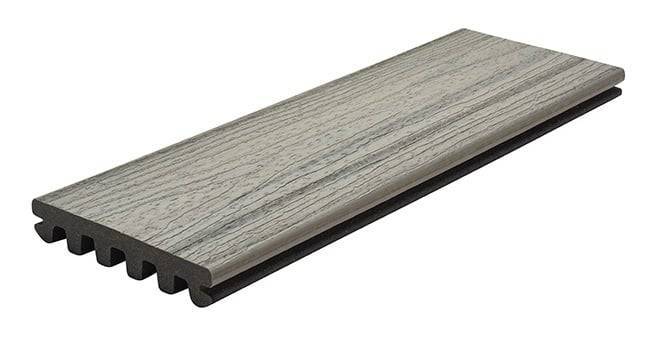
It’s tempting to compare only the price per board, but the cheapest decking isn’t always the best value.
Lower priced composite decking often has:
- Less realistic wood grain
- Shorter warranties
- Lower scratch resistance
- Greater thermal expansion
- Fewer color options
- Often scalloped boards which offer less strength and rigidity
Premium decking typically costs more upfront but often delivers better long term performance and aesthetics.
Instead of asking:
“What’s the cheapest composite decking?”
Ask:
“Which decking gives me the best value for the next 25 to 50 years?”
Mistake #2: Not Understanding the Difference Between Composite, PVC, and Mineral Based Decking
Many homeowners assume every “composite” deck board is made the same way.
In reality, there are several different categories.
Traditional Composite Decking
Made from a blend of recycled plastic and wood fibers.
Pros
- Natural appearance
- Good value
- Strong and durable
- Wide range of colors
Considerations
- Contains wood fibers
- Can absorb small amounts of moisture over time
- Can become warmer in direct sunlight
Examples include:
PVC Decking
PVC decking contains no wood fibers, making it one of the most moisture resistant options available.
Advantages include:
- Excellent resistance to mold and mildew
- Lightweight
- Outstanding moisture performance
- Minimal maintenance
Examples include:
PVC is an excellent choice for:
- Coastal homes
- Pool decks
- High humidity climates
Mineral Based Composite Decking
Newer products like Deckorators Surestone® Technology replace wood fibers with mineral based materials.
Benefits include:
- Extremely stable
- Minimal expansion and contraction
- Lightweight
- Excellent strength
- Outstanding moisture resistance
- Rated for ground contact
For many homeowners, this represents the newest generation of decking technology.
Mistake #3: Ignoring How Hot the Deck Gets
One of the biggest surprises for new deck owners is how warm some decking can become during the summer.
Darker colors generally absorb more heat than lighter colors.
If your deck receives full sun throughout the day, choosing a lighter color can make a noticeable difference in comfort.
If your deck surrounds a swimming pool or you’ll frequently walk barefoot, ask about heat performance before making your final decision.
Mistake #4: Assuming Every Composite Decking Product Is Maintenance Free
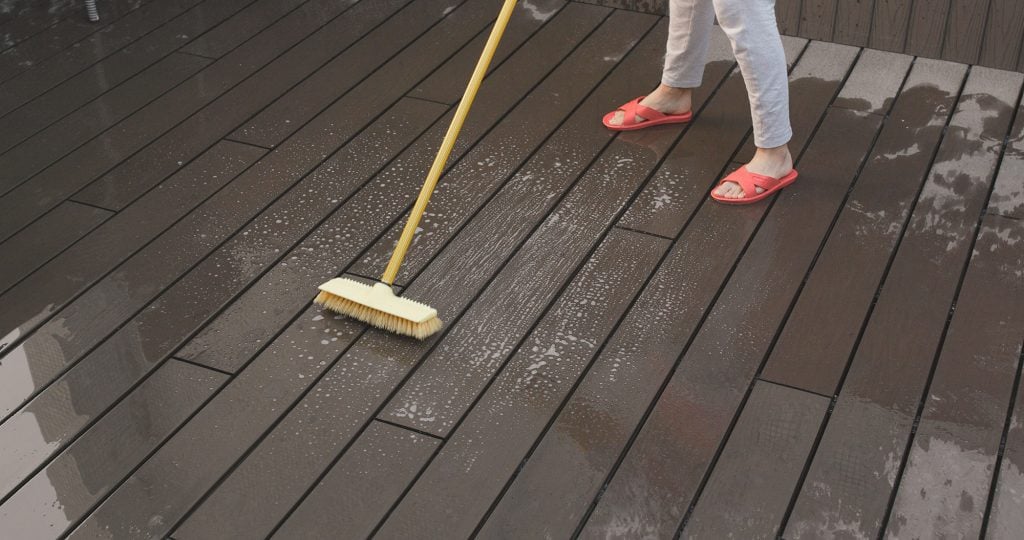
Composite decking is low maintenance, but no outdoor product is truly maintenance free.
Most manufacturers recommend:
- Occasional washing
- Removing leaves and debris
- Cleaning spills promptly
- Avoiding standing water when possible
A little routine care helps keep your deck looking its best for years.
Mistake #5: Overlooking Mold and Mildew Concerns
One of the biggest misconceptions is that composite decking can never develop mold or mildew.
While today’s composites are dramatically improved over early generations, many traditional composite boards still contain wood fibers.
In damp, shaded environments where organic debris accumulates, surface mold or mildew can still develop if the deck isn’t cleaned periodically.
If you live in a particularly humid climate or your deck receives very little sunlight, you may want to consider:
- PVC decking
- Mineral based composite decking
These products contain little or no organic material and offer outstanding resistance to moisture related issues.
Mistake #6: Forgetting About Deck Framing
Many homeowners focus entirely on the deck boards while forgetting what’s underneath.
A beautiful composite deck installed over deteriorating framing may need major repairs long before the decking wears out.
Consider investing in long lasting framing materials such as:
- Steel framing
- Aluminum framing
- Engineered LVL deck framing
- Joist tape and ledger tape if your going to use pressure treated wood framing
A longer lasting frame helps maximize the life of your investment.
Mistake #7: Choosing a Color From a Tiny Sample
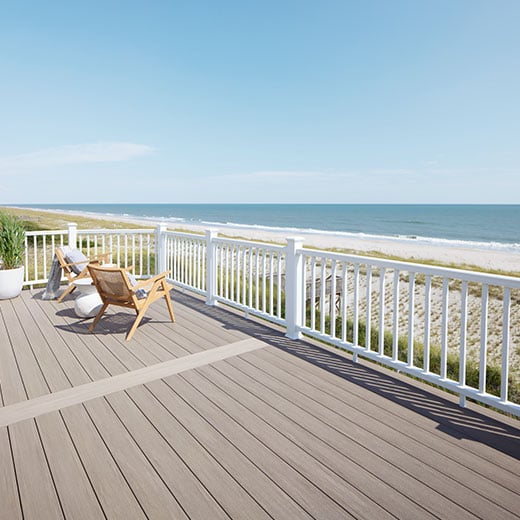
Decking looks very different once hundreds of square feet are installed.
Small samples can make colors appear:
- Darker
- Lighter
- Less textured
- Different depending on lighting
Whenever possible:
- View larger display boards
- Take samples outdoors
- Compare them in morning and afternoon sunlight
- See them next to your home’s siding, stone, or brick
Natural lighting often changes your perception dramatically.
Mistake #8: Not Considering Expansion and Contraction
All decking materials expand and contract with temperature changes.
Some products move more than others.
This affects:
- Butt joints
- Picture framing
- Fascia installation
- Hidden fastener spacing
Following the manufacturer’s installation guidelines helps prevent issues later.
Mistake #9: Buying Before Comparing Warranties
Not every warranty covers the same things.
Compare:
- Structural warranty
- Fade warranty
- Stain warranty
- Labor coverage (Deckorators offers coverage for labor and removal of faulty decking boards)
Some premium manufacturers also provide more comprehensive protection than entry level products.
Mistake #10: Buying Without Expert Advice
There are dozens of composite decking collections on the market.
The “best” choice depends on:
- Your climate
- Your budget
- Sun exposure
- Pool vs. standard deck
- Desired appearance
- Maintenance expectations
Someone living in Arizona may choose differently than someone building in Maine or Florida.
An experienced decking supplier can help narrow the options based on your specific project rather than simply recommending the most expensive board. AdvantageLumber.com has experience supplying luxury building materials all throughout the USA as well as internationally.
Which Composite Decking Is Right for You?
Every homeowner has different priorities.
If your goal is the most realistic wood appearance, one collection may stand out.
If you want maximum moisture resistance, PVC decking may be the better choice.
If minimizing expansion and contraction is your priority, a mineral based composite like Deckorators Surestone® may deserve a closer look.
By understanding the differences before you buy, you’ll be much more likely to choose a deck you’ll enjoy for decades.
Let AdvantageLumber.com Help You Choose
At AdvantageLumber.com, we don’t believe there’s one “best” composite decking for everyone. Instead, we help homeowners compare the strengths of today’s leading brands—including Trex®, TimberTech®, and Deckorators®—to find the product that best fits their budget, climate, and lifestyle.
Whether you’re building a backyard entertainment space, a pool deck, or a low maintenance front porch, our decking specialists can answer your questions, provide samples, and help you select the right materials for your project.
Contact AdvantageLumber.com today to explore our full selection of composite, PVC, mineral based, and premium hardwood decking options and build a deck that’s designed to last.
