
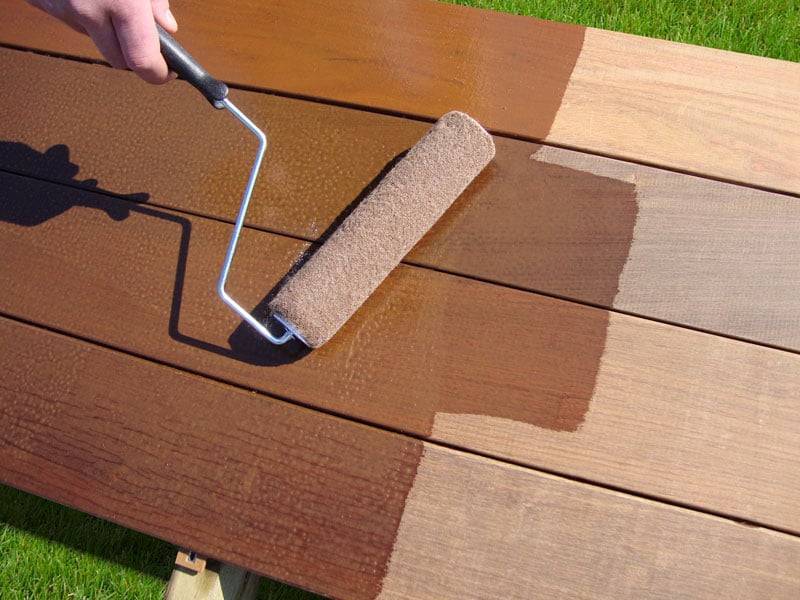
Staining a deck is one of the best ways to enhance its appearance and help protect it from the elements. But while the process may seem simple, a few common mistakes can lead to peeling finishes, uneven color, sticky surfaces, and disappointing results.
The good news? Most deck staining problems are completely preventable.
Whether you’re working with pressure-treated lumber, cedar, redwood, or a dense tropical hardwood like Ipe, Cumaru, Tigerwood, or Teak, following proper preparation and application techniques can make a significant difference in how your deck looks and performs over time.
Before you start your next deck staining project, make sure you’re not making one of these common mistakes.
Quick Deck Staining Checklist
Before staining your deck:
- Clean the surface thoroughly
- Allow the wood to dry completely
- Check the weather forecast
- Test the stain on a small area
- Use a stain or sealer designed for your decking material
- Follow the manufacturer’s application instructions
- Remove excess finish when require
A little preparation can help prevent costly mistakes later.
Mistake #1: Skipping Proper Deck Preparation
One of the biggest reasons deck stains fail prematurely is poor surface preparation.
Dirt, mildew, pollen, old finish residue, and other contaminants can prevent the stain from penetrating properly and create an uneven appearance.
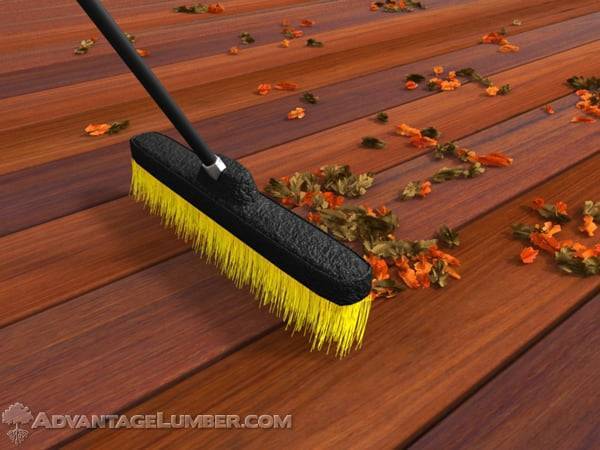
Before applying any stain or sealer:
- Remove dirt and debris from the deck surface.
- Clean the deck with an appropriate wood cleaner.
- Use a wood brightener if needed to restore the wood’s appearance.
- Rinse thoroughly.
- Allow the deck to dry completely.
Skipping these steps may save time initially, but it often results in shorter-lasting finishes and more maintenance down the road.
Mistake #2: Staining a Wet Deck
A deck may look dry on the surface while still holding moisture inside the wood.
Applying stain to damp wood can interfere with penetration and curing, resulting in:
- Uneven color
- Blotchy appearance
- Premature fading
- Reduced stain performance
After cleaning or rainfall, allow the deck sufficient time to dry before staining. Following the stain manufacturer’s recommendations can help ensure the finish performs as intended.
Mistake #3: Ignoring the Weather Forecast
Weather conditions play a major role in stain performance.
Applying stain immediately before rain, during extreme heat, or when temperatures are too low can create problems such as:
- Streaking
- Slow curing
- Washout from rain
- Uneven appearance
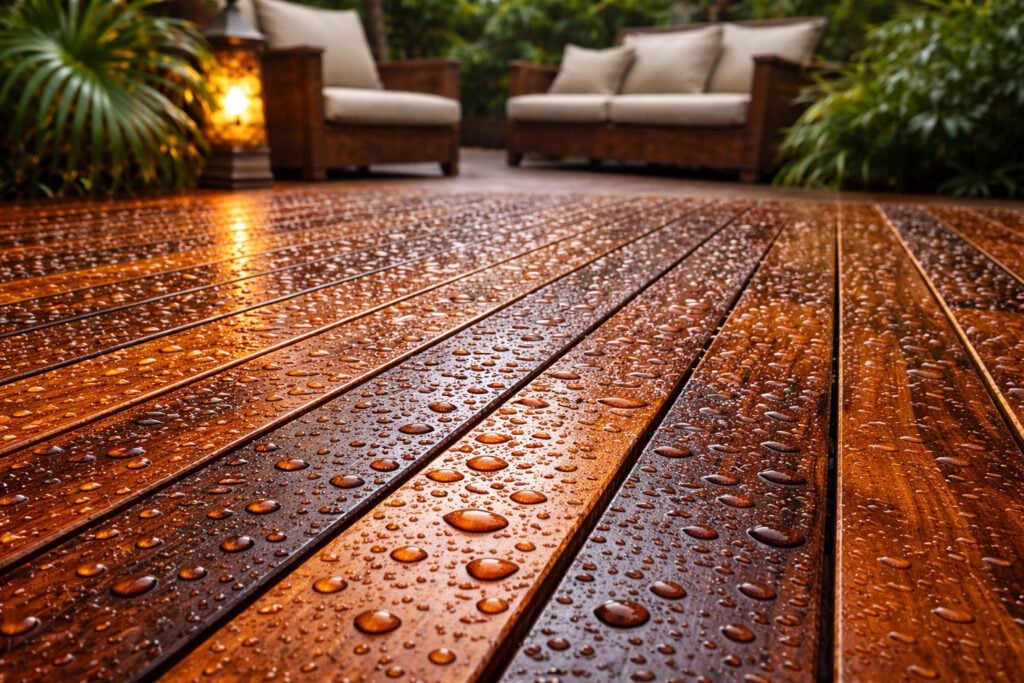
For best results:
- Avoid staining if rain is expected within 24 hours.
- Follow the manufacturer’s recommended temperature range.
- Avoid applying stain to excessively hot deck boards in direct sunlight.
Waiting for favorable conditions often leads to a much better result.
Mistake #4: Skipping a Test Area
Many homeowners choose a stain color based on a product label, brochure, or online photo. Unfortunately, wood species, age, weathering, and existing finishes can all influence the final appearance.
Before staining the entire deck:
- Apply the stain to a small, inconspicuous area.
- Allow it to dry completely.
- Evaluate the color and appearance in natural light
Testing first can help avoid surprises and costly refinishing work.
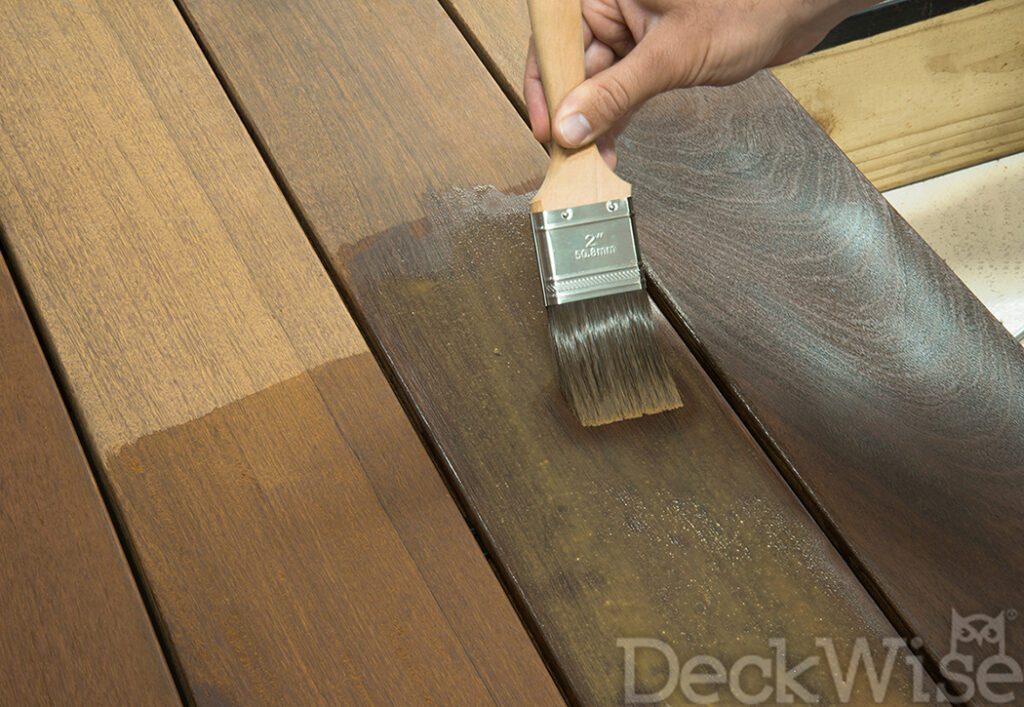
Mistake #5: Applying Too Much Product
When it comes to deck stains and finishes, more is not always better.
Applying too much product can prevent proper curing and create an uneven finish.
Common problems include:
- Sticky surfaces
- Blotchy color
- Dirt accumulation
- Premature finish failure
Always follow the manufacturer’s coverage guidelines and apply thin, even coats.
Mistake #6: Failing to Remove Excess Oil
This mistake is especially common on dense hardwood decking species such as Ipe, Cumaru, Tigerwood, and Teak.
These woods are naturally dense and can only absorb a limited amount of finish. Any excess product left on the surface may not cure properly.
Failing to wipe away excess oil can result in:
- Sticky or gummy surfaces
- Uneven appearance
- Dirt and pollen buildup
- Premature finish breakdown
The goal is a rich, natural-looking finish not a glossy or wet-looking surface.
Mistake #7: Using the Wrong Stain or Sealer
Not all stains and sealers are designed for every type of decking material.
Products that work well on pressure-treated lumber or cedar may not perform the same way on dense hardwoods.
For example, tropical hardwood species such as Ipe and Cumaru are extremely dense and often require products specifically formulated for hardwood decking.
Before purchasing a finish:
- Verify it is compatible with your decking material.
- Follow manufacturer recommendations.
- Understand the maintenance requirements before application.
Using the right product from the start can help maximize both appearance and performance.
Mistake #8: Staining Immediately After Sanding
Sanding can help refresh weathered decking, but it also creates fine dust that can become trapped in the wood’s surface.
If the dust is not removed completely, it can interfere with stain penetration and create uneven results.
After sanding:
- Remove dust thoroughly.
- Vacuum if necessary.
- Rinse or clean the surface if needed.
- Allow the deck to dry completely before staining.
Proper cleanup helps ensure the stain reaches the wood rather than sitting on a layer of sanding dust.
Mistake #9: Applying Too Many Coats
Many homeowners assume that additional coats automatically provide better protection.
In reality, applying more stain than the wood can absorb may lead to:
- Longer drying times
- Uneven curing
- Sticky residue
- Reduced performance
Always follow the manufacturer’s application instructions regarding the number of recommended coats.
Mistake #10: Expecting Stain to Last Forever
Even the best deck stains and sealers require maintenance.
Sunlight, rain, snow, foot traffic, and local climate conditions all affect how long a finish will last.
Rather than waiting until the stain completely wears away, inspect your deck regularly and look for signs that maintenance may be needed, including:
- Noticeable color fading
- Dry appearance
- Reduced water repellency
Routine maintenance is typically easier and less expensive than restoring a heavily weathered deck.
Mistake #11: Assuming Black Stains Mean the Wood Is Defective
When black spots or dark staining appear, homeowners often assume there is something wrong with the decking itself.
In many cases, discoloration is actually caused by:
- Dirt accumulation
- Mildew growth
- Metal filings or contamination
- Tannin reactions
- Improper finish application
These issues are often maintenance or environmental related rather than a defect in the wood.
Proper cleaning and refinishing can frequently restore the deck’s appearance without replacing boards.
Safety Warning: Oil-soaked rags, brushes, rollers, and applicators can spontaneously combust if handled improperly. Never leave oily materials in a pile or throw them directly into a trash can. Store used materials in a water-filled metal container with a tight-fitting lid and dispose of them according to the manufacturer’s instructions and local regulations.
Frequently Asked Questions
Why is my deck stain sticky after application?
A sticky surface is usually caused by over-application or failing to remove excess stain or oil. Dense hardwood decking species are particularly susceptible because they can only absorb a limited amount of finish.
Can you stain a deck after it rains?
Only after the wood has fully dried. Applying stain to damp wood can prevent proper penetration and curing, leading to uneven results.
Why is my deck stain peeling?
Peeling often occurs when the deck was not prepared properly, moisture became trapped beneath the finish, or the wrong product was used for the decking material.
Final Thoughts
Most deck staining problems can be traced back to preparation, product selection, application techniques, or unrealistic maintenance expectations.
Taking the time to clean the deck properly, monitor weather conditions, use the right stain or sealer, and follow manufacturer instructions can help you achieve better-looking, longer-lasting results.
Whether you’re maintaining a pressure-treated deck or a premium hardwood deck, avoiding these common mistakes can help protect your investment and keep your outdoor space looking its best for years to come.
Need Help Choosing the Right Deck Finish?
Advantage Lumber offers premium hardwood decking, deck finishes, cleaners, brighteners, and maintenance products to help you protect and enhance your outdoor living space. Contact our team today for expert guidance on selecting the right products for your project.
