
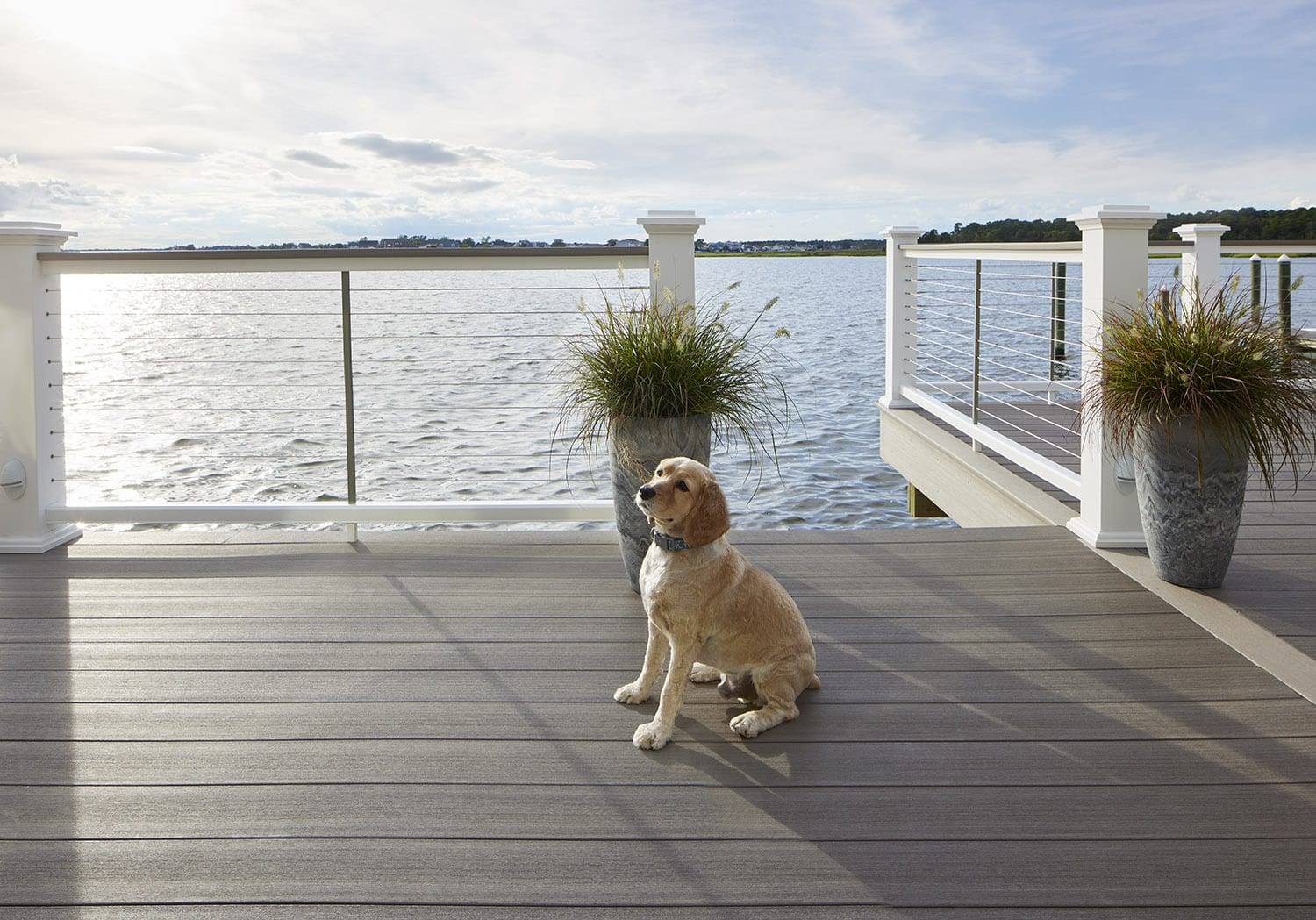
Your deck should be a place where kids can run barefoot, pets can play safely, and family gatherings feel relaxing, not stressful. But not all decking materials are designed with family safety in mind. Some decking surfaces become dangerously slippery when wet. Others get too hot in direct sun, develop splinters over time, or require harsh chemical treatments to maintain them.
If you are building a new deck or replacing an older one, choosing safer materials can help create a more comfortable and lower-maintenance outdoor space for years to come.
What Makes a Deck Safer for Families?
Before choosing a decking material, it helps to understand what actually makes a deck “family friendly.”
The safest decks typically focus on:
- Slip resistance
- Splinter prevention
- Cooler surface temperatures
- Easy cleaning and maintenance
- Scratch resistance for pets
- Hidden fasteners instead of exposed nails or screws
- Strong structural framing
- Long-term durability
A safe deck is not just about the surface boards. The framing, railing, stairs, and installation methods all play an important role too.
1. PVC Decking: One of the Safest Low-Maintenance Options
PVC decking has become one of the most popular options for households with children and pets because it combines durability with low maintenance.
Unlike traditional wood decking, PVC boards:
- Do not splinter
- Resist moisture damage
- Are easy to clean
- Resist mold and mildew
- Hold up well against muddy paws and spills
Many premium PVC decking collections also feature textured surfaces for improved traction, which is especially important around pools, hot tubs, or rainy climates.
Another major advantage is that PVC decking does not require sanding, staining, or sealing over time.
Why Families Like PVC Decking
For families with pets, PVC decking is particularly appealing because it resists scratches and stains better than many traditional wood products. Dog nails, muddy paws, spilled drinks, and everyday wear are usually much easier to clean up.
Lighter-colored PVC decking can also stay cooler under bare feet compared to darker composite or wood decking options.
Recommended Applications
PVC decking works especially well for:
- Pool decks
- Backyard play spaces
- Waterfront homes
- High-moisture climates
- Busy entertainment areas
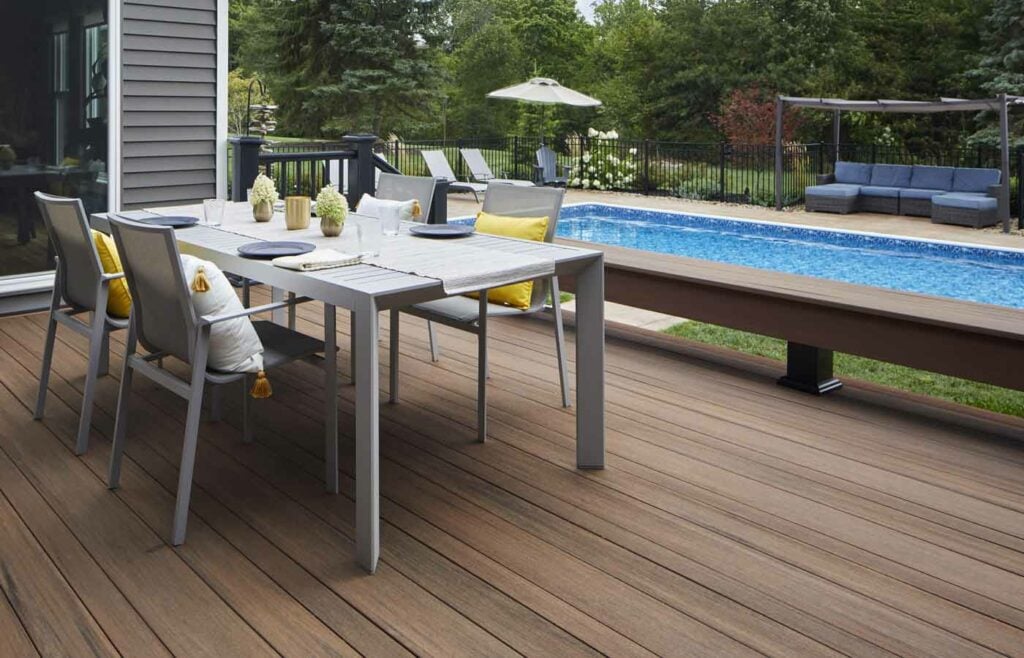
For long-lasting performance, many homeowners choose premium options like TimberTech Advanced PVC decking collections, which combine slip resistance with low-maintenance durability.
2. Composite Decking: Durable and Pet Friendly
Composite decking remains one of the best all-around choices for active families because it offers the appearance of wood without many of the maintenance headaches.
Modern capped composite decking:
- Resists splintering
- Handles heavy foot traffic well
- Resists stains and scratches
- Requires minimal upkeep
- Provides better durability than traditional pressure-treated lumber
For pet owners, scratch resistance is a major benefit. Many capped composite boards are designed to handle wear from pets’ claws much better than softer wood species.
Composite Decking and Heat
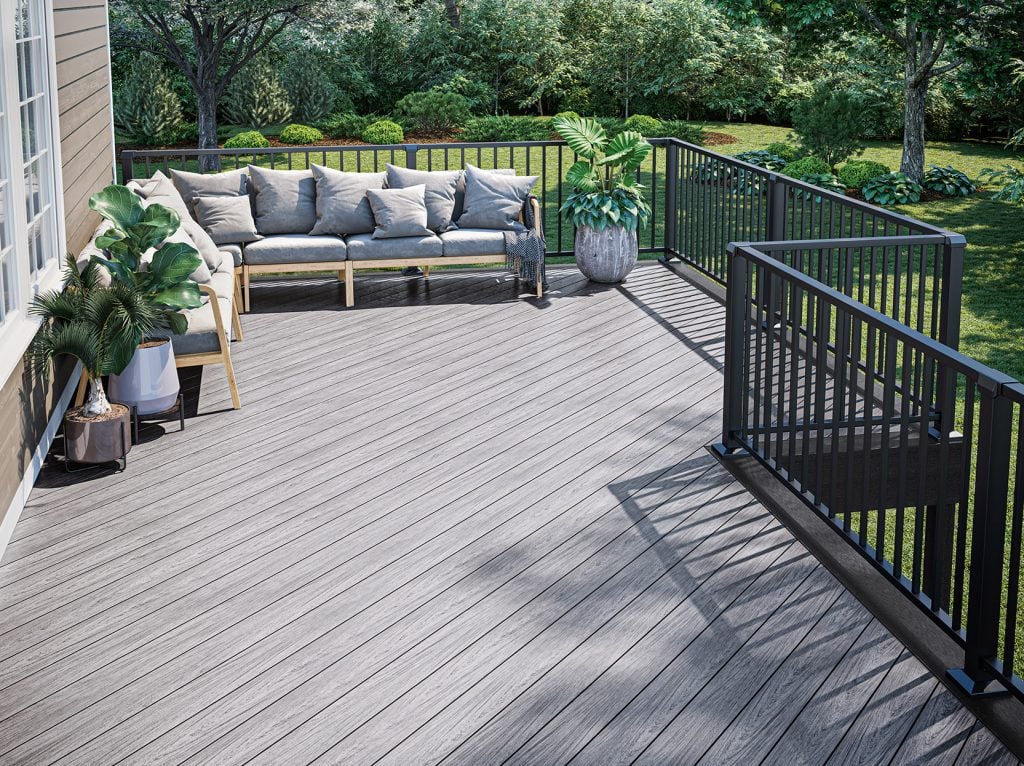
One thing to keep in mind is heat retention. Darker composite boards can become hot in full sun during summer months. If your deck receives a lot of direct sunlight, lighter colors are often the better choice for barefoot comfort and pet safety. Popular lighter shades can help reduce surface temperatures while still providing a modern wood-look appearance.
Slip Resistance Matters
Not all composite decking offers the same traction. Look for boards with:
- Deep embossed grain patterns
- Textured finishes
- High slip-resistance ratings
Collections like Deckorators Voyage Decking and TimberTech capped composite decking are often chosen for family-focused outdoor spaces because of their durability and traction.
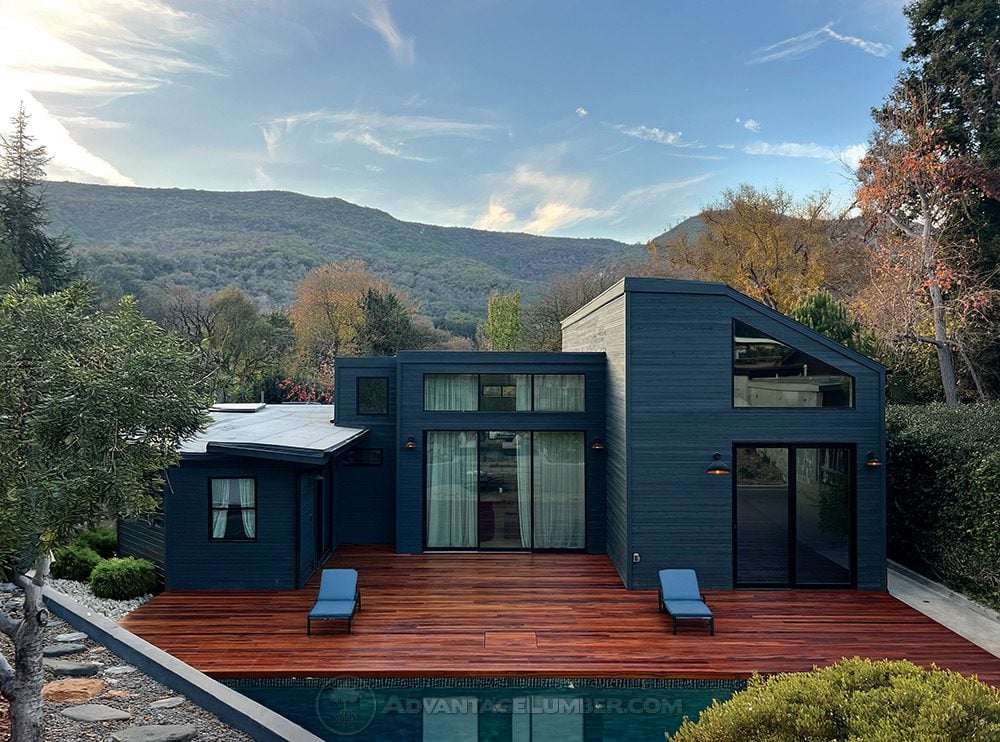
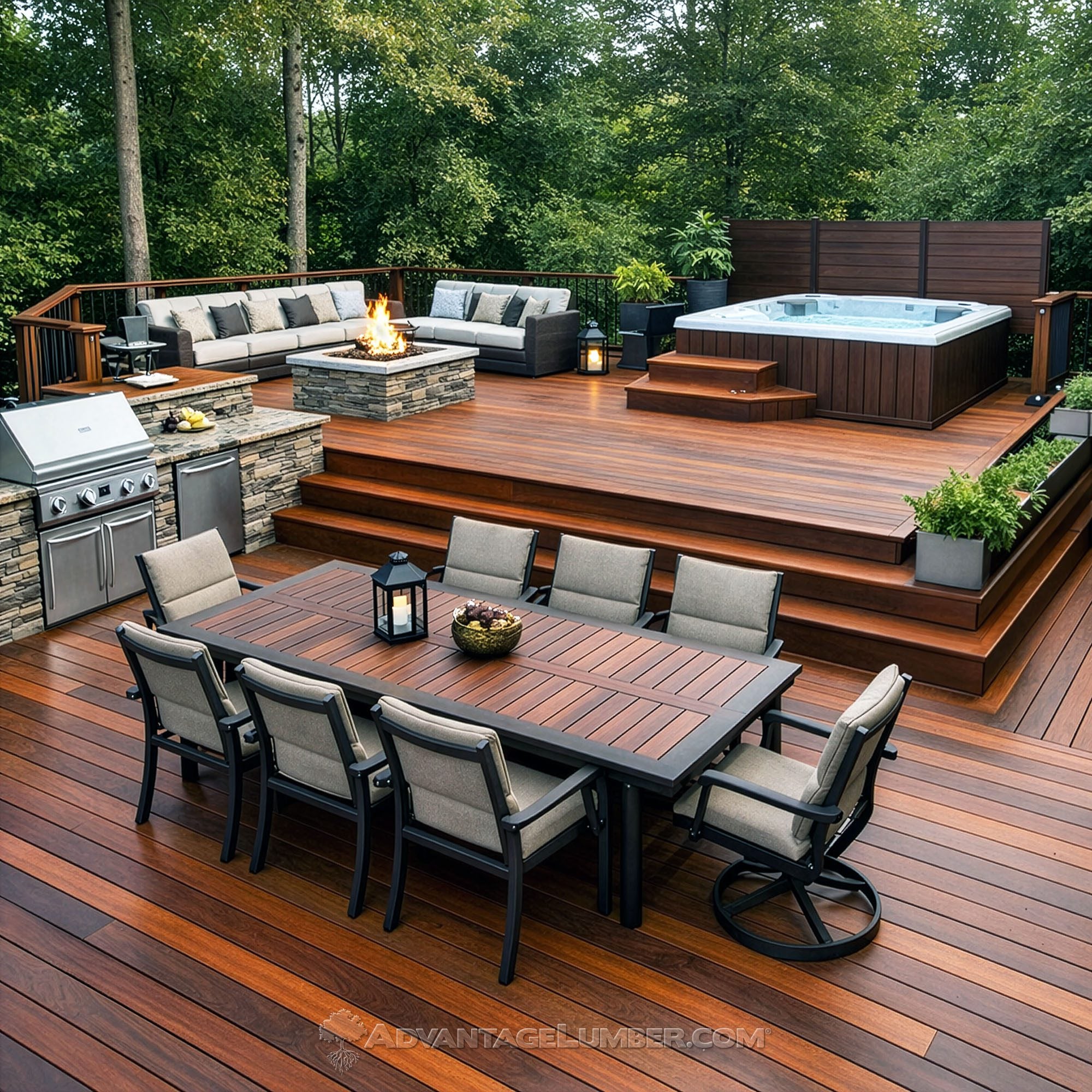
3. Natural Hardwood Decking: A Beautiful Barefoot-Friendly Option
For homeowners who prefer real wood, hardwood decking can still be a safe and durable option when properly maintained.
Premium hardwoods like:
are naturally dense and durable, making them less prone to splintering than softer woods like pressure-treated pine.
Hardwood decking also tends to stay cooler than many synthetic materials, which can make it more comfortable for bare feet and pets during hot summer weather.
Easier Maintenance Than Many People Expect
While hardwood decking does require occasional maintenance to preserve its rich color, many homeowners appreciate the natural beauty and long lifespan these species provide.
Applying a quality deck oil or sealant can also help make cleanup easier while protecting the surface from moisture and wear.
For homeowners who want a natural look with long-term performance, hardwood decking remains one of the best premium options available.
Why Pressure-Treated Wood May Not Be the Best Choice for Families
Pressure-treated lumber is still widely used because of its lower upfront cost, but it may not always be the safest option for households with kids and pets.
Over time, pressure-treated wood can:
- Crack and splinter
- Warp and twist
- Become slippery when wet
- Require repeated chemical stains and sealers
Older pressure-treated decks may also develop popped nails or loose screws, which can create additional safety hazards.
That does not mean pressure-treated wood should never be used. In many cases, it still works well for framing. But for the deck surface itself, many families now prefer composite, PVC, or hardwood decking for improved comfort and safety.
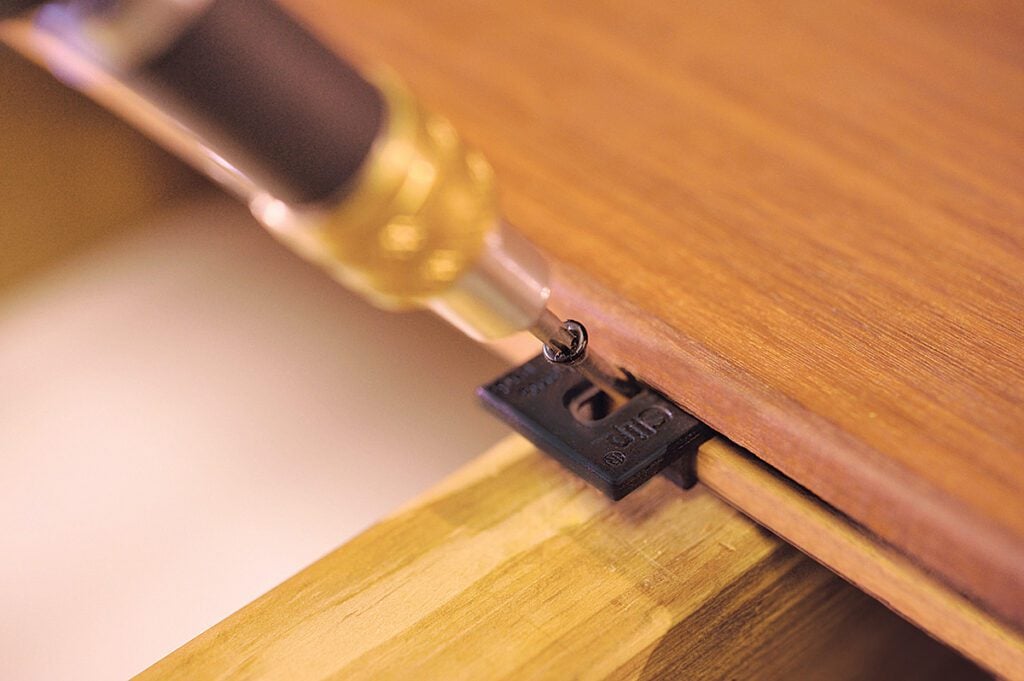
Hidden Fasteners Make Decks Safer Too
One detail many homeowners overlook is the fastening system. Traditional face-fastened decks can eventually develop raised nails or screws as the decking expands and contracts over time.
Hidden fastener systems help create:
- A smoother walking surface
- Fewer tripping hazards
- Reduced risk of cuts or scrapes
- A cleaner overall appearance
Many premium hardwood, composite, and PVC decking systems now offer hidden fastening options for both safety and aesthetics.
Do Not Overlook the Importance of a Strong Foundation
Even the safest decking surface can become dangerous if the structure underneath is failing.
A solid deck frame helps prevent:
- Sagging
- Movement
- Loose railings
- Structural instability
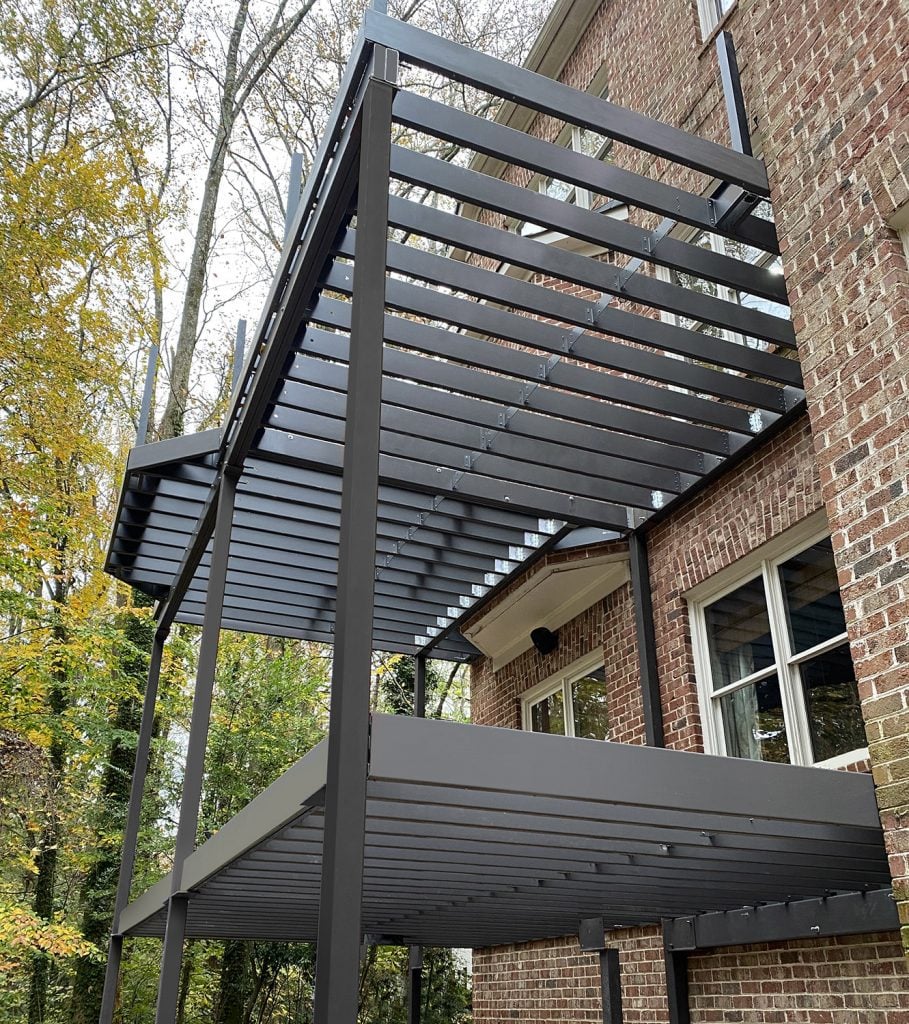
For long-lasting durability, many homeowners are now upgrading to steel or aluminum deck framing systems instead of traditional wood framing.
Metal framing offers several advantages:
- Rot resistance
- Greater dimensional stability
- Longer lifespan
- Reduced maintenance
This can be especially valuable in wet climates or for decks built near pools and waterfront areas.
Final Thoughts: Choosing the Right Decking for Your Family
The safest decking material for your family depends on how you use your outdoor space, your climate, and how much maintenance you want to handle.
For many homeowners:
- PVC decking offers the best low-maintenance safety benefits
- Composite decking provides an excellent balance of durability and value
- Hardwood decking delivers premium natural beauty and barefoot comfort
No matter which material you choose, focusing on slip resistance, hidden fasteners, cooler colors, and strong framing can help create a deck that is safer, more comfortable, and built to last.
If you are upgrading an older deck, replacing worn boards with premium hardwood, capped composite, or PVC decking materials can dramatically improve both safety and long-term performance.
Build a Safer Outdoor Space for Your Family
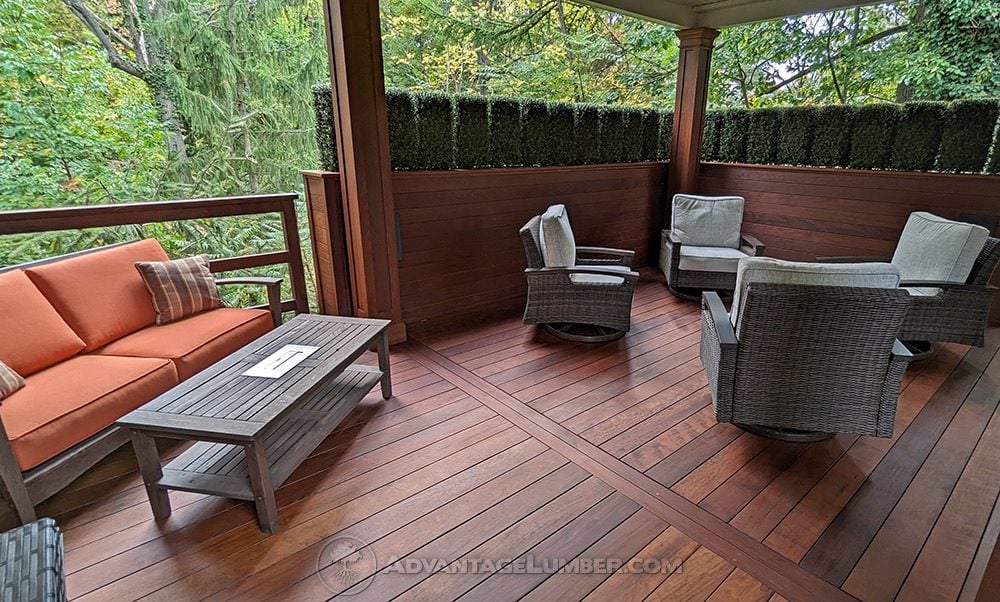
Whether you prefer low-maintenance PVC decking, durable composite boards, or premium hardwood decking, choosing the right materials can help create a safer and more comfortable outdoor space for kids, pets, and everyday family life.
Explore high-quality decking, hidden fasteners, and long-lasting framing materials at AdvantageLumber.com to start building a deck designed for safety, durability, and years of enjoyment.
