
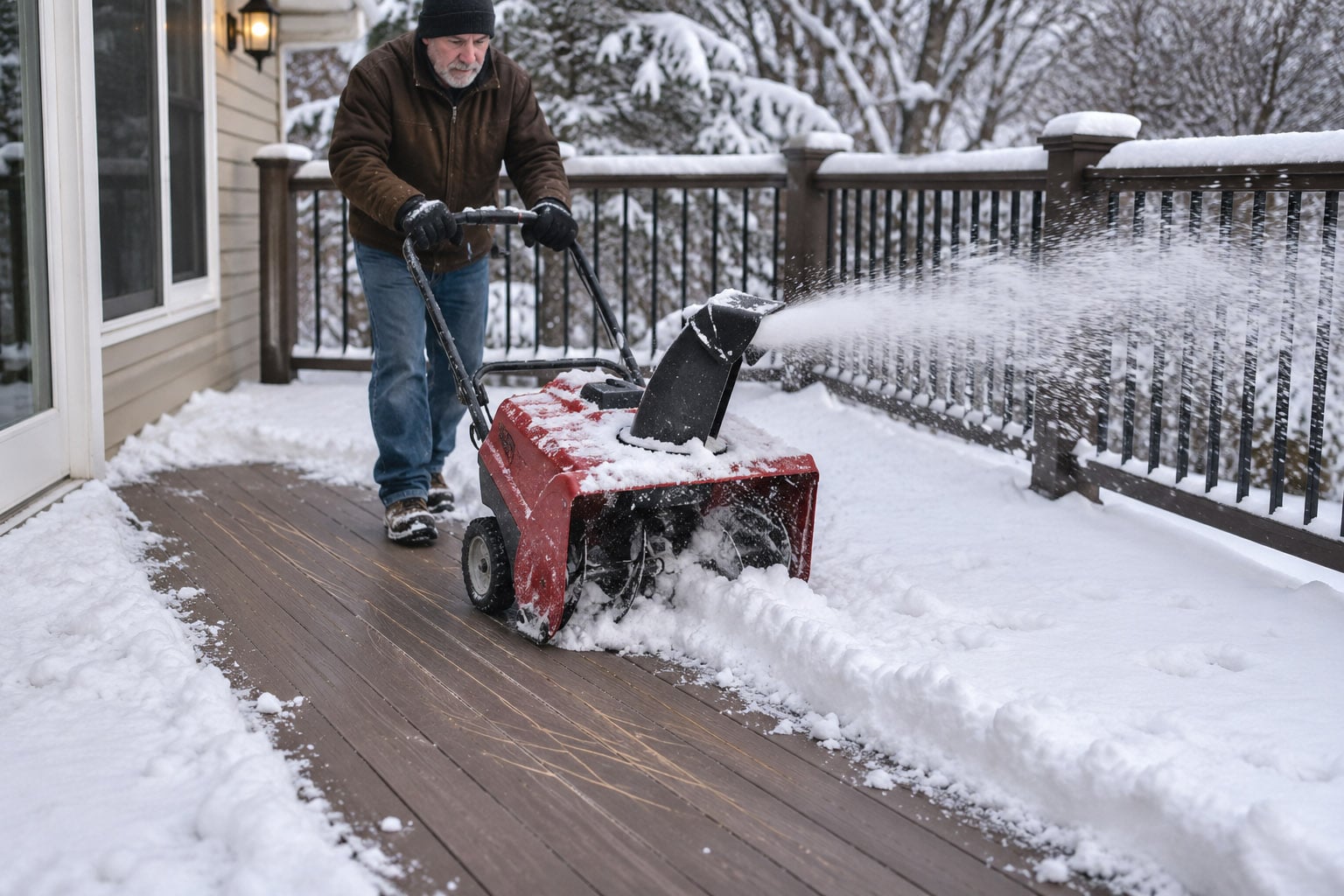
Winter can be tough on a deck, especially if you live in an area where snow piles up for months. After a big storm, the last thing most homeowners want to do is shovel hundreds of square feet of decking by hand.
So, naturally, we get this question quite often: Can you use a snow blower on composite or PVC decking?
The short answer is we generally don’t recommend it. Although some snow blowers may be less likely to damage your deck than others, there’s still a risk of scratching, gouging, or even breaking the deck boards.
After more than 20 years in the decking industry, I’ve seen how the wrong snow removal tools can damage an otherwise beautiful deck. The good news? There are safer ways to clear snow without ruining your investment.
Let’s go over what you need to know before you fire up that snow blower.
Why Snow Blowers Can Damage Composite and PVC Decking
Composite and PVC decking are built to handle rain, snow, ice, and freezing weather. Brands like Trex, TimberTech, and Deckorators make boards designed to stand up to the outdoors year after year.
However, just because your decking can handle winter weather doesn’t mean it can handle every snow removal tool.
Most snow blowers were made for driveways and sidewalks, not finished deck surfaces. Here are a few reasons why using one on your deck can cause trouble.
1. Metal Augers Can Scratch or Gouge Deck Boards
Traditional snow blowers use a spinning metal auger to scoop up snow and throw it out of the way.
That works great on a concrete driveway. On composite or PVC decking? Not so much.
If the metal auger touches your deck boards, it can leave deep scratches or gouges. In some cases, it may even chip the protective surface.
This is a bigger concern with two stage snow blowers. These machines often have metal augers, heavy steel housings, and metal skid shoes.
One small bump against a deck board could leave a mark you can’t easily repair. Unlike natural hardwood, most composite and PVC deck boards cannot simply be sanded down to remove deep scratches.
2. Snow Blowers Can Catch on Deck Board Edges
Deck boards aren’t always perfectly level with each other. Over time, a board may move slightly. You may also have raised edges where two boards meet.
Now picture a snow blower moving across the deck. If the scraper bar or auger catches one of those edges, it could chip the board or damage the edge.
This is especially concerning around picture frame borders, stair nosings, and other areas where decking boards meet at different angles.
3. Gravel and Ice Can Get Trapped Under the Machine
Here’s something many homeowners don’t think about. Even if your snow blower has rubber paddles, small rocks, dirt, or hard chunks of ice can get caught underneath it.
As the machine moves, those materials may scrape across the decking. I’ve seen plenty of deck scratches caused by grit and debris. You don’t need a sharp metal blade to damage a finished surface.
Sometimes all it takes is a small stone getting dragged across the boards.
Are Rubber Paddle Snow Blowers Safe for Composite Decking?
This is where things get a little more interesting. Some smaller electric snow blowers use rubber paddles instead of metal augers. These are often called single stage snow blowers.
Because the paddles are softer, they may be less likely to scratch a deck. However, rubber paddles don’t automatically make a snow blower safe for composite or PVC decking.
You still need to think about the scraper bar, the bottom of the machine, and any debris hidden in the snow.
Some single stage snow blowers are designed to let their paddles touch the ground. That’s fine for certain paved surfaces, but it may not be ideal for a finished deck.
Before using one, check both the snow blower manufacturer’s instructions and your decking manufacturer’s care guidelines. If either manufacturer advises against using the machine on decking, don’t use it.
Personally, I’d rather spend a little extra time clearing snow than risk damaging an expensive deck.
Can You Use a Snow Blower on Trex Decking?
Trex composite decking is made to handle harsh outdoor weather, including snow and freezing temperatures.
However, you still need to be careful when removing snow. Trex recommends using a plastic shovel for snow removal and avoiding metal tools that could damage the deck surface.
Although some homeowners use lightweight electric snow throwers on their Trex decks, that doesn’t mean every model is safe or approved.
Before trying one, check the current care instructions for your specific Trex collection. This applies whether you have Trex Transcend, Transcend Lineage, Select, Enhance, or another collection.
Our advice: Stick with a plastic snow shovel or a soft snow broom unless Trex specifically approves the equipment you plan to use.
What About TimberTech Composite and PVC Decking?
TimberTech offers both composite decking and Advanced PVC decking. Both are designed to handle winter weather, but their surfaces can still be damaged by improper snow removal.
TimberTech Advanced PVC decking has a durable outer surface. Even so, dragging metal equipment across the boards isn’t a good idea.
The same goes for TimberTech composite decking. A metal scraper or auger could leave scratches, especially if it catches a board edge.
For routine snow removal, a plastic shovel is generally the safer choice. Also, remember that TimberTech offers several decking collections with different materials and surface finishes.
Always check the care instructions for your exact product before using powered snow removal equipment.
Can You Use a Snow Blower on Deckorators Decking?
Deckorators offers composite decking along with its mineral based Surestone decking products. These materials are made for outdoor use and can handle freezing temperatures.
However, that doesn’t mean you should run a heavy snow blower across them. Even a tough deck board can suffer surface damage if a metal scraper catches an edge or drags a rock across the finish.
With Deckorators Voyage, Venture, and other collections, we recommend checking the manufacturer’s snow removal instructions before using any powered equipment.
A plastic shovel or soft broom is usually a much safer place to start.
What’s the Best Way to Remove Snow From Composite or PVC Decking?
Fortunately, you don’t need expensive equipment to keep your deck clear in winter. In fact, some of the simplest tools work the best.
1. Use a Plastic Snow Shovel
A plastic snow shovel is one of the best tools for removing snow from composite and PVC decking.
Choose one with a smooth plastic edge and no exposed metal wear strip. When shoveling, try to move in the direction of the deck boards whenever possible.
Don’t jam the shovel into the gaps between boards or force it under thick ice. Instead, push the snow off in small sections.
It may take a little longer, but you’ll greatly reduce the chance of damaging your decking.
2. Try a Snow Broom for Light Snowfall
If you only have an inch or two of fluffy snow, a soft snow broom can work wonders. These tools are lightweight, easy to use, and much gentler on the decking surface.
They’re especially handy for clearing a path to your grill, hot tub, or back door. Just make sure the broom doesn’t have hard metal parts that can touch the boards.
3. Use a Leaf Blower for Powdery Snow
Here’s a trick many homeowners overlook. A powerful leaf blower can remove light, dry snow from your deck without ever touching the boards.
This works best when the snow is fresh and powdery. Once the snow gets wet, heavy, or packed down, a leaf blower won’t do much.
Still, for those light overnight snowfalls, it can save you quite a bit of work.
4. Don’t Try to Chip Away Thick Ice
This is one of the biggest mistakes we see. A homeowner finds a thick patch of ice and grabs a metal shovel, ice chopper, or other sharp tool.
A few hard hits later, the ice may be gone, but the decking has deep marks. Instead, use a deicing product approved for your specific decking material.
Give it time to loosen the ice, then remove the slush with a plastic shovel. Never use a sharp metal tool to break ice off composite or PVC decking.
Is Rock Salt Safe for Composite and PVC Decking?
In many cases, yes. However, you should always check the manufacturer’s recommendations first.
Some composite and PVC decking manufacturers allow calcium chloride or certain other ice melting products. Others may have specific rules about which products to use.
Avoid ice melts with added sand, grit, or other abrasive materials. Those particles can scratch the surface when people walk across the deck.
Also, don’t assume every product labeled “pet safe” or “deck safe” is approved for your decking. After the ice melts, remove leftover salt and residue as directed by the decking manufacturer.
One more thing worth mentioning: Salt can also affect metal fasteners, railing parts, and nearby plants. So even when a deicer is approved for the deck boards, use only as much as needed.
Do You Even Need to Remove Snow From Your Deck?
Here’s a question worth asking before you grab the shovel. Does the snow really need to come off?
In many cases, you can leave ordinary snowfall on a properly built composite or PVC deck and let it melt naturally.
These decking materials are designed to handle wet weather. However, the deck’s framing and support system matter just as much as the boards themselves.
Heavy, wet snow can add a lot of weight. If you have several feet of snow piling up, especially on an older deck, that extra load may become a concern.
Don’t assume your deck can safely hold unlimited snow just because it has composite or PVC boards.
If you notice sagging, movement, damaged supports, or other signs of trouble, stay off the deck and have a qualified professional inspect it.
For most homeowners, the main reason to clear snow is to keep a safe walking path to the door or stairs. If you don’t need to use the deck during winter, you may be able to leave lighter snowfalls alone.
What If You Have a Large Composite Deck?
Now, I know what some of you are thinking.
“That’s great advice, but I have a 600 square foot deck. I’m not shoveling the whole thing by hand!”
Fair enough. Large decks can take a lot of work to clear, especially in places like Buffalo, New York, where heavy lake effect snow is common.
If you have a large deck, consider using a wide plastic snow pusher to move snow more quickly. For lighter snowfall, a cordless leaf blower may also help.
If you’re determined to use a powered snow removal machine, look for a lightweight model with soft paddles and no exposed metal parts that could contact the deck.
Even then, don’t assume it’s safe. Get approval from both the decking manufacturer and the snow blower manufacturer before using it.
Remember, replacing a few scratched composite deck boards can cost much more than buying the right snow removal tools.
Can Snow Removal Damage Your Decking Warranty?
Possibly. Most major decking manufacturers provide warranties against certain product defects, but they generally don’t cover damage caused by improper use, abuse, or mechanical impact.
If a snow blower scratches, gouges, or chips your deck boards, that damage may not be covered. This is why following the manufacturer’s care instructions matters.
For example, Trex, TimberTech, and Deckorators each publish maintenance guidelines for their products.
Those instructions may vary depending on the collection and material. Before using any snow removal equipment, take a few minutes to review the guidelines for your deck.
It’s a simple step that could save you an expensive repair.
Our Final Advice: Skip the Snow Blower Unless It’s Approved
After more than two decades working with decking materials, I’ve learned that the simplest approach is often the best.
Composite and PVC decking are great choices for homeowners who want a beautiful, low maintenance outdoor space.
They don’t need staining or sealing like natural wood, and they’re built to handle years of rain, snow, and sun. However, low maintenance doesn’t mean damage proof.
A heavy snow blower with metal parts can scratch or gouge even a high quality deck.
Although some lightweight rubber paddle machines may be gentler, you should never assume they’re safe without checking the manufacturer’s instructions.
For most homeowners, a plastic snow shovel, soft snow broom, or leaf blower is the better choice.
And if the snow doesn’t need to be removed, sometimes the best thing you can do is leave it alone and let nature take care of it.
At AdvantageLumber.com, we carry a wide selection of composite and PVC decking from Trex, TimberTech, and Deckorators.
Whether you’re building a new deck or replacing an old one, our decking experts can help you choose the right material for your climate, budget, and lifestyle.
After all, a good deck should give you years of enjoyment, even when winter comes knocking.
