
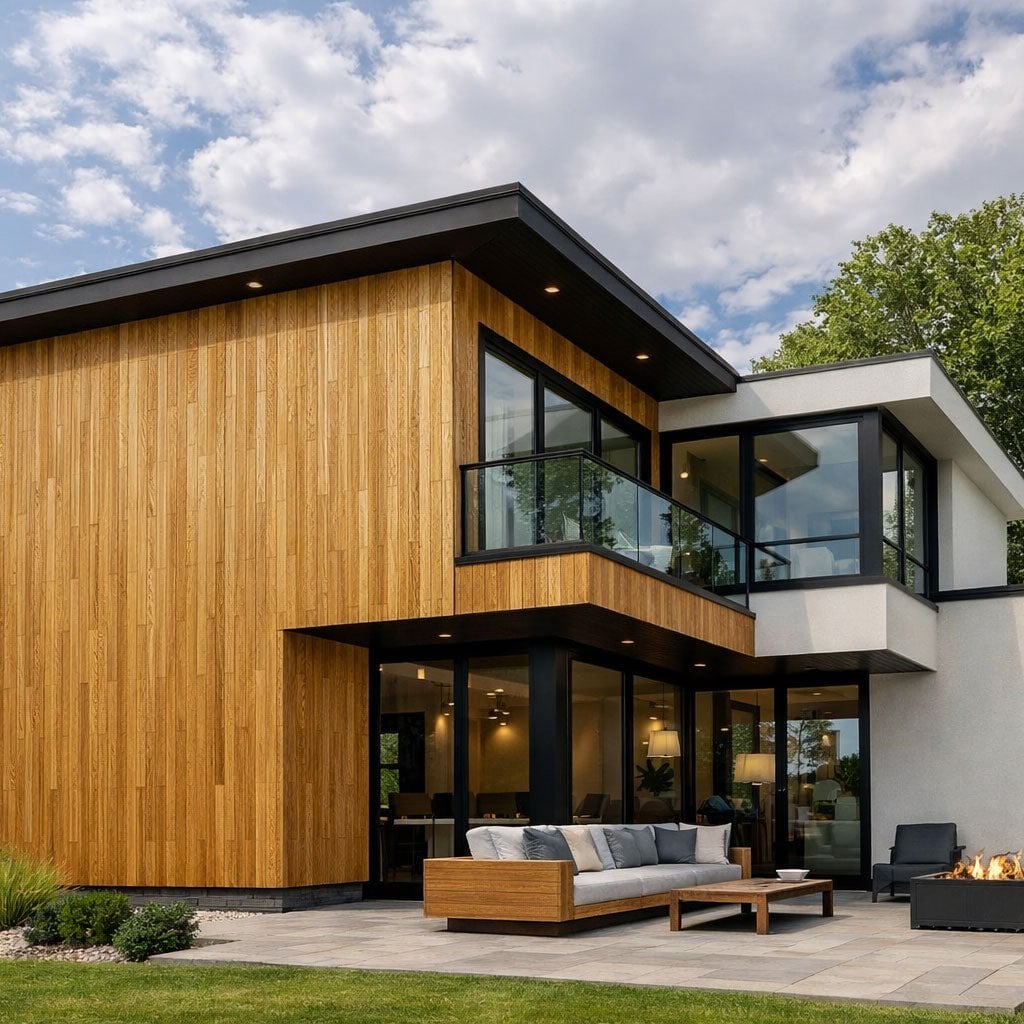
When choosing wood for exterior cladding, durability and dimensional stability are just as important as appearance. Accoya and thermally modified ash are both designed to perform better outdoors than untreated wood, but they get there in different ways.
Accoya stands out for its exceptional stability and resistance to moisture-related movement, while thermally modified ash offers the natural grain and rich color of a hardwood with improved durability. Both can be excellent options for exterior siding. The best choice depends on the look you want, your project requirements, and how much maintenance you’re comfortable with.
What Is the Difference Between Accoya and Thermally Modified Ash?
The biggest difference between these two materials is how they’re made.
Accoya is real wood made from radiata pine that has been modified through a process called acetylation. This process changes the wood’s ability to absorb moisture, making it exceptionally stable and resistant to rot and decay. Although it starts as a softwood, the modification process gives Accoya performance characteristics that make it well suited for demanding exterior applications.
Thermally modified ash is hardwood that has been treated with high heat and steam. The process changes the wood’s chemical structure, reducing its ability to absorb moisture and making it more resistant to decay. It also gives ash a darker, richer color while allowing its natural grain to remain visible.
Neither material relies on traditional chemical preservatives to achieve its improved outdoor performance. However, their appearance, stability, and durability differ.
Accoya vs. Thermally Modified Ash: Quick Comparison
| Feature | Accoya | Thermally Modified Ash |
| Wood species | Radiata pine | Ash hardwood |
| Modification process | Acetylation | Heat and steam treatment |
| Durability | Class 1 | Varies by product and treatment |
| Moisture absorption | Very low | Reduced compared with untreated ash |
| Dimensional stability | Excellent | Improved |
| Appearance | Light, consistent wood grain | Rich brown color with prominent grain |
| Weathering | Naturally weathers to silver-gray | Naturally weathers to silver-gray |
| Finishing | Can be left unfinished or coated | Can be left unfinished or coated |
| Best known for | Stability and resistance to decay | Hardwood appearance and improved outdoor performance |
Durability and Resistance to Rot and Decay
Both Accoya and thermally modified ash are designed to handle outdoor conditions better than untreated wood. However, their durability ratings and performance can vary.
Accoya is classified as Class 1 for durability, the highest classification for resistance to wood-decaying fungi. Its acetylation process makes it highly resistant to rot and decay. It also comes with a 50-year above-ground warranty and a 25-year warranty for below-ground or freshwater applications, subject to the manufacturer’s terms and conditions.
Thermally modified ash also has improved resistance to rot and decay compared with untreated ash. The heat-treatment process reduces the wood’s ability to absorb moisture, which helps limit the conditions that contribute to decay. However, its durability rating can vary depending on the product and treatment process.
For projects where long-term resistance to moisture and decay is a top priority, Accoya has a well-established performance record. Thermally modified ash is still a durable exterior option, particularly when the product is properly installed and maintained.
Appearance and Color
Appearance is one of the biggest differences between these two materials.
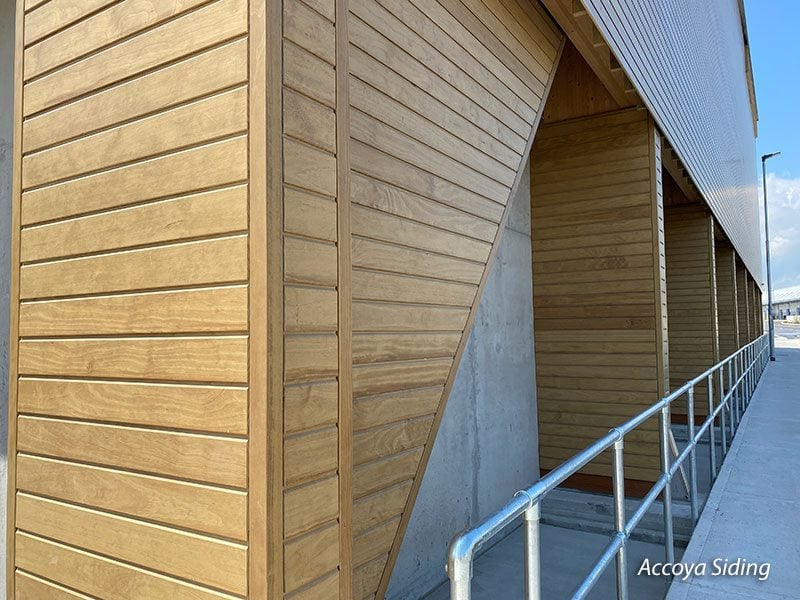
Accoya has a relatively light, consistent appearance with a subtle wood grain. Its natural color makes it a good option for projects where a clean, understated look is desired.
It can be painted or stained, or left unfinished to weather naturally.
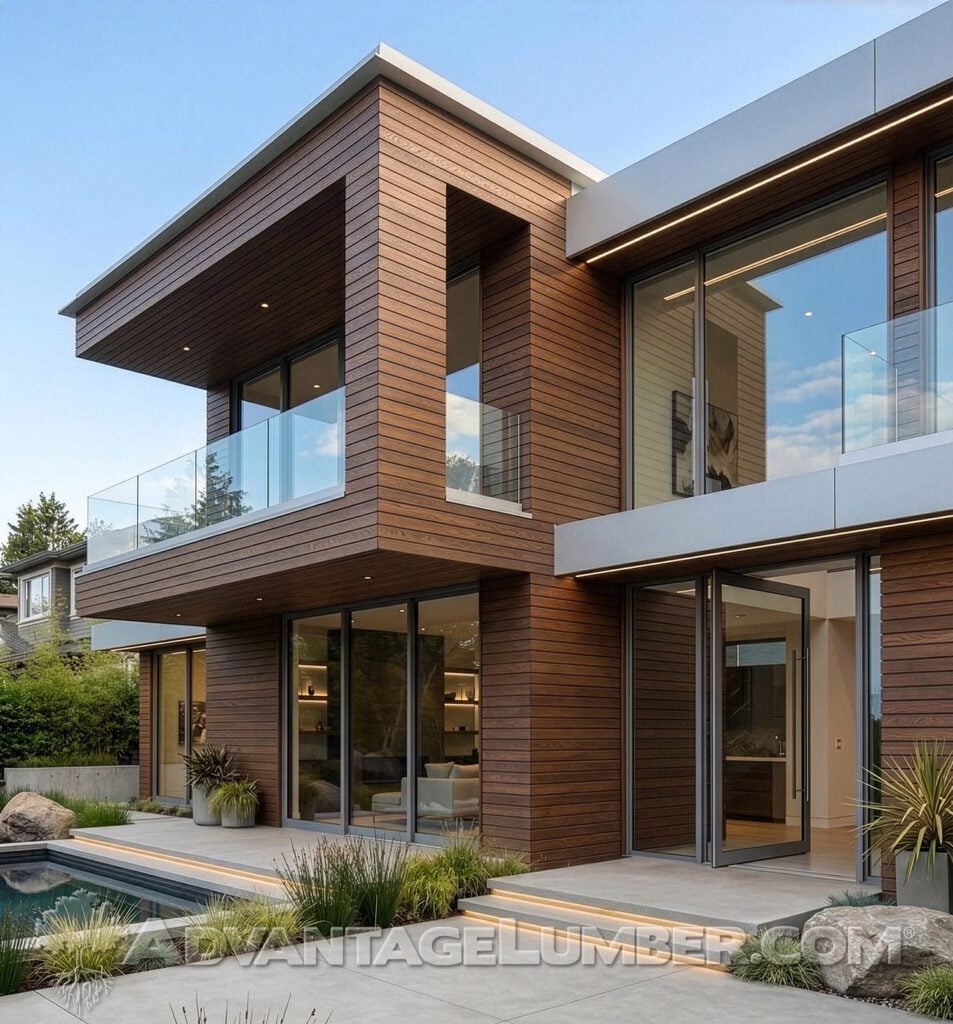
Thermally modified ash has a darker, richer brown color that develops during the heat-treatment process. Its grain remains visible, giving it a more pronounced hardwood appearance. This can be appealing for projects where the natural character of the wood is an important part of the design.
Both materials will gradually weather to a silver-gray color when exposed to the elements. Their natural appearance and grain, however, give each one a distinct look before weathering.
Maintenance and Finishing
Neither Accoya nor thermally modified ash needs to be coated to provide its improved durability. However, applying an exterior finish can help preserve the wood’s original color and reduce the effects of UV exposure.
Accoya can be left unfinished, painted, or stained with a suitable exterior coating. Its dimensional stability can also help reduce stress on finishes as the wood responds to changing moisture conditions.
Thermally modified ash can also be left unfinished or treated with an exterior wood finish. If you want to maintain its darker brown color, a UV-resistant finish can help slow the natural graying process. Like other exterior wood products, it will need periodic cleaning and refinishing depending on exposure and the finish used.
Ultimately, maintenance will depend on the appearance you want. If you’re comfortable with the natural silver-gray patina, you may not need to refinish the siding to maintain its durability.
Sustainability and Environmental Impact
Both materials offer an alternative to wood products that rely on traditional chemical preservatives, but their environmental considerations are a little different.
Accoya is made from fast-growing radiata pine and modified through acetylation. The process improves the wood’s durability and stability without relying on toxic wood preservatives. Accoya is also FSC® certified when sourced through the appropriate certified supply chain. It can be recycled and reused, supporting a longer product lifecycle.
Thermally modified ash is made from natural hardwood using heat and steam rather than chemical preservatives. The process improves the wood’s performance for exterior applications while retaining its natural wood characteristics.
When comparing the two, it’s worth looking at the specific product’s sourcing, certifications, manufacturing process, and expected service life. Choosing a durable material that can remain in service for many years may also help reduce the need for replacement.
Cost and Long-Term Value
The cost of Accoya and thermally modified ash can vary depending on board dimensions, profile, grade, and availability. It’s best to compare products with similar specifications rather than assume one material will always cost more than the other.
The initial material price is only part of the equation, too. Dimensional stability, durability, finishing requirements, and expected service life can all affect long-term value.
Accoya may be worth considering when minimizing movement and maintenance is especially important. Thermally modified ash offers a different value proposition for projects where the appearance of a natural hardwood is a priority.
Before making a decision, consider the upfront cost alongside the look you want and the amount of upkeep you’re willing to handle over time.

So, Which Wood Is Better for Exterior Cladding?
Both Accoya and thermally modified ash can be excellent choices for exterior cladding, but they have different strengths.
Accoya may be the better choice if you:
- Want exceptional dimensional stability and minimal moisture-related movement.
- Prioritize resistance to rot and decay.
- Prefer a lighter, more consistent wood appearance.
- Plan to paint, stain, or leave the wood unfinished.
- Want a product backed by a long-term manufacturer’s warranty.
Thermally modified ash may be the better choice if you:
- Prefer the natural grain and darker color of hardwood.
- Want improved outdoor durability compared with untreated ash.
- Like the look of wood that has already developed a rich brown tone.
- Want a natural wood option that can be left unfinished or coated.
Ultimately, the right material depends on your project’s priorities. Accoya has the edge in dimensional stability and established durability, while thermally modified ash offers a distinctive hardwood appearance with improved performance outdoors.
Looking for wood siding for your next project? Explore our selections of Accoya siding and thermally modified wood siding at Advantage Lumber.
