

If you’re planning a new deck or replacing an old railing, you’ve probably noticed aluminum deck railing showing up everywhere. And for good reason. It’s strong, attractive, requires very little maintenance, and can last for decades without the headaches you get with traditional wood railings.
But here’s the question we hear from homeowners all the time: How much does aluminum deck railing actually cost?
After more than 20 years in the decking and building materials industry, I’ve seen railing options evolve quite a bit. Years ago, pressure treated wood was the standard choice for most residential decks. Today, aluminum railing has become one of the most popular upgrades, especially for homeowners building with premium hardwood, composite, or PVC decking.
The good news? Aluminum railing is often more affordable than people expect, particularly when you consider how little maintenance it needs over its lifetime.
Let’s break down the actual costs, what affects pricing, and how to choose the right aluminum railing system for your deck.
What Is the Average Cost of Aluminum Deck Railing?
For most residential projects, aluminum deck railing typically costs between $40 and $150 per linear foot for materials, depending on the manufacturer, railing style, and accessories.
Basic aluminum railing systems generally fall toward the lower end of that range, while premium designs with specialty infill, decorative features, or upgraded finishes can cost considerably more.
Professional installation adds to the total, especially if your deck has stairs, multiple corners, or complicated layouts. Here’s a general breakdown of what you might expect to spend.
Aluminum Deck Railing Cost Per Linear Foot
| Railing Type | Materials Only | Professionally Installed |
|---|---|---|
| Basic aluminum picket railing | $35–$70 | $50–$100 |
| Mid range aluminum railing | $60–$100 | $75–$130 |
| Premium aluminum railing | $90–$150+ | $130–$200+ |
| Aluminum railing with glass panels | $55–$110+ | $80–$150+ |
Approximate 2026 national planning ranges. Actual costs depend on system components, installation requirements, and location. Specialty glass and custom designs may exceed these ranges.
One thing I always tell customers: Don’t shop for railing based on the price of a six foot or eight foot section alone.
Why? Because the railing panel is only part of the complete system. You’ll also need posts, mounting brackets, post caps, hardware, and possibly stair components. Depending on the manufacturer, some of those items may be included, while others are sold separately.
A railing system advertised at an attractive price can end up costing considerably more once you add everything required to finish the job.
What Factors Affect the Cost of Aluminum Deck Railing?
Not all aluminum railing systems are created equal. Several factors can influence what you’ll ultimately pay.
1. The Brand and Railing Collection
Just like decking, aluminum railing comes in different quality levels and price ranges. Some manufacturers focus on affordable, straightforward railing systems, while others offer premium designs with more customization options.
At AdvantageLumber.com, we carry railing options from leading manufacturers, including Trex, TimberTech, and Deckorators. Let’s look at a few popular choices.
Trex Signature Aluminum Railing
Trex Signature is a premium aluminum railing system with a clean, modern appearance. Available configurations include traditional vertical balusters, horizontal rods, mesh, and glass.
Its slim profiles make it particularly attractive for homeowners who want an unobstructed view of their backyard.
TimberTech Impression Rail Express
TimberTech Impression Rail Express is another excellent choice, especially if you’re looking for a sleek railing with a relatively straightforward installation process.
It’s a good option for homeowners who want the appearance of custom metal railing without necessarily moving into custom fabrication pricing.
Deckorators offers aluminum railing collections with traditional and contemporary styling. Depending on the collection, you’ll find options such as welded panels, convenient installation features, and coordinating stair railing.
These systems are worth considering when comparing installation convenience and overall project value.
Although these manufacturers all offer quality products, the actual cost depends on the collection, railing height, infill style, and accessories you choose.
2. Railing Height: 36 Inches vs. 42 Inches
Most residential deck railing systems come in two common heights: 36 inches and 42 inches. Generally speaking, a 42 inch railing costs more because it uses additional material.
For many residential decks, a 36 inch guard may meet applicable building code requirements. However, certain jurisdictions and commercial applications require 42 inch guards.
Before ordering, check your local building department’s requirements. There’s no sense in buying a railing system only to discover it doesn’t meet code.
3. Railing Style: Vertical Balusters, Cable, Rod, or Glass
This is where railing costs can really start to vary. Traditional vertical aluminum balusters are usually among the most economical options. They’re simple, attractive, and relatively easy to install.
However, if you’re trying to preserve a beautiful lakefront view or create a more contemporary outdoor living space, you might prefer something different.
Popular alternatives include:
- Horizontal rod railing: A modern look with clean horizontal lines.
- Cable railing: Thin stainless steel cables create an open appearance.
- Glass railing: Excellent for preserving views while providing a solid barrier.
- Mesh railing: Adds a distinctive architectural appearance.
Each design has different hardware and installation requirements. Cable railing, for example, requires appropriate fittings and tensioning, while glass systems require properly engineered supports and safety glazing.
Naturally, those additional components can increase the cost.
My advice? If you have a great view, spending more on an open style railing might be worth every penny. After all, why build a beautiful deck overlooking the water only to block the scenery with bulky railing?
4. Deck Layout and Number of Posts
Here’s something homeowners often overlook. Two decks can require exactly 50 linear feet of railing and still have dramatically different material costs.
Imagine one deck has two long, straight railing sections. Another has several corners, short sections, and a staircase.
Even though both decks require the same overall railing length, the second deck will probably cost more. That’s because you’ll need additional posts, brackets, and specialized components.
Posts can be one of the more expensive parts of an aluminum railing system, so the layout matters.
5. Stair Railing Costs More
Stairs are usually more complicated than straight railing sections.
For starters, stair railing must follow the angle of the staircase. Depending on the system, you’ll need adjustable brackets, specialized stair panels, or other components.
Additionally, some stairways require a separate continuous, graspable handrail to satisfy building codes.
I’ve seen homeowners budget for all their horizontal railing sections and completely forget about the stairs.
Unfortunately, those missing components can create an unpleasant surprise when it’s time to place the order.
Is Aluminum Deck Railing Cheaper Than Composite Railing?
This question comes up frequently, especially among homeowners shopping for Trex, TimberTech, or Deckorators decking.
You might assume composite railing would always cost less than aluminum, but that’s not necessarily true.
Some premium composite railing systems can actually cost more than entry level aluminum railing. The price difference depends on the collection, post construction, infill, and accessories.
Aluminum also has a few advantages worth considering.
For one, aluminum railing typically has a slimmer profile than many traditional composite railing systems. That can make a noticeable difference when you’re sitting on your deck looking out across the backyard.
Additionally, aluminum doesn’t swell, rot, or absorb moisture the way wood does.
Both quality composite and aluminum railing systems require relatively little maintenance, so the choice often comes down to appearance, price, and personal preference.
If you ask me, aluminum railing is one of the best looking options available for a modern deck.
Is Aluminum Deck Railing Cheaper Than Wood?
Initially, pressure treated wood railing is usually less expensive. However, I always encourage homeowners to consider the long term cost.
Wood railing requires maintenance. Depending on the climate, exposure, and finish, you may need to clean, stain, seal, or repaint it periodically. Over time, wood posts and balusters can also develop cracks, splinters, and rot.
Aluminum railing doesn’t have those same problems. Most quality aluminum systems feature a factory applied powder coated finish. Rather than sanding and staining, routine maintenance usually involves washing the railing with mild soap and water.
That can save considerable time and money over the years. And let’s face it, most homeowners would rather spend their weekends enjoying their deck than maintaining the railing.
How Long Does Aluminum Deck Railing Last?
A properly installed, high quality aluminum railing system can often last 25 to 40 years or longer, depending on environmental conditions, finish quality, and maintenance.
Unlike steel, aluminum doesn’t develop the same type of red iron oxide rust. It naturally forms a protective oxide layer that helps resist corrosion.
That doesn’t mean every aluminum railing system is completely maintenance free or immune to damage.
Coastal environments, for example, can be particularly demanding because airborne salt can affect finishes, hardware, and other components.
If you’re building near the ocean, look for a manufacturer approved system with suitable corrosion resistant hardware and follow the recommended cleaning schedule. Also, pay attention to the warranty.
Some manufacturers offer lengthy limited warranties on their aluminum railing systems, but structural coverage, finish coverage, and coastal exclusions may differ. It’s worth reading the warranty before making your final decision.
Can You Install Aluminum Deck Railing Yourself?
Absolutely, depending on the system and your experience. Many modern aluminum railing products are designed with contractors and experienced DIY homeowners in mind.
Preassembled panels, adjustable brackets, and manufacturer installation templates can make the process considerably easier.
However, there’s one area where I never recommend cutting corners: how the railing posts attach to the deck framing. A railing system is only as strong as its connection to the structure underneath.
Simply fastening aluminum posts through the deck boards isn’t enough. Posts need to connect to properly reinforced structural framing using the manufacturer’s approved mounting method and hardware.
For existing decks, you may need to add blocking or reinforce the framing before installing the new railing.
If you’re unsure about the structural requirements, hiring an experienced deck contractor is money well spent.
How to Save Money on Aluminum Deck Railing
Over the years, I’ve learned that you don’t necessarily have to choose the cheapest railing to get the best value. Sometimes a few smart design decisions can save hundreds or even thousands of dollars without sacrificing quality.
Here are a few things worth considering. Keep your railing layout simple. Straight runs generally require fewer specialty components than decks with multiple corners and angles.
Choose standard railing colors. Black, white, and bronze are common options, although availability varies by manufacturer. Standard finishes may offer better pricing and availability than specialty colors.
Compare six foot and eight foot sections. Depending on your deck dimensions, one panel length might reduce waste or eliminate an extra post. Always follow the manufacturer’s maximum spans.
Consider preassembled railing panels. Although the upfront material price may be higher, faster installation can reduce labor costs. Get a complete material takeoff. This is probably the most important advice I can give.
Before purchasing, make sure your estimate includes every post, rail section, bracket, cap, and fastener needed for the project. Missing even a handful of components can delay installation and create extra shipping costs.
Don’t Forget About the Deck Framing
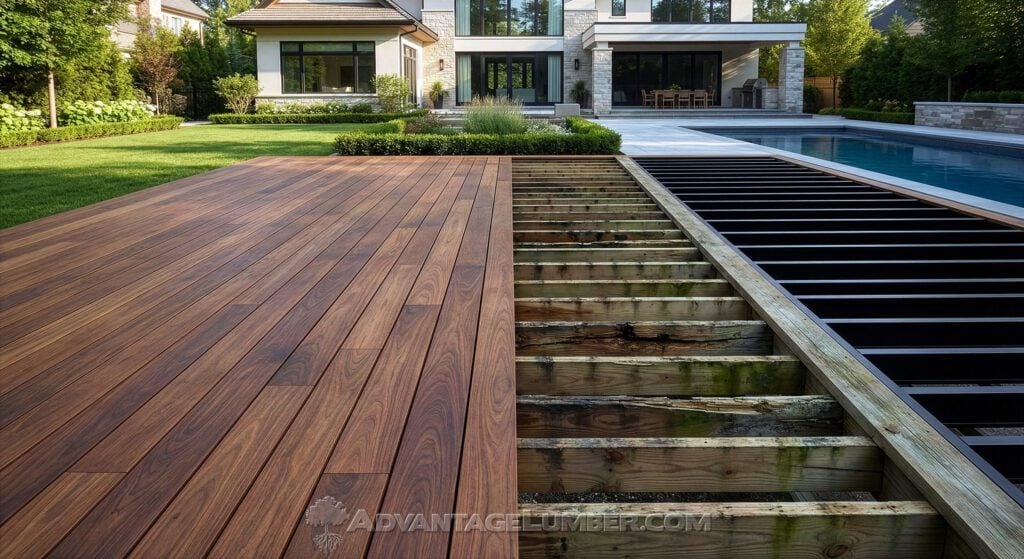
Here’s one final point worth mentioning, especially if you’re replacing railing on an older deck. Before spending several thousand dollars on new aluminum railing, inspect the deck framing underneath.
If the framing is rotting, the ledger is improperly attached, or the deck posts are deteriorating, those problems need attention first.
I’ve seen homeowners invest in beautiful new decking and railing while leaving questionable structural framing underneath. That’s not a good long term investment.
If you’re building a completely new deck, consider how long you want the entire structure to last.
Premium hardwoods such as Ipe and Cumaru can provide decades of service. Pairing those boards with durable railing and appropriately designed long life framing can help create a deck that holds up for many years.
Depending on the project, steel or aluminum deck framing may also be worth considering.
Where Can You Buy Aluminum Deck Railing?
At AdvantageLumber.com, we help homeowners and contractors choose decking and railing materials for projects throughout the United States.
We offer popular railing options from Trex, TimberTech, and Deckorators, along with a wide selection of hardwood, composite, and PVC decking.
One advantage of working with an experienced decking supplier is getting help with the complete project rather than just buying individual railing components.
Our team can help you compare railing styles, review your measurements, and prepare a material takeoff so you know what you’ll need before placing your order.
With four U.S. warehouse and manufacturing locations, we also offer nationwide shipping directly to homes and job sites.
Whether you’re replacing an old wood railing or building a completely new deck, our goal is to help you find a railing system that fits your budget, complements your decking, and performs well for years to come.
Frequently Asked Questions About Aluminum Deck Railing Costs
How much does 100 feet of aluminum deck railing cost?
For 100 linear feet of professionally installed aluminum railing, a reasonable broad budgeting range is approximately $5,000 to $20,000 or more. Standard vertical baluster systems generally fall toward the lower end, while premium styles, glass infill, and complex installations cost more.
Is black aluminum railing more expensive than white?
Not necessarily. Black is a common standard color among aluminum railing manufacturers. Pricing differences depend on the specific collection and available finishes rather than color alone.
Does aluminum deck railing rust?
Aluminum doesn’t rust like ordinary steel because it contains no iron. However, aluminum can still corrode under certain conditions, particularly in harsh coastal environments. Quality powder coating and proper maintenance help protect the railing.
Can aluminum railing be installed on an existing wood deck?
Yes. Aluminum railing can often be installed on an existing wood framed deck, provided the framing is structurally sound and can support the required railing loads. Additional blocking or reinforcement may be necessary.
Is aluminum deck railing worth the extra money?
For many homeowners, yes. Aluminum railing offers an attractive appearance, excellent durability, and very little routine maintenance. Although the upfront cost may exceed basic wood railing, the reduced upkeep can make aluminum a smart long term investment.
Final Thoughts: Is Aluminum Deck Railing Worth the Cost?
After more than two decades working with decking and railing materials, I’ve watched aluminum railing go from something you’d primarily see on high end projects to a practical option for everyday residential decks.
And frankly, I think that’s a good thing. It’s durable, looks great with almost any decking material, and doesn’t require the constant maintenance associated with traditional wood railing.
Although you’ll generally pay more upfront than you would for basic pressure treated wood, the long term benefits can make that extra investment worthwhile.
The key is choosing the right system and getting an accurate estimate for the entire project. Ready to price aluminum railing for your deck?
Visit AdvantageLumber.com to explore Trex, TimberTech, and Deckorators railing options, or contact our decking specialists for a free material estimate and takeoff.
We’ll help you compare your options and find a railing system that looks great without stretching your budget.
