
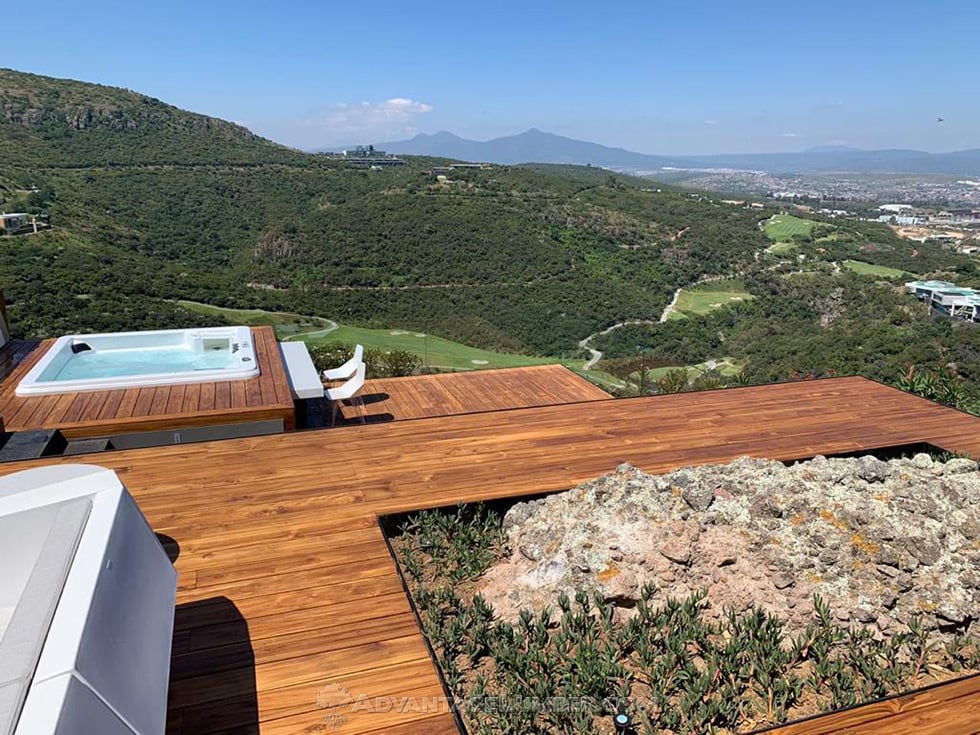
Ipe is often considered the gold standard for hardwood decking. It’s exceptionally hard, naturally resistant to decay, and can last for decades with proper installation. However, it can also cost more than other tropical hardwoods.
Fortunately, Ipe isn’t your only option. Several other hardwoods offer attractive colors, natural durability, and long potential service lives at a potentially lower cost.
What Is Affordable Luxury Decking?
Ipe is often considered one of the best choices for hardwood decking, thanks to its exceptional hardness, natural resistance to decay, and long service life. However, other tropical hardwoods can offer many of the same benefits at a potentially lower price.
Tropical hardwoods stand out for their natural beauty, dense grain, and durability. Species like Cumaru, Tigerwood, and Garapa each have their own look and performance characteristics, giving you more options without stepping too far away from what makes Ipe so desirable.
6 Affordable Luxury Hardwood Decking Options
Cumaru (Brazilian Teak)
Cumaru is one of the closest alternatives to Ipe in terms of hardness and durability. Its color ranges from golden tan to reddish brown, often with darker grain accents. With proper installation, Cumaru decking can potentially last 50 years or longer.
Best for: Homeowners who want Ipe-like durability and rich color while potentially spending less.
Tigerwood
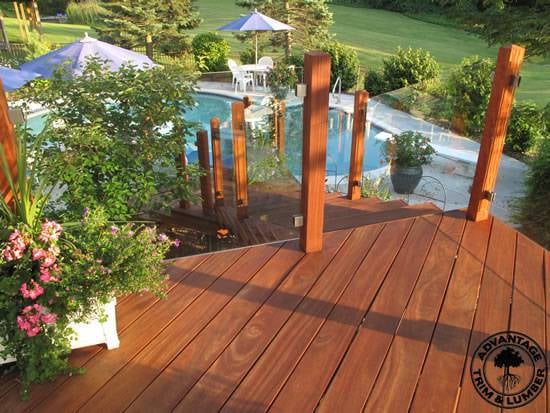
Tigerwood stands out for its golden to reddish-brown color and irregular dark streaks. It’s naturally durable and can offer a service life of 30 years or more under suitable conditions.
Its bold grain makes it a good fit when you want the decking itself to be a design feature.
Best for: Decks where distinctive color and grain matter as much as durability.
Garapa (Brazilian Ash)
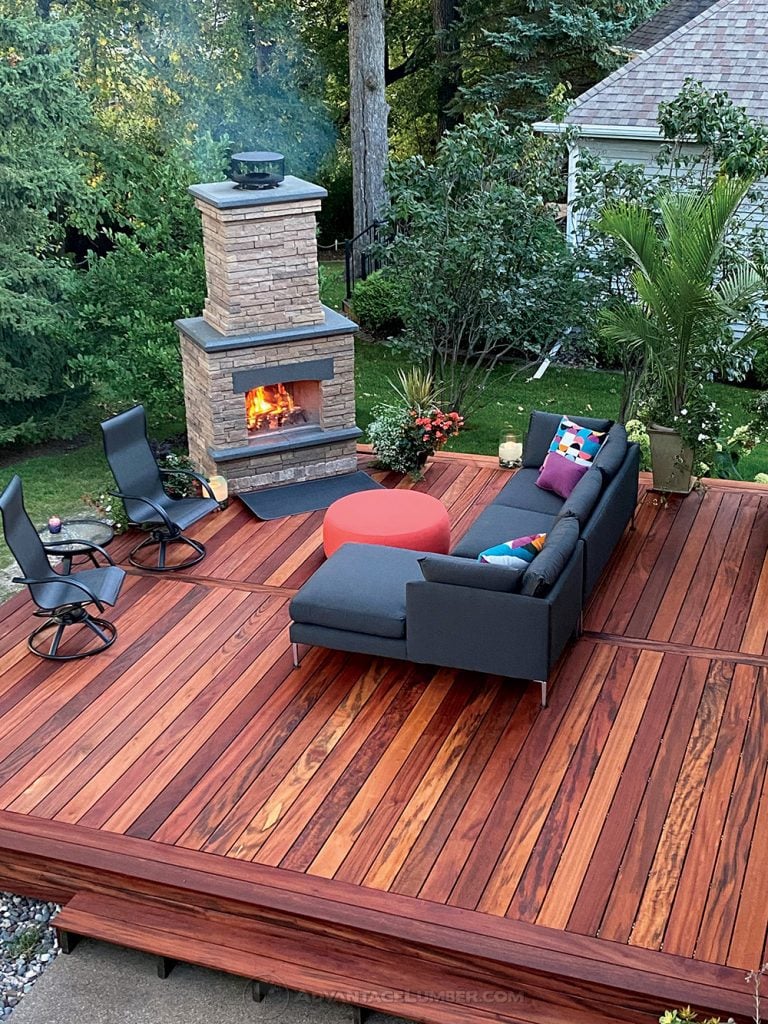
Garapa has a lighter, yellow-gold appearance that can bring a brighter feel to an outdoor space. It’s naturally resistant to rot, decay, and insects, and may last 30 years or longer when properly installed.
It’s also less dense than Ipe and Cumaru, which can make it easier to work with during installation.
Best for: Homeowners who prefer lighter-colored hardwood and want natural durability.
Massaranduba (Brazilian Redwood)
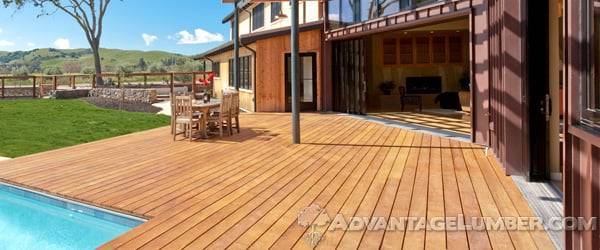
Massaranduba starts with a rich red to reddish-brown color that can darken with exposure to sunlight. It’s a dense hardwood with strong resistance to decay and insects, and it can potentially last 30 years or longer outdoors.
Despite its common name, Brazilian Redwood is a tropical hardwood, not the same species as North American redwood.
Best for: A rich red-brown appearance and a dense, durable decking material.
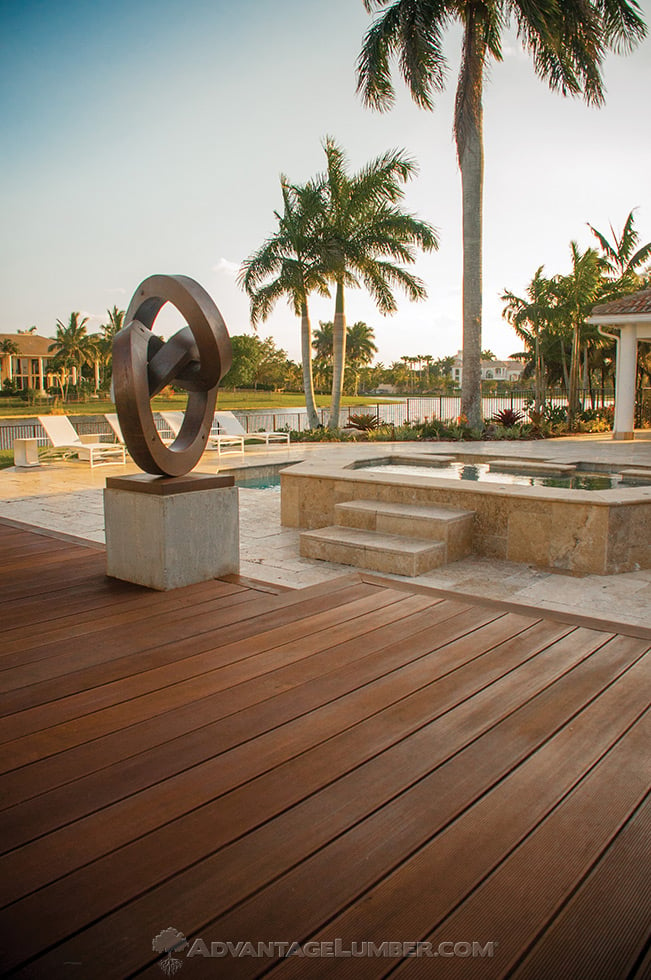
Teak
Genuine plantation-grown Teak typically has a golden-brown color and contains natural oils that help it resist moisture and decay. It’s also known for its dimensional stability. With proper installation, Teak decking can potentially last 30 years or longer.
Best for: Homeowners who value golden color, natural oils, and dimensional stability.
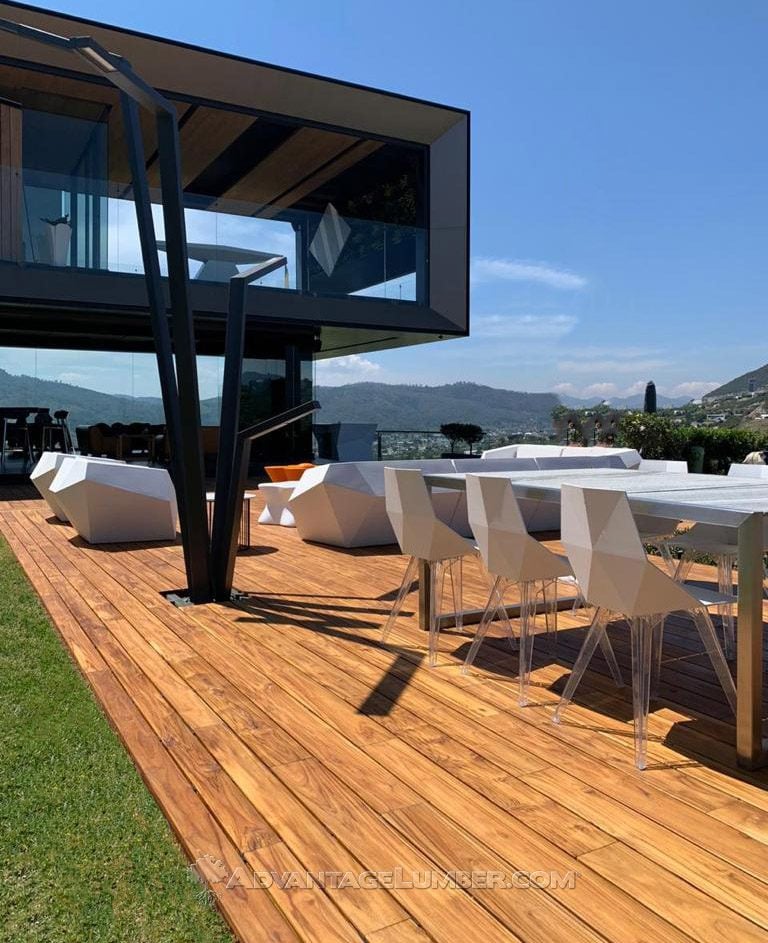
Red Balau (Mahogany)
Red Balau has a rich reddish-brown appearance and offers natural resistance to decay and insects. It has a potential lifespan of 30 years or more, although actual service life will depend on the project and conditions.
Best for: A reddish-brown tropical hardwood that may offer a more accessible starting price than some other species.
How Do These Hardwoods Compare?
| Hardwood | Appearance | Potential lifespan |
| Cumaru | Golden tan to reddish brown | 50+ years |
| Tigerwood | Golden to reddish brown with dark streaks | 30+ years |
| Garapa | Yellow-gold to warm gold | 30+ years |
| Massaranduba | Red to dark reddish brown | 30+ years |
| Teak | Golden to dark golden brown | 30+ years |
| Red Balau | Reddish brown | Up to 30+ years |
These are estimates. Actual service life depends on installation, drainage, airflow, climate, and maintenance.
Does Affordable Luxury Mean Compromising on Quality?
You don’t have to choose Ipe to get a durable hardwood deck. Cumaru offers similar hardness and long-term potential, while Tigerwood, Garapa, Massaranduba, Teak, and Red Balau each bring their own mix of appearance and performance.
Keep in mind that tropical hardwoods vary in density and working properties. Some require predrilling and carbide-tipped tools, and all need proper installation to perform well outdoors. Their color will also change with weather exposure unless you maintain it with an appropriate finish.
Rather than choosing by price alone, weigh the upfront cost against the appearance, installation needs, and expected service life.
Find the Right Hardwood for Your Deck
A beautiful deck doesn’t have to use the most expensive wood available. The right species can give you the look you want, dependable outdoor performance, and a price that makes sense for your project.
Explore the tropical hardwood decking options at AdvantageLumber.com to compare species and find the best fit for your deck and budget.
