
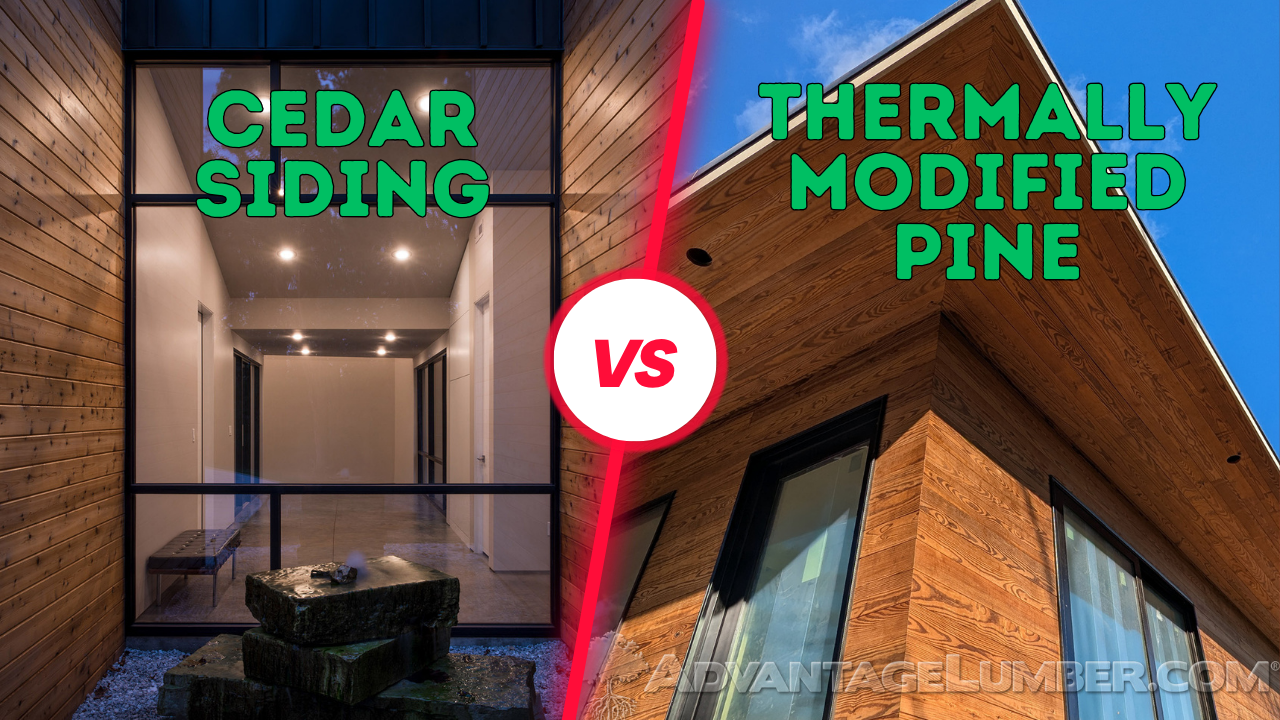
Western Red Cedar has been one of the most popular wood siding choices for decades. After all, it’s attractive, lightweight, easy to work with, and naturally resists decay. There’s a reason you’ll find cedar siding on everything from rustic cabins to beautiful custom homes.
I’ve always liked the look of Western Red Cedar on a house. There’s something about the natural grain and warm color that gives a home character. You just don’t get that same look from vinyl or fiber cement siding.
However, Western Red Cedar isn’t the only softwood worth considering these days.
In fact, thermally modified softwoods, especially Thermally Modified Pine, have become increasingly popular among homeowners, architects, and contractors who want the natural beauty of real wood without some of the drawbacks of traditional lumber.
And I’ll tell you what, some of the thermally modified wood siding products available today look pretty impressive. If you haven’t seen them in person, you might be surprised at how much they resemble expensive hardwoods.
So, which one is better?
Well, like most things in construction, the answer depends on your project, your budget, and how much maintenance you’re willing to do.
I know that’s probably not the straightforward answer you were hoping for. But when you’re spending thousands of dollars on siding, it’s worth understanding what you’re buying.
With that in mind, let’s take a closer look at how these two siding materials compare.
What Is Western Red Cedar Siding?
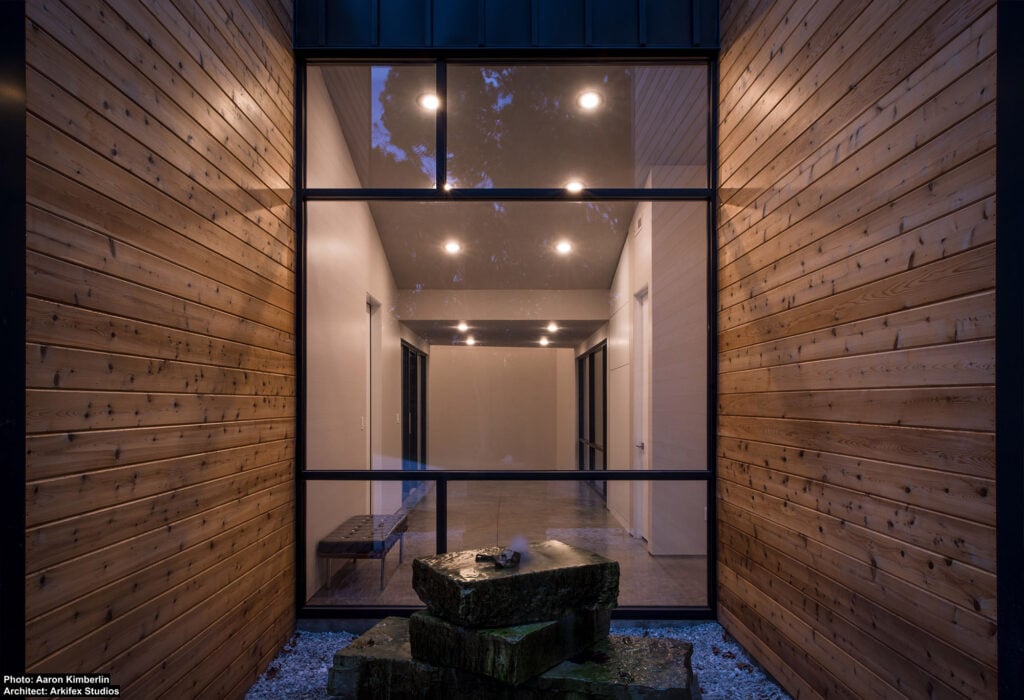
Western Red Cedar is a naturally durable softwood that grows primarily in the Pacific Northwest and western Canada.
For generations, builders have used it for siding, fencing, roofing, and outdoor structures because it naturally resists decay and certain insects.
One of cedar’s biggest advantages is its appearance. In particular, Western Red Cedar offers beautiful grain patterns and colors that range from light amber to rich reddish brown.
It’s also a relatively soft, lightweight wood, so contractors can usually cut, nail, and install it without much difficulty.
If you’ve ever worked with cedar, you probably know what I’m talking about. It generally cuts nicely, doesn’t put up much of a fight when you’re fastening it, and it’s a lot easier on your tools than dense tropical hardwoods like Ipe.
Another nice feature is how well cedar handles moisture changes. Compared to many other untreated softwoods, Western Red Cedar tends to shrink and swell less as moisture and humidity levels rise and fall.
However, don’t confuse naturally durable with maintenance free.
After all, cedar still absorbs moisture, weathers in the sun, and can develop problems when installers fail to provide proper drainage and ventilation behind the siding.
I’ve heard people say, “It’s cedar, so I don’t have to worry about rot.” Well, I wouldn’t go quite that far. Cedar is a good outdoor wood, but it isn’t magic.
Although cedar has a reputation for lasting decades, its durability can vary depending on the grade, the amount of heartwood, and the conditions where you install it.
For example, clear heartwood cedar generally resists decay better than lower grades that contain more sapwood. So, that’s something worth considering when comparing prices.
Personally, I’d rather pay a little more for quality cedar than save money on a lower grade that might give me problems down the road. Of course, your budget matters, too.
What Is Thermally Modified Pine Siding?

Thermally modified pine starts with ordinary pine lumber, that manufacturers heat in a controlled environment.
During the process, manufacturers expose the wood to high temperatures while limiting oxygen to prevent combustion. Depending on the method, temperatures commonly reach approximately 180°C to 220°C (356°F to 428°F).
As a result, the heat changes the wood’s chemical structure. In simple terms, the process reduces how much moisture the wood absorbs and can make it less susceptible to many decay causing fungi.
Consequently, properly modified wood generally handles moisture changes better and may resist decay more effectively than the same species before treatment.
And here’s something many homeowners might find interesting.
Unlike traditional pressure treated lumber, thermally modified wood doesn’t typically need chemical preservatives to achieve these improvements. Instead, heat changes the wood itself.
Pretty interesting, isn’t it? We’re taking an ordinary softwood like pine and potentially improving its outdoor performance by carefully heating it.
At AdvantageLumber.com, we offer Thermally Modified Pine siding as an alternative to conventional softwood siding.
Another benefit is how the process darkens the pine throughout each board, giving it a rich brown appearance that can resemble more expensive hardwoods.
I’ve seen thermally modified pine that looks surprisingly close to some darker hardwood species. Now, I’m not saying it has the same hardness or durability as Ipe or Cumaru, but from an appearance standpoint, it can be a beautiful product.
However, although heat improves several important properties, it doesn’t turn pine into Ipe.
After all, thermally modified softwoods are still relatively soft materials. They can dent, split, or crack, especially when installers use the wrong fasteners or techniques.
And that’s where some people might get confused. They hear “modified wood” and assume every property has improved. Unfortunately, wood doesn’t work that way.
That’s why it’s important to understand both the benefits and limitations before choosing one for your home.
Western Red Cedar vs. Thermally Modified Pine: Side by Side Comparison
| Feature | Western Red Cedar | Thermally Modified Pine |
|---|---|---|
| Wood type | Naturally durable softwood | Heat treated softwood |
| Decay resistance | Naturally resists decay, especially in heartwood | Heat treatment can improve decay resistance |
| Dimensional stability | Good | Generally excellent when properly modified |
| Moisture absorption | Naturally absorbs and releases moisture | Typically absorbs less moisture than untreated pine |
| Insect resistance | Naturally resists certain insects | Varies by insect and treatment; not termite proof |
| Initial appearance | Light amber to reddish brown | Medium to dark brown |
| Weathering | Generally turns gray without UV protection | Generally turns gray without UV protection |
| Workability | Usually easy to cut and fasten | Easy to machine but can be more brittle |
| Maintenance | Occasional cleaning and refinishing | Occasional cleaning and refinishing |
| Cost | Varies by grade and availability | Varies by manufacturer, profile, and treatment |
| Best applications | Traditional siding, rustic homes, cabins | Modern siding, rainscreens, contemporary homes |
As you can see, both materials can make excellent siding when you install them correctly. However, several differences may influence which one makes more sense for your project.
And remember, there’s no perfect siding material. Every product has its strengths and weaknesses. The trick is finding the one that makes the most sense for your particular home.
1. Which Siding Material Handles Moisture Better?
If there’s one thing I’ve learned from working with exterior wood products, it’s that moisture causes more problems than most homeowners realize.
For starters, rain can get behind siding. Meanwhile, humidity changes throughout the year. As a result, wood absorbs moisture and then releases it as conditions change.
Of course, that’s normal.
However, repeated moisture changes can cause wood to expand, shrink, cup, and sometimes crack.
I’ve seen homeowners blame the wood when boards start moving or cupping. Sometimes the material is part of the problem, but other times the installer may not have left enough room for the wood to move or provided proper airflow behind it.
Western Red Cedar generally handles these changes better than many common softwoods. Its relatively low density and natural stability make it a good choice for exterior siding.
On the other hand, thermally modified pine may have an advantage when it comes to moisture absorption.
During thermal modification, heat changes some of the wood components that attract and hold moisture.
Consequently, thermally modified pine typically absorbs less moisture than untreated pine under similar conditions. This can help reduce seasonal movement and increase the lifespan.
For example, imagine installing horizontal siding on a home in Florida, where humidity stays high for much of the year. The siding will likely face repeated changes in moisture exposure.
Although Western Red Cedar performs well when properly installed, thermally modified pine may remain more stable, especially when you use wider siding profiles.
And if you’ve ever installed wide plank siding, you probably know how important stability can be. Nobody wants to finish a beautiful siding project only to see boards start cupping a few months later.
My take: If you want to minimize seasonal wood movement, thermally modified pine deserves serious consideration.
However, neither product should go on a wall without proper flashing, drainage, and ventilation.
Otherwise, even the most stable wood siding can develop problems when water gets trapped behind it.
2. Which One Resists Rot Better?
Western Red Cedar has a natural advantage over many untreated softwoods because its heartwood contains natural compounds that help resist decay.
In fact, that’s one reason builders have used cedar outdoors for generations.
However, not every cedar board offers the same level of resistance.
For instance, heartwood generally performs better than sapwood, while lower grades may contain more knots, defects, and less naturally durable material.
I’ve always felt that homeowners should pay more attention to wood grades. Two boards can both be sold as Western Red Cedar, but that doesn’t necessarily mean they’ll perform exactly the same outdoors.
Thermally modified pine, on the other hand, takes a different approach.
Rather than relying on naturally occurring compounds, manufacturers use heat to change the wood and make it less susceptible to certain decay fungi.
As a result, properly modified pine can resist decay substantially better than untreated pine.
However, actual performance may depend on how manufacturers treat the wood, including the temperature, heating time, and process controls.
For example, some manufacturers produce siding specifically for exterior cladding, while others offer thermally modified products that may not meet the same durability standards.
So, is thermally modified pine more rot resistant than Western Red Cedar?
Well, not necessarily in every situation.
Both can perform very well as above ground siding, although results may depend on the cedar’s heartwood content and how thoroughly the manufacturer modifies the pine.
Personally, I’d pay just as much attention to the wall assembly as the wood species.
After all, I’ve seen expensive siding develop problems because somebody skipped a rainscreen or failed to flash a window correctly. That’s frustrating because those problems are very preventable. A little extra attention during installation can potentially save a homeowner a lot of money later.
The bottom line? The best siding in the world probably won’t make up for poor installation.
3. Which Siding Looks Better?
This is where personal preference plays a big role.
For starters, Western Red Cedar has a classic appearance that’s difficult to duplicate.
Its warm reddish tones, natural grain patterns, and occasional knots make it particularly attractive on cabins, cottages, lake houses, and traditional homes.
However, clear cedar can also look fantastic on modern architecture.
Personally, I think cedar looks especially good when you combine it with natural stone. There’s something about those two materials together that just works.
Thermally modified pine, meanwhile, offers a different appearance.
During the heating process, the wood darkens throughout each board, creating warm brown tones that can resemble certain tropical hardwoods.
As a result, thermally modified siding may look particularly attractive on contemporary homes where architects favor clean lines, horizontal siding, or vertical wood cladding.
Personally, one thing I particularly like about thermally modified pine is how well it works with black windows, metal roofing, stone, and other modern exterior materials.
The contrast can look outstanding.
If you’ve ever seen a modern home with dark wood siding and large black framed windows, you probably know the look I’m talking about. It’s clean, elegant, and doesn’t need a bunch of decorative trim to make an impression.
However, keep in mind that neither wood will maintain its original color indefinitely without UV protection.
Both Woods Will Eventually Turn Gray
Here’s something homeowners occasionally misunderstand.
Although thermal modification improves dimensional stability and decay resistance, it doesn’t prevent sunlight from changing the wood’s color.
Just like cedar, thermally modified pine will generally develop a silver gray appearance over time when exposed to sunlight and weather.
Of course, some homeowners love that natural weathered look.
Others, however, prefer the original warm brown or reddish tones.
I’ve always thought naturally weathered wood can look fantastic on the right house. A coastal cottage or mountain cabin with silver gray siding can have a lot of character.
But if you spent extra money because you fell in love with the original brown color, you probably won’t be thrilled when it starts fading.
If you want to maintain the original color, you’ll generally need an exterior finish that protects against UV exposure, along with periodic maintenance.
Also, remember that sunlight, rainfall, and exposure can affect how quickly the siding changes color.
For example, a shaded north facing wall may weather differently than a south facing wall that receives direct sunlight all afternoon.
So, don’t be surprised if one side of your house turns gray faster than another. That’s just how natural wood tends to behave outdoors.
4. Which Material Requires Less Maintenance?
There’s a common misconception that thermally modified wood is maintenance free. Unfortunately, it isn’t.
Although heat helps the wood resist moisture and remain more stable, it doesn’t eliminate the need to clean your siding or maintain its appearance.
Western Red Cedar and Thermally Modified Pine generally need similar basic care. Both woods benefit from occasional cleaning to remove dirt, pollen, mildew, and other debris.
Likewise, both may need periodic refinishing if you want to preserve their original color.
However, thermally modified pine may move less as humidity changes, potentially reducing some problems that repeated swelling and shrinking can cause. That doesn’t mean you can skip maintenance altogether.
I always tell homeowners that low maintenance and no maintenance are two different things. Even vinyl siding gets dirty and needs cleaning once in a while. Let’s face it, if you want the beauty of real wood on your house, a little maintenance generally comes with the territory.
What About Painting or Staining?
Western Red Cedar generally accepts many exterior stains and paints well when you prepare the surface correctly.
Cedar is often an excellent choice for homeowners who want painted wood siding. However, cedar’s natural compounds can sometimes bleed through the finish, especially when painters use the wrong primer.
On the other hand, you can also coat thermally modified pine with certain exterior finishes, but not every coating works equally well with every treatment process. Some manufacturers may recommend specific primers, stains, or surface preparation methods.
Regardless of which material you choose, follow the siding and finish manufacturers’ instructions.
Here’s another piece of advice: Don’t spend good money on premium wood siding and then try to save a few dollars by using the cheapest exterior finish you can find. I’ve never understood that approach.
My recommendation: If you’re planning to paint your siding a solid color, Western Red Cedar may be the more straightforward choice.
However, if you want natural wood tones or a weathered gray appearance, thermally modified pine could be especially attractive.
5. Which Siding Is Easier to Install?
Western Red Cedar is generally one of the easier siding materials to work with. That’s because it’s lightweight, cuts easily, and usually fastens without much difficulty.
Due to cedar being relatively soft, installers still need to avoid driving nails too deeply and damaging the surface.
If you’ve spent much time working with wood, you know how nice it is to have a material that cuts cleanly and doesn’t wear out your blades every few boards.
Thermally modified pine is also relatively easy to machine. But, the heating process can make the wood more brittle. Installers definitely need to take additional precautions when fastening near board ends or working with thinner profiles.
Depending on the manufacturer and siding profile, you may need to pre-drill holes before fastening.
In either case, stainless steel fasteners are generally a good choice for both materials, especially in coastal environments.
Don’t assume you can install thermally modified pine exactly the same way as traditional cedar siding.
For example, some manufacturers design their siding to work with proprietary clips, specific fastening patterns, or particular ventilation requirements.
Therefore, always follow the manufacturer’s instructions.
I know, reading installation instructions isn’t exactly the most exciting part of a siding project. But trust me, it’s a lot more enjoyable than pulling boards off a wall because something went wrong.
Don’t Forget the Rainscreen
Whether you’re installing Western Red Cedar or Thermally Modified Pine, I strongly recommend a properly designed rainscreen assembly.
Essentially, a rainscreen creates a drainage and ventilation space behind the siding.
As a result, moisture can escape, and the back of the siding can dry.
For many wood siding projects, this may be one of the best ways to help the material last longer.
However, local building codes and the wall design will determine how much space you need, where you need fire blocking, and how you should install the weather barrier and fasteners.
This becomes particularly important in areas where frequent rainfall or high humidity can keep exterior walls damp.
Personally, I think rainscreens are one of the most overlooked parts of wood siding projects. Homeowners spend hours comparing siding colors and wood species, but hardly anyone gets excited about what’s going on behind the boards.
Of course, that’s the part you can’t see once the job is finished. But it’s also one of the parts that can make the biggest difference in how long your siding lasts.
6. Which One Is More Durable Against Dents and Damage?
Here’s an area where homeowners sometimes expect too much from thermally modified wood.
Although thermal modification helps wood resist decay and remain more stable, it doesn’t necessarily make the wood harder.
In fact, some heating processes can reduce bending strength and make the wood less resistant to impacts.
Western Red Cedar, meanwhile, is also a relatively soft wood. Consequently, both materials can dent when ladders, tools, outdoor furniture, or other objects strike them.
For siding installed high on a wall, this usually isn’t a major concern. However, siding near patios, walkways, or areas where children frequently play may take more abuse.
Think about the siding next to a backyard patio. You’ve got people moving chairs, carrying ladders, grilling, and doing all sorts of things around the house. Eventually, something is probably going to bump into the wall.
So, if you need siding that can withstand frequent impacts, you might want to consider a denser wood species or another cladding material.
Personally, I wouldn’t worry too much about this on a second story wall. But around a busy patio or entryway, I’d definitely give it some thought.
7. Which Siding Costs Less?
This is where things get interesting. Western Red Cedar used to be a relatively affordable premium siding material.
However, prices have changed significantly over the years. For example, limited supplies, harvesting costs, transportation expenses, and strong demand can all drive cedar prices higher.
As a result, clear Western Red Cedar, especially longer boards with minimal knots, can be expensive.
If you haven’t priced clear cedar lately, you might be in for a surprise. Good quality lumber isn’t always easy to find, especially when you want long, attractive boards with minimal defects.
Thermally modified pine, on the other hand, offers another option. Because manufacturers can start with more readily available softwood species, thermally modified pine may cost less than premium cedar grades.
However, heating the wood adds manufacturing costs. You shouldn’t assume thermally modified pine will always be cheaper.
Instead, the actual price can depend on the siding profile, thickness, width, grade, finish, and manufacturer.
And here’s my advice: Don’t get too hung up on which product costs a few cents less per linear foot. When you’re covering an entire house, there are plenty of other expenses that can affect your final bill.
Compare the Entire Project Cost
When comparing siding prices, don’t focus only on the cost per linear foot.
Instead, you’ll also want to consider trim boards, fasteners, furring strips, rainscreen components, finishes, labor, and waste. One siding product might cost less per board but require additional accessories.
Meanwhile, another might cost more per board but come in a profile that installers can fasten more efficiently.
I’ve seen plenty of projects where the cheapest material didn’t turn out to be the cheapest finished job. Labor, waste, and accessories can add up faster than people expect.
With that in mind, get a complete material estimate before deciding.
8. Which One Lasts Longer?
This is probably the question homeowners care about most.
Unfortunately, there isn’t one reliable lifespan number that applies to every Western Red Cedar or thermally modified pine siding product.
For example, cedar siding can last for decades when you install it correctly and keep it reasonably maintained.
Likewise, thermally modified pine may provide decades of service when manufacturers treat it properly, approve it for exterior cladding, and provide suitable installation instructions.
However, climate, exposure, workmanship, and maintenance can all affect how long the siding lasts.
For instance, generous roof overhangs can protect siding from rain and direct sunlight.
Meanwhile, siding on a tall coastal home may face wind driven rain, salt exposure, and intense sunlight.
Similarly, a properly ventilated wall can perform much better than one that traps water behind the boards.
This is why I don’t like giving homeowners one magic lifespan number for wood siding. A house in Arizona faces very different conditions than a house in coastal Washington or humid Florida.
And even two homes in the same neighborhood can experience different levels of exposure depending on trees, roof overhangs, and which direction the walls face.
For this reason, when evaluating thermally modified pine, look for manufacturer durability testing, applicable cladding certifications, and warranty details.
And remember, don’t assume every thermally modified product performs identically.
My opinion: I’d rather install either of these materials over a properly designed rainscreen than install a supposedly superior siding product against a wall where moisture can’t escape.
After all, good installation matters that much.
9. Which One Is Better for the Environment?
Both Western Red Cedar and thermally modified pine are real wood products, and both may offer environmental advantages over some building materials that require more energy to manufacture.
However, sustainability depends on where the wood comes from and how manufacturers process it.
For example, Western Red Cedar naturally resists decay, so it generally doesn’t need chemical pressure treatment for above ground siding.
Even so, responsible harvesting and forest management still matter.
Thermally modified pine, on the other hand, can come from commercially managed softwood forests, potentially making it an attractive option when manufacturers source the lumber responsibly.
Furthermore, heat can improve the wood’s durability without traditional preservative impregnation.
However, manufacturers must use energy to heat the wood to high temperatures.
Consequently, the overall environmental impact may depend on the energy source, transportation distance, product lifespan, and manufacturing practices.
Personally, I think people sometimes oversimplify the environmental side of building materials. Just because something comes from a tree doesn’t automatically make it the most environmentally friendly choice.
You also have to consider how long the product lasts. After all, siding that needs replacement sooner may create more waste and require more resources over time.
So, if environmental impact matters to you, look for credible forest certifications, product specific environmental documents, and clear information about where the wood comes from.
Ultimately, neither material automatically wins simply because it’s natural wood.
10. Which Siding Should You Choose?
After comparing these two products, I think the best choice probably comes down to the appearance you want, the climate where you live, and how you plan to finish the siding.
With that in mind, here’s how I’d narrow down the options.
Choose Western Red Cedar If:
- You prefer the traditional reddish brown appearance of natural cedar.
- You’re building a cabin, cottage, or traditional style home.
- You want a siding material that’s generally easy to cut and install.
- You plan to paint the siding or use a conventional exterior stain.
- You can find high quality cedar at a competitive price.
- You appreciate cedar’s long history in exterior construction.
Personally, if I were building a traditional lake house or mountain cabin, Western Red Cedar would probably be near the top of my list. It’s hard to beat that classic cedar appearance.
Choose Thermally Modified Pine If:
- You want a darker, contemporary wood appearance.
- You want siding that may move less as moisture levels change.
- You’re interested in wood that gains decay resistance through heat rather than traditional preservative treatment.
- You’re designing a modern home with horizontal or vertical wood cladding.
- You want a potentially more affordable alternative to expensive clear cedar siding.
- You prefer natural wood that can weather to a silver gray patina.
On the other hand, if I were building a contemporary home with large windows, black metal accents, and clean architectural lines, I’d give thermally modified pine a very serious look.
There’s no rule saying you can’t use cedar on a modern home or thermally modified pine on a traditional one, either. Sometimes mixing things up produces the best looking results.
Final Thoughts: Western Red Cedar or Thermally Modified Pine?
Western Red Cedar has earned its reputation as an excellent siding material. After all, it’s attractive, naturally durable, and has protected homes for generations.
However, thermally modified pine offers some interesting advantages that are worth considering.
For starters, it typically absorbs less moisture than untreated pine, generally moves less as humidity changes, and develops rich brown tones that make it an appealing alternative to traditional cedar.
So, does that mean thermally modified pine is better than cedar?
Well, not across the board.
On one hand, cedar may be the better choice for traditional architecture, painted siding, or projects where easy workability matters most.
On the other hand, thermally modified pine may be the better choice for contemporary homes, natural wood finishes, and applications where you want to minimize seasonal wood movement.
Personally, I wouldn’t hesitate to consider either product for a properly designed exterior wall.
And I’ll tell you something else. I’ve worked with enough different wood products over the years to know that chasing the “perfect” material usually isn’t the best approach. Every wood species has its strengths and weaknesses, and the right choice depends on what you’re trying to accomplish.
However, just remember that the quality of the installation can make a bigger difference than the species you choose.
So, use the correct fasteners, follow the manufacturer’s instructions, provide proper drainage and ventilation, and pay attention to flashing details.
I can’t stress that enough. You can buy the nicest siding on the market, but if water gets trapped behind it, you’re probably going to have problems eventually.
Ultimately, do those things right, and both Western Red Cedar and Thermally Modified Pine can provide beautiful siding for many years.
And really, isn’t that what we’re all looking for? A beautiful home exterior that looks great, holds up to the weather, and doesn’t turn into a constant maintenance headache.
Shop Western Red Cedar and Thermally Modified Wood Siding
At AdvantageLumber.com, we offer Western Red Cedar and Thermally Modified Wood siding for homeowners, contractors, and architects.
Whether you’re building a contemporary home with vertical wood cladding or renovating a traditional home with cedar siding, our team can help you compare profiles, calculate how much material you’ll need, and choose the right product for your project.
Visit AdvantageLumber.com to explore our wood siding options and get help planning your next project.
