
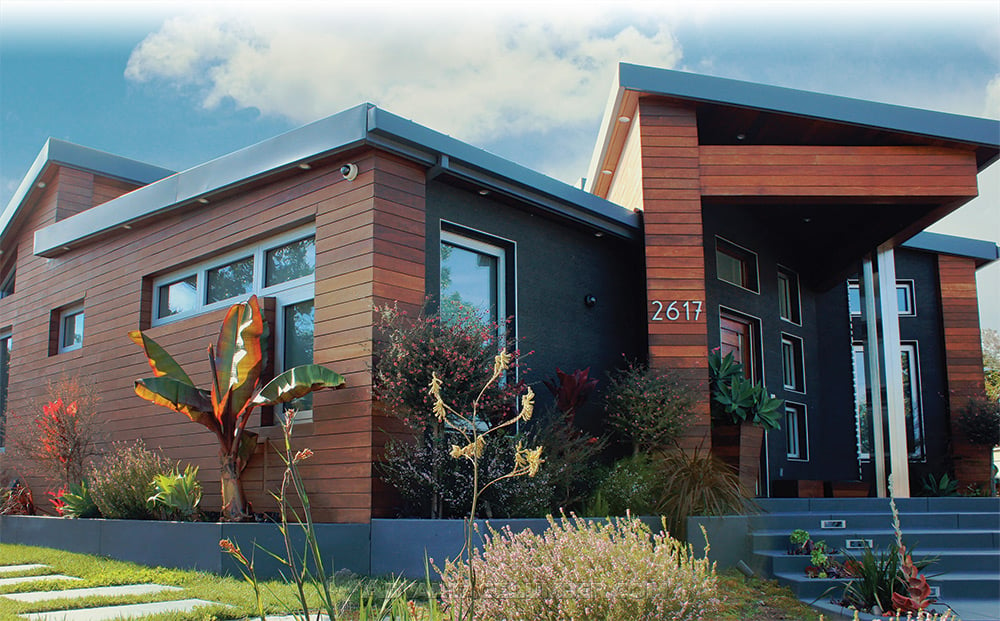
Rainscreen siding has become increasingly popular on modern homes and commercial buildings. If you’ve seen wood siding with clean lines, deep shadow gaps, and a slight space between the siding and the wall, there’s a good chance you were looking at a rainscreen system.
The basic idea is pretty simple. The siding sits away from the wall, leaving a space for water to drain and air to move. It also gives architects more options when choosing the siding itself, from the species of wood to the board width and profile.
What Is a Rainscreen Siding System?
A rainscreen system typically consists of the siding, an air cavity, a weather-resistant barrier, and the wall structure behind it.
The siding is the first line of defense against rain. If some water gets behind the boards, the cavity allows it to drain and gives air a chance to circulate and help the wall dry.
A rainscreen still needs proper flashing, especially around windows, doors, roof intersections, and other places where water can get into the wall.
Why Are Architects Using Rainscreen Siding?
Moisture management is a big reason, but it isn’t the only one.
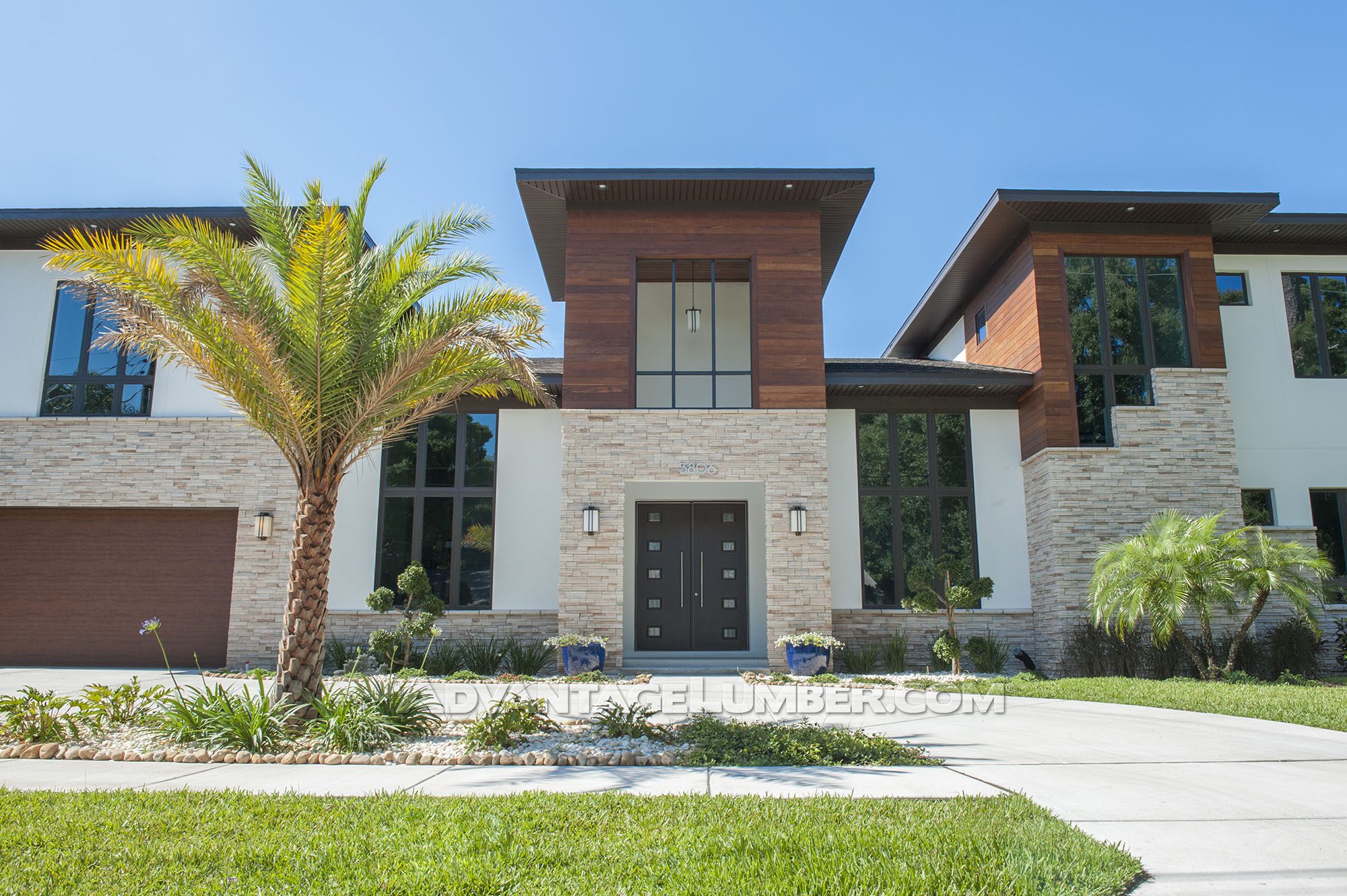
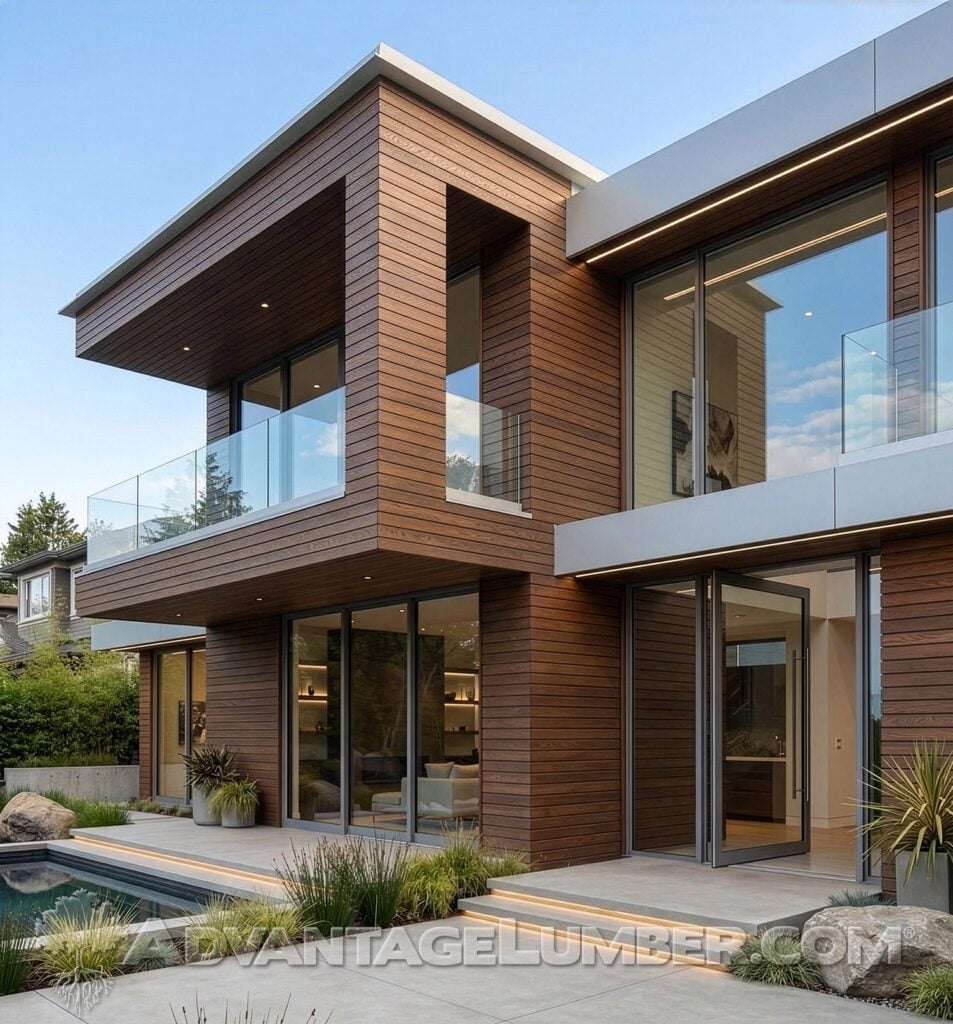
Rainscreen siding also gives architects a lot of freedom with the appearance of a building. The boards can be installed horizontally or vertically, and different species, widths, and profiles can completely change the look of the exterior.
The small gap between the boards can also create strong shadow lines. That’s one reason rainscreen siding works so well with modern architecture.
When you’re using real wood, you get something else that is difficult to reproduce with manufactured siding: natural variation. The grain isn’t perfectly uniform. Neither is the color. That’s part of what makes wood look like wood.
Why Use Hardwood for Rainscreen Siding?
Hardwood is a good choice when durability and appearance are both important.
Ipe is one of the most durable options and has a rich brown color and fine grain. Cumaru offers warm brown and reddish tones. Garapa is lighter, with golden to yellowish-brown coloring, while Tigerwood has the bold striping that gives it its name. Brazilian Redwood, Teak, and Mahogany give you still more options.
These woods also have natural resistance to rot and decay, which is a pretty important quality when you’re putting wood on the outside of a building.
Another nice thing about hardwood siding is that you don’t necessarily have to keep it looking the way it did on day one. Many hardwoods will naturally weather to a silver-gray color if left unfinished. If you prefer the original brown or reddish tones, a suitable hardwood oil can help maintain the color.
There are some tradeoffs. Dense tropical hardwoods can be harder on tools and may require predrilling depending on the siding profile and fastening system. You’ll also generally pay more for hardwood than you would for more common siding materials.
What Is Thermally Modified Wood?
Thermally modified wood is another option for rainscreen siding.
The wood is heat-treated to change some of its properties. The process improves dimensional stability and resistance to decay, while the finished product still looks and feels like real wood.
That’s useful on exterior siding because wood is always going to move as its moisture content changes. Reducing that movement can help the siding stay more stable through changes in humidity, rain, and temperature.
Thermally modified wood can also give a project a different look than tropical hardwood. It provides a lighter, more contemporary appearance.
Is Accoya Good for Rainscreen Siding?
Accoya is another option worth considering, especially when dimensional stability is high on the priority list.
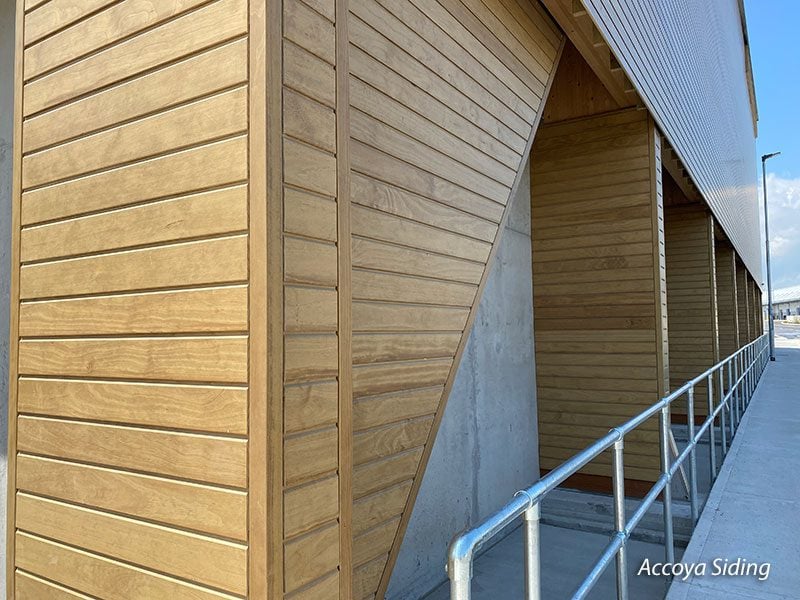
Accoya starts as real wood and goes through an acetylation process that changes how readily it absorbs water. As a result, it moves much less than many conventional woods. That can be useful when you’re trying to keep clean lines around windows, corners, trim, and other architectural details.
You also still get real wood grain.
That’s important because there are plenty of synthetic siding products available, but real wood has a look that’s difficult to duplicate. Accoya doesn’t have the same rich brown appearance as Ipe or Cumaru, but that’s not necessarily a drawback. If you want a lighter and more uniform appearance, Accoya may be a better choice.
What Should You Consider When Choosing Rainscreen Siding?
Think about how the siding will work with the roof, windows, trim, soffits, stone, brick, or other materials on the building. A wood sample can look great on its own and look completely different once it’s covering an entire wall.
You should also consider how the particular wood will be installed.
Tropical hardwoods such as Ipe and Cumaru are much denser than typical softwood siding. They need sharp carbide blades, quality drill bits, proper spacing, and the right fasteners.
The fastening system matters for appearance, too. Hidden siding fasteners leave the face of the boards free of exposed screw heads, which can give the finished wall a much cleaner look.
Is Rainscreen Siding Worth It?
A rainscreen gives water a place to drain and gives the wall an opportunity to dry. At the same time, it opens up a lot of design possibilities, especially when you’re working with natural wood.
Just don’t lose sight of the details behind the siding. Good flashing, drainage, ventilation, and installation are still essential.
If you’re considering hardwood, thermally modified wood, or Accoya for a rainscreen project, check out AdvantageLumber.com.
