
If you’re building a deck with pressure treated wood framing, is joist tape worth the extra money and time?
For most decks, probably yes. In fact, I think it usually is.
And I’ll admit, years ago, joist tape wasn’t something everyone automatically thought about. You framed the deck, installed the boards, and moved on to the next job.
At first, joist tape might not seem terribly important when you’re standing in the lumberyard with a cart full of framing lumber. After all, you already bought pressure treated wood, so shouldn’t that wood resist rot?
Well, it should.
And that’s what most homeowners probably assume, right? It says “pressure treated,” so you might figure you’ve checked the rot problem off the list.
However, although pressure treatment can help lumber fight rot and insects, it doesn’t make the wood waterproof, and it certainly doesn’t mean the wood will last forever.
Over the years, we’ve seen this firsthand. After more than 30 years of selling hardwood decking such as Ipe, we’ve seen what can happen to decks after a decade or two outdoors. Unfortunately, we’ve also watched plenty of beautiful deck boards outlast the framing underneath them.
Honestly, seeing that happen a few times can change how you think about framing.
The Phone Call We Hate Getting
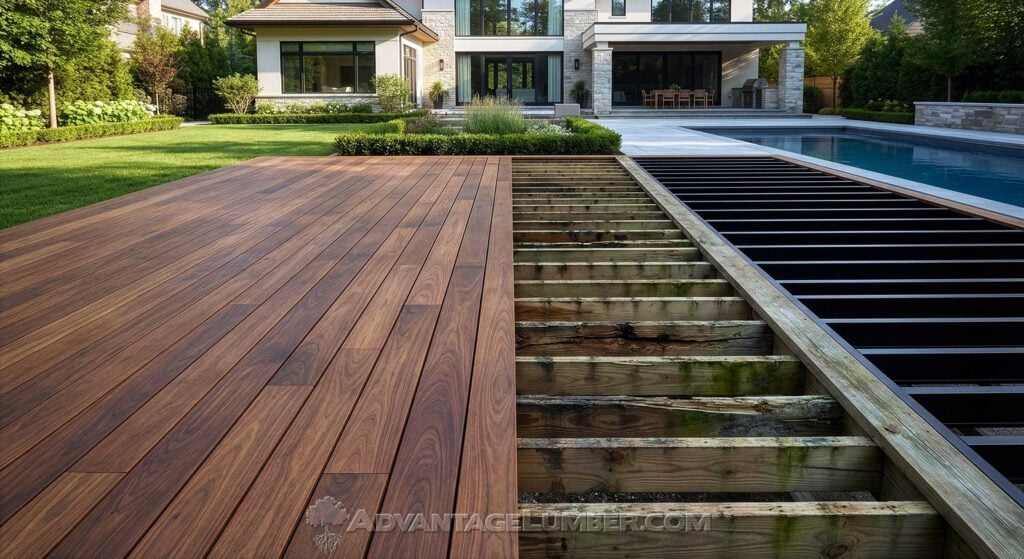
For more than 30 years, we’ve sold Ipe and other tropical hardwood decking.
Every so often, though, a customer comes back to us after roughly 10 years, give or take, and says something along these lines:
“My Ipe boards still look great, but my framing is rotting.”
And if you’ve worked around decks long enough, you probably know where this conversation might go next.
Needless to say, that can be a painful situation.
The customer bought Ipe because they wanted a deck that could last for decades. Indeed, Ipe is an exceptionally durable outdoor hardwood, and in the right conditions, it can potentially provide a very long service life.
Yet the decking often isn’t the problem.
That’s the frustrating part. You spent the money on good material, took care of it, and the part you can actually see may be doing exactly what you hoped it would do.
For example, you might pull up a 10 or 15 year old Ipe board, clean it, and find wood that still looks remarkably good. Meanwhile, the pressure treated joist underneath may show decay around fasteners, between doubled framing members, or along the top where the deck board sat against it.
I’ve always thought there’s something especially painful about pulling up a perfectly good hardwood board and finding mush underneath it. Nobody wants that surprise.
So, now what?
Unfortunately, you can have perfectly good decking sitting on a structure that may need major repairs or, in some cases, a complete rebuild.
And really, what good is a 40 or 50 year deck board if you potentially have to tear the deck apart after 10 or 15 years to replace what’s underneath it?
That’s why, although many homeowners focus on the decking first, I tell people to think about the whole deck as a system. In other words, don’t spend all your time asking whether your decking might last 30, 50, or more years while ignoring what’s holding it up.
Why Does the Top of a Joist Rot?
Simply put, water is the enemy.
Nothing fancy here. Give water enough time and enough places to hide, and it can usually find a weak spot.
When it rains, water falls through the gaps between your deck boards. Some water runs off quickly, while some may land directly on the framing.
Of course, that alone usually isn’t a disaster. Wood gets wet outdoors.
If getting wet once ruined lumber, we’d have a much bigger problem in the deck business.
The bigger problem, however, can start when water gets trapped.
Think about the top of a joist with a deck board fastened tightly against it. Water may work its way into that narrow space, although air and sunlight can have a much harder time getting there.
As a result, the surface may stay damp longer.
And anyone who has pulled apart an old deck knows those little protected areas can stay surprisingly nasty.
Then, on top of that, add a screw hole.
Every face fastened deck board drives a fastener through the top of the joist. Consequently, if water reaches that hole, it may get another pathway into the lumber.
It’s one of those details that can seem insignificant during construction. It’s just a screw hole. What could it hurt? Give it years of rain, though, and little details may start to matter.
At the same time, you can run into trouble around blocking, beams, ledgers, doubled joists, and other spots where two pieces of lumber sit tightly together. Although the rest of the frame may dry quickly, these areas can potentially stay wet much longer.
That’s why, over time, rot may show up in specific areas instead of spreading evenly across the entire frame.
What Does Joist Tape Actually Do?
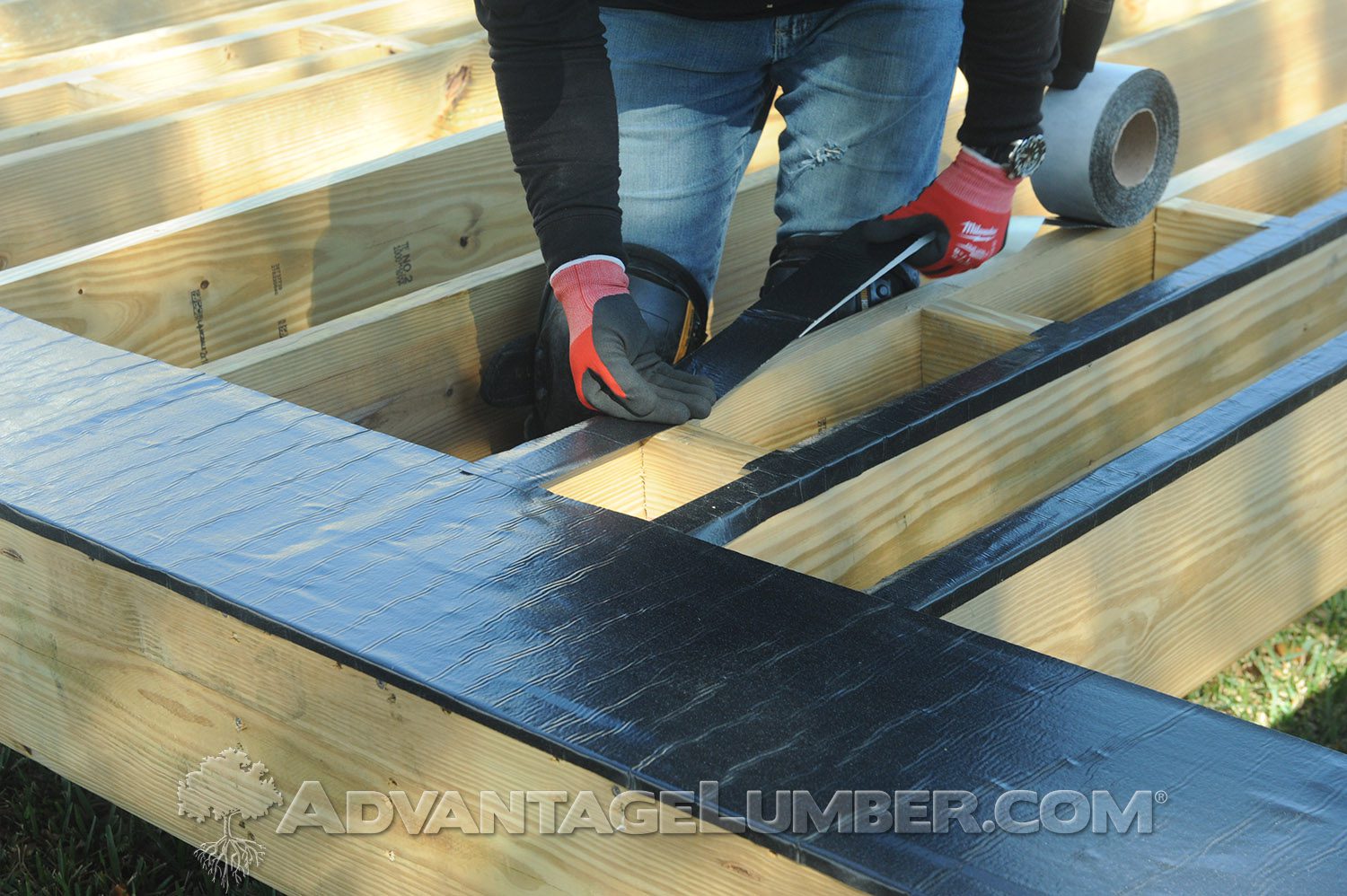
Basically, joist tape puts a water resistant barrier over the top of the joist.
Pretty simple.
And I like simple. Some of the best construction details aren’t complicated at all.
Before you install the decking, you apply the tape over the horizontal framing surfaces. Then, the deck boards sit over the tape instead of directly against the pressure treated lumber.
As a result, the tape can help keep water off the top of the joist.
Just as importantly, it may help protect fastener holes. Many quality tapes are designed to seal around screws as they pass through the material, so water may have a harder time following the fastener into the framing.
Likewise, ledger and flashing tapes work on the same basic idea, although wider products will probably make more sense on beams, ledgers, and other framing members.
For that reason, we’ve recommended this approach for years because horizontal framing surfaces can collect water more easily than vertical ones.
It isn’t glamorous, and you probably won’t show your neighbors pictures of your freshly taped joists. Still, sometimes the boring stuff may matter the most.
But Pressure Treated Lumber Is Already Treated
Now, this is probably the biggest argument against joist tape.
And, to be fair, I understand it.
Why buy pressure treated lumber and then spend more money protecting it? I’ve heard some version of that question plenty of times. Frankly, it sounds reasonable until you start looking at old decks.
The answer is fairly simple: treatment and waterproofing aren’t the same thing. Pressure treatment can help wood resist fungal decay and insect damage. However, although that treatment gives the lumber valuable protection, it doesn’t wrap every joist in an impenetrable raincoat.
So, the lumber can still get wet. Then it dries. Over time, it may still check and crack as it ages. Meanwhile, fasteners still penetrate it.
And depending on the deck design, climate, airflow, and exposure, some sections of the frame may stay wet much longer than others.
You don’t need to be a building scientist to see the potential problem. If one piece of wood dries quickly and another stays damp day after day, which one would you rather bet on 15 years from now?
That’s where joist tape comes in. Essentially, it may give those vulnerable horizontal surfaces another layer of protection.
Is Joist Tape Necessary?
Technically, no. You can generally build a code compliant pressure treated deck without covering every joist in tape, although local requirements and manufacturer instructions should always guide the project.
After all, people built decks for decades without it. People also built plenty of decks that eventually rotted. I’ve torn into enough old construction to know that “we’ve always done it this way” isn’t necessarily the argument people think it is.
However, I think there’s a better question:
Does spending a relatively small amount of additional money now make sense if it might help protect framing that could cost far more to replace later?
For most decks I work around, my answer would probably be yes. In particular, I like joist tape when you’re installing premium decking.
If you’re putting Ipe, Cumaru, Tigerwood, high end Trex, TimberTech, or Deckorators boards over pressure treated framing, you’ve already made a substantial investment in the surface of the deck.
At that point, are you really going to worry about spending a little more to potentially protect the structure underneath it?
So, although the decking gets most of the attention, the structure underneath probably deserves just as much thought.
Joist Tape Makes Even More Sense With Long Life Decking
In my experience, homeowners sometimes look at deck construction backwards. For starters, people will spend weeks comparing decking.
Should I buy Ipe?
Trex?
TimberTech?
Deckorators?
Cumaru?
PVC?
And believe me, I understand it. The decking is what you look at every day. It’s what your feet touch, what your patio furniture sits on, and what everyone notices when they walk into the backyard.
They’ll compare warranties, colors, scratch resistance, maintenance, heat, fastening systems, and expected lifespan.
Then, suddenly, framing day arrives. “Just use pressure treated.” I’ve always found that a little funny. We can debate deck board colors for two weeks, but somehow the structure holding everything up gets a five minute conversation.
Now, there’s nothing inherently wrong with pressure treated framing. In fact, it remains one of the most economical and practical ways to build a deck.
Even so, although it can work well in many applications, I would still ask whether it can keep up with decking that may last for decades.
More importantly, we’ve learned that lesson after more than 30 years of selling Ipe.
When someone calls and says their old Ipe boards are still in great shape but the structure underneath them is failing, you may start looking at a roll of joist tape differently.
Suddenly, the extra few dollars and a little more labor probably don’t seem very expensive.
Funny how a repair bill can change your perspective, isn’t it?
Where Should You Use Joist Tape?
At minimum, I generally like to protect the tops of the joists. However, don’t stop looking once you cover them.
In particular, pay attention to:
- Joist tops
- Beams
- Ledgers
- Blocking
- Doubled joists
- Triple joists
- Stair framing
- Areas around posts
- Other horizontal surfaces where water may sit
For broader surfaces, wider flashing or ledger tape will probably make more sense for beams and ledgers.
Still, although the material is relatively simple to use, careful installation matters. Wrinkles, gaps, and poorly sealed transitions may give water a path underneath the tape.
And yes, taping joists can get a little tedious. On a hot afternoon when you want to start laying deck boards, I understand the temptation to hurry through it.
Ultimately, you want the tape to help shed water away from the lumber instead of potentially trapping it.
So take your time. You’re probably never going to see this part of the deck again unless something goes wrong, and that’s exactly why it may be worth doing carefully.
Don’t Forget the Ledger
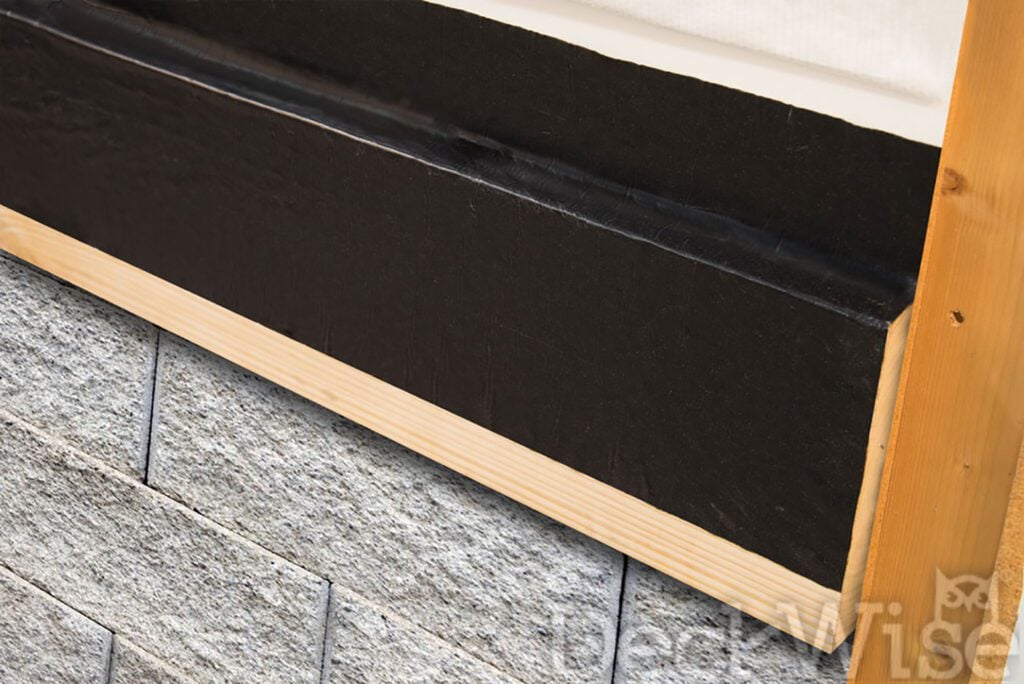
Speaking of water, if I had to pick one piece of deck framing where I absolutely don’t want water problems, the ledger would sit near the top of the list.
After all, the ledger connects an attached deck to the house. Once water starts getting into the house, you may not be talking about just a deck repair anymore. That conversation can get expensive in a hurry.
Because of that, although moisture can damage any part of a deck, water around the ledger may cause bigger problems because it can potentially reach the home’s structure.
However, joist tape shouldn’t replace proper ledger flashing. Those are two different jobs. Instead, start with proper flashing details. Then use compatible tape where it makes sense as another layer of protection.
In short, don’t try to fix bad flashing with a roll of tape. I know everybody loves a shortcut, especially when you’re trying to finish a job before the weekend. This probably isn’t the place for one.
What About Steel or Aluminum Deck Framing?
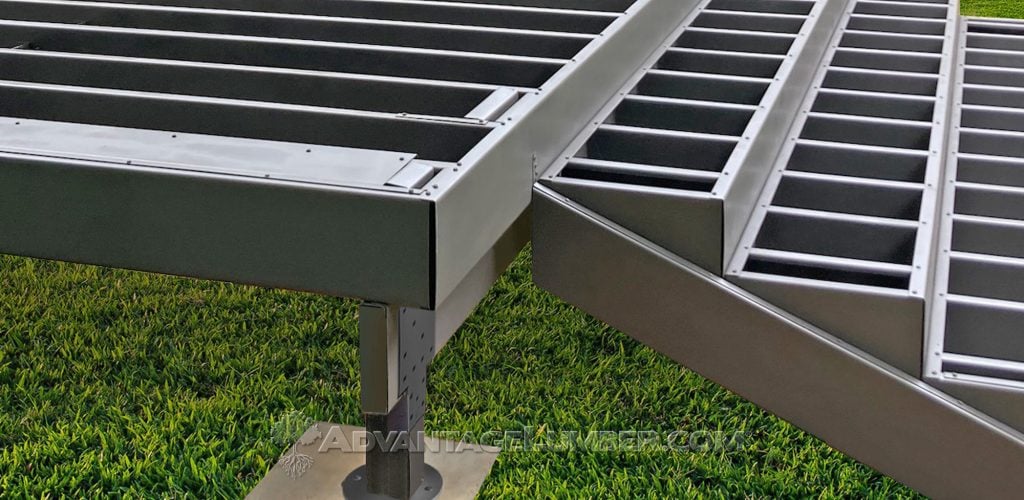
Of course, there’s another way to approach this problem: consider moving away from wood framing.
In recent years, steel and aluminum deck framing have become much more interesting options, especially on high end projects where the homeowner expects the deck to stay in place for decades.
Naturally, the upfront cost will usually run higher than standard pressure treated framing. And yes, there can be a little sticker shock. I won’t pretend otherwise.
Even so, although metal framing costs more, pairing long lasting decking with long lasting framing can make a lot of sense.
For example, if I’m building an expensive Ipe deck on a luxury home and the owner wants the structure to last as long as reasonably possible, I’d certainly discuss metal framing.
Personally, I like the logic of matching the expected life of the framing as closely as you reasonably can to the expected life of the decking. Why put a marathon runner on legs you expect to give out halfway through the race?
For many homeowners, though, pressure treated framing will probably remain the practical choice. And that’s where joist tape may really earn its keep.
Don’t Expect Joist Tape to Fix Bad Construction
That said, joist tape isn’t magic. I wish there were a roll of tape that could fix every bad deck detail. It would make life a lot easier.
Although it can help protect pressure treated framing, it can’t rescue a poorly built deck. For example, if your deck doesn’t drain properly, lacks adequate airflow, uses poor flashing details, or has framing buried against wet soil, tape alone probably won’t solve the problem.
In the end, good deck construction still matters. Water needs somewhere to go and air needs room to move.
At the house, flashing needs to direct water away from the structure. Meanwhile, posts need proper footings.
And, of course, fasteners and connectors need to suit the environment and the materials you’re using.
None of this stuff makes for an exciting picture on Instagram, but it can help separate a deck that simply looks good when you finish it from one that still works years later.
So, think of joist tape as one potentially useful part of a good moisture management strategy, not as a substitute for sound carpentry.
So, Is Joist Tape Worth It?
For pressure treated deck framing, I think joist tape can be cheap insurance. Granted, you don’t see it after the deck gets built. Nobody comes over for a barbecue and says, “Wow, look at that beautiful joist tape.”
If somebody does, invite them back. You’ve found the one person who really appreciates deck framing.
But, of course, that’s not the point. In fact, the best construction details are often the ones nobody notices.
After 30+ years of selling Ipe and other long lasting hardwood decking, we’ve learned to pay attention to what happens underneath the boards. Over the years, we’ve had customers come back roughly a decade after building their deck with an unfortunate problem: their Ipe decking is still perfectly usable, but parts of their pressure treated framing have started to rot.
And every time you hear that story, you can’t help thinking about how much easier it might have been to add a little extra protection while the framing was sitting there completely exposed.
As a result, they may have to pull up good decking so they can repair or rebuild the structure underneath it.
And frankly, that’s a job nobody wants.
Have you ever carefully pulled up expensive hardwood decking, stacked it, rebuilt the frame, and then tried to put everything back together? If you have, you already know why I’d rather spend a little more time on the framing the first time around.
So, if you’re already building the deck, I’d probably cover those joists. Likewise, protect the beams and ledger where appropriate.
Above all, pay attention to flashing. Then put your decking down.
You may never know whether that joist tape added five years, 10 years, or more to the life of the framing. There are simply too many variables to make that promise. Climate, exposure, ventilation, lumber quality, deck design, workmanship, and maintenance can all affect how long a frame lasts. Quite frankly, if you never have to find out, I’d call that a pretty good outcome.
In the end, although a roll of joist tape adds a little cost up front, it may cost very little compared with tearing apart a deck full of perfectly good Ipe boards because the lumber underneath them failed first.
