
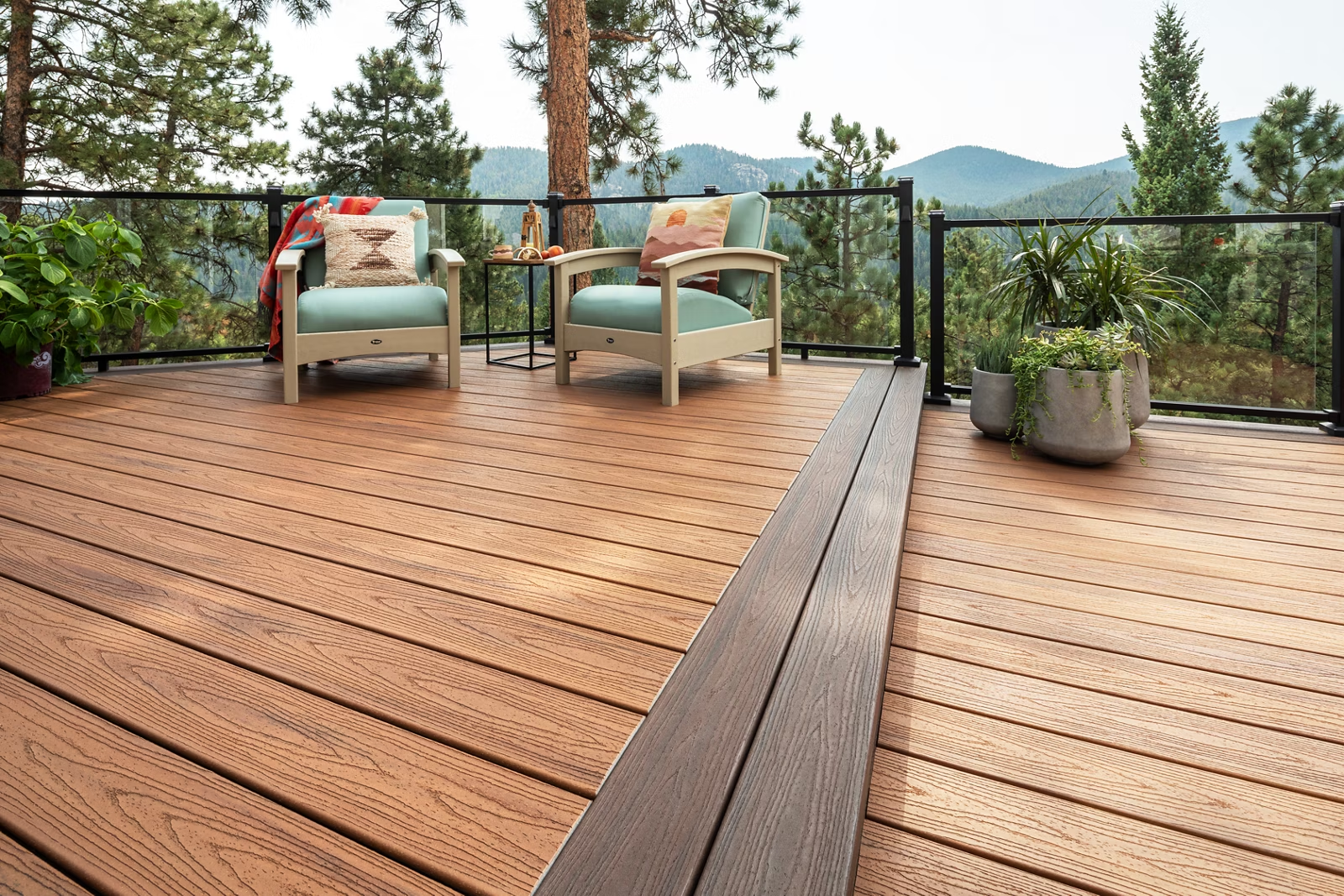
Most homeowners start a Trex deck project with one question: How many deck boards do I need?
You can measure the deck’s length and width to find its square footage. Though this first step looks simple, square footage tells only part of the story. Board length, deck layout, joist spacing, stairs, picture frames, and cutting waste can all change your final material list.
Use our Trex deck board calculator to get a starting estimate for standard Trex boards and Trex Hideaway® hidden fasteners.
Project planning tool
Trex Deck Material Calculator
Estimate standard 5.5-inch-wide deck boards and Trex Hideaway Universal Hidden Fasteners.
Deck board options
Compare the estimated quantity for each standard board length.
Planning note: Board quantities are minimum estimates based on total lineal footage of standard 5.5-inch boards. Fasteners are estimated from Trex coverage guidance (90 clips per 50 sq. ft. at 16-inch joist spacing), scaled for 12-inch spacing. Complex shapes, stairs, picture frames, breaker boards, butt joints, unusable offcuts, and start/stop fasteners may require additional material. Confirm your layout and current Trex installation instructions before ordering.
Before you order anything, work through the following details.
Measure the Deck Carefully
For a rectangular deck, multiply the length by the width.
A deck measuring 20 feet long by 16 feet wide contains:
20 × 16 = 320 square feet
For an irregular deck, divide the design into smaller rectangles. Calculate each section, then add the totals.
Leave out open areas where you will not install decking. Include landings and other decked areas outside the main rectangle.
Measure the frame itself whenever possible. Although building plans provide a useful starting point, builders sometimes adjust the frame during construction. An inch or two may not change the square footage much, but it can affect how your boards fit.
Decide Which Way the Deck Boards Will Run
Deck boards normally run across the joists, not along them. Your framing layout therefore controls the direction of the decking.
Board direction also affects which lengths will work best.
Trex commonly offers deck boards in 12 foot, 16 foot, and 20 foot lengths. If your deck measures 16 feet in the direction of the boards, 16 foot boards may span it without butt joints. If it measures 18 feet, 20 foot boards may work better because your installer can trim them to fit.
Short boards may cost less per piece, though they can create more seams and require more framing. Sometimes the cheapest board creates the more expensive layout.
Choose a length that spans the deck with as few butt joints as possible. You will usually get a cleaner surface and an easier build.
Use the Actual Board Width
A standard Trex 1 × 6 deck board measures approximately 5.5 inches wide. It does not measure a full six inches.
Our calculator uses the actual 5.5 inch width to estimate lineal footage. Although the half inch difference sounds small, it adds up across an entire deck. If you calculate with a full six inch width, you will probably order less boards than needed.
You must also leave gaps between the boards. Trex Hideaway fasteners create consistent gaps between compatible grooved boards. These gaps help water drain and give the boards room to move.
Choose the Trex Collection Before You Order
Trex offers several collections at different prices. Options may include Trex Enhance®, Trex Select®, Trex Transcend®, Trex Transcend® Lineage®, Trex Signature®, and their new specialty PVC line Trex Refuge®.
Set your budget first, then compare appearance, warranty, board profile, and performance.
An entry level collection may suit a homeowner who wants composite decking at a lower price. Premium collections generally offer more complex colors, richer grain patterns, better anti-slip textures, longer warranties, or extra performance features.
Trex Transcend Lineage, for example, uses heat mitigating technology. This feature can help on a deck that receives strong afternoon sun. Although Lineage boards can still become hot in direct sunlight, they resist heat buildup better than many older composite products.
Never choose a color from an online photo alone. Order samples and place them next to your house. Look at them in morning sun, afternoon sun, and shade. A gray board may look blue beside one siding color and brown beside another.
Consider Heat Before Choosing a Dark Color
Dark decking often looks rich and dramatic, though it usually absorbs more heat than light decking.
Heat matters around pools, in southern climates, and on decks without shade. A dark deck can become uncomfortable for bare feet, children, and pets.
For a sunny deck, consider a lighter color or a Trex collection with heat mitigating technology. If you still want a dark accent, use it around the perimeter instead of across the entire surface.
Place a sample outside in direct sun before you commit. Let it sit for a while, then carefully test the surface temperature.
Plan Picture Frames and Breaker Boards
A picture frame creates a border around the deck. It hides the ends of the field boards and gives the project a finished look.
Although picture frames look great, they require extra decking and framing. You may need square edge boards for the border, grooved boards for the field, more blocking, and color matched screws or plugs.
A breaker board runs through the deck and separates two fields of decking. Builders often use one when a single board cannot span the full deck. A breaker board can replace a long row of staggered butt joints, though your frame must support it properly.
Our calculator estimates the main deck surface. Add picture frames, breaker boards, and decorative patterns separately.
Choose Grooved and Square Edge Boards
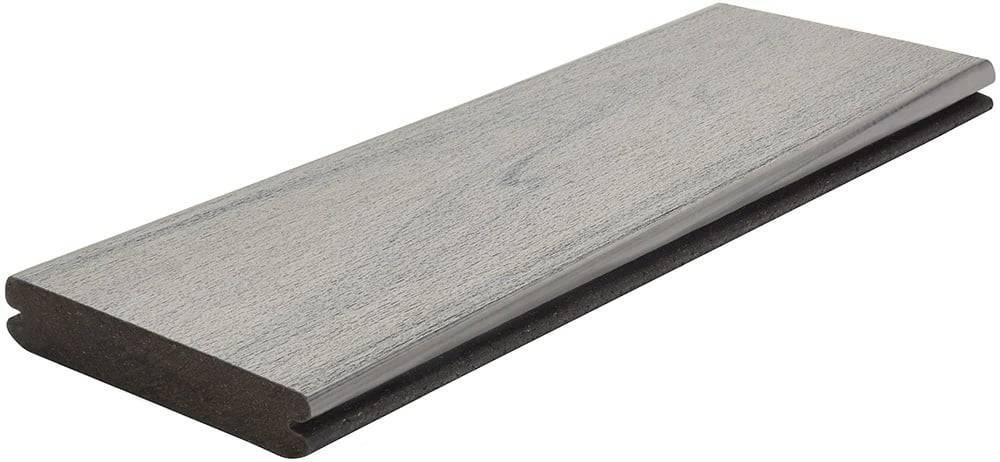
Grooved Trex boards accept hidden fasteners along their sides. The clips sit below the walking surface, so you do not see screw heads across the field.
Square edge boards work better wherever people can see the edge or hidden clips cannot reach it. Builders commonly use them for:
- Picture frame borders
- Stair treads
- Outside deck edges
- Fascia transitions
- Areas where clips cannot fit
Most Trex decks use both profiles. If you order only grooved boards, your installer may struggle to finish the perimeter cleanly.
Mark each board profile on your deck plan before you order.
Check the Joist Spacing
Joist spacing affects how the deck feels and how many fasteners you need.
Many standard Trex layouts use joists no more than 16 inches on center. Diagonal decking may require 12 inch spacing. Stairs and detailed patterns may need even closer framing.
Closer joists mean more places where each board crosses the frame. You will therefore need more hidden fasteners.
Our calculator lets you choose 12 inch or 16 inch joist spacing and adjusts the fastener count.
Do not choose wider spacing just to save money on clips. Follow the requirements for your Trex collection, board angle, and project type. Your local building code may also require closer spacing.
Inspect an Existing Frame Before You Cover It
If you plan to replace old wood boards with Trex, inspect the frame before you buy the new decking.
Remove enough old boards to see the joists, beams, posts, ledger, and hardware. Look for rot, cracks, insect damage, loose connections, corrosion, and areas where water collects.
Check the top of the frame with a long straightedge or string line. Composite decking follows dips and high spots in the joists. If the frame rises and falls, the finished deck may look wavy.
Older decks sometimes use 24 inch joist spacing. Although thick wood boards may have spanned this distance, standard composite boards generally cannot. You may need to add joists between the existing ones.
Do not hide a weak frame under expensive new decking. You will only delay the repair while making it harder and more costly.
Protect Wood Framing from Water
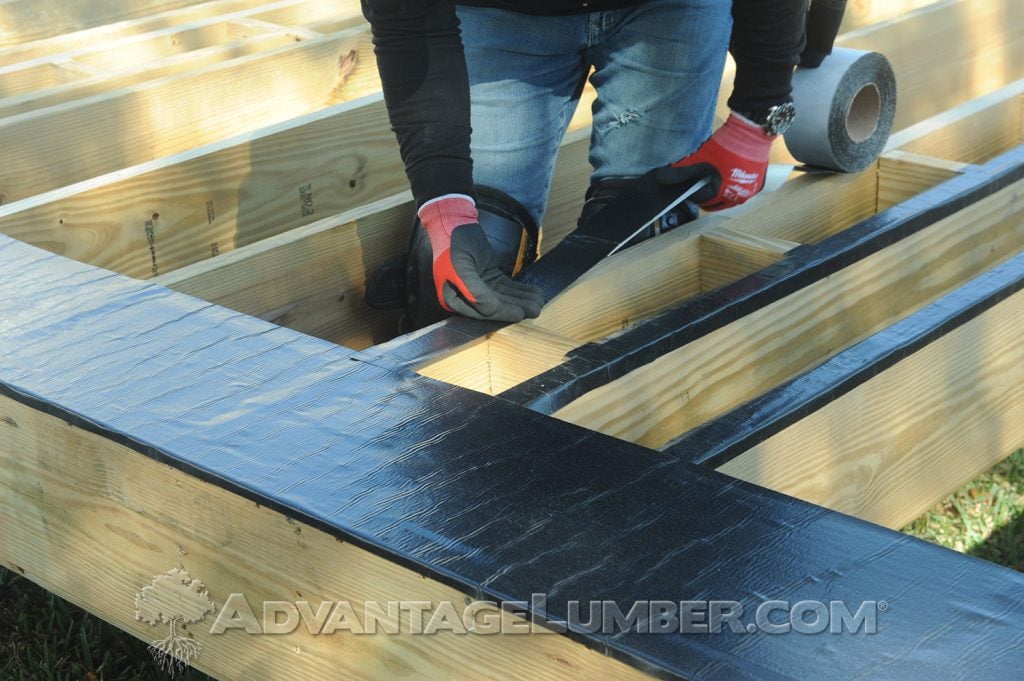
If you use pressure treated framing, apply joist tape and ledger tape to its horizontal surfaces.
Water can collect where the deck boards sit on the joists. It can also enter old screw holes and remain trapped between pieces of lumber. Joist tape helps keep this water away from the wood.
Though tape adds a little cost, replacing a rotten frame costs far more. Apply it before you install the decking, while you can still reach every joist and beam.
Estimate Trex Hideaway Hidden Fasteners
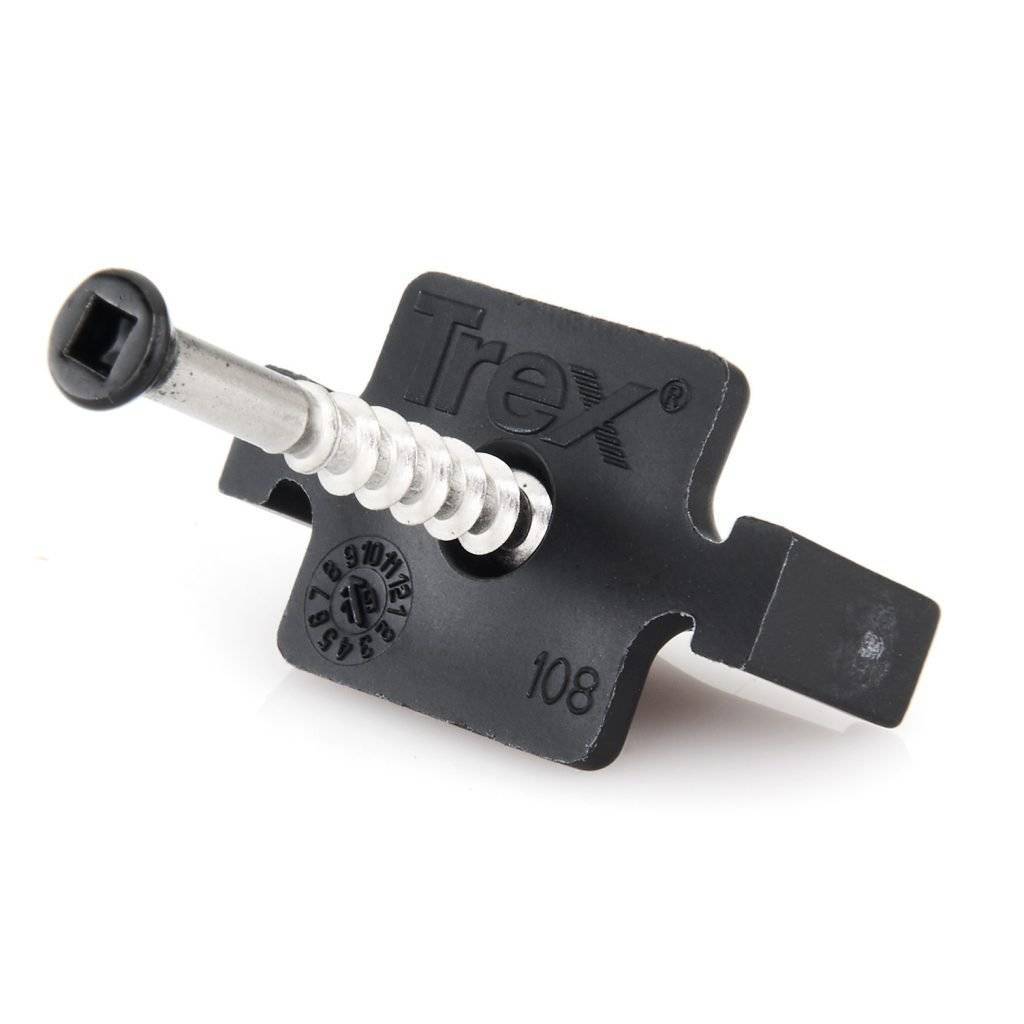
Trex commonly sells Hideaway Universal Hidden Fasteners in 90 count boxes. One box covers approximately 50 square feet when the joists sit 16 inches on center.
A deck with 12 inch joist spacing needs more clips because each board crosses more joists.
Our calculator adjusts the clip estimate for the joist spacing you choose. It also shows how many 90 count boxes you may need.
Although the calculator covers the main deck field, it may not include every fastener. Butt joints, breaker boards, picture frames, stairs, start clips, plugs, and special framing can all add hardware.
Add a Realistic Waste Factor
Almost every deck order needs extra material.
Even a simple rectangle creates cut ends. You may also find a damaged board, reject a board for a prominent area, or make a cutting mistake. A complicated layout creates even more waste.
Use these percentages as a starting point:
- 5 percent for a simple rectangular deck
- 10 percent for a typical deck
- 15 percent or more for diagonal boards, stairs, picture frames, or complex shapes
These figures provide a guide, not a rule. A 16 foot deck with 16 foot boards may create very little waste. A deck with several angles and short sections may create much more.
Order enough material to finish the job without depending on every off cut. If you order a few replacement boards later, the new boards may come from a different production run and show slight color differences. You may also pay another delivery charge.
Keep a few extra boards for future repairs. Store them flat, support them well, and keep them protected. Trex has discontinued colors, textures etc… over the years and every year we see homeowners trying to get s replacement deck board for their 5 year old deck and Trex no longer makes that color. This is a very common mistake homeowners make when ordering synthetic decking materials.
Include the Stairs
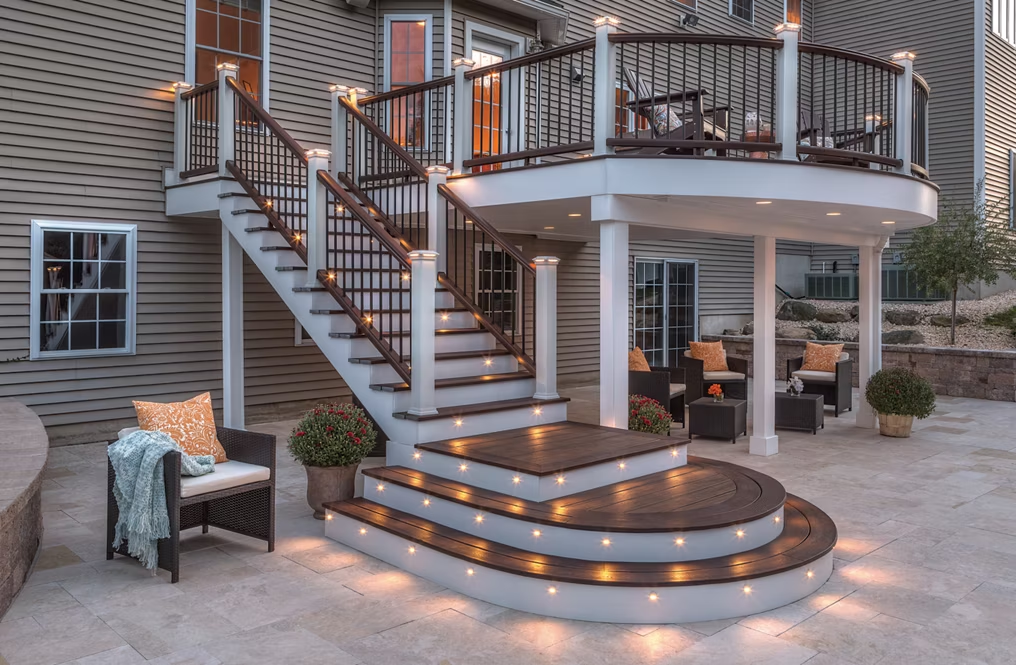
Homeowners often forget the stairs during their first estimate.
Each tread may require two or more deck boards, depending on its depth and design. You may also need square edge boards, fascia, plugs, color matched screws, and extra framing.
Stair stringers often sit closer together than the main deck joists. Check the Trex requirements for your board before you build the stairs.
Calculate every tread and landing separately, then add those materials to your order.
Include Fascia, Railing, and Trim
Deck boards make up only one part of a complete deck.
Your project may also need:
- Fascia boards
- Stair risers
- Railing posts
- Rails and balusters
- Post sleeves and caps
- Stair railing
- Hidden fasteners
- Starter clips
- Color matched screws or plugs
- Joist and ledger tape
- Framing hardware
- Lighting and wire
- Under deck drainage products
Railing posts and stair openings can change the framing layout. Decide where they will go before you build the frame or order materials.
Allow for Movement, Drainage, and Airflow
Trex decking does not move exactly like wood. Composite boards mainly expand and contract along their length as temperatures change.
Leave the proper gaps at board ends, walls, and posts. Trex may require different gaps at different temperatures, so check the current instructions for your exact product.
Give water a clear path away from the deck. Leaves and dirt can clog the gaps, especially on low decks.
Trex requires less upkeep than many wood products, though no outdoor deck stays clean by itself. Sweep away debris and wash the surface as needed.
Plan for Delivery
Trex boards are long and heavy. Most homeowners cannot safely carry a 20 foot board in a pickup truck.
Before delivery day, choose a flat place where you can unload and store the material. Support the boards across their full length. Do not let them hang off the end of the pile.
Freight companies typically deliver with a full size tractor trailer. Confirm that the truck can reach your property, and arrange enough help to unload the boards safely. A tractor trailer can not back into your driveway so it will be a curbside hand unload unless you specify otherwise.
Check the order as you unload it. Confirm the quantity, color, profile, and length. If you find damage or missing material, note it on the delivery receipt.
Check Permits and Building Codes
A deck calculator estimates materials. It does not design a safe structure.
Your local building department may regulate footings, ledgers, beams, joist spans, guards, stairs, handrails, and lateral connections. Snow, wind, soil, and deck height can also affect the design.
Take extra care with elevated decks because a framing mistake can cause serious injuries.
If you have doubts about the frame, ask a qualified deck builder, engineer, or building official for help. A deck must do more than look good. It must safely carry everyone who uses it.
Where’s the Best Place to Buy Trex Decking?
Buy Trex decking from a supplier who can help with the whole project, not just the deck boards.
AdvantageLumber.com sells all Trex collections, colors, profiles, lengths, fasteners, railing, lighting and more. Our team can also help homeowners assemble complete Trex deck packages.
A complete package may include decking, fascia, railing, hidden fasteners, screws, plugs, joist tape, and other materials for your design. This approach helps coordinate the colors and reduces the chance that you will forget an important part.
AdvantageLumber.com delivers complete Trex deck packages directly to homes and job sites. Home delivery proves especially helpful when you need 16 foot or 20 foot boards and cannot transport them safely.
Customers may also pick up orders or view samples at participating Advantage Lumber locations. Before you order, talk with one of our experienced sales representatives about your measurements, board direction, stairs, picture frame, railing, and framing.
Although a calculator gives you a strong starting point, an experienced person should review the material list before the order ships.
Final Thoughts
Most costly deck mistakes begin before anyone installs the first board.
Poor measurements, weak framing, forgotten stairs, too few fasteners, and no allowance for waste can delay the job and raise the cost.
Use the Trex deck board calculator for your first estimate. Then draw the full layout, choose your collection and color, confirm the joist spacing, add special features, and review the current Trex instructions.
A little extra work now can prevent a half finished deck later. After all, nobody wants to discover one missing 20 foot board on Saturday afternoon.
