
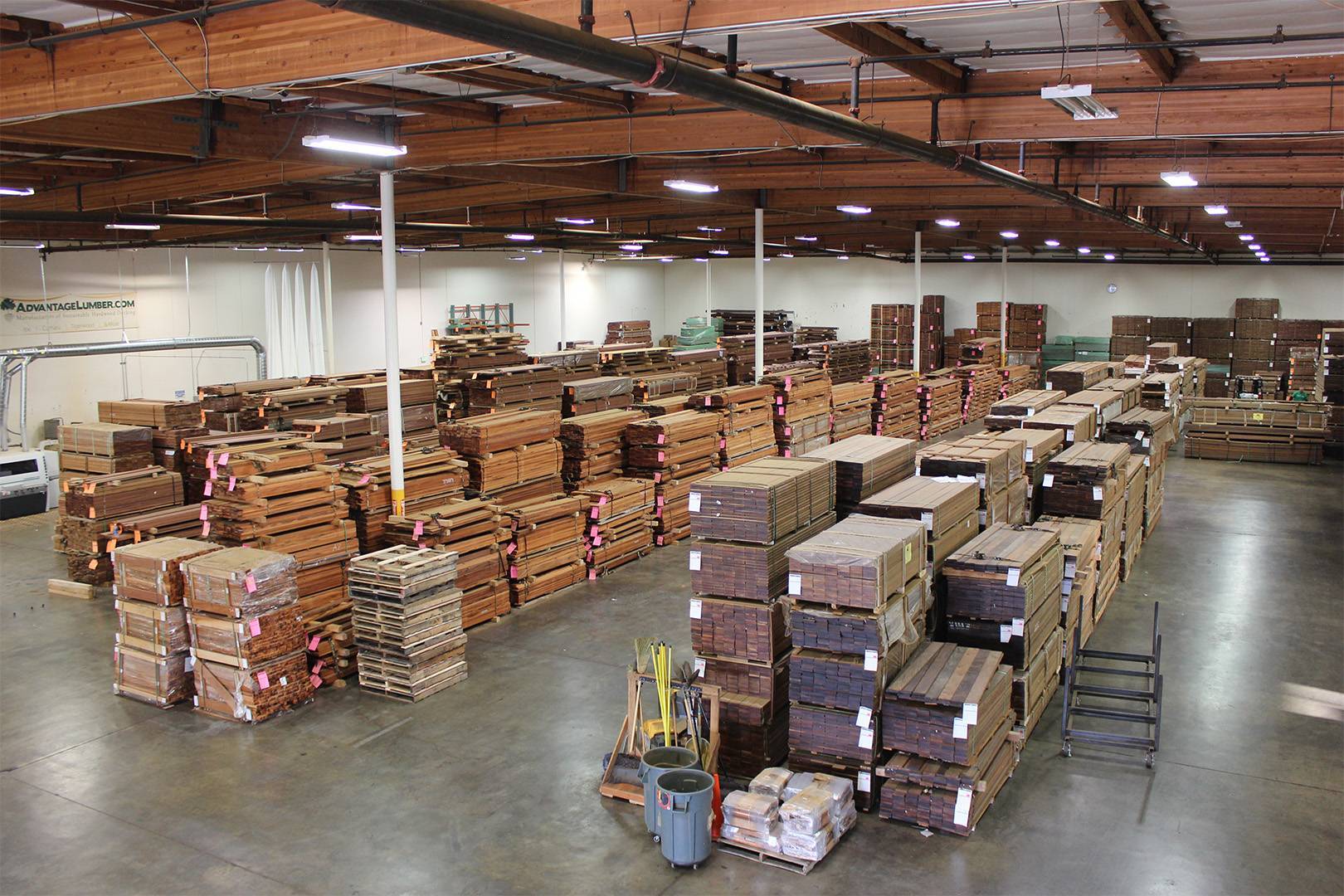
Ordering lumber online has changed quite a bit over the years. I can remember when ordering specialty lumber often meant making phone calls, waiting for someone to check a rack, and hoping they actually had what you needed. In fact, you can now order everything from Ipe decking and Western Red Cedar siding to hardwood flooring, live edge slabs, and specialty trim without ever setting foot in a lumberyard.
Of course, that’s convenient, especially when you’re looking for something your local yard simply doesn’t stock. And let’s face it, many local lumberyards probably aren’t going to have a stack of 16 foot Ipe or some oddball hardwood molding profile sitting out back.
However, lumber isn’t a box of screws. Instead, you’re buying a natural building material that can come with different grades, lengths, widths, moisture levels, and milling profiles. On top of that, you may be dealing with freight when boards run 8, 12, 16, or even 20 feet long. That’s a little different from having a new drill dropped on your porch, isn’t it?
Over the years, after more than 30 years of selling and shipping lumber, we’ve seen most of the mistakes people tend to make. I’ve seen orders where someone planned everything beautifully and others where, well, you could probably tell somebody started shopping before they finished measuring. It happens. Fortunately, you can avoid many of these problems if you spend a little extra time planning your order.
So, here are some of the biggest mistakes you may want to watch for when ordering lumber online this season. None of this is particularly complicated stuff, either. A lot of it may simply come down to slowing down for a few minutes before you place the order.
1. Ordering the Exact Amount Your Project Requires
First of all, this is probably the first mistake I’d warn anyone about. I’ve built enough projects to know that the number you get on paper and the amount you actually use may not match perfectly.
For example, let’s say you’ve calculated that your deck requires 1,000 square feet of decking. Even so, you probably shouldn’t order exactly 1,000 square feet. Could you get lucky and make it work? Sure. Would I plan a job that way? Probably not.
After all, lumber isn’t tile or sheet goods. Inevitably, you’re going to make cuts. For instance, you’ll probably have end cuts, stair cuts, picture framing, defects you decide to cut around, and boards whose color or grain might look better somewhere else on the project. And once you start sorting boards on a nice hardwood deck, you may get a little picky. I know I do.
Then, of course, there’s the layout itself. That’s where the perfect estimate on paper can sometimes start falling apart.
In reality, a 12 foot board doesn’t always magically fit into a 12 foot section of deck with zero waste. Wouldn’t that be nice? As a result, anyone who has actually laid out a deck probably knows how quickly those little pieces of waste can start piling up. By lunchtime, you might have a respectable little scrap pile next to the saw.
For that reason, we generally recommend that you order extra material for waste, although the exact amount can depend on the project. On one hand, a straightforward rectangular deck may need relatively little extra material. On the other hand, a complicated deck with angles, stairs, breaker boards, and picture framing will probably need more. Personally, I’d rather explain why we have three boards left over than explain why the crew may have nothing to install tomorrow morning.
Likewise, the same general idea applies to siding, ceilings, flooring, and trim. Trim can be especially sneaky because a few bad cuts around doors and windows may eat up material faster than you’d expect.
Ultimately, it’s usually much cheaper to have a few boards left over than to discover you’re six boards short near the end of the job. Besides, keeping a couple of spare boards can be a pretty good idea anyway.
2. Assuming Nominal Dimensions Are Actual Dimensions
Next, this one can cause plenty of confusion. And if you’ve worked around lumber for years, it’s easy to forget how strange nominal sizing might sound to somebody buying lumber for the first time.
For starters, a 1×6 isn’t actually one inch by six inches. Makes perfect sense, right? Welcome to the lumber business.
Although exact finished dimensions can vary by product, lumber commonly uses nominal dimensions. Because of that, you’ll probably want to account for the actual dimensions when you calculate coverage. I’ve seen people do perfectly good math with the wrong starting number, and unfortunately, the calculator probably isn’t going to warn you about that.
For example, many decking products sold as 1×6 may have a finished width around 5 1/2 inches. So, if you calculate your project as though every board covers six full inches, you could come up short.
Similarly, tongue and groove products can create another issue because the overall board width may differ from the exposed face you see after you install it. I’ve had this conversation more times than I can count: “But the board measures this wide.” Sure, but how much of it will actually show once the next board goes in?
Before you order, it’s usually worth checking the actual finished dimensions and coverage of the product. It’s one of those boring details nobody gets excited about until it potentially saves the job.
Believe me, that little detail can save you a surprisingly large headache. And I’ll take five minutes with a tape measure over that headache any day.
3. Choosing Board Lengths Without Planning the Layout
Along the same lines, people naturally look at price per linear foot or price per square foot when they compare lumber. Although that’s important, board length can matter too. Sometimes I’d argue it may matter almost as much as the price when you’re trying to control waste.
For instance, suppose you’re building a 16 foot wide deck. At first, ordering mostly 8 foot boards might look economical, although you could quickly discover how many butt joints you’ve created. Now you may have more seams to think about, more layout work, and potentially a deck that doesn’t look the way you pictured it.
On the other hand, ordering every board at 16 feet isn’t automatically the best answer either. Depending on your layout, you may be able to combine different lengths and cut waste considerably. This is where a little common sense can beat simply clicking the longest board available.
So, before you place the order, consider sketching the project. It doesn’t need to look like an architect drew it, either. I’ve planned plenty of things with a pencil, a tape measure, and a piece of scrap paper.
Think about it: Where will your joists land? Where are your stairs? Are you installing a picture frame border? Will you use a breaker board? Where do you want seams? And here’s another question: where might all those cutoffs actually be useful?
Quite often, a few minutes with a pencil, paper, and calculator can potentially save hundreds of dollars in unnecessary lumber. That’s probably a pretty good return on ten minutes of work.
For larger projects, an experienced lumber supplier may also be able to help. After all, we’ve looked at enough deck and siding takeoffs over the years to spot layouts where you’re likely to create unnecessary waste. Sometimes another set of eyes may catch something obvious that you’ve been staring at for two hours. We’ve all been there.
4. Forgetting That Hardwood Is a Natural Product
Now, if you’re ordering Ipe, Cumaru, Tigerwood, Garapa, Brazilian Redwood, Teak, or another natural hardwood, you probably shouldn’t expect every board to look identical. Personally, I wouldn’t want them to. If I wanted every board to look exactly the same, I’d probably choose a manufactured product.
Actually, that’s part of what can make a hardwood project look so good. You may get real grain, real color variation, and boards with their own character. That’s generally the whole point.
For example, Cumaru can show considerable natural color variation. Meanwhile, Tigerwood gets its name for a reason. Likewise, Teak can vary from board to board, and even Ipe may range from olive brown to darker chocolate tones. Put a dozen Ipe boards next to each other and you’ll probably find a few favorites pretty quickly.
So, if you want every deck board to match the sample photograph on your computer screen exactly, natural wood might frustrate you. And remember, computer screens may not show wood color perfectly anyway.
Instead, consider opening several bundles before you start and laying out the boards. Have a look at them. Move a couple around. This probably isn’t wasted time.
Personally, I usually prefer to mix boards throughout the project rather than install one bundle at a time. That way, you can spread the natural color and grain throughout the deck, and you’ll often end up with a much better looking project. I’ve seen the difference this can make, and to my eye, it’s worth the extra effort.
5. Waiting Until Installation Day to Inspect Your Lumber
Fortunately, you can usually avoid this mistake altogether. There’s really no good reason to discover an issue five minutes before the saw starts running if you can catch it earlier.
Simply put, when your lumber arrives, inspect it. Yes, I know everybody’s busy. It’s still probably worth doing.
In other words, don’t leave the entire shipment wrapped up for three weeks and finally open it the morning your contractor shows up. You’d probably be surprised how often some version of this happens.
Instead, check the species, profile, dimensions, quantities, and lengths. At the same time, look for obvious freight damage as well. Grab your paperwork, grab a tape measure, and spend a few minutes going through it.
If something isn’t right, you may be able to deal with it before the saws come out. Wouldn’t you rather make that phone call today than while three guys are standing around waiting tomorrow?
This can become especially important during the busy building season. After all, decking, siding, and other outdoor projects can pile up quickly in spring, summer, and early fall. Obviously, you probably don’t want to find out you’re missing something when the crew is already standing in your driveway. Those guys probably aren’t going to be thrilled about spending the morning admiring your unopened lumber bundle.
6. Ignoring Freight Delivery Requirements
Here’s another thing to remember: long lumber usually doesn’t ship like a package from Amazon. I’ve said this to customers plenty of times because the difference can really catch people off guard.
Instead, deck boards, siding, molding, and other long building materials often travel by freight carrier. Although homeowners may expect something similar to ordinary parcel delivery, freight can work quite differently. A truck carrying bundles of 20 foot lumber probably needs a little more room than the guy delivering your socks.
Because of that, you’ll want to pay attention to the delivery instructions when you order. Don’t just scroll past that part.
Beforehand, make sure a large truck can reach the delivery location. In particular, think about narrow roads, low branches, gates, steep driveways, job site conditions, and where you might safely unload the lumber. I’ve seen beautiful houses at the end of driveways where you take one look and think, “Well, that truck probably isn’t going up there.”
Likewise, if you’re sending material directly to a job site, you may want to make sure somebody there knows it’s coming. Nothing makes a delivery more interesting than everyone asking, “Who ordered this?”
Over the years, we’ve shipped long length building materials directly to homes and job sites, and good communication can make these deliveries considerably easier. It’s not glamorous advice, but good communication tends to solve a lot of problems in construction.
7. Not Checking Your Shipment for Freight Damage
Along those same lines, you’ll want to inspect the shipment when it arrives. I know I just talked about inspecting lumber, but freight damage probably deserves its own mention.
Remember, long lumber is heavy. And frankly, a bundle of dense tropical hardwood is really heavy. If you’ve ever tried moving a stack of Ipe by hand, you probably know exactly what I’m talking about.
Although suppliers and freight carriers take precautions, damage can potentially happen while material travels hundreds or thousands of miles. That’s simply one of the realities you may face when moving long, heavy building materials around the country.
So, look over the shipment before you accept it. If you see obvious damage, you’ll want to document it. Then, take pictures and note the damage according to the delivery instructions. Everybody has a phone in their pocket now, so take the pictures. You may be glad you did if there’s a question later.
Most importantly, don’t assume you’ll remember to deal with it later. Once the project gets moving, “I’ll do that later” can have a funny way of becoming “I completely forgot about that.”
8. Ordering Your Lumber Too Late
Meanwhile, here’s another problem we sometimes see during peak building season: someone schedules a contractor for Monday and orders the decking on Friday. You can probably guess where this might be going.
Please, don’t do that to yourself. And you probably shouldn’t do it to your contractor, either.
Even when we have material in stock, we still need time to process, pick, package, and ship your order. On top of that, freight carriers may run into weather, traffic, terminal delays, or other problems outside anyone’s control. Could everything go perfectly? Absolutely. But do you really want your entire construction schedule depending on that?
So, give yourself some breathing room when you can. A few extra days sitting on properly stored lumber probably won’t ruin the project. A crew sitting idle might ruin your mood.
Personally, I’d rather have the material sitting safely at the job site before the crew arrives than have three carpenters waiting around for a truck. I’ve been around enough jobs to have a pretty good idea which one may cost more.
9. Storing Lumber Incorrectly After Delivery
Once the truck leaves, getting the lumber to your house is only half the battle. From there, you’ll also need to store it properly until you’re ready to install it. The lumber may have made it across the country; don’t make its roughest part of the trip the last 30 feet into your backyard.
For starters, keep lumber flat, support it properly, and protect it from poor job site conditions. Whatever you do, you probably don’t want to toss expensive hardwood decking directly onto wet soil. I’ve never understood spending good money on premium lumber and then treating it like firewood once it arrives.
Also, remember that wood can respond to moisture. Wood can move. That’s not necessarily a defect; that’s often just wood being wood.
Because of that, different products and applications may call for different storage and acclimation methods. Obviously, you wouldn’t handle interior hardwood flooring the same way you’d handle exterior Ipe decking. Likewise, thermally modified wood may call for different practices than Western Red Cedar. There probably isn’t one magic rule that works for everything, although life would certainly be easier if there were.
Therefore, follow the recommendations for the material you’re installing rather than apply one storage rule to every piece of wood. When in doubt, it may be worth asking before you unwrap, stack, or install it.
10. Buying on Price Alone
Of course, I understand the temptation. Everybody has a budget. Contractors have budgets too, despite what some homeowners might think.
After all, if one website lists a hardwood deck board for less money, why wouldn’t you buy it? I’d probably be asking the same question.
However, lumber prices don’t always tell the whole story. They rarely have.
Instead, compare the grade, dimensions, profile, lengths, species, and shipping costs. Also, look at whether you’re buying random lengths or specific lengths. Finally, find out whether the supplier actually has the material in stock. A great price on something you can’t get probably isn’t much of a bargain.
Otherwise, a cheap board may not be so cheap anymore if you need significantly more material because the available lengths create excessive waste. That’s where the math can get interesting.
Over the years, I’ve seen this plenty of times in construction. Although everyone wants to keep material costs down, the lowest material price may not always give you the lowest finished project cost. Personally, that’s the number I tend to care about. What did the finished job actually cost you?
11. Ordering the Wrong Profile
Next, this can be particularly important with decking, siding, ceilings, and soffits. A board can look right in a photo and still be completely wrong for the way you’re planning to install it.
Although the face dimensions may look similar, a square edge board, grooved edge board, tongue and groove board, shiplap profile, rainscreen siding profile, and pregrooved decking board aren’t necessarily interchangeable. Trust me, you probably don’t want to learn that lesson after the pallet arrives.
So, think about how you’re going to fasten the material. What does the installation actually require?
For example, if you’re planning to install hardwood decking with Ipe Clip hidden fasteners, you’ll typically want decking with the proper grooves for the fastening system. I’ve used and worked around hidden fastening systems for years, and getting the board profile right from the beginning can make the job much easier.
On the other hand, if you’re installing a porch floor, you may need tongue and groove material instead. Different job, different board. Pretty simple once you think about it that way.
Similarly, you’ll probably run into the same issue with siding. Therefore, decide how you’ll build the wall assembly and fasten the boards before you order them. Generally, the profile should follow the installation plan, not the other way around.
12. Forgetting the Accessories
Now, you’ve got 1,500 square feet of beautiful Ipe sitting in the driveway. It looks great. You’re probably ready to get started.
Great.
But wait, where are the fasteners? You’d probably be amazed how quickly that question can take the wind out of a Monday morning.
Believe it or not, this may happen more often than you’d think. The big ticket material tends to get all the attention, and the little stuff can get forgotten.
For that reason, plan the entire job before you order. Depending on the project, you may need stainless steel screws, hidden fasteners, plugs, joist tape, end grain sealer, drill bits, cleaners, brighteners, or finishing products. I like to mentally walk through the installation from the first board to the last. What am I probably going to reach for at each step?
In particular, with dense tropical hardwood decking, I strongly recommend that you use the correct stainless steel fasteners rather than try to save a few dollars with cheap coated screws. I’ve never understood putting bargain bin fasteners into a deck you expect to last for decades. To me, that’s probably the wrong place to save twenty bucks.
For hidden fastening, we’ve had excellent results with Ipe Clip systems, particularly when working with hardwood decking. The system has been around a long time, and it’s one I feel comfortable recommending when the application makes sense.
Likewise, if you’re planning to maintain the original color of hardwood decking, you’ll probably want to think about your finishing products as well. Depending on the project, DeckWise Ipe Oil, WiseCoat, Cleaner, and Brightener can all potentially play a role in your long term maintenance routine. And yes, it’s probably easier to think about that before the deck turns gray than afterward.
Whenever possible, consider ordering everything together. Otherwise, a $15 accessory could potentially hold up a several thousand dollar project. There’s something especially irritating about having thousands of dollars worth of lumber sitting there because you’re missing one little box of hardware.
13. Not Asking Questions Before Ordering
Finally, this might be the easiest mistake to fix. It could also save you the most money for the least amount of effort.
Simply put, ask questions. Seriously, ask.
For example, if you’re unsure whether you need 1×6 or 5/4×6, ask. Likewise, if you don’t know whether you should order 12 foot or 16 foot boards, ask. And if you’re trying to figure out how much siding you’ll need for a gable wall, ask. What’s the worst that happens? Somebody helps you double check the project?
After all, there’s no prize for figuring everything out yourself. I’ve been doing this a long time, and I still ask questions when I’m working with something unfamiliar. That’s usually how you avoid expensive assumptions.
Every day, we talk to homeowners, contractors, architects, and builders. Sometimes, a five minute conversation may catch a problem that could otherwise become a very expensive mistake. Those are some of my favorite conversations because fixing a problem before it exists can be pretty painless.
Measure Twice, Order Once
As you’ve probably heard, the old carpenter’s saying is “measure twice, cut once.” There’s probably a reason that saying has stuck around for so long. Most of us who work with wood have likely ignored it at least once and immediately remembered why it exists.
When you’re buying lumber online, though, I’d add another one:
Measure twice, order once.
Although ordering lumber online can give you access to species, lengths, profiles, and specialty building materials you may never find at your local lumberyard, you still need to plan carefully. In particular, this can become especially important when you’re shopping for tropical hardwoods, specialty siding, thermally modified wood, long length decking, or custom milled products. That’s one of the things I like most about buying lumber online: you aren’t necessarily limited to whatever happens to be sitting on a rack ten miles from your house.
So, take your time. Maybe have another cup of coffee, look at the plans again, and make sure the numbers still make sense.
First, confirm the dimensions. Next, check your quantities. Then, plan your board lengths. Also, understand how freight delivery works. Of course, order enough material to cover reasonable waste. Finally, make sure you’ve got the correct fasteners and accessories. It isn’t exciting work, but neither is explaining why the project might stop halfway through.
In the end, a little planning before you click the order button can prevent a lot of aggravation when the truck pulls into the driveway. I’ve always believed the best projects tend to feel almost boring once construction starts because somebody probably thought through most of the problems beforehand.
And after more than 30 years around lumber and building projects, I can tell you one thing with confidence: fixing a mistake on paper is almost always cheaper than fixing it after you’ve started cutting boards. Ask any carpenter who’s ever stared at a board he just cut an inch too short. You’ll probably get the same answer, although you might hear a few different words first.