
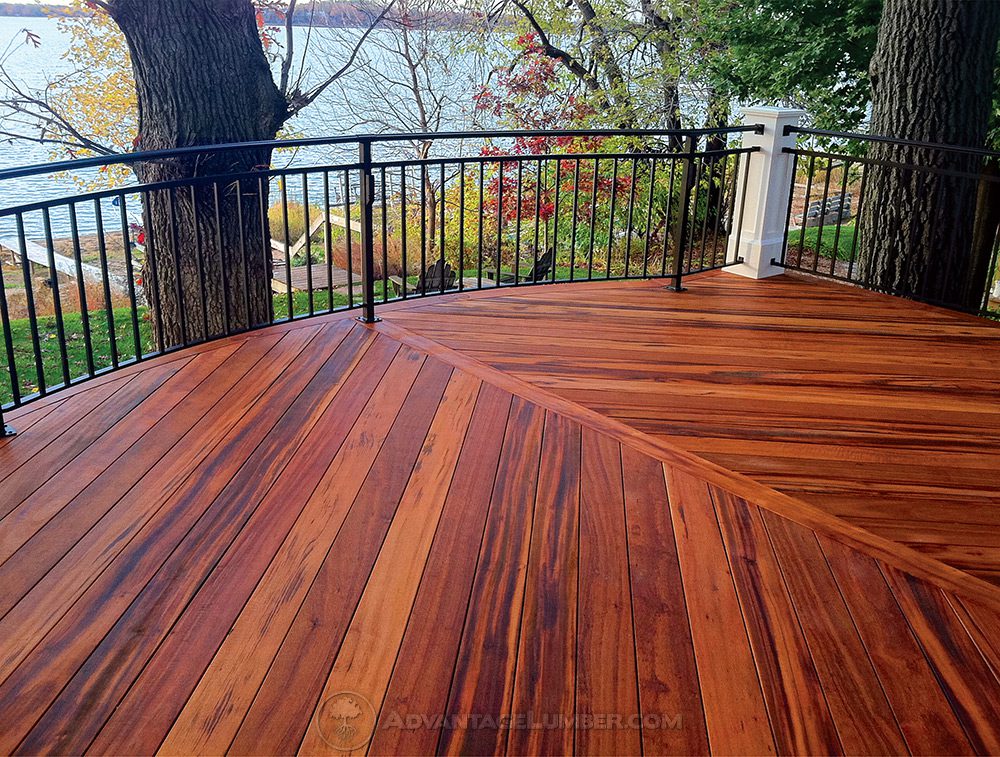
Late summer can put a deck through some pretty rough conditions. For example, a deck might bake in 90 degree sun during the afternoon, then face cool nights only a couple of weeks later. In fact, in some parts of the country, you can get a pretty good temperature swing in a single day.
It’s important to think about the best decking material for temperature swings if you want your deck to withstand these extremes. On top of that, add fall rain, wet leaves, morning dew, and shorter days, and your deck may have a lot of stuff to deal with.
Of course, every decking material can move to some degree. Wood may gain and lose moisture, while composite and PVC boards can expand and contract as temperatures rise and fall. Although you can’t stop that movement entirely, you can choose materials that tend to handle seasonal changes well. At the same time, you can build the deck so the boards have enough space to move without potentially causing problems.
And really, that’s probably the trick. You aren’t going to outsmart Mother Nature with a box of screws and a circular saw. I’ve been around enough decks to know that it’s usually smart to work with the material than try to force it to behave the way you want. Anyway, that’s the reality of building outdoors.
Temperature Isn’t the Only Thing to Watch
People often focus on temperature when they worry about seasonal movement. However, with wood decking, moisture can have a similar impact.
For instance, hot, dry weather can lower the moisture content of deck boards. On the other hand, fall may bring cooler weather, more rain, and damp conditions. As a result, as wood gains or loses moisture, it can move mainly across its width and thickness.
That’s why proper gap spacing can matter so much.
Even so, you probably shouldn’t use one gap for every wood deck. Instead, the wood species, moisture content, climate, airflow, and weather during the build can all play a role.
For example, I’ve seen people place boards as tightly as possible because they like the look. Although those tight gaps may look great on day one, they can potentially cause trouble when wet weather arrives and the boards swell.
And who doesn’t like those nice, tight, uniform gaps when the deck is brand new? I get it. They look great. But I’d rather leave a decent amount of room now than come back later and figure out why the deck isn’t draining properly.
So, build for the weather your deck will likely see all year, not just the weather you have on installation day.
Tropical Hardwoods Handle Seasonal Changes Very Well
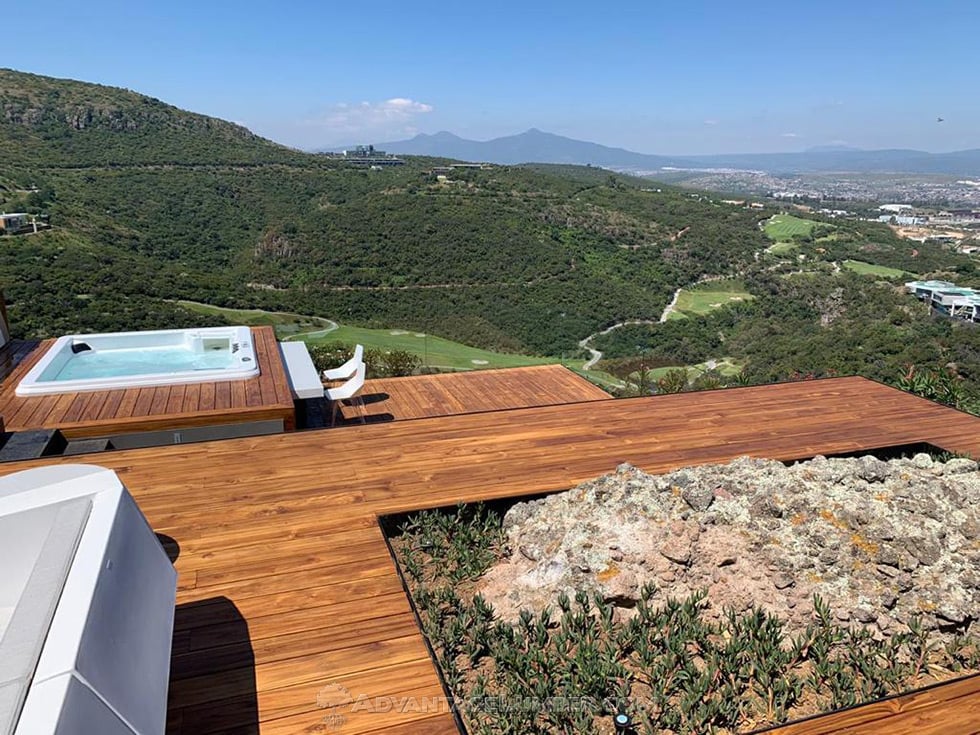
If you want natural wood, tropical hardwoods can be hard to beat. In particular, Ipe would sit near the top of my list.
For starters, Ipe is extremely dense and naturally durable. In fact, builders have used it for demanding outdoor projects for decades. Just as important, it doesn’t rely on a film forming coating to survive outdoors, and it can hold up exceptionally well when you install it correctly.
I’ll admit, I’m partial to Ipe. Once you’ve worked with enough exterior woods and seen how they look years down the road, you may start to appreciate materials that don’t need excuses made for them. There’s something to be said for a material that simply does what it’s supposed to do.
Still, Ipe isn’t your only option. Other tropical hardwoods worth considering may include:
- Cumaru
- Tigerwood
- Garapa
- Brazilian Redwood, also known as Massaranduba
- Mahogany, also known as Red Balau
- Teak
Of course, these species don’t all behave the same way. They can vary in density, color, grain, movement, and price. Even so, each can give you a durable natural wood option for an outdoor deck.
At the same time, one point can cause confusion: weathering and rotting aren’t necessarily the same thing.
Over time, sunlight will generally turn an unfinished tropical hardwood deck silver gray. However, the color change doesn’t necessarily mean the wood has started to rot.
If you want to keep the original brown tones, you may need to clean the deck as needed and apply a penetrating hardwood oil with UV protection. On the other hand, if you like the silver gray appearance, you can generally let the wood weather naturally.
And you know what? Some gray Ipe decks can look absolutely fantastic. I’ve seen homeowners worry because their deck changed color, even though the boards themselves were perfectly sound. Sometimes the gray may be exactly the look the house needs. It can completely change the picture without changing the actual durability of the wood.
Although some homeowners call this “maintenance,” I consider it mostly appearance maintenance. In other words, the oil can help preserve the color you like. It isn’t holding the wood together.
Good Decking Still Needs Good Carpentry
Of course, buying Ipe probably won’t save a poorly built deck. Although good material helps, good carpentry can matter just as much.
That’s something I can’t emphasize enough. Would you put a great roof on a rotten house and expect everything to work out? Probably not. Premium decking deserves the same common sense approach.
So, when you install hardwood decking, you should pay attention to moisture, airflow, fastening, and gap spacing. In particular, you may need to pay even more attention when you build close to the ground because the underside of the deck can stay damp longer.
For example, think about two identical Ipe decks.
One sits 10 feet above the ground with air moving freely underneath. Meanwhile, the other sits 12 inches above damp soil.
Although the boards may come from the same pile, they can live in very different environments.
Naturally, the low deck will probably dry more slowly after rain. As summer turns to fall and temperatures drop, that difference can become even more important.
I’ve crawled under enough low decks to tell you that what’s happening underneath isn’t always pretty. Homeowners see the nice deck surface. I’m looking underneath at drainage, airflow, wet soil, leaves, and whatever else has found a home down there. That’s where you can often discover the real story. Sometimes it’s obvious. Sometimes you have to look a little further.
Match the Frame to the Life of the Decking
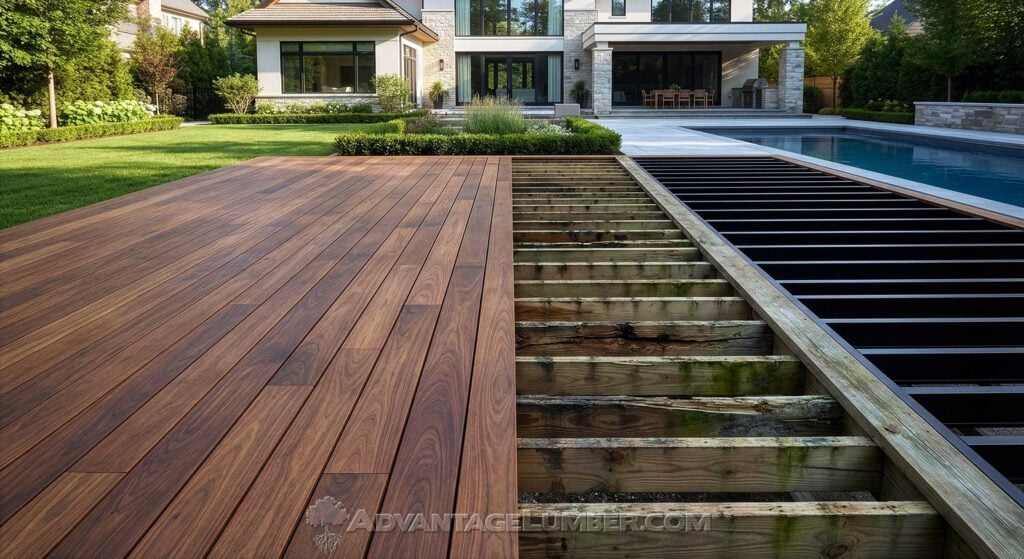
There’s another problem I’ve seen on premium deck projects: someone spends good money on long lasting decking and puts it over a frame that can become the weak link.
Pressure treated lumber remains common for deck framing. After all, it’s inexpensive, widely available, and easy to work with. However, if you use it, you may want to protect vulnerable horizontal surfaces from water. For example, joist tape can help keep water away from the tops of joists and other areas where moisture may tend to sit.
Fall can make this especially important.
For one thing, leaves and debris may collect between boards. Then rain can get into those spaces. At the same time, cooler temperatures and shorter days may slow down drying.
As a result, you can potentially end up with water sitting on top of a joist underneath a deck board, and that’s exactly what you probably don’t want.
Honestly, this is one of those little details that isn’t very exciting when you’re building the deck. Nobody invites the neighbors over to admire the joist tape. But ten or twenty years later? That’s when those boring details may start looking pretty smart. A few dollars spent in the right place can potentially save a whole lot more later.
For a high end project where long service life matters, steel deck framing may also deserve a look. Granted, it costs more upfront, though it can make a lot of sense when you pair it with decking you expect to keep for decades.
After all, there’s not much relief in pulling perfectly good premium deck boards because the frame underneath them failed first.
Composite Decking Handles Temperature Swings Differently
Composite decking from established manufacturers such as Trex, TimberTech, and Deckorators can also perform very well through seasonal temperature swings. However, don’t assume composite means motionless.
In reality, composite deck boards can move as temperatures rise and fall. Because of this, manufacturers provide spacing requirements for their products.
In particular, you should probably pay close attention to board ends, long runs, picture frames, breaker boards, walls, and other fixed points.
Although experienced carpenters develop habits over the years, this isn’t the place to say, “I’ve always left this much space.” Instead, you should read the current installation guide for the exact decking line in front of you.
I know, I know. Reading an installation manual isn’t anybody’s idea of a fun Saturday morning. But spending ten minutes checking the manufacturer’s requirements might beat spending a Saturday pulling boards back up. Please, don’t assume you can skip the instructions just because you’ve built a hundred decks.
After all, Trex isn’t Ipe. TimberTech isn’t Trex. Deckorators isn’t TimberTech.
Simply put, different materials can need different details.
PVC Decking Also Needs Room to Move
PVC decking can be an excellent choice if you want low maintenance and don’t want to maintain the color of natural wood. TimberTech Advanced PVC, for example, can be a good example of this category.
One advantage is that PVC doesn’t absorb moisture the way wood does. Naturally, that can be useful in wet climates, though temperature can still affect the boards.
Because of this, long boards may deserve extra attention.
For example, if temperatures cause a board to move a certain amount per foot, a 20 foot board can have more total movement to deal with than a 6 foot board. As a result, you may need to account for that around picture frames, walls, posts, and other places where the decking meets something solid.
Seems obvious when you say it out loud, doesn’t it? But long runs are exactly where small amounts of movement can add up and potentially catch people by surprise.
So, don’t try to fight the material. Instead, install it the way the manufacturer tells you to install it. There’s no reason to turn normal material movement into a battle.
Don’t Treat Every Synthetic Board as the Same Product
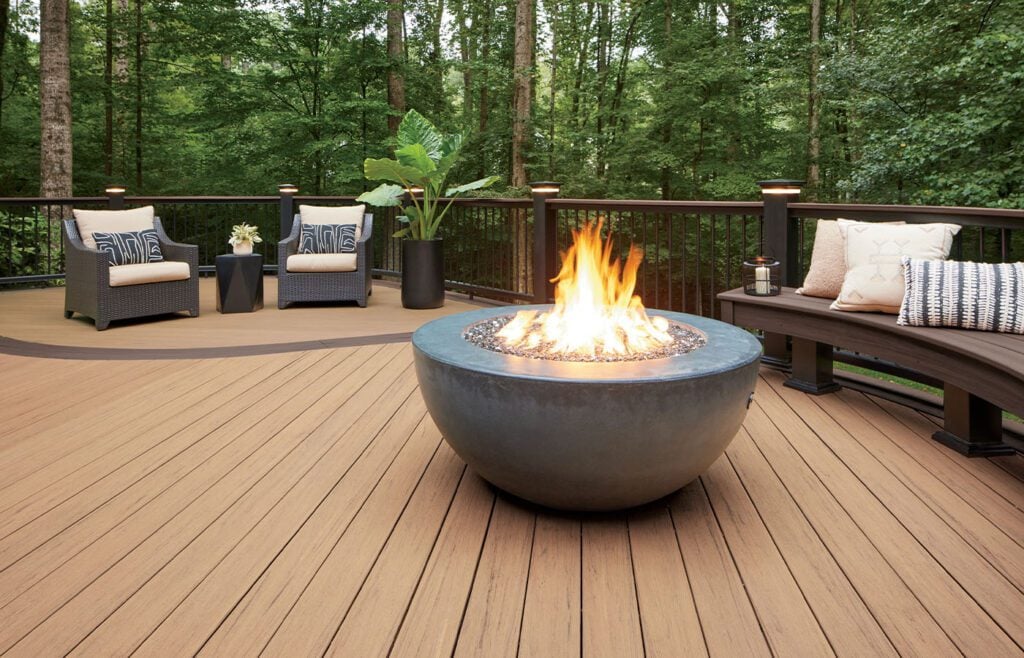
Another mistake I see homeowners make is lumping all manufactured decking into one category.
In reality, Trex, TimberTech, and Deckorators don’t simply make the same board with different logos stamped on it.
Deckorators, for example, offers decking with Surestone technology. Meanwhile, other product lines use more traditional wood plastic composite construction. TimberTech, on the other hand, offers both composite and PVC decking.
As you’d expect, these products can differ in heat buildup, expansion and contraction, feel underfoot, appearance, warranty coverage, and installation requirements.
Although marketing can make every premium deck board sound perfect, no decking material is likely to win every category. So, look at the conditions on your deck and choose accordingly.
Personally, I don’t believe in a single “best decking” answer for every house. Best for what? A shaded deck in Maine? A pool deck in Florida? A low deck over damp soil? Those are different jobs, and I’d rather choose the material for the job than choose the material first and try to make the job fit it. Anyone who has built decks for a while probably knows exactly what I mean.
Thermally Modified Wood Offers Another Option
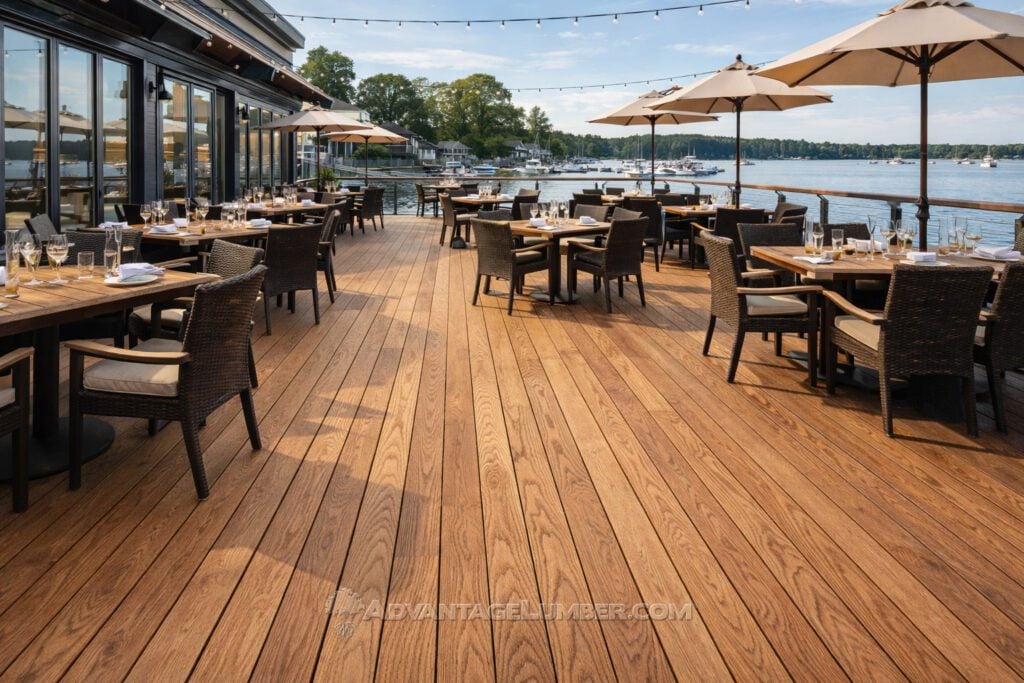
Wood that has been Thermally modified can give homeowners another real wood option.
Essentially, manufacturers use heat to change how the wood behaves. As a result, the process can improve stability and durability while keeping the look and feel of natural wood.
Naturally, that can make thermally modified decking attractive in climates where summer and winter feel like they belong on different planets.
Even so, you should pay attention to the wood species.
After all, “thermally modified” describes how someone treated the wood. It doesn’t necessarily tell you everything about the finished board.
Instead, look at the original species, grade, manufacturer, milling quality, and installation requirements. Although thermal modification can improve wood, it doesn’t magically make every species equal.
For that reason, I probably wouldn’t buy a deck board based on the words “thermally modified” alone.
Maybe I’m old fashioned about this, but I like knowing what the wood actually is. If I’m going to build with something, I want to know the species, how it was processed, and what I can reasonably expect from it. I suppose that’s the carpenter in me, but I’d rather know what I’m putting my hands on before I build with it.
Dark Decking Gets Hotter
Color can matter more than many homeowners expect.
For example, put a very dark board next to a lighter board in direct August sunlight, and the darker surface will generally get hotter.
Naturally, your feet may notice. So might your dog.
And if you’ve ever stepped barefoot onto a dark deck that’s been cooking in the warm afternoon sun, you probably already know exactly what I’m talking about. You don’t necessarily need a laboratory report. Your feet can give you the test results pretty quickly.
Although surface temperature matters for comfort, it can also matter when you think about seasonal temperature swings. In particular, a dark board baking in direct sunlight may become considerably hotter than the surrounding air. Then, later that night, its temperature can drop quickly.
So, if your deck faces south or west and gets hammered by afternoon sun, you probably shouldn’t choose the color from a small sample sitting inside an air conditioned showroom or office.
Instead, put samples outside. Then let them sit in the sun. After that, touch them.
Admittedly, it’s not a very sophisticated test. However, it can tell you quite a bit.
Sometimes the simple job site tests may tell you almost everything you need to know. No fancy data, no complicated testing equipment, just a couple of boards and a sunny afternoon.
Give the Deck Some Air
Good airflow can help nearly every deck.
Quite simply, air moving underneath the boards can help moisture escape after rain. Because of this, airflow may become especially important on low and ground level decks.
So, if you build close to grade, think about drainage before you start laying boards. In addition, keep vegetation under control, make sure water has somewhere to go, and provide as much airflow as the design reasonably allows.
Although tropical hardwoods offer excellent durability, I still wouldn’t build them over a permanently damp hole and expect ideal results.
You’d be surprised how often people want to solve a drainage problem by buying more expensive decking. That’s probably backwards. Fix the water problem first, then give the decking a decent place to live.
In the end, good materials will generally work best when you give them good conditions. It seems simple enough, though it’s easy to overlook when you’re rushing to make progress on a project.
Hidden Fasteners Should Work With the Decking
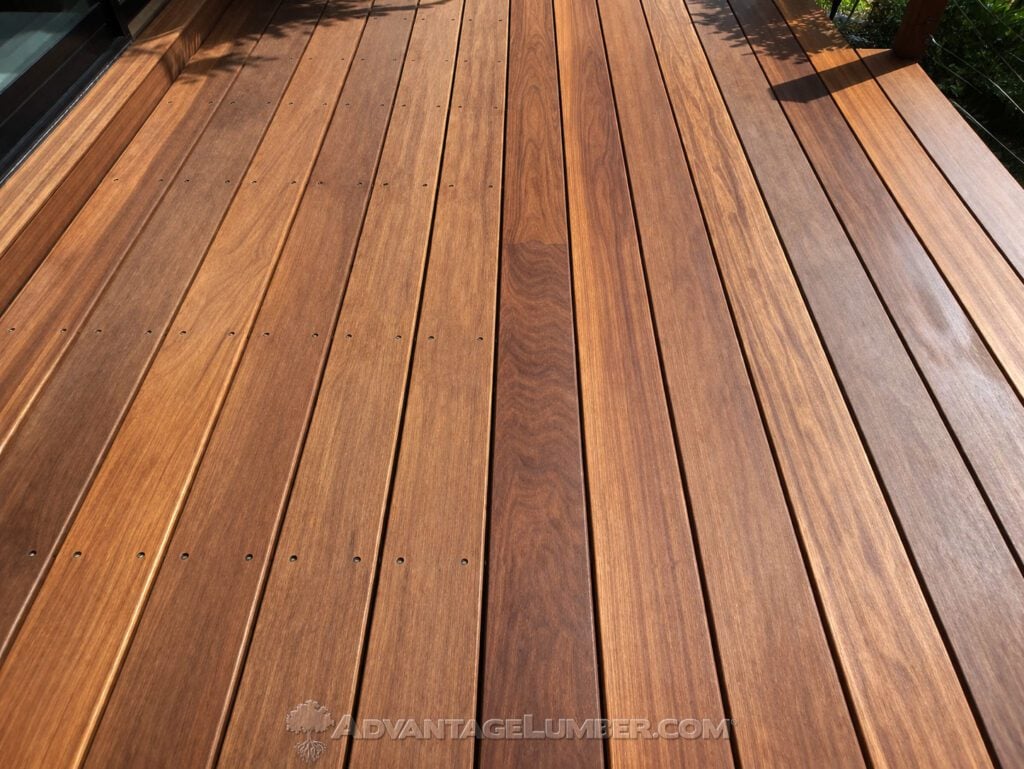
Hidden fastening systems such as Ipe Clip can give grooved hardwood decks a clean surface without rows of exposed screw heads. At the same time, they can help maintain consistent spacing.
Still, don’t think your job is to clamp every board so tightly that nothing can move. Instead, you want to hold the decking securely while allowing the normal seasonal movement the material may need.
For that reason, use fasteners and clips that suit the decking in front of you.
I’ve always looked at fasteners as a lousy place to get cheap. Think about it. You’ve already paid for the decking, framing, railing, and labor. Why gamble the whole job over the comparatively small cost of using the right fastener?
Although improvising might save a few dollars on the day you build the deck, it could create a much more expensive problem later. That’s a silly risk when the right hardware is sitting right there.
What’s the Best Decking for Big Temperature Swings?
If I were building a high end deck in a climate with hot summers, cool falls, freezing winters, and plenty of moisture, Ipe would probably be near the top of my list.
That said, Cumaru, Tigerwood, Garapa, Brazilian Redwood, Teak, and Mahogany can also give you excellent natural wood options.
On the other hand, if you don’t want to maintain the original color of natural wood, I’d probably compare premium offerings from TimberTech, Trex, and Deckorators.
Meanwhile, thermally modified wood may make sense for someone who wants real wood with improved stability.
Although the decking material matters, you probably shouldn’t choose based on temperature alone. Instead, before you buy, consider:
- How much direct sunlight the deck gets.
- How high the deck sits above the ground.
- How much air can move underneath it.
- How well the site drains.
- How much rain and snow your climate may bring.
- Whether you prefer real wood or synthetic decking.
- How much appearance maintenance you’re willing to do.
- How long you want the decking and frame to last.
And here’s the question I’d ask myself: What am I actually trying to get out of this deck? Do I want natural wood and don’t mind maintaining the color? Do I want as little appearance maintenance as possible? Am I planning to live in this house for another 25 years? Those answers can matter quite a bit.
Finally, install the material according to its requirements.
After all, a deck can look perfect when you drive the last screw on a warm August afternoon. However, the better test may come after it survives a wet October, a frozen January, spring rain, and another hot summer.
I’ve always felt that’s when you really find out whether you built a good deck. Anybody can make fresh decking look nice on installation day. What might it look like after the seasons have had a few rounds with it?
In the end, choose good material, build for the conditions, and give the decking room to do what decking does. That’s probably the best way to build a deck that keeps looking good long after the weather changes.
