
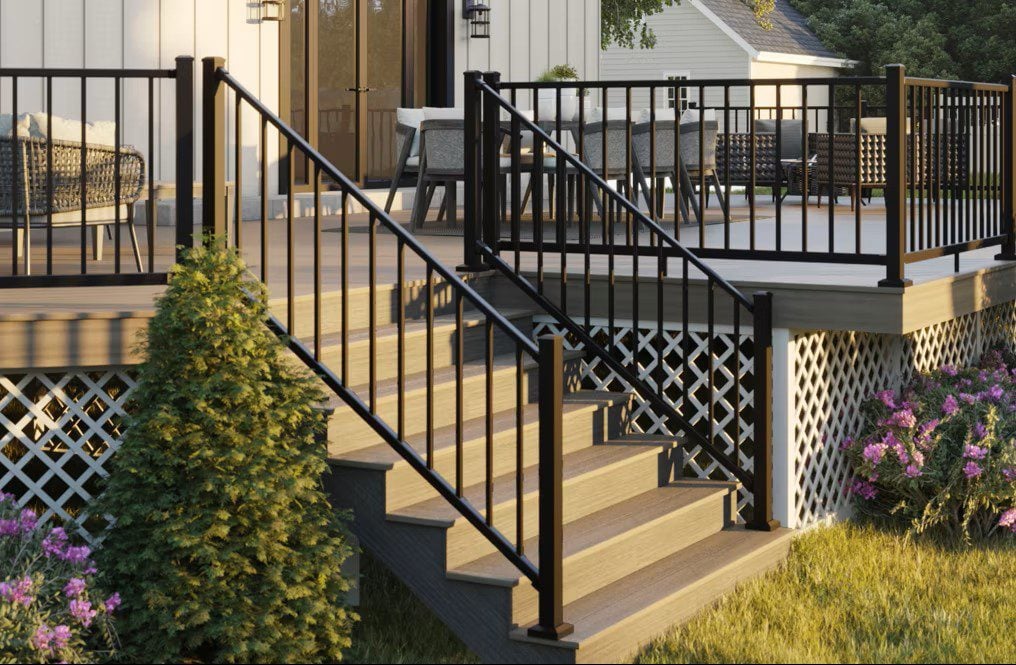
Deck railings do not have to match your decking. In fact, using a contrasting railing can sometimes make the deck look better.
The railing is one of the most visible parts of a deck, so the color, material, and style you choose will have a noticeable effect on the finished project. However, that doesn’t mean you have to use the same material or color for both the decking and railing.
You have quite a few options. You could use a wood railing that matches your decking, choose a complementary wood species, or go in a completely different direction with aluminum or composite railing.
So, how do you decide?
It helps to look at the entire house rather than just the deck boards.
Should Your Deck Railing Match Your Decking?
Your deck railing can match your decking, but it doesn’t have to. Matching the two creates a more uniform appearance, while contrasting materials or colors can give the deck more definition.
For example, an Ipe deck with an Ipe railing creates a classic, natural look. The railing blends into the deck rather than calling attention to itself.
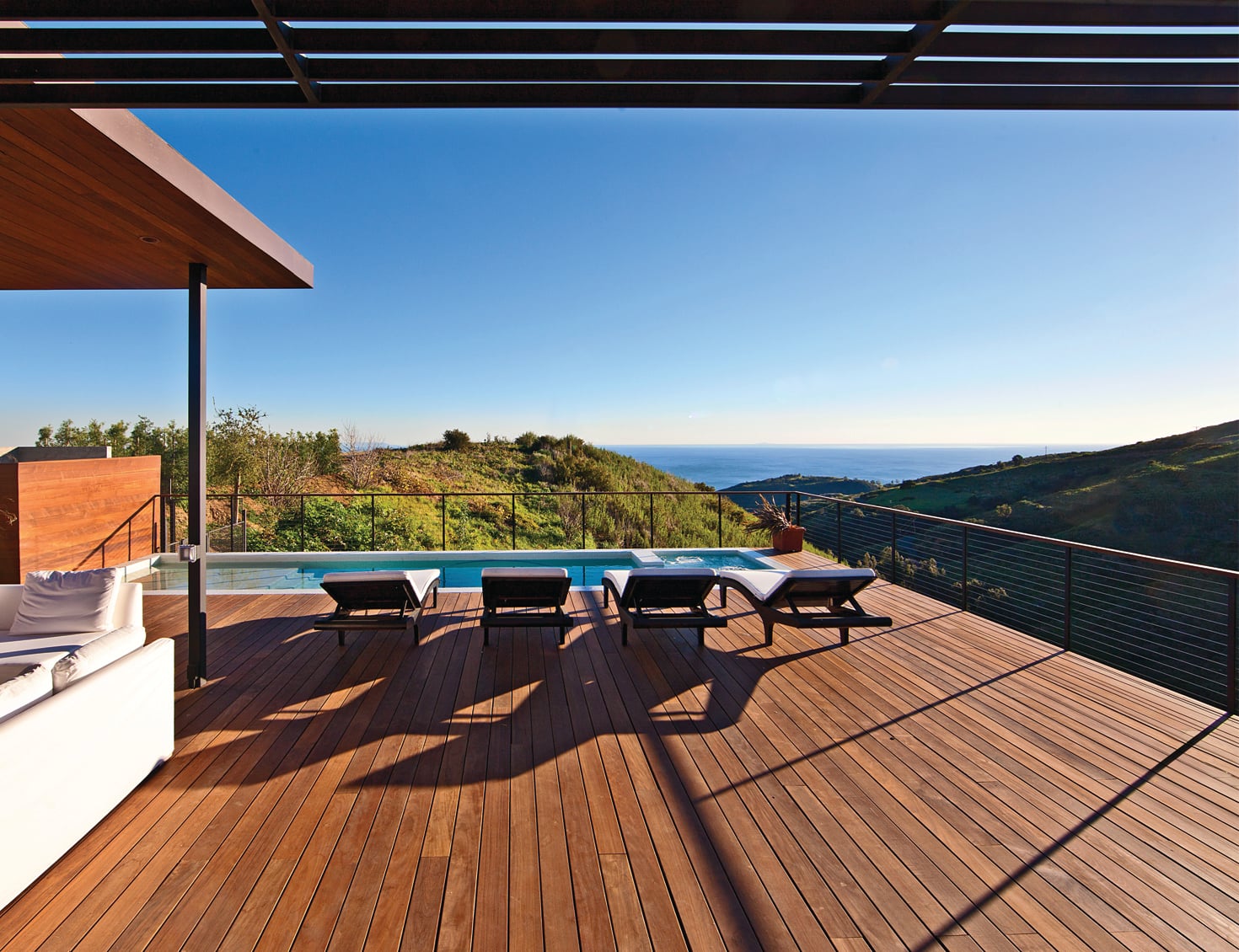
On the other hand, an Ipe deck with black aluminum railing can have a completely different appearance. The dark railing creates some contrast, gives the deck a cleaner outline, and can work especially well with a modern home.
Neither approach is necessarily better. It really depends on the look you’re after.
And that’s probably the most important thing to remember. Don’t feel like you have to make every part of the deck match.
A little contrast can go a long way.
What Should You Consider When Choosing a Deck Railing?
Before choosing a railing, take a look at the other colors and materials around the house. The decking is only one piece of the puzzle.
Consider:
- The decking color and species: Ipe, Cumaru, Tigerwood, Garapa, composite, and other materials all have different colors and grain patterns.
- The home’s exterior: Look at the siding, trim, doors, windows, and other exterior details.
- The style of the house: Traditional homes may call for a different railing style than a contemporary home.
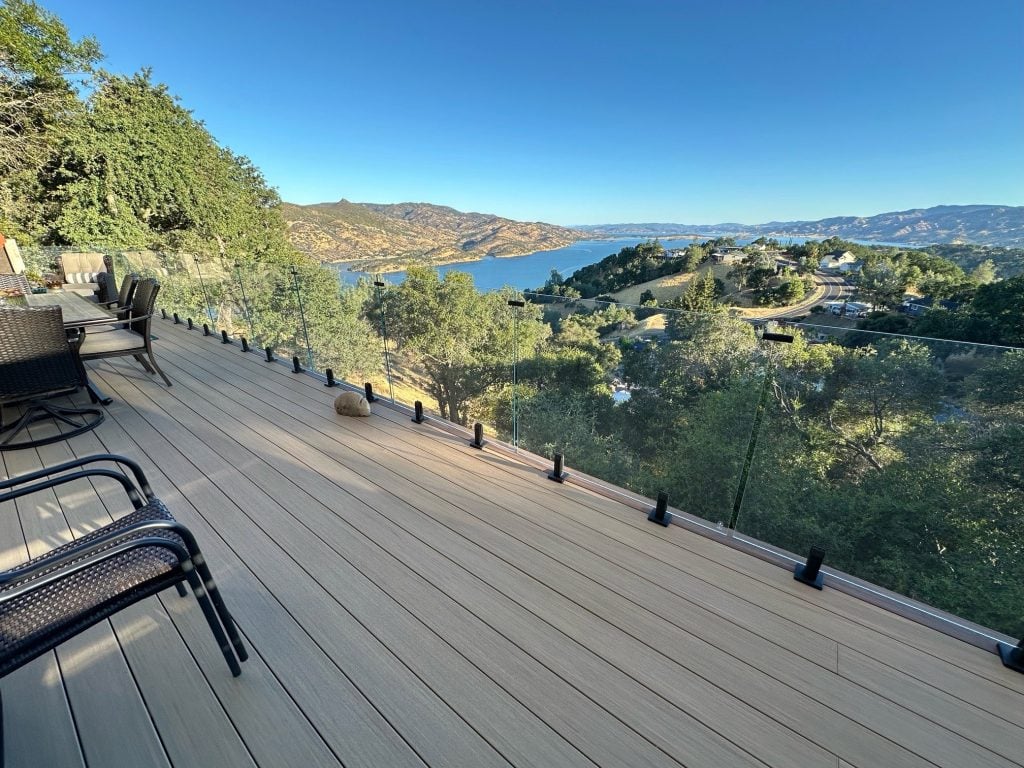
- The view: If the deck overlooks a backyard, lake, wooded area, or other attractive view, you may want a railing that doesn’t compete with it.
- Maintenance: Different railing materials require different levels of upkeep.
- The overall color scheme: A railing doesn’t necessarily have to match the decking if it coordinates with another part of the house.
This last point gets overlooked quite a bit.
If your house has black window frames, gutters, and exterior lighting, for example, black railing can tie those elements together even if the decking is a completely different color.
When Does Matching the Railing to the Decking Make Sense?
Matching your railing to the decking makes sense when you want a cohesive, traditional appearance.
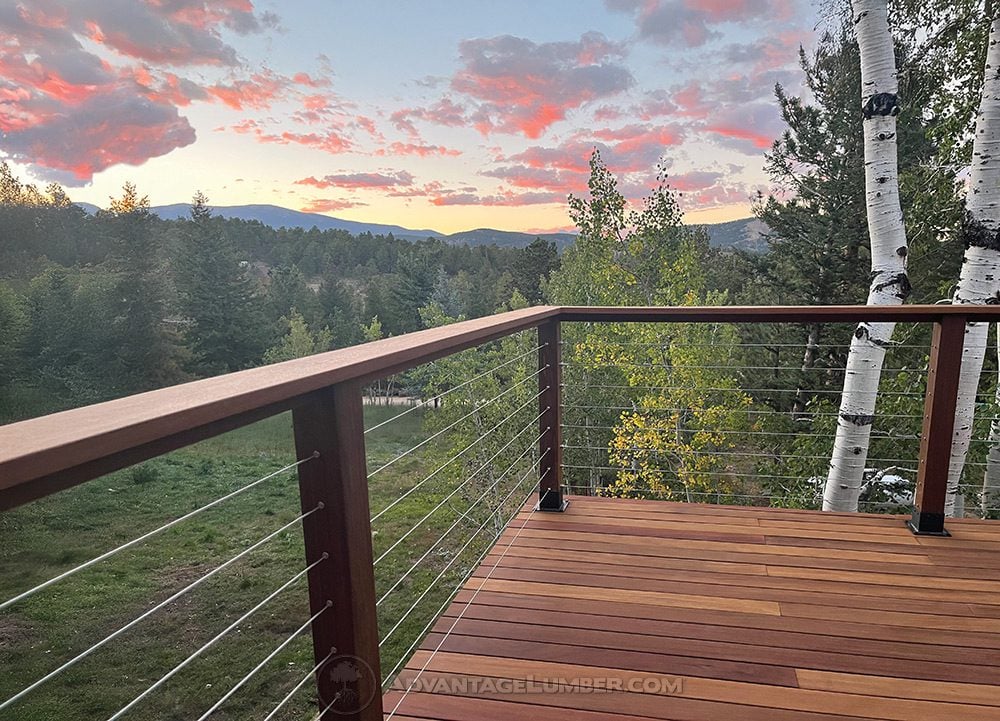
This can be particularly attractive with natural hardwood decking. If you’re building an Ipe deck, for example, an Ipe railing lets you carry the same rich wood color and natural grain throughout the project.
The same idea can work with Cumaru, Tigerwood, Garapa, and other hardwood species.
There’s also something to be said for keeping things simple. If you’ve chosen a beautiful hardwood because you like the way it looks, you may not want to introduce several other materials that compete with it.
Sometimes the wood should do the talking.
However, keep in mind that natural wood changes as it weathers. Even if two pieces look nearly identical when they’re new, they may not age at exactly the same rate. Sunlight, moisture, and the finish you use can all affect the color over time.
If you’re trying to match new railing to an existing hardwood deck, don’t judge the color from a sample sitting inside the house. Take the sample outdoors and look at it in natural light instead.
When Should You Contrast the Deck Railing and Decking?
A contrasting railing can work well when you want the railing to stand out from the decking.
One common combination is dark railing with lighter-colored decking. Black railing, for example, can look great with lighter brown, tan, or gray decking. It creates a defined border around the deck without making the railing the focal point.
You can also go the other direction. A white railing can create a sharp contrast against dark Ipe, Cumaru, or other brown hardwood decking.
And you don’t necessarily need a dramatic difference. A railing that’s simply a few shades lighter or darker than the decking may create enough contrast to separate the two without making the deck look busy.
Personally, I like a little contrast when the house already has a strong color scheme. It gives the deck another visual connection to the house instead of making it look like a completely separate structure.
Do Deck Railings Have to Be the Same Material as the Decking?
No. Your deck railing and decking can be completely different materials.
This gives you the freedom to choose your decking based on its appearance and performance, then select a railing that provides the look and maintenance level you want.
For example, you could pair:
- Ipe decking with black aluminum railing
- Cumaru decking with composite railing
- Tigerwood decking with black aluminum balusters
- Garapa decking with a complementary wood railing
- Composite decking with matching or contrasting composite railing
A hardwood deck with aluminum railing is a particularly versatile combination. The hardwood provides the natural appearance and durability you want from the deck surface, while aluminum can provide a clean look with relatively little maintenance.
There’s no reason the railing and decking have to come from the same material family.
What Railing Color Looks Best With Hardwood Decking?
Black, bronze, white, and natural wood tones can all work well with hardwood decking. The best choice will depend on the species and the look you’re trying to create.
Black railing is one of the easiest choices to pair with hardwood decking. With lighter woods such as Garapa, black creates noticeable contrast. With darker woods such as Ipe, the combination has a more subtle, contemporary appearance.
White railing can give a deck a brighter, more traditional appearance. It can work especially well when the house already has white trim around the windows and doors.
Natural wood railing is a good choice when you want the decking to remain the star of the show. You can use the same species for a uniform appearance, or choose another species with a complementary color.
Just remember that different wood species may weather differently. If an exact color match matters to you, it’s worth looking at the materials side by side before making the final decision.
What Railing Looks Best With Composite Decking?
Composite decking gives you plenty of railing options because you aren’t trying to match the natural color variation of a wood species.
You can choose a railing that closely coordinates with the decking for a consistent appearance. Or, you can choose a contrasting railing to create some separation between the deck surface and the perimeter.
Black railing is particularly versatile. It can provide a strong outline around lighter-colored composite decking, while it may blend more quietly with darker boards.
White railing is another option. It can give the deck a traditional appearance and may work especially well when the home has white trim.
Some railing systems also let you combine materials or colors. For example, you might use black railing with a deck-board-colored drink rail. That’s a nice way to connect the railing to the decking without making the entire railing the same color.
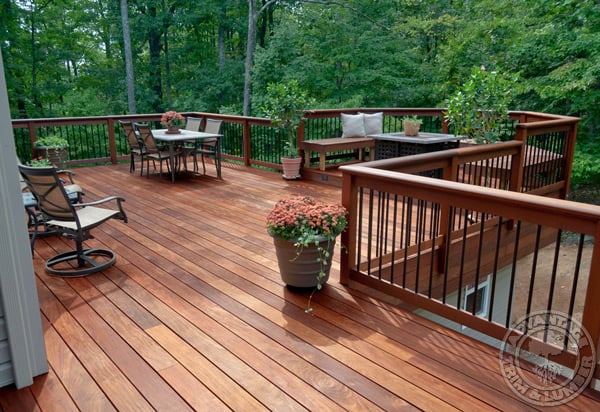
Should Your Deck Railing Match the House Trim?
It doesn’t have to, but matching your railing to the house trim can be a smart design choice.
Think about it this way: What colors are already on your house?
If you have white window trim, a white railing can make the deck feel like a natural extension of the house. If you have black windows or dark exterior accents, black railing can reinforce those colors.
This can be especially helpful when your decking is a natural wood color that doesn’t match anything else on the house.
Instead of asking, “What railing matches my decking?” you might want to ask, “What railing makes sense with my house?”
That’s a slightly different question, but it can make the decision much easier.
Does Railing Infill Matter?
Absolutely. The railing frame is only part of the finished appearance. The infill you choose can have just as much impact.
Common options include:
If preserving a view is important, cable or glass may be worth considering because they can keep the railing from visually blocking the space. If you’re more concerned with privacy, you’ll probably want a different approach.
The infill can also affect the overall style. Black aluminum balusters can give a hardwood deck a modern appearance, while traditional balusters can create a more classic look.
So, don’t just choose the railing based on the top rail color. Look at the entire system.
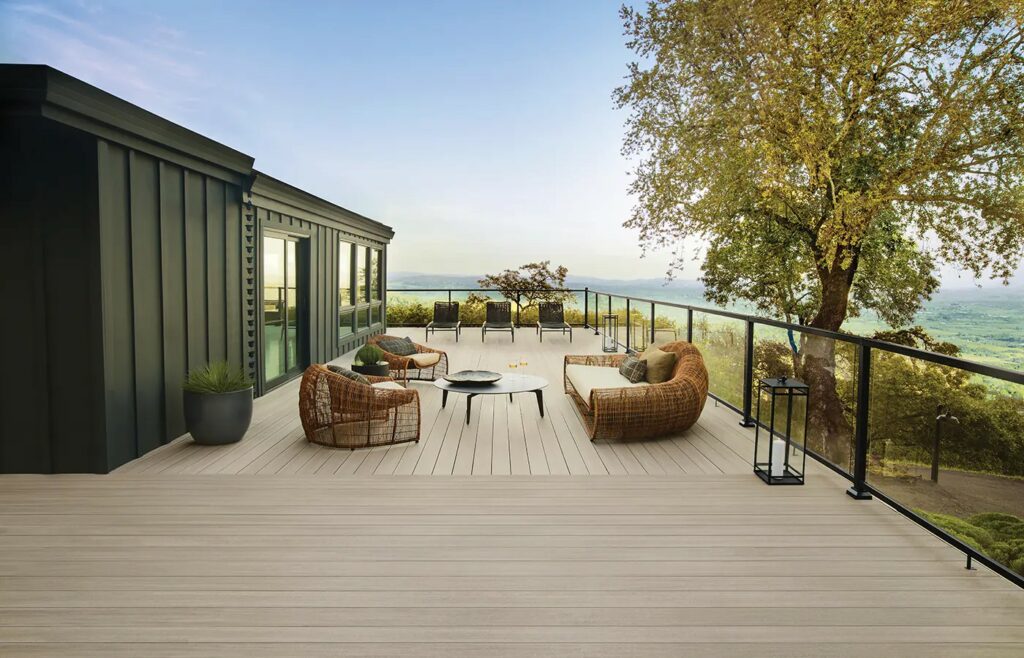
What About Using a Deck Board as a Drink Rail?
A drink rail can be a great way to connect contrasting decking and railing.
Some railing systems allow you to install a deck board on top of the railing. That means you can use black, white, or another contrasting railing color while bringing the decking material back onto the top rail.
I like this option because you get a little of both. The railing provides contrast, while the deck board on top ties everything back together. Plus, it’s a pretty handy place to set a drink.
It’s a small detail, but it can make the railing feel like part of the deck rather than something that was simply added around the perimeter.
Does Matching the Railing and Decking Matter for Resale?
Probably not as much as you might think.
A deck doesn’t need to use the same color or material throughout to appeal to future buyers. What matters more is whether the different elements work together and look like they belong with the house.
Of course, you can take contrast too far. If you combine too many unrelated colors, materials, and styles, the deck can start to look disjointed.
If resale is a major concern, I’d stick with fairly classic combinations. You can still create contrast, but avoid making the design so specific that it only appeals to one particular taste.
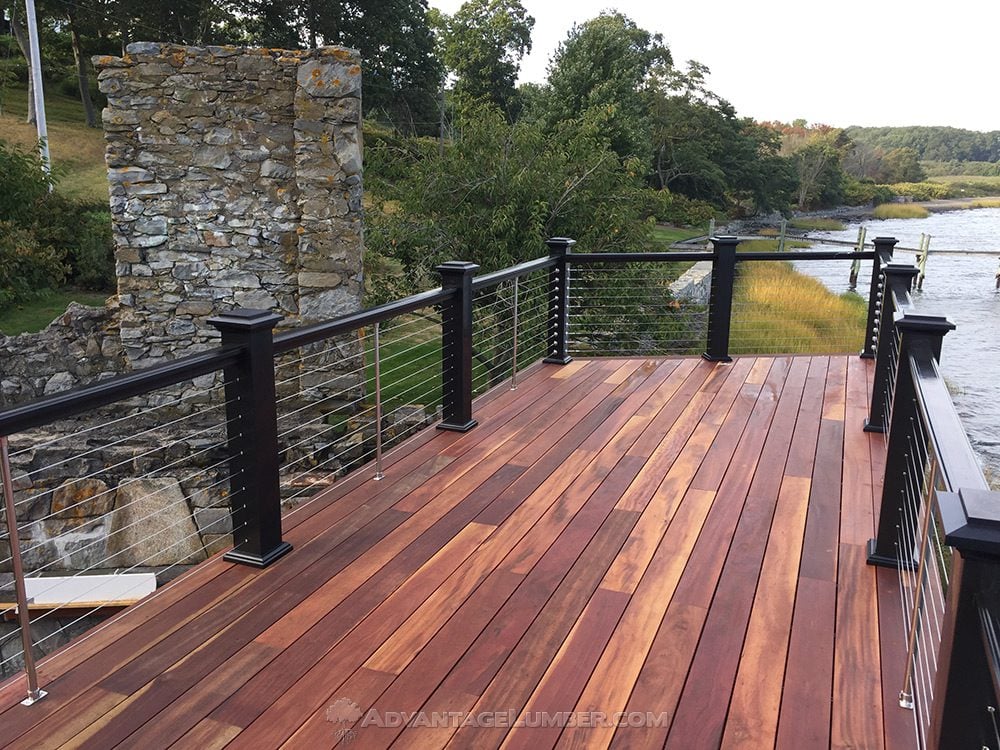
So, Should Your Deck Railing Match Your Decking?
Your deck railing does not have to match your decking.
It can match if you want a cohesive, traditional appearance. However, contrasting decking and railing can also create an attractive deck, particularly when the colors work with the rest of the house.
If you’re building with hardwood, you might choose a matching wood railing to highlight the natural beauty of the material. Or, you could pair the hardwood with black aluminum railing for a cleaner, more contemporary look.
With composite decking, you have even more flexibility. You can match the railing closely, contrast it, or use the railing to pick up a color that’s already present on the house.
The important thing is to look at the whole project.
Your decking, railing, siding, trim, doors, windows, and other exterior details should work together. They don’t have to match perfectly.
They just need to make sense together.
Ready to Choose Your Decking and Railing?
Whether you’re planning an Ipe, Cumaru, Tigerwood, Garapa, or composite deck, choosing the right railing is an important part of the design. Explore our decking and railing options to find the materials, colors, and styles that work best for your project, and don’t be afraid to mix and match until you find the right combination.

