
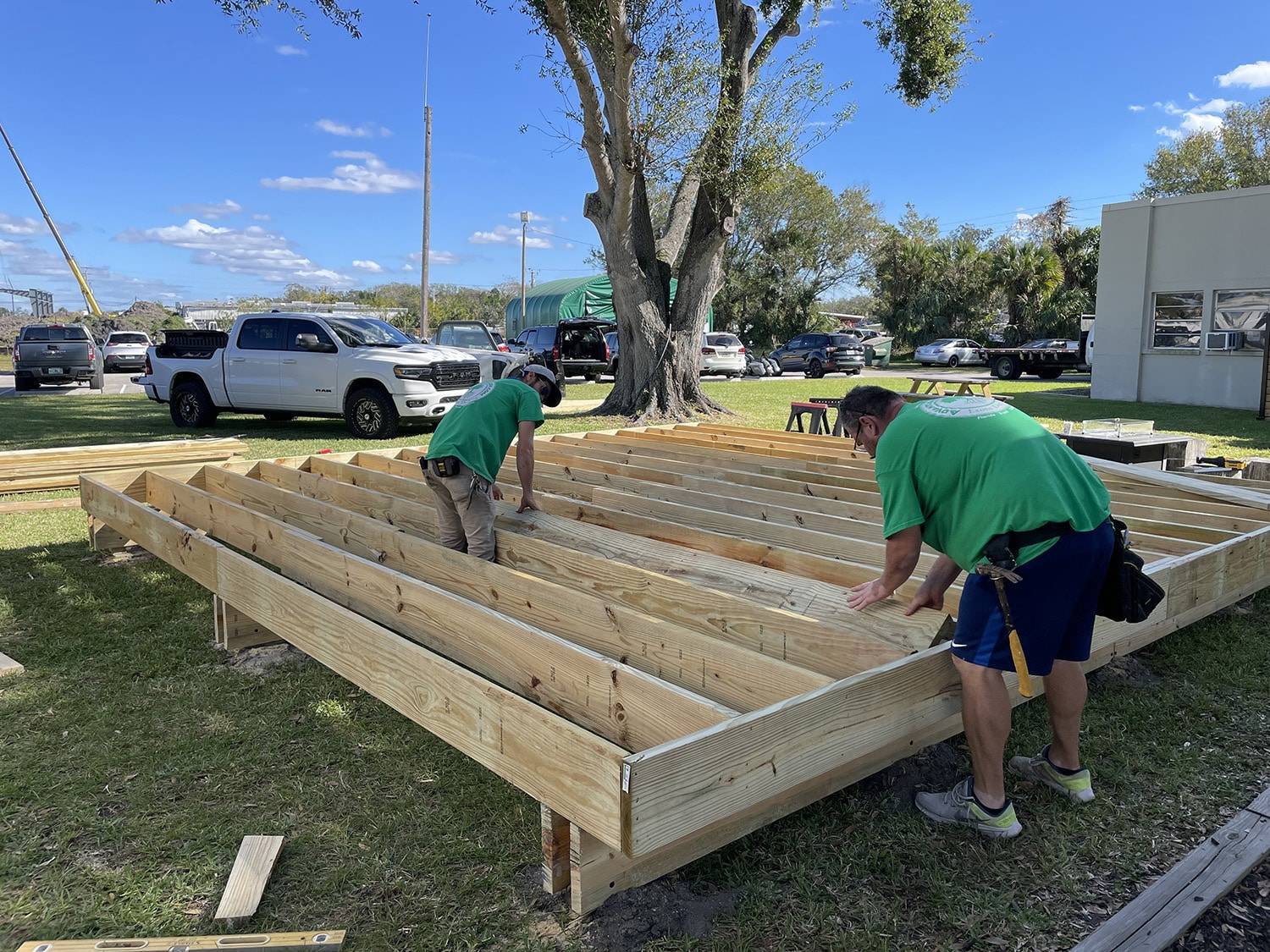
Building a new deck is one of the best investments you can make in your home, but that doesn’t mean you need to spend more than necessary. The key is knowing where to save money and, just as importantly, where you should never cut costs.
Many homeowners focus only on the initial price tag, but the cheapest deck often becomes the most expensive deck after years of repairs, maintenance, and premature replacement.
Here’s how to build a beautiful, long lasting deck while keeping your budget under control.
Spend Money Where It Matters Most
Every deck has components that are easy to replace and components that are nearly impossible to replace once the deck is finished.
For example:
- Deck boards can eventually be replaced.
- Railing can be upgraded later.
- Lighting and accessories can always be added.
But your deck framing, fasteners, and structural components are buried beneath the finished deck. If these fail, you’re often forced to tear apart large sections of your deck just to make repairs.
The smartest way to save money is by investing where it counts and finding savings elsewhere.
1. Protect Wood Deck Framing with Joist Tape
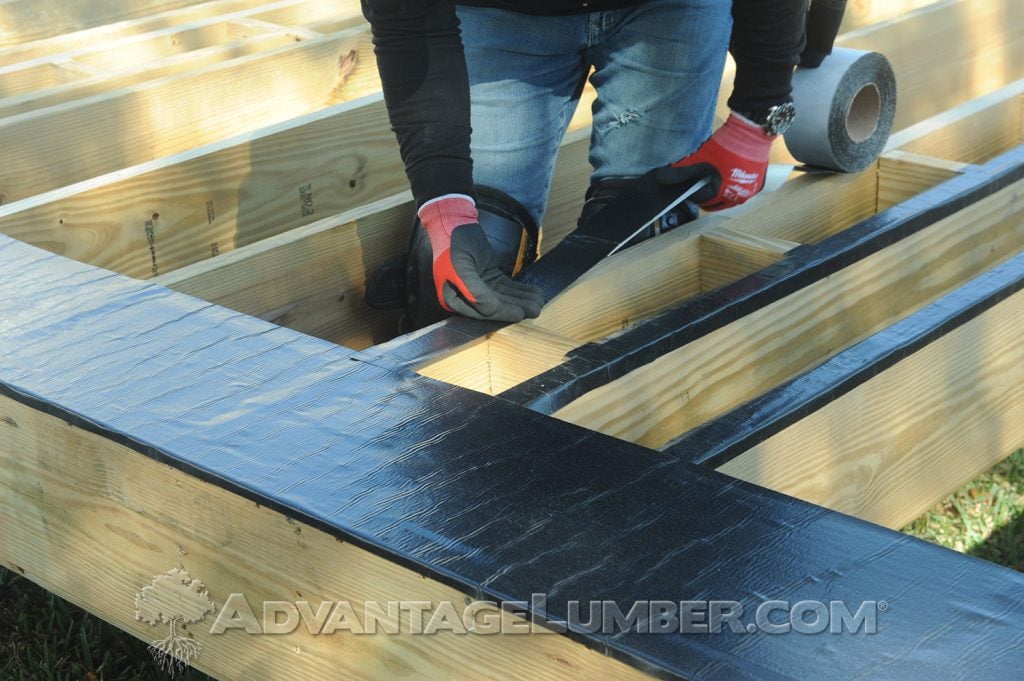
If your budget doesn’t allow for premium framing materials like steel or aluminum deck framing, don’t worry you can still dramatically extend the life of pressure treated lumber.
One of the most affordable upgrades you can make is installing joist tape over every joist and beam before installing your decking.
Why joist tape matters
Every screw or hidden fastener penetrates the top of your joists.
These penetrations allow water to soak into the wood. As moisture sits around fasteners, the tops of joists often begin rotting long before the rest of the framing.
Joist tape creates a waterproof barrier that helps prevent:
- Water intrusion
- Rot
- Mold
- Premature framing failure
For a relatively small investment, products like DeckWise® WiseWrap® JoistTape™ can add years to the life of your framing.
If you’re spending thousands on premium decking, protecting the framing underneath simply makes sense.
2. Consider Long vs. Short Deck Boards
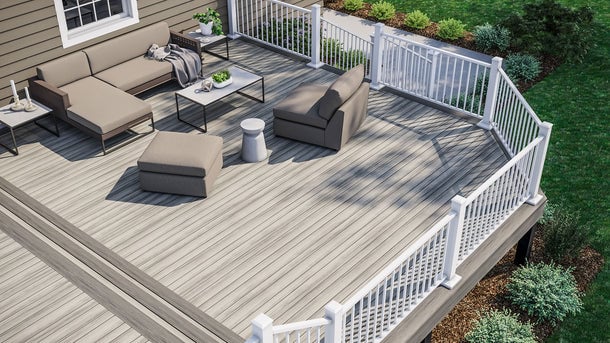
Longer deck boards often cost slightly more per board, but they can sometimes reduce your overall project cost. At AdvantageLumber.com though we often will sell short length hardwood deck boards at a significant cost savings. So you should always check the price difference first.
Benefits of long boards include:
- Less butt joints
- Less waste
- Faster installation
- Cleaner appearance
- Lower labor costs
Benefits of short boards:
- Can be up to 50% off for hardwood decking
- More of a hardwood floor appearance
3. Build a Simple Deck Shape
Curves, multiple elevations, angles, and complicated borders all increase labor and material costs. A simple rectangular deck often costs significantly less while providing the same usable outdoor living space.
If your budget is tight:
- Skip complicated inlays.
- Avoid unnecessary angles.
- Use square layouts whenever possible.
You can always dress up a simple deck later with furniture, lighting, planters, or pergolas.
4. Choose Low Maintenance Decking
Sometimes the lowest priced decking isn’t actually the least expensive option over time.
For example:
Hardwood Decking
Species like Ipe, Cumaru, and Plantation Teak can last 40 to 75+ years with very little structural maintenance.
If you enjoy the natural silver gray weathered look, these woods don’t even require regular oiling.
Composite & PVC Decking
Trex®, TimberTech®, and Deckorators® require:
- No staining
- No sealing
- Minimal maintenance
Although they cost more upfront than pressure treated lumber, many homeowners save thousands over the years by avoiding maintenance costs.
5. Use Hidden Fasteners Where Appropriate
Face screwing every deck board may appear cheaper initially, but hidden fasteners provide several long term benefits:
- Cleaner appearance
- No exposed screw heads
- Less chance of water collecting around fasteners
- Easier replacement of individual boards
For grooved decking, hidden fasteners are usually worth the investment.
6. Buy From a Supplier That Stocks Everything
Ordering decking from one company, fasteners from another, and railing from a third often leads to:
- Multiple shipping charges
- Delivery delays
- Color mismatches
- Missing parts
Working with one supplier who stocks all major components can often reduce freight costs and simplify the entire project.
Where You Should NEVER Try to Save Money
Some shortcuts can cost far more than they save.
Here are the biggest mistakes homeowners make.
Never Use Cheap Coated Deck Screws with Hardwood Decking
This is one of the most common and expensive mistakes.
Dense hardwoods like:
- Ipe
- Cumaru
- Tigerwood
- Garapa
- Brazilian Redwood
- Plantation Teak
contain natural oils and tannins that are extremely demanding on fasteners.
Cheap coated steel screws may:
- Corrode
- Stain the wood
- Snap during installation
- Leave rust streaks
Instead, always use high quality stainless steel deck screws designed specifically for hardwood decking.
While stainless steel screws cost more initially, they provide long-term corrosion resistance and help ensure your deck remains structurally sound and visually attractive for decades.
Don’t Skip Pre-Drilling Hardwood Deck Boards
Trying to save labor by skipping pre-drilling often results in:
- Split boards
- Broken screws
- Poor looking installations
Hardwood decking is incredibly dense.
Taking the extra time to pre-drill every fastener hole helps produce a much cleaner, longer-lasting deck.
Don’t Buy Cheap Hidden Fasteners
Not all hidden fasteners are created equal.
Low-quality clips may:
- Break
- Loosen over time
- Corrode
- Cause squeaks
Choose hidden fastening systems designed specifically for your decking material, such as high-quality stainless steel clip systems for hardwood decking.
Don’t Cheap Out on Deck Framing
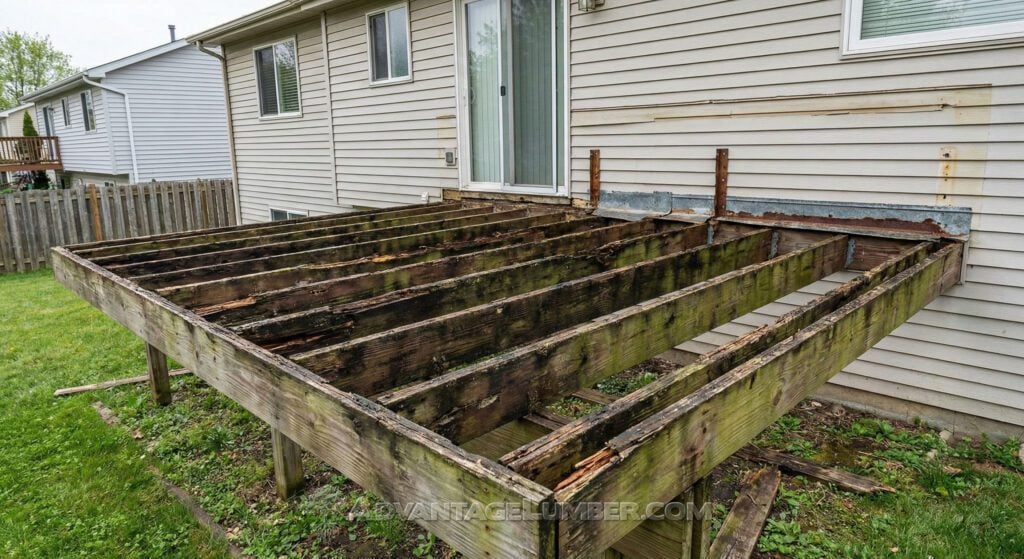
Your deck framing is literally the foundation of your investment.
If your budget allows, consider upgrading to:
Both materials can last significantly longer than traditional wood framing and resist:
- Rot
- Insects
- Warping
- Twisting
If premium framing isn’t in the budget, pressure treated lumber is still an excellent option just be sure to protect it with joist tape and proper flashing wherever water can collect.
Don’t Ignore Proper Ventilation
Trying to save money by building a deck too close to the ground can create moisture problems that shorten the life of both the decking and framing.
Many hardwood decking installations perform best with approximately 18 inches of airflow beneath the deck.
Proper ventilation helps:
- Reduce trapped moisture
- Improve drying after rain
- Extend the life of the entire deck system
Don’t Skip Flashing Around the Ledger Board
One of the leading causes of deck failures starts where the deck attaches to the house.
Proper flashing helps keep water from getting behind the ledger board, reducing the risk of rot in both the framing and your home’s structure.
It’s a relatively inexpensive detail that can prevent very costly repairs down the road.
The Best Way to Save Money Is to Build It Right the First Time
The least expensive deck isn’t always the one with the lowest upfront cost.
It’s the one that lasts the longest with the fewest repairs.
Smart savings include:
- ✔ Using joist tape to protect wood framing
- ✔ Designing a simple deck layout
- ✔ Purchasing longer deck boards when practical
- ✔ Choosing durable, low maintenance decking
- ✔ Buying all materials from one supplier
Avoid false economies like:
- ✘ Cheap coated screws on hardwood decking
- ✘ Inferior hidden fasteners
- ✘ Skipping pre-drilling
- ✘ Omitting flashing or joist tape
- ✘ Sacrificing structural quality to save a few dollars
A well planned deck built with quality materials will provide decades of enjoyment while saving you thousands in maintenance and repairs over its lifetime.
If you’re planning a new deck and want help choosing the right materials for your budget, the decking specialists at AdvantageLumber.com can help you compare hardwood, composite, PVC, steel framing, aluminum framing, fasteners, and accessories to build a deck that delivers the best long term value.
