
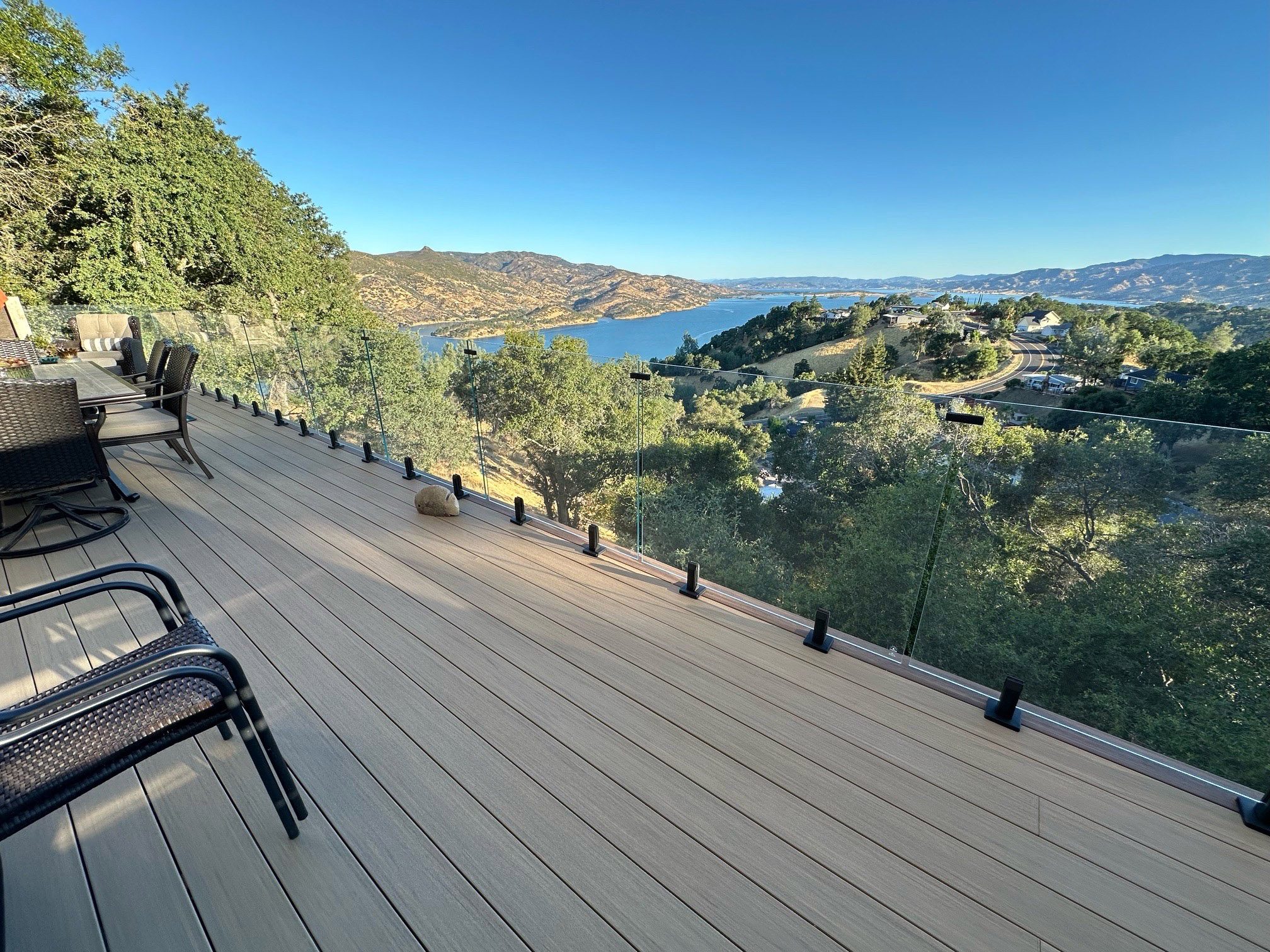
Deck railings come in more styles than ever before. While some designs are meant to serve as a bold architectural feature, other projects call for the opposite approach. When your deck overlooks water, mountains, woods, or a beautifully landscaped backyard, the goal is often to minimize the railing so the view takes center stage. If preserving sightlines is your top priority, several railing materials stand out: cable railing, glass panels, mesh infill, and slim-profile metal systems. Each offers a different balance of visibility, durability, and design flexibility.
Cable Railing: Clean Lines That Fade into the Horizon
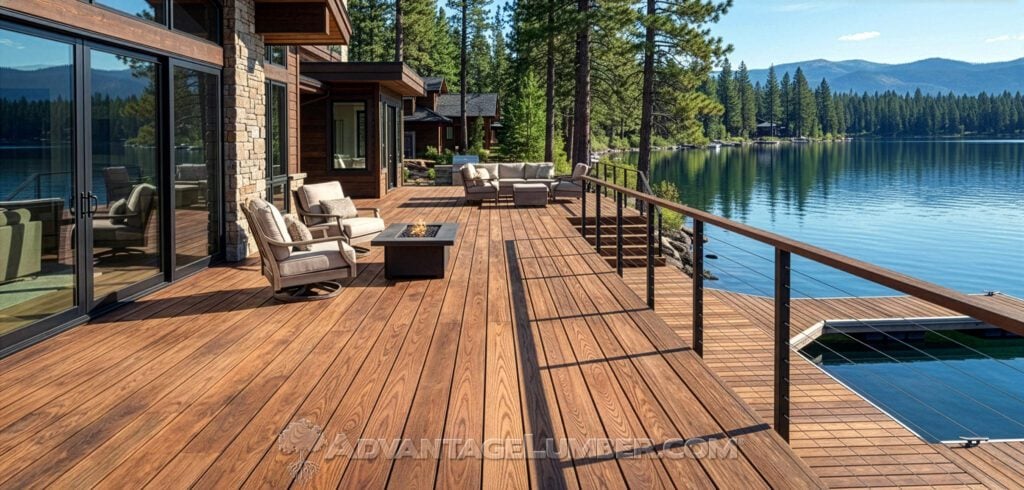
Cable railing remains one of the most popular choices for maximizing views. Its minimalist design uses thin stainless steel cables—often just 1/8-inch thick—to create a secure barrier without visually closing off the space.
Why Cable Blends In
- The slim profile allows for excellent transparency.
- Horizontal cable tends to visually align with the horizon.
- When viewed from inside the home, horizontal lines can blend with siding courses, making the railing less noticeable.
Cable can be installed horizontally or vertically. Horizontal systems are most common for modern decks, while vertical cable can reduce climbability concerns and provide a slightly different aesthetic.
Performance Considerations
- Marine-grade stainless steel is recommended in coastal environments.
- Proper tensioning is essential for long-term performance.
- Routine cleaning and occasional tension adjustments maintain optimal appearance.
When paired with hardwood posts or sleek metal framing, cable railing delivers a contemporary look while keeping the surrounding landscape in focus.
Glass Deck Railing: The Most Seamless View Available
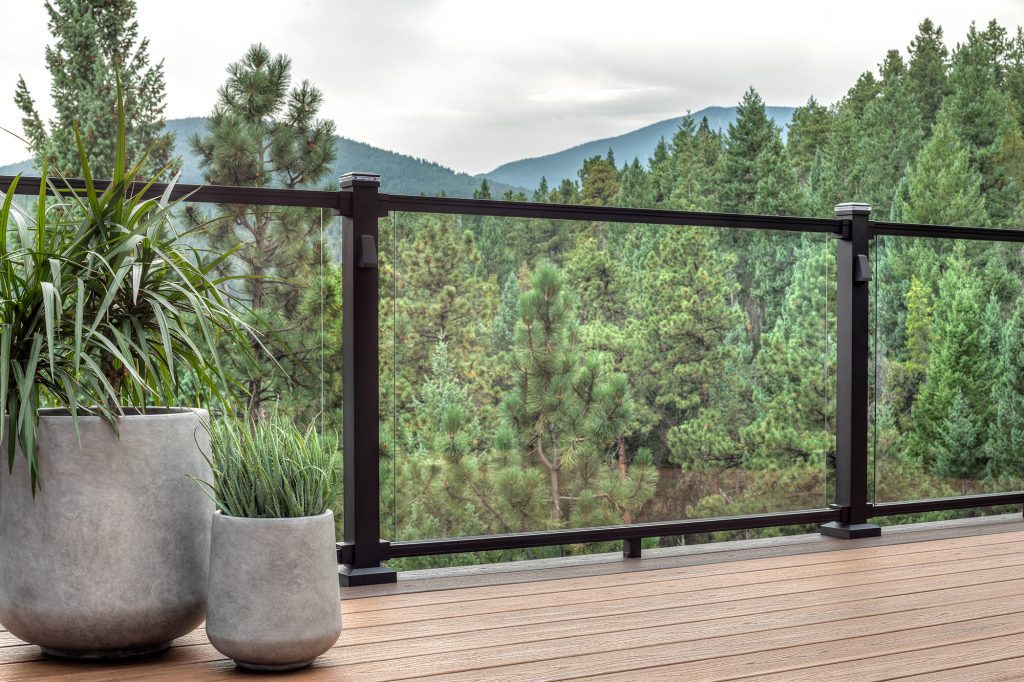
If the goal is uninterrupted visibility, glass railing offers the clearest sightlines of any railing option. Glass systems use tempered safety glass panels designed to meet residential building codes. These panels create a continuous, transparent barrier that preserves the view without horizontal or vertical interruptions.
Framed vs. Frameless
- Framed systems use slim metal posts and top rails to support glass panels.
- Frameless systems minimize visible hardware, allowing the glass itself to become nearly invisible.
Why Homeowners Choose Glass
- Maximum visibility.
- Modern, upscale aesthetic.
- Can function as a wind screen on exposed decks.
- Low maintenance compared to painted or stained wood railings.
In coastal settings, salt spray may require more frequent cleaning. However, for homeowners who want their deck to feel fully open to the surrounding environment, glass remains the most seamless solution.
Mesh Railing: Uniform Transparency with Structural Stability
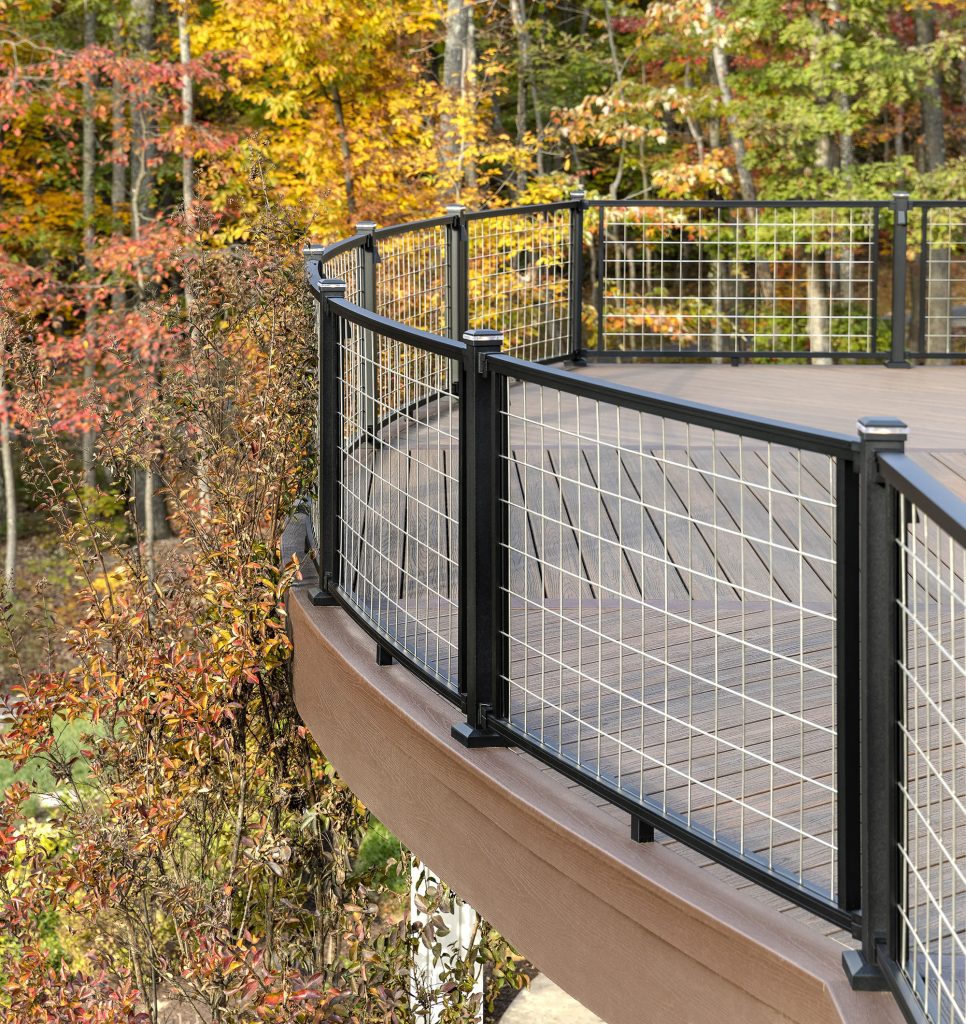
Mesh infill is an increasingly popular option for homeowners who want openness with a slightly different visual effect than cable.
Unlike cable, mesh creates a flat, uniform surface. There are no individual horizontal lines cutting across the view. Depending on the openness percentage of the mesh, visibility can be very high while still maintaining a solid, secure feel.
Benefits of Mesh
- High transparency with a consistent appearance.
- No tensioning required.
- Strong and durable.
- Often well-suited for families with children or pets.
Metal mesh panels integrate easily with composite or aluminum railing frames and work particularly well in modern or industrial-inspired designs.
Slim-Profile Metal Railings: Classic Look, Improved Views
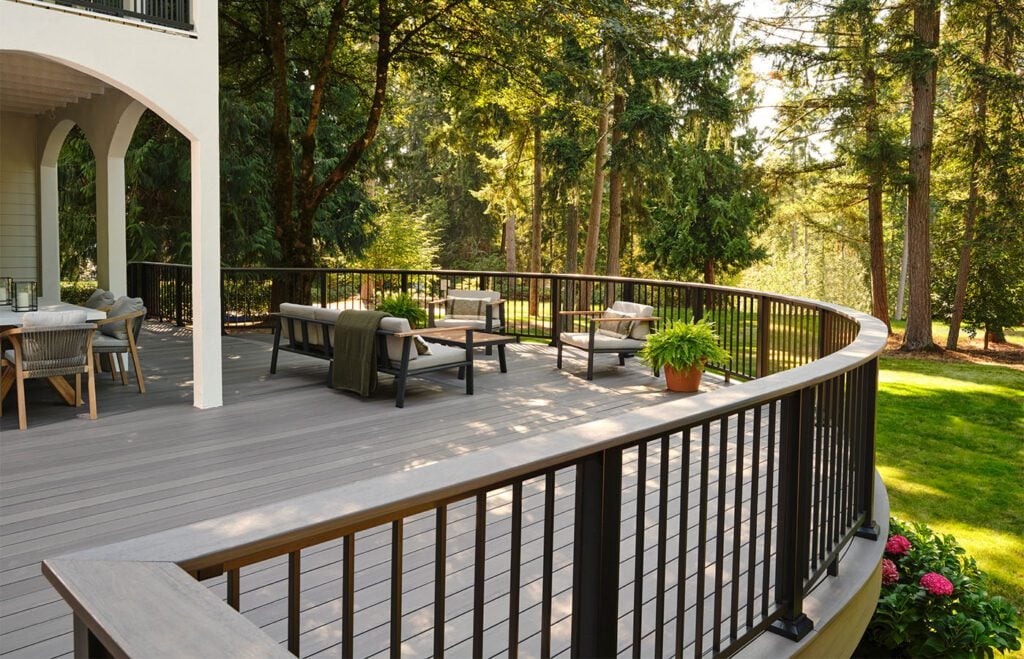
For homeowners who prefer a more traditional railing profile, slim metal balusters offer a strong middle-ground option.
Compared to thick wood balusters, thin aluminum or steel pickets:
- Provide greater visibility.
- Offer a sleek, modern appearance.
- Require minimal maintenance.
- Resist rot, warping, and corrosion.
Darker finishes, particularly black, tend to visually recede into the background. This allows the railing to remain subtle while still delivering the familiar look of vertical balusters.
Safety and Visibility
Metal railing systems provide a secure, code-compliant barrier without compromising sightlines. Options such as thin balusters or glass infill allow homeowners to prioritize both safety and openness.
Choosing the Right Railing for Your Deck
- Environment
- Coastal areas benefit from corrosion-resistant materials.
- Windy locations may benefit from glass panels that reduce airflow.
- Wooded settings often pair well with darker rail finishes that blend into shadows
- Architectural Style
- Ultra-modern homes often pair best with frameless glass.
- Contemporary designs align well with cable or mesh.
- Transitional and classic homes may prefer slim-profile metal balusters.
- Maintenance Expectations
- Cable and aluminum systems require minimal upkeep.
- Glass requires occasional cleaning to maintain clarity.
- All systems must be properly installed to meet local building codes.
Let the View Be the Focal Point
Your railing should protect your deck without overwhelming it. Whether you choose cable, glass, mesh, or slim-profile metal, today’s railing options make it possible to maintain open sightlines while meeting safety standards.
When thoughtfully paired with high-quality decking materials, these systems create an outdoor space that feels expansive, connected, and designed around the landscape.
Need Help Choosing the Right Railing System?
Selecting the right railing involves more than just style. Environment, layout, code requirements, and decking material all play a role in long-term performance.
If you would like guidance planning your project, visit AdvantageLumber.com to explore your options or contact our team directly for expert assistance. We are here to help you design a deck that protects your investment while keeping your view front and center.
