
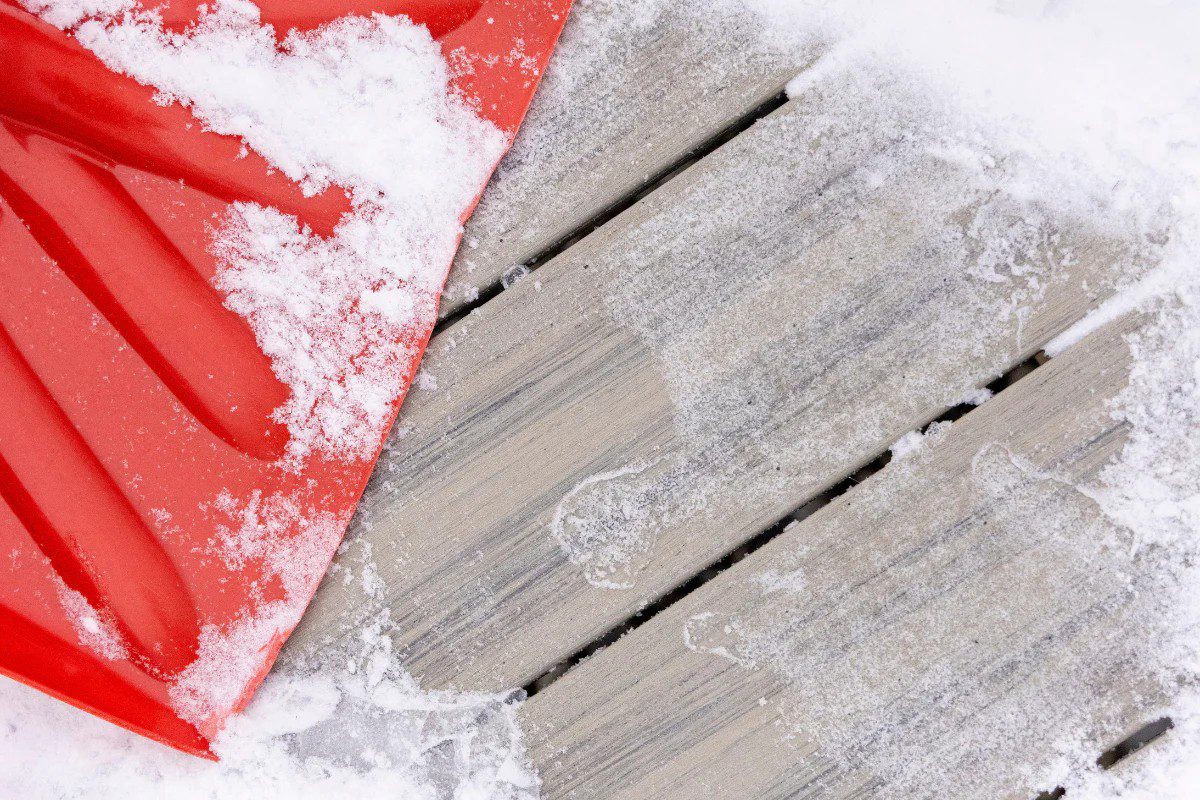
Composite decking is often chosen for its low maintenance and long-term durability, but many homeowners wonder how it performs in winter conditions. Specifically, does composite decking become slippery when temperatures drop? The short answer is yes—it can—but understanding why, and how to manage it, makes a big difference.
Why Composite Decking Can Feel Slippery in Cold Weather
Composite decking boards are designed with a protective outer shell that makes them non-porous. Unlike natural wood, composite boards do not absorb moisture, which helps prevent rot, warping, and mildew. However, this same benefit can also create winter challenges.
Because moisture does not soak into the board, water can remain on the surface. When temperatures fall, that moisture can freeze, forming ice. Frost, snow, and ice can all reduce traction on any outdoor surface, including composite decking.
Older vs. Newer Composite Decking
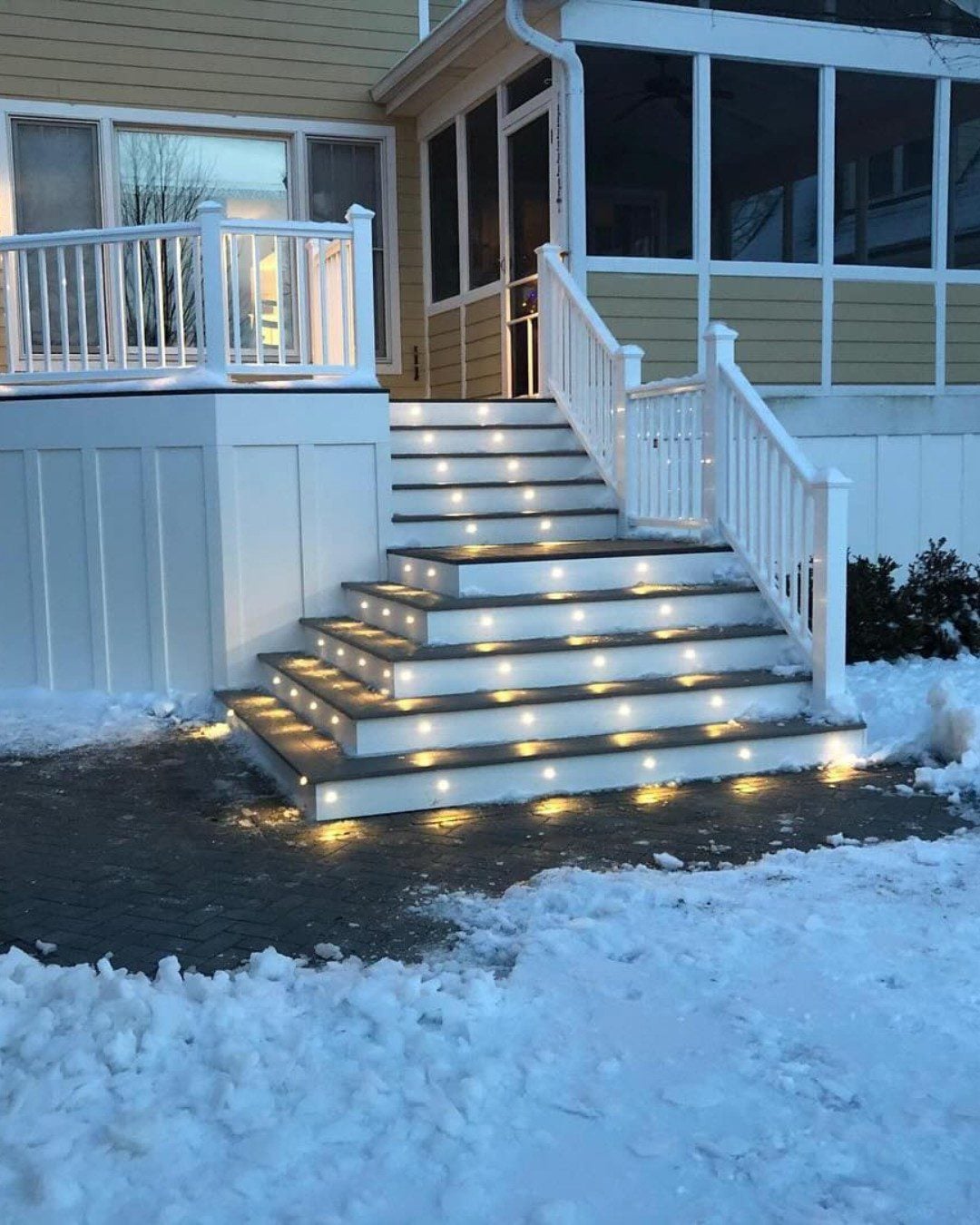
Not all composite decking performs the same in winter conditions. Older composite boards were typically smoother and offered less traction. Many newer, high-quality composite decking lines are engineered with enhanced surface textures or subtle grooves designed to improve grip underfoot.
If winter safety is a priority, choosing a premium composite decking product with added texture can help reduce slipperiness compared to early-generation composites.
Maintenance Matters More Than You Think
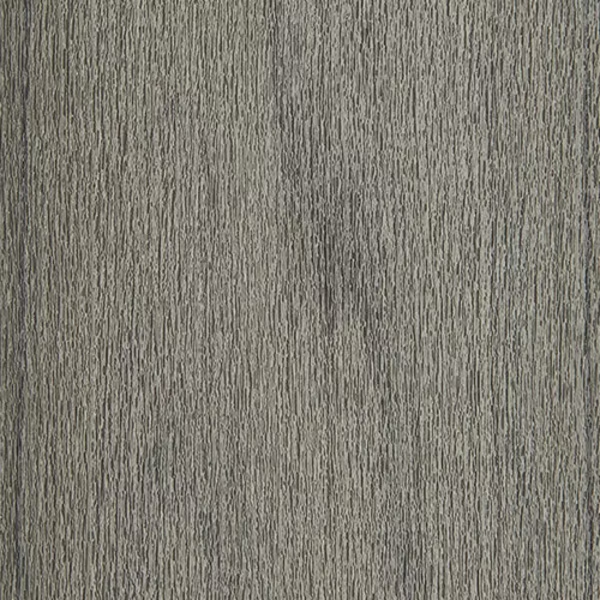
While composite decking is resistant to rot and mildew, it is not maintenance-free. Regular cleaning plays an important role in winter performance.
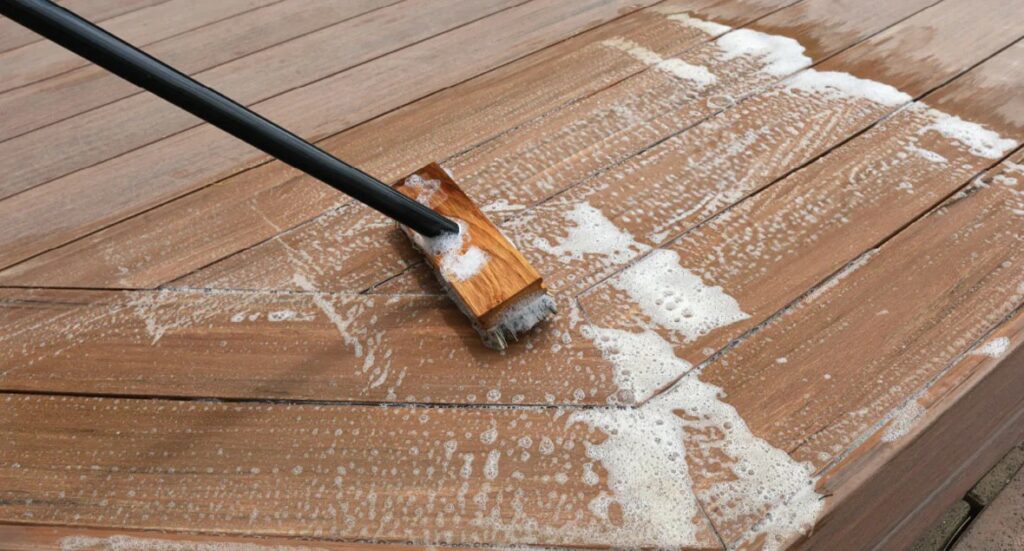
Leaves, pollen, dirt, and other debris can trap moisture on the deck surface. When that moisture freezes, it increases the risk of slippery conditions. Cleaning your deck during warmer months with mild soap, warm water, and a soft-bristle brush helps minimize buildup that can cause problems later in the winter.
Winter Safety Tips for Composite Decking
Composite decking can become slippery with snow, ice, and frost, but proper care can help reduce risks:
- Use the right snow removal tools. Clear snow using a broom or a shovel with a rounded, plastic edge. Metal or abrasive shovels can scratch or damage the deck surface.
- Shovel with the grain. Always work in the direction of the deck boards rather than across them to avoid surface damage.
- Remove unused items. Store away furniture, planters, and outdoor rugs that will not be used during winter. These items can trap moisture underneath, which may freeze and create slick areas.
- Avoid aggressive scraping. If ice is difficult to remove, it is often best to wait for temperatures to rise and allow it to melt naturally rather than forcing it off.
Ice Melt and De-Icing Products: What to Use and What to Avoid
Manufacturers generally recommend caution when using ice melt products on composite decking. Many composite brands allow calcium chloride–based ice melts, which are effective and less abrasive.
However, abrasive products—including some forms of rock salt—can scratch or damage the surface of composite boards. Always check the specific care and maintenance guidelines provided by your decking manufacturer before applying any ice melt product.
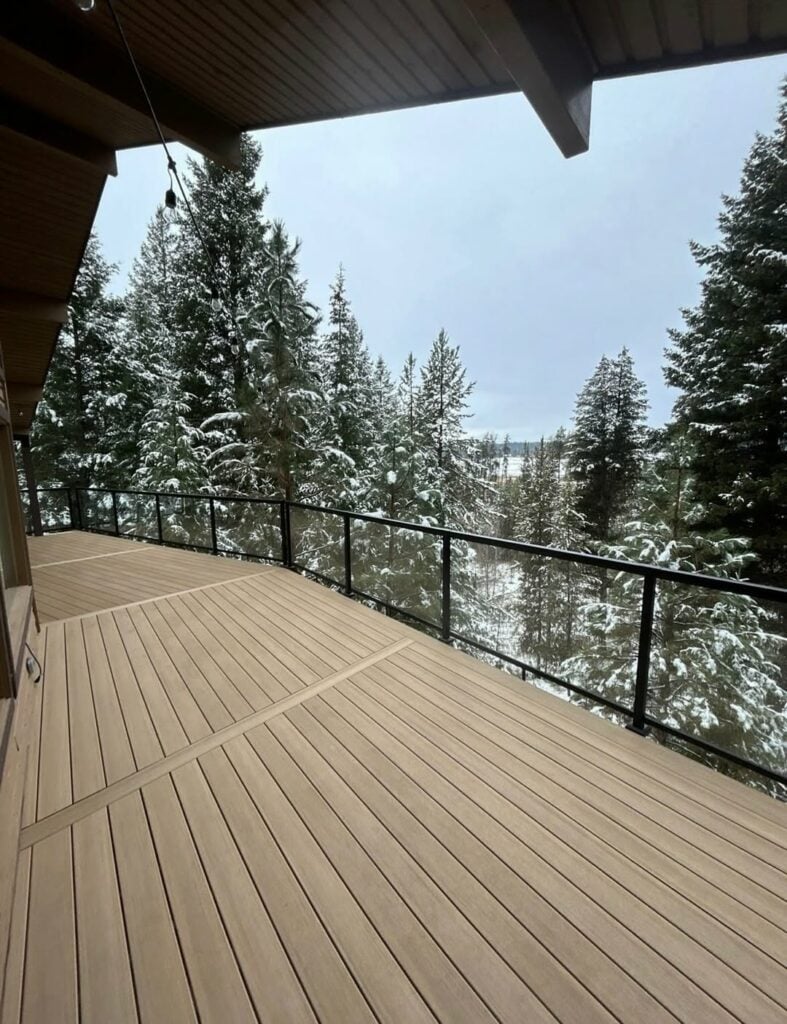
Composite Decking and Winter Performance
Composite decking is not immune to winter conditions. Like concrete, stone, or wood, it can become slippery when exposed to frost, snow, and ice. The good news is that modern composite decking offers improved traction, and with proper maintenance and winter care, it can remain a safe and reliable outdoor surface year-round.
Choosing quality materials, keeping the deck clean, and following manufacturer-recommended winter practices all go a long way toward minimizing winter slip hazards.
If you would like help selecting a composite decking option designed for long-term performance in all seasons, the team at AdvantageLumber.com is always here to help.