
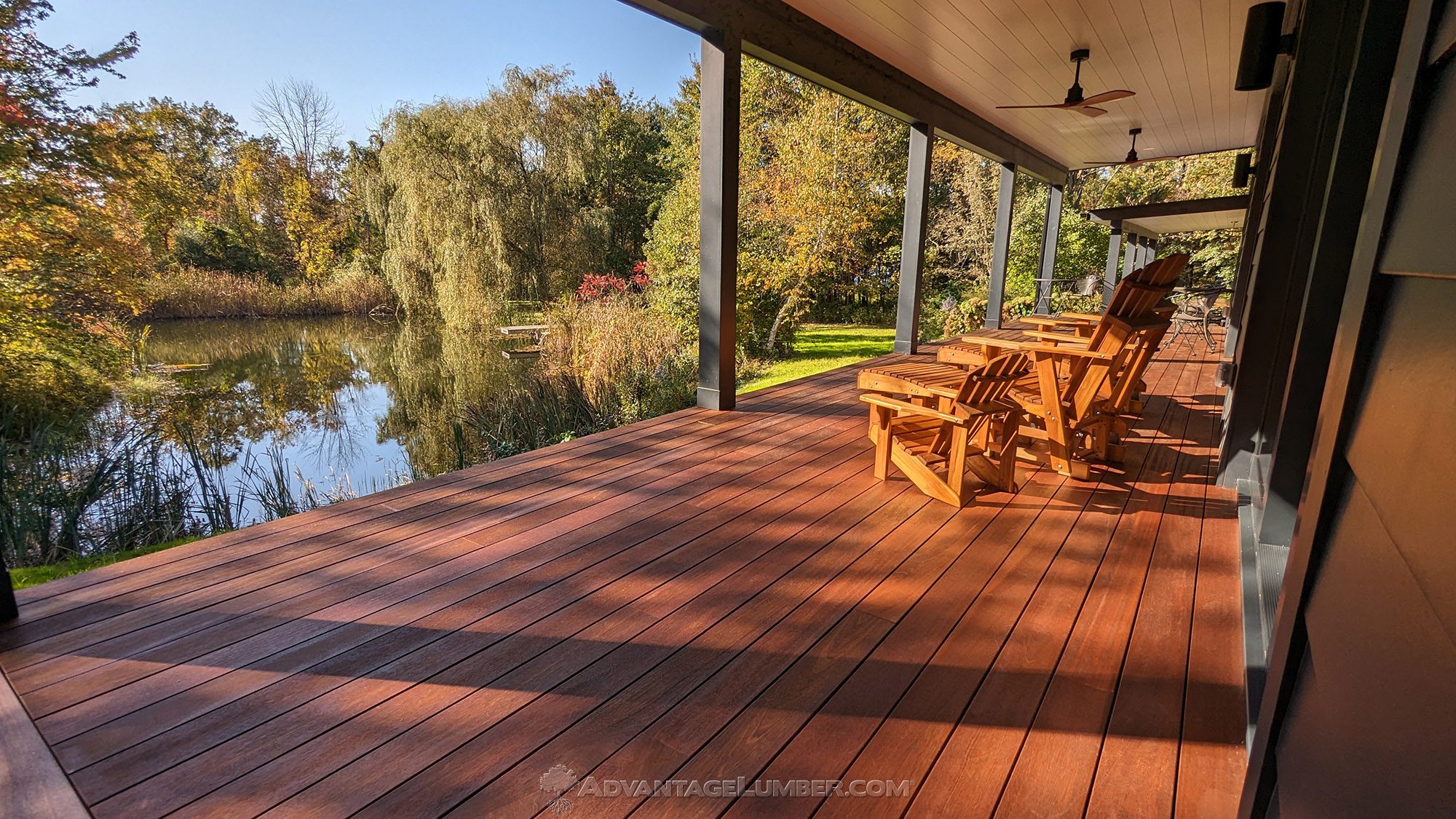
At Advantage Lumber, we often get asked, “Is mahogany a hardwood?” It’s a great question, and the answer is a resounding yes—mahogany is indeed a hardwood, prized for its durability, beauty, and workability. But there’s more to the story, especially when it comes to Genuine Mahogany, its rich history, and why it’s become so hard to find today.
In this post, we’ll discuss what makes mahogany a hardwood, trace the history of Genuine Mahogany, explain its scarcity, and highlight the species, including Red Balau, that we at Advantage Lumber often recommend as substitutes.
Is Mahogany a Hardwood?
Let’s start with the basics. Mahogany is classified as a hardwood due to its botanical characteristics and physical properties. Hardwoods come from deciduous trees—those that typically shed their leaves annually—and mahogany fits this category, though some species grow in tropical climates.
On the Janka hardness scale, which measures a wood’s resistance to denting and wear, Genuine Mahogany (Swietenia macrophylla) scores around 800-900 lbf (pounds-force). This makes it moderately hard, comparable to oak, and ideal for furniture, cabinetry, and outdoor applications like decking.
What sets mahogany apart is its tight, interlocking grain and rich, reddish-brown hue that deepens with age. It’s not just durable; it’s also a dream to work with, resisting warping and taking stains and finishes beautifully. These qualities have made mahogany a favorite for craftsmen and homeowners alike for centuries.
A Brief History of Genuine Mahogany
Genuine Mahogany, specifically Swietenia macrophylla (also known as Honduran or Big-Leaf Mahogany), has a storied past. Native to Central and South America, it was first discovered by European explorers in the 16th century.
By the 18th and 19th centuries, mahogany became the wood of choice for high-end furniture, shipbuilding, and architectural details. Its rich color and ability to hold intricate carvings made it a status symbol in Europe and North America, gracing the dining rooms of aristocrats and the hulls of luxury ships.
During the colonial era, mahogany was harvested extensively from the Caribbean, particularly Jamaica, and later from Central America. The demand was insatiable, and by the 20th century, over harvesting had taken its toll. Forests that once teemed with towering mahogany trees began to dwindle, and the species became harder to source sustainably.
Why Is Genuine Mahogany So Hard to Find Today?
Today, Genuine Mahogany is a rare commodity, and for good reason. Decades of unsustainable logging have depleted natural stands of Swietenia macrophylla, leading to strict regulations on its harvest and trade.
Mahogany is now listed on Appendix II of CITES (Convention on International Trade in Endangered Species), which controls its export to ensure sustainable practices. While some plantations grow mahogany, the supply is limited, and the slow growth rate of these trees—often taking 20-30 years to reach maturity—means it can’t keep up with demand.
Additionally, political and economic challenges in mahogany-producing regions, like parts of Central and South America, have made sourcing even more difficult. Combine that with the high cost of certified, sustainable mahogany, and it’s no wonder Genuine Mahogany is tough to come by.
At Advantage Lumber, we’re committed to responsible sourcing, which is why we often turn to high-quality substitutes that deliver similar beauty and performance.
Substitutes for Genuine Mahogany
While Genuine Mahogany is unparalleled, several species offer comparable characteristics and are more sustainable and accessible. Here are some of the top substitutes we recommend at Advantage Lumber, including our go-to choice, Red Balau:
- Red Balau (Shorea spp.): A standout substitute, Red Balau is a dense, durable hardwood from Southeast Asia, often used for decking and outdoor furniture. With a Janka hardness of around 1,600 lbf—nearly twice that of Genuine Mahogany—it’s incredibly tough and weather-resistant. Its deep reddish-brown color closely mimics mahogany’s aesthetic, making it a favorite at Advantage Lumber for clients seeking a similar look with superior durability for outdoor projects.
- Sapele (Entandrophragma cylindricum): This African hardwood is a close cousin to mahogany, with a similar interlocking grain and reddish-brown tone. Sapele is slightly harder (Janka ~1,500 lbf) and often used for furniture, flooring, and musical instruments. Its affordability and availability make it a popular choice.
- African Mahogany (Khaya spp.): Another African species, Khaya is often marketed as “mahogany” due to its visual and working similarities. It’s slightly lighter in color and less dense (Janka ~1,000 lbf) but still a great option for interior applications like cabinetry.
- Utile (Entandrophragma utile): Also known as Sipo, Utile is another African hardwood with a mahogany-like appearance and workability. It’s slightly harder than Genuine Mahogany (Janka ~1,200 lbf) and is often used for high-end furniture and millwork.
- Spanish Cedar (Cedrela odorata): Despite its name, Spanish Cedar is not a true cedar but a relative of mahogany. It’s lighter and softer (Janka ~600 lbf) but shares a similar color and grain, making it a budget-friendly option for indoor projects.
At Advantage Lumber, we often recommend Red Balau for outdoor applications like decking and pergolas because of its exceptional durability and mahogany-like appearance. For indoor projects, Sapele or African Mahogany are excellent choices that balance cost and aesthetics.
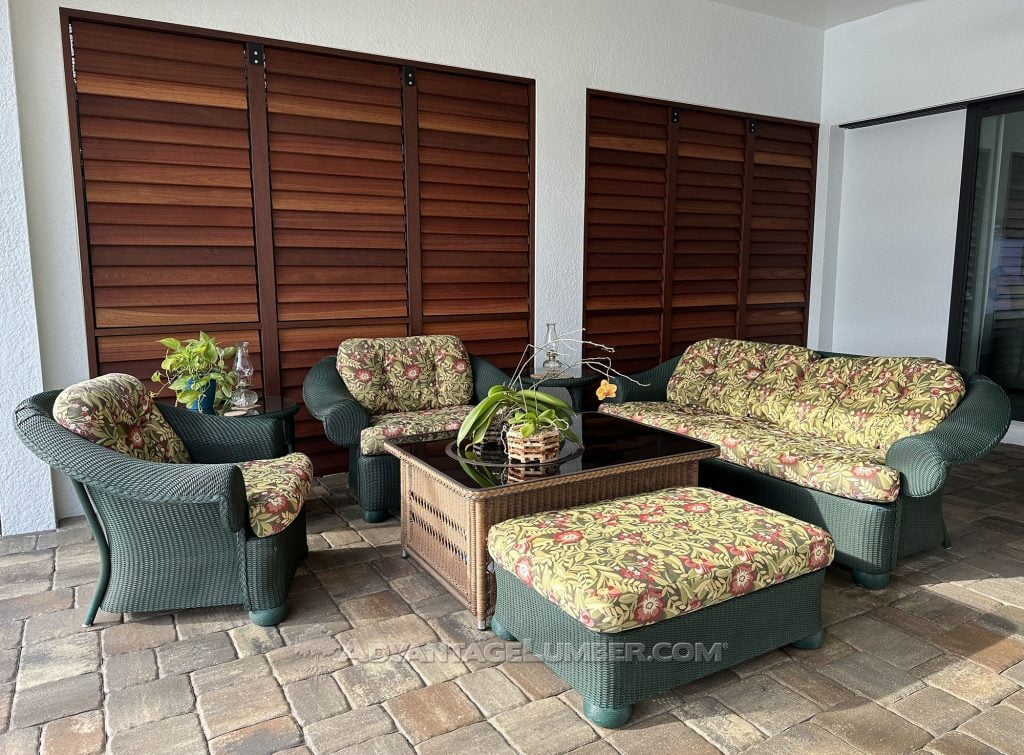
Why Choose Advantage Lumber for Your Mahogany Needs?
At Advantage Lumber, we understand the allure of Genuine Mahogany and the challenges of sourcing it responsibly. That’s why we offer a range of high-quality substitutes like Red Balau, Sapele, and African Mahogany, all carefully selected to meet your project’s needs. Whether you’re building a deck, crafting furniture, or designing custom mill work, our team is here to help you find the perfect wood with the look, feel, and performance you’re after.
Ready to explore mahogany or its substitutes for your next project? Visit us at AdvantageLumber.com or contact our experts to discuss your options. We’re passionate about helping you bring your vision to life with sustainable, beautiful hardwoods.