
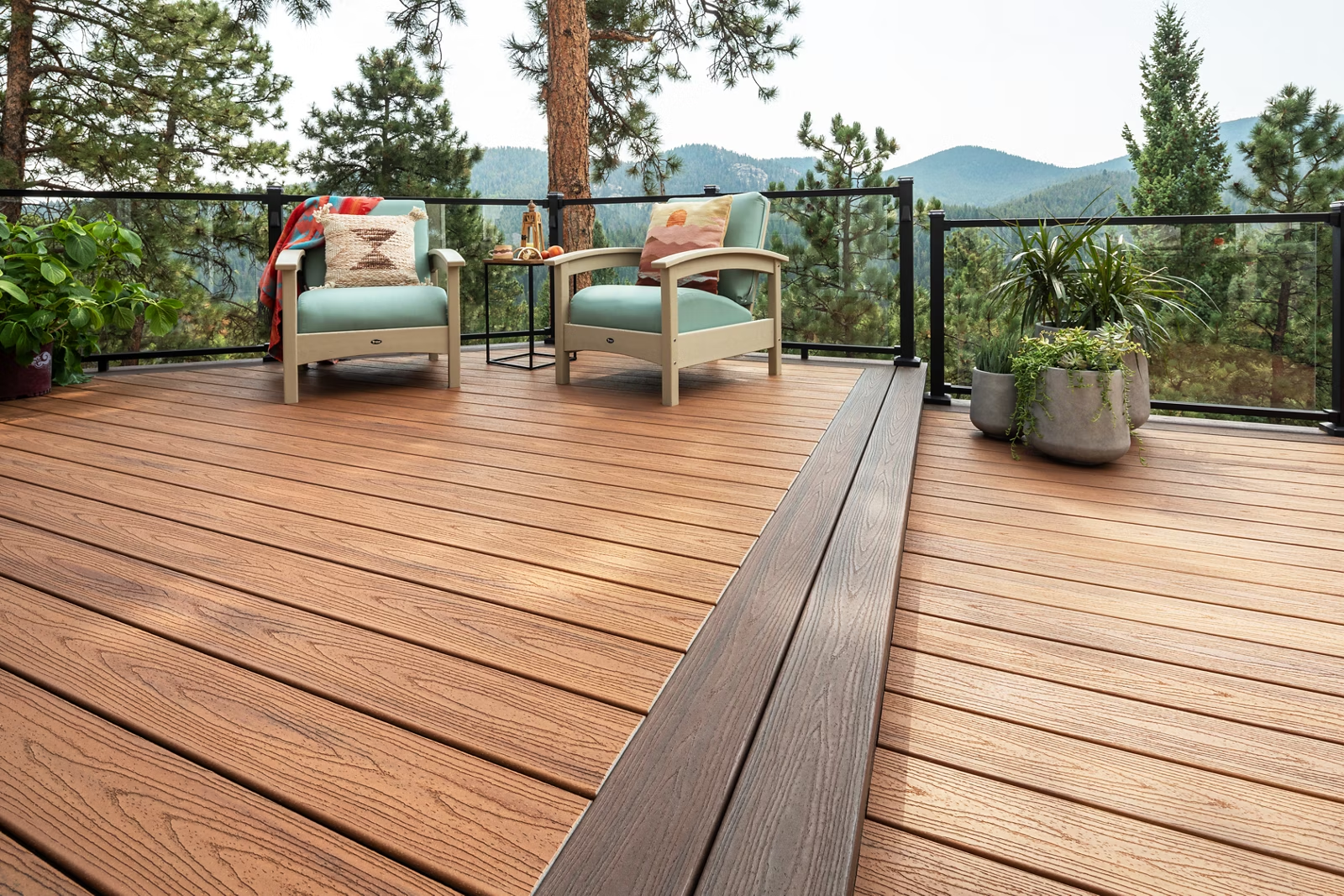
If you’ve ever walked barefoot across a deck in the middle of July, you already know the answer: it can get pretty hot.
One of the most common questions we hear from homeowners is:
“Does composite decking get hotter than wood?”
The short answer is yes—it often does. But there’s more to the story.
Modern composite decking has come a long way over the past decade. Manufacturers like Trex®, TimberTech®, and Deckorators® have introduced new technologies designed to reduce heat buildup, especially in lighter colors. However, every decking material exposed to direct summer sun will heat up.
To find out how different decking materials actually perform, we decided to stop guessing and start testing.
We Put Composite Decking to the Test
Rather than relying on manufacturer specifications or laboratory data, we tested a variety of decking materials outdoors in direct Florida sunshine using an infrared thermometer.
Our test included several popular decking materials, including:
- Trex® composite decking
- TimberTech® composite decking
- TanDeck® HDPE decking
- Thermally Modified Wood
- Ipe decking
- Cumaru decking
- Tigerwood decking
- Plantation Teak decking
- Brazilian Redwood
- Mahogany
Watch the full test here:
▶ HEAT TEST – Hardwoods and Composites in Florida Sun
https://youtu.be/3OOT6tgsLLw?si=Gi4P0T2OHPMUOyVQ
Our goal wasn’t to prove one product was “bad.” We simply wanted to show homeowners how different materials perform in real world conditions.
Why Does Composite Decking Get Hot?
Composite decking is made from a combination of recycled plastics and wood fibers.
Plastic naturally absorbs and retains heat more than natural wood fibers. When combined with full sun exposure, surface temperatures can become uncomfortable for bare feet.
Several factors influence how hot a deck gets:
- Color
- Material composition
- Amount of direct sunlight
- Ventilation beneath the deck
- Time of day
- Geographic location
Even concrete, pavers, and tile can become extremely hot during summer.
Color Matters More Than Most People Realize
Perhaps the biggest factor isn’t the brand, it’s the color.
Dark colors absorb significantly more solar energy than lighter colors.
For example:
- Charcoal
- Espresso
- Walnut
- Dark Brown
will typically become much hotter than:
- Light Gray
- Weathered Gray
- Sand
- Tan
- Driftwood
If your deck receives full sun all afternoon, choosing a lighter color can make a noticeable difference in comfort.
Today’s Composite Decking Is Better Than Ever
It’s important to recognize how much composite decking has improved.
Many premium products now feature heat mitigation technology that reflects more solar energy than earlier generations of composite decking.
Some examples include:
- Trex® Signature®
- Trex® Transcend® Lineage™
- Trex® Transcend®
- TimberTech® Advanced PVC collections
- Other newer premium capped composites
These products generally stay cooler than older composite decking, although they still become hot during long periods of direct sun.
Hardwood Decking Often Stays Cooler
One surprise from our testing was how well natural hardwood decking performed.
Species like:
- Plantation Teak
- Ipe
- Cumaru
- Tigerwood
- Mahogany
all remained noticeably cooler than many composite products we tested.
In our Florida heat test, Plantation Teak recorded the lowest surface temperature of all materials tested.
Natural wood doesn’t contain plastic, allowing it to dissipate heat differently than synthetic materials.
That doesn’t mean hardwood never gets hot—it certainly does—but many homeowners are surprised by how much more comfortable it can feel under bare feet.
PVC Decking vs Composite Decking
Not all synthetic decking performs the same.
Traditional composite decking contains wood fibers.
PVC decking contains no wood fibers at all.
Premium PVC products often include additional cooling technologies and generally perform better in hot climates than standard wood plastic composites.
At AdvantageLumber.com we carry several premium PVC collections from TimberTech® that are designed with comfort in mind.
Tips for Keeping Any Deck Cooler
Regardless of the material you choose, there are several ways to reduce deck surface temperatures.
Choose lighter colors
Lighter colors reflect more sunlight and absorb less heat.
Add shade
Pergolas, covered patios, awnings, umbrellas, and shade sails dramatically reduce surface temperatures.
Use outdoor rugs
Strategically placed rugs can make barefoot walking much more comfortable.
Rinse with water
A quick spray from the garden hose can cool a deck immediately on especially hot afternoons.
Consider your deck orientation
South and west facing decks receive the most afternoon sun and typically experience the highest surface temperatures.
Is Composite Decking Too Hot for Pools?
Around pools, deck temperature becomes even more important because people are typically barefoot.
If you’re installing decking around a pool, consider:
- Lighter composite colors
- Premium PVC decking
- Natural hardwood decking
- Plantation Teak decking
- Hardwood deck tiles over existing concrete pool decks
These options often provide a more comfortable walking surface during peak summer temperatures.
So…Should You Avoid Composite Decking?
Absolutely not.
Composite decking remains an outstanding choice for homeowners looking for:
- Low maintenance
- Excellent durability
- No sanding
- No staining
- Long warranties
- Beautiful wood look finishes
You simply need realistic expectations.
Every decking material including wood, composite, concrete, stone, and pavers gets hot in direct sunlight.
If minimizing heat is your highest priority, lighter colors, premium PVC decking, or natural hardwood decking are generally your best options.
Watch the Real Heat Test
Instead of relying solely on marketing claims, see the results for yourself.
Our side by side comparison shows exactly how various decking materials performed after sitting in direct Florida sunshine.
▶ Watch the full video here:
https://youtu.be/3OOT6tgsLLw?si=Gi4P0T2OHPMUOyVQ
If you’re still deciding between hardwood, composite, or PVC decking, our decking specialists can help you compare products, request samples, and choose the best material for your climate, budget, and lifestyle.
