

Thermally modified wood has become an increasingly popular choice for decking, siding, and other outdoor applications. The process of thermally modifying wood involves heating it to high temperatures in a controlled environment, which changes its properties, making it more resistant to rot, decay, and insects.
However, despite these advantages, thermally modified wood is not without its challenges. In this post, we’ll explore some common problems associated with thermally modified wood, particularly focusing on the issues seen with thermally modified wood products.
Additionally, we’ll discuss how sourcing your thermally modified wood from reputable suppliers like AdvantageLumber.com can help you avoid these pitfalls.
1. Varying Durability Across Wood Species
One of the most significant issues with thermally modified wood is the inconsistency in performance across different species. While the thermal modification process enhances durability in many types of wood, not all species respond equally well.
Pine, for example, has shown to not be as durable as Ash on horizontal surfaces such as decking. Deck applications receive a lot of foot traffic and weather elements such as rain and snow just beat on the surface for hours.
Even with the thermal modification process Pine is still not going to be as durable as a hardwood like Ash. Therefore we typically recommend thermally modified pine for walls, siding, and ceiling applications that don’t get the wear and tear of a deck application.
2. Increased Brittle Nature Leading to Cracking
The thermal modification process involves subjecting the wood to extreme heat, which can cause the wood to become more brittle. This increased brittleness can lead to surface checking and cracking, particularly in species that are already prone to these issues.
Cracks in the wood can allow moisture to penetrate, further exacerbating the risk of decay. For species like Pine, which already struggle with durability in certain applications such as decking this can lead to accelerated deterioration.
3. Moisture Sensitivity
Despite the intended moisture resistance provided by thermal modification, some types of wood can still absorb water, leading to swelling, warping, and rot. This is particularly true in softer woods like Pine, which have shown less stability and resistance when exposed to prolonged moisture. This sensitivity to moisture can cause significant problems, especially in climates with high humidity or frequent rainfall, where the wood may fail much sooner than expected.
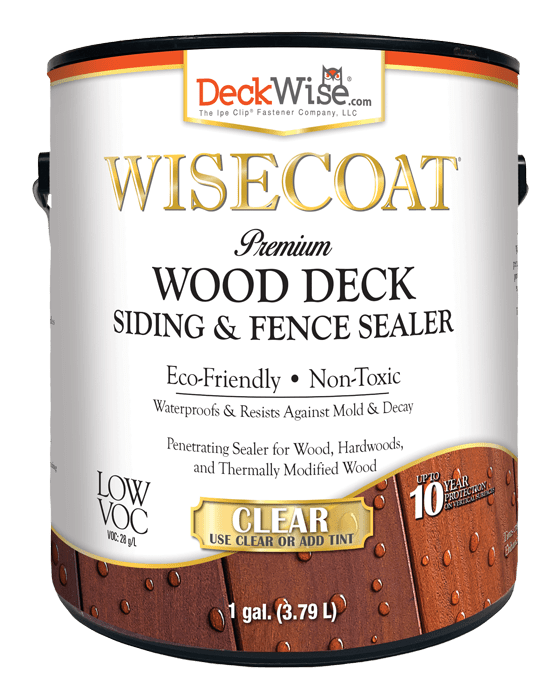
To help greatly reduce the moisture issues we recommend using DeckWise WiseCoat wood sealer which is warranted to prevent long standing water accumulation for up to 10 years on vertical surfaces and 6 years on horizontal surfaces.
4. Maintenance and Aesthetic Challenges
Thermally modified wood often undergoes a noticeable color change during the modification process, resulting in a deeper, richer hue. However, without proper maintenance, this color can fade quickly when exposed to sunlight and the elements. The faded, weathered appearance can detract from the wood’s visual appeal, and if the wood is not properly sealed, it can lead to further issues with moisture ingress and surface degradation.
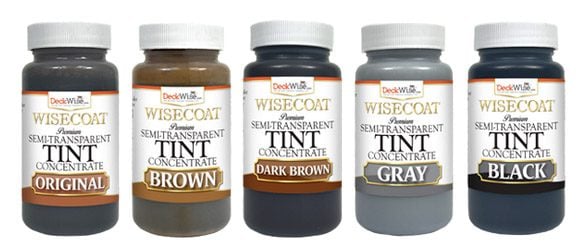
Luckily the DeckWise WiseCoat wood sealer is available with your choice of color tint that helps maintain your desired color in addition to repelling water. You simply mix the tint into the gallon, stir it real good and apply it to your thermally modified wood to enhance and protect the color.
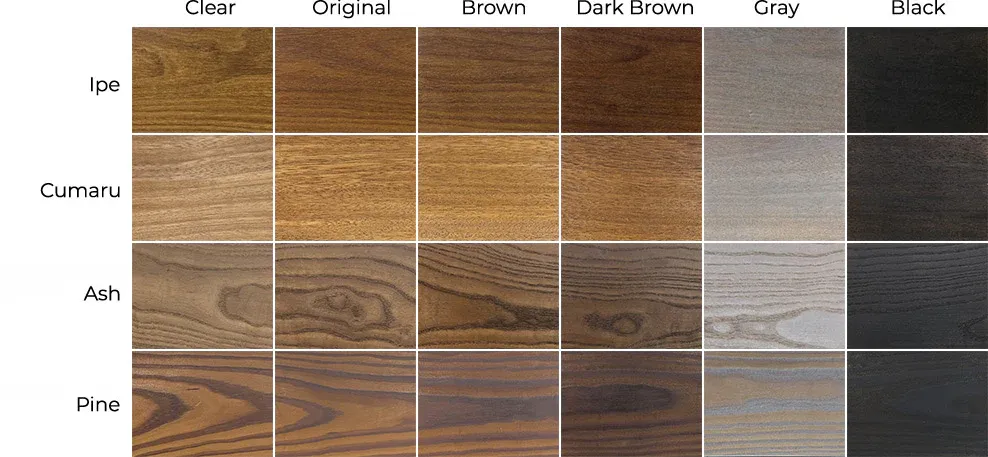
Below you can see all the color options on thermally modified Ash, Pine as well as Ipe and Cumaru.
5. Cost vs. Reliability
Thermally modified wood comes at a premium price due to the additional processing it undergoes. While this cost is often justified by the promise of increased durability and lower maintenance, the experience with certain species like Pine calls this into question.
If the wood fails prematurely, as has been the case in some instances, the cost-benefit equation becomes problematic, leading to costly replacements and potential damage to the structures it was intended to protect.
For certain applications like a deck on your home a thermally modified pine deck board will not last as long as thermally modified ash. Know your application and pick the right product for longevity not just cost.
Advantage Lumber Your Direct Source for Thermally Modified Wood
Given the potential issues with thermally modified wood, particularly with species like Pine, it’s crucial to source your materials from a reputable supplier that offers not just quality options but expert guidance on picking the right modified wood products for your project.
AdvantageLumber.com is a direct source for thermally modified wood products. Other suppliers buy from 2 step or even 3 step distributors. Each distribution company is marking up your thermally modified wood 20 – 30% each time which drives up the cost to you the end consumer.
For 30+ years AdvantageLumber.com has focused on a direct to consumer approach. This cuts out middle men and puts quality thermally modified wood products delivered directly to your home at a price you can afford.
Conclusion
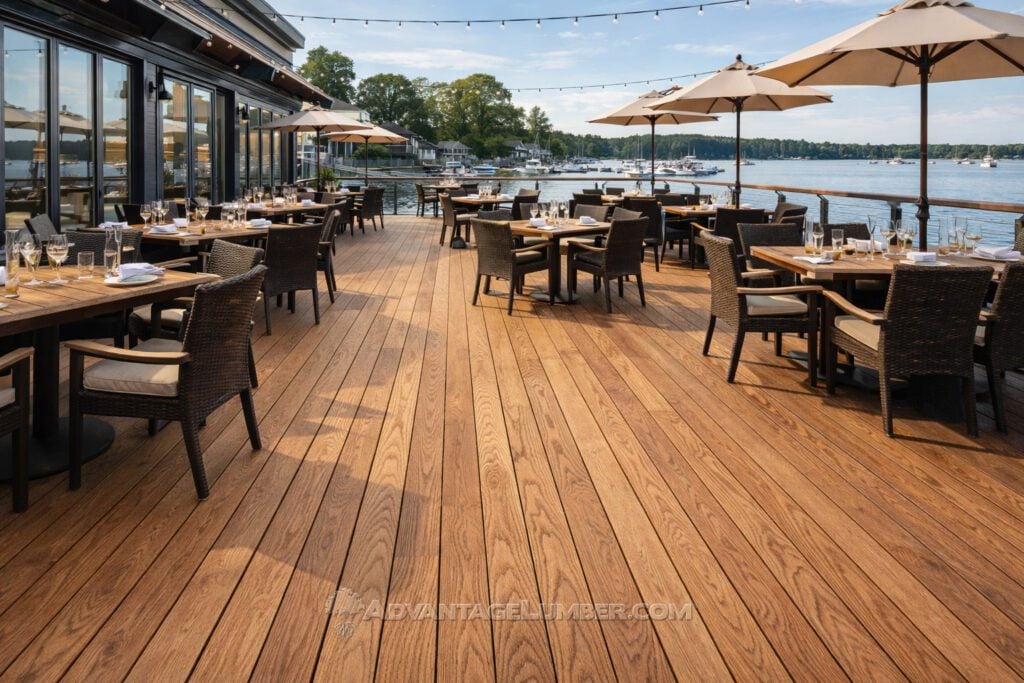
While thermally modified wood offers several advantages, it’s essential to be aware of the potential problems as well as when and where you should use each specie. These challenges highlight the importance of choosing the right type of wood and sourcing it from a trusted supplier. AdvantageLumber.com offers quality modified wood products at factory direct prices.

My interest is in custom outdoor furniture. how would somthing like an Adirondack chair stand up to the stress of use and to the outdoor environment ie. rain/snow/sun?
It would hold up fine to rain snow and sun. We do recommend applying a oil or water based finish to help protect from the rain snow and sun which will help keep the wood looking new for years to come.