
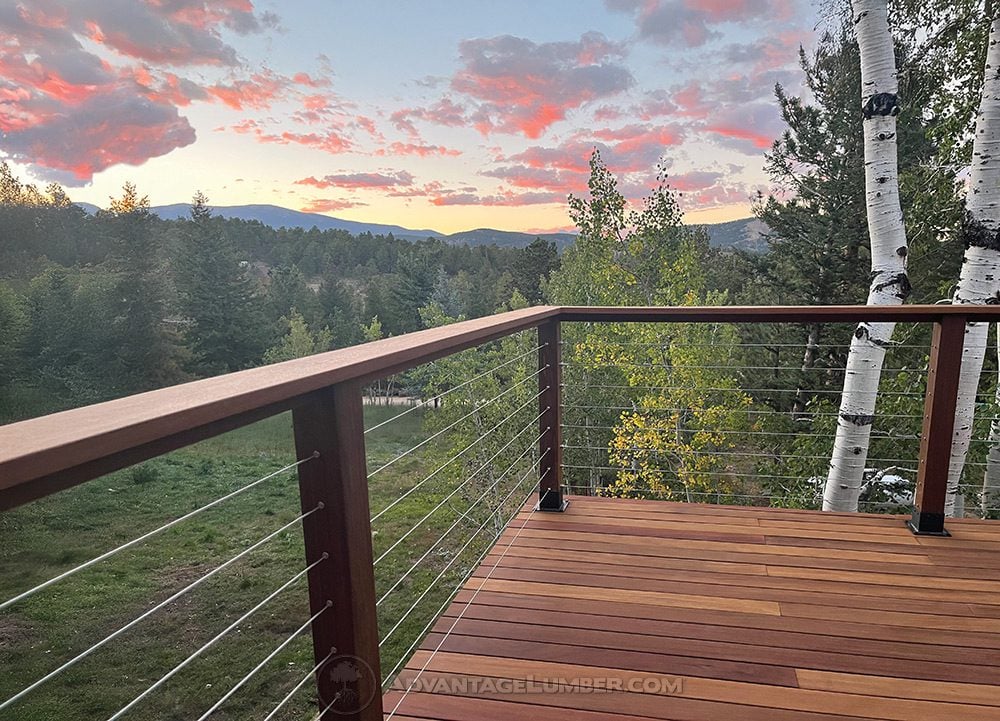
A deck railing does much more than meet building code requirements. It helps define the style of your outdoor living space, improves safety, and can even increase your home’s curb appeal. With so many materials, colors, and designs available today, choosing the right railing can feel overwhelming.
The good news is that the best deck railing isn’t necessarily the most expensive one. It’s the one that fits your home’s style, your maintenance preferences, your budget, and how you plan to use your deck.
Start with Safety and Building Codes
Before comparing materials or colors, make sure your railing will meet local building codes.
While requirements vary by municipality, most residential decks that are more than 30 inches above grade require a railing. Residential railing height is commonly 36 inches, although some areas require 42 inches. Baluster spacing is typically limited to less than 4 inches to help prevent children from slipping through.
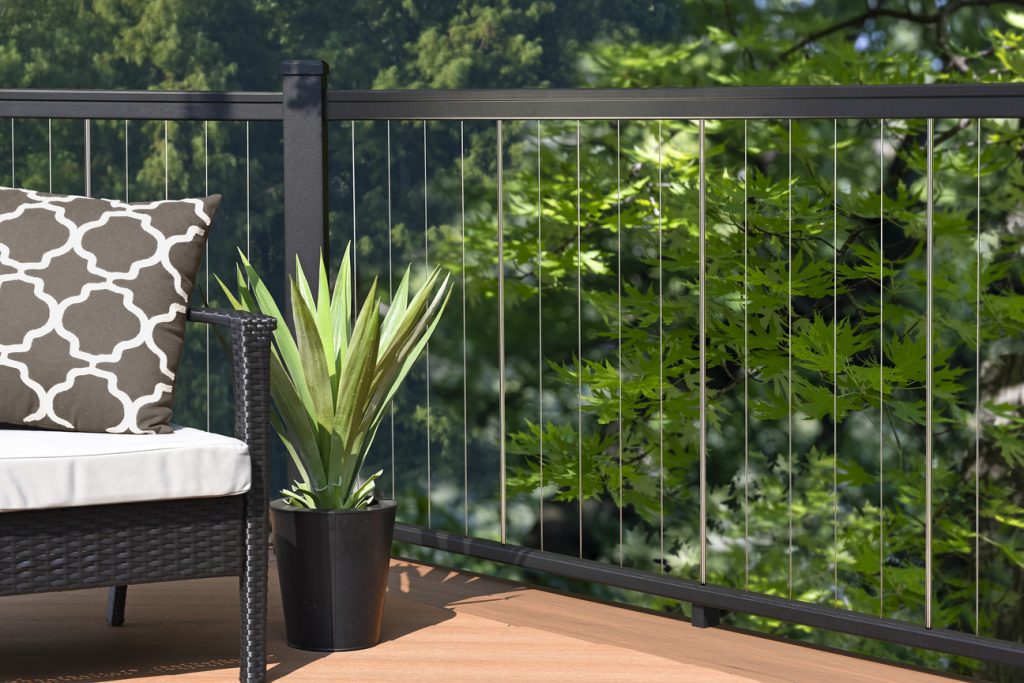
If you’re considering cable railing or other horizontal infill designs, check your local codes before ordering. Some municipalities restrict horizontal cable systems because they can create a climbable surface for young children.
Building codes should always be your starting point. Once you know what’s allowed, you can narrow your options based on style and performance.
Consider Your Home’s Architectural Style
Your deck railing should complement your home instead of competing with it.
Here are a few general pairings that work well:
- Traditional homes: Hardwood railings, composite railing with classic balusters, or white PVC systems.
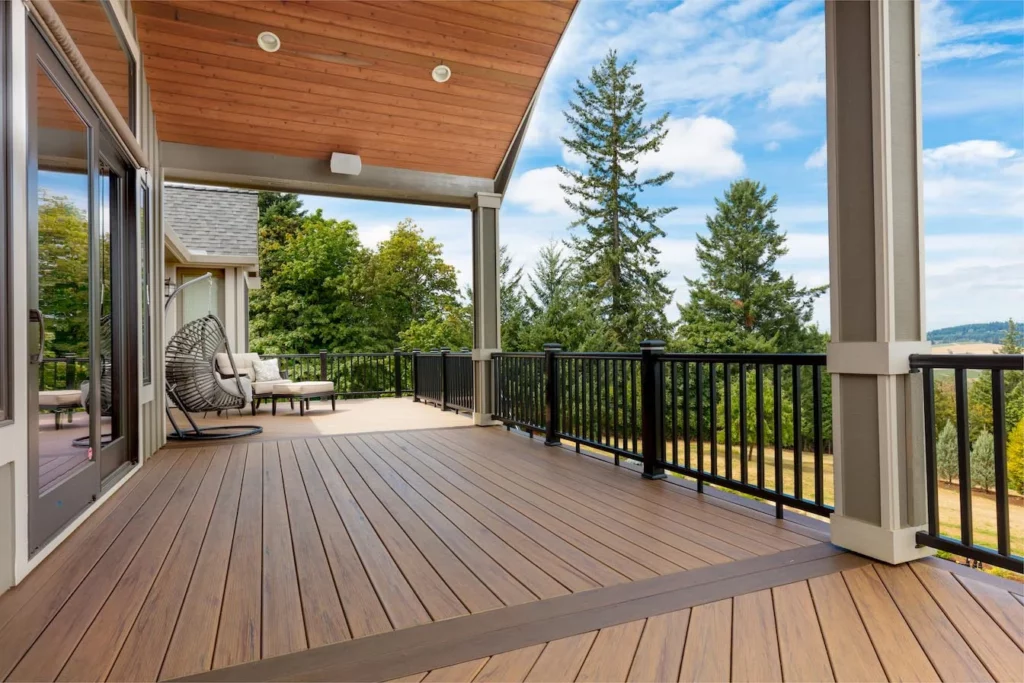
- Modern homes: Aluminum railing, cable railing, or glass panel railing with clean lines.
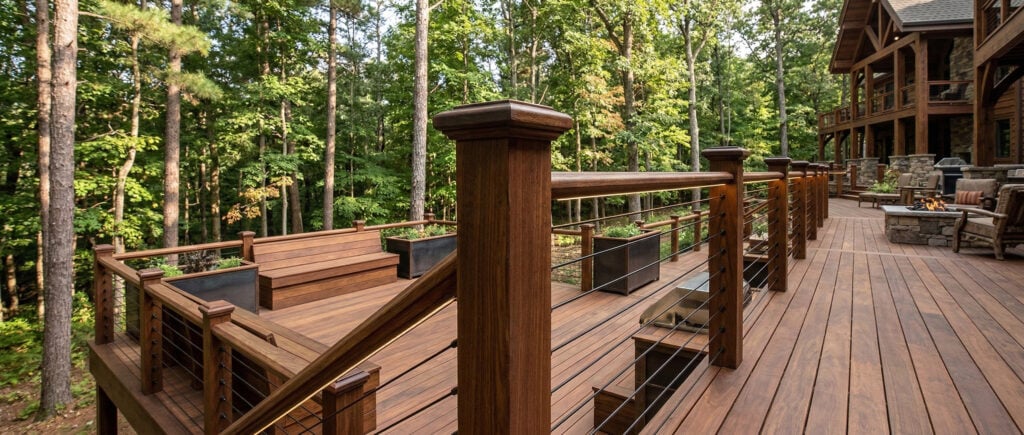
- Rustic homes: Natural hardwood railings paired with wood decking.
- Coastal homes: Aluminum, PVC, or cable railing that preserves water views.
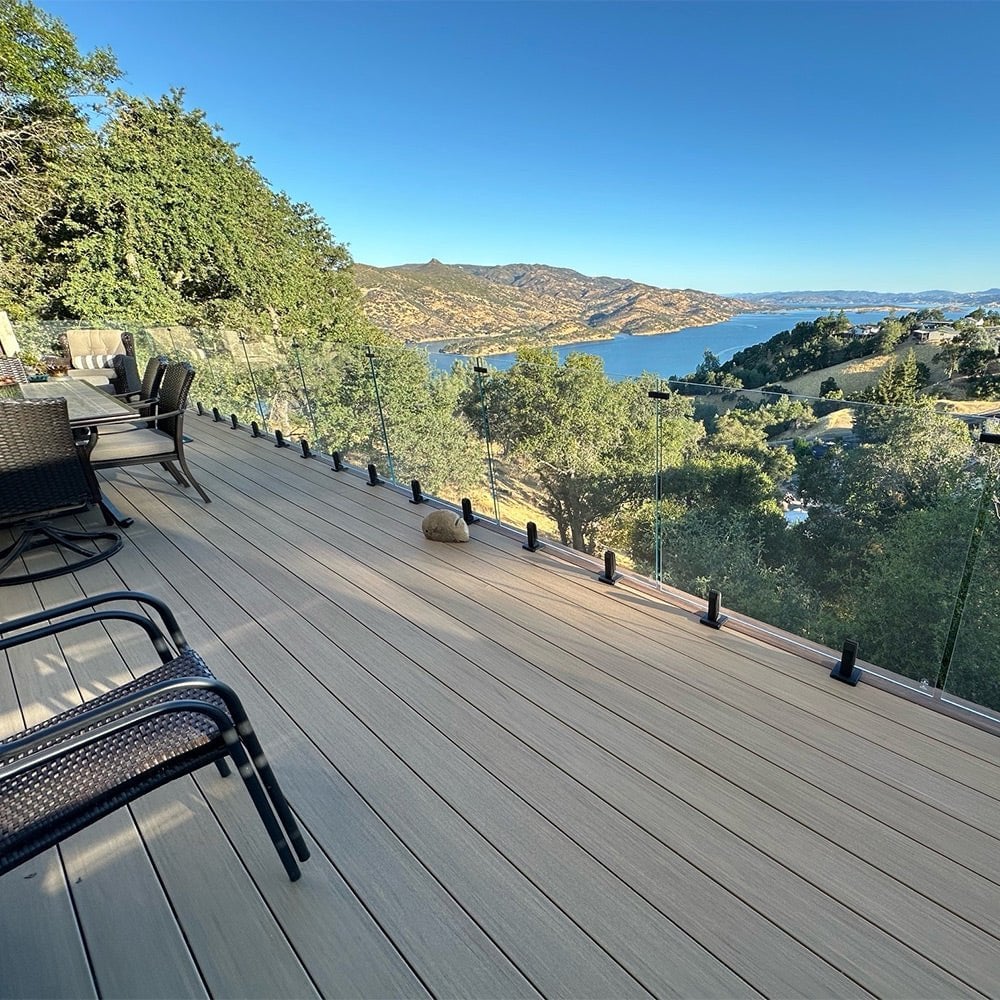
If your deck overlooks a lake, mountains, or wooded backyard, consider railing systems that maximize visibility. Glass panels or cable railing can help preserve the view without sacrificing safety.
Choose the Right Material
Every railing material has advantages. Understanding the differences will help you choose one that matches your lifestyle.
Hardwood Railing
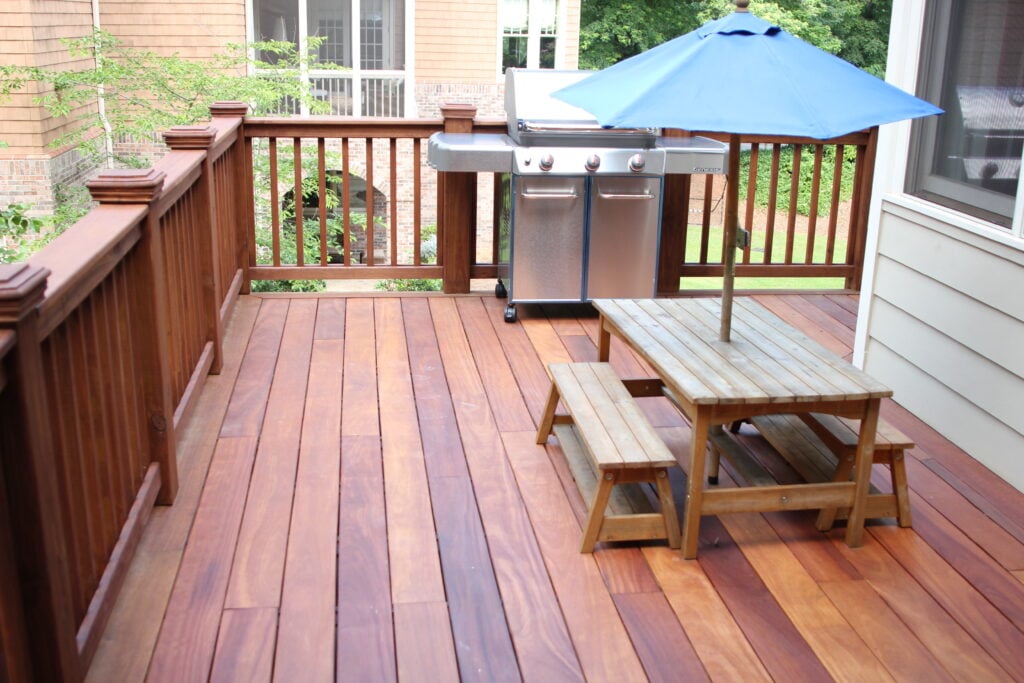
For homeowners who appreciate natural beauty, hardwood railing remains one of the most attractive options available.
Species like Ipe, Cumaru, and Tigerwood offer exceptional durability, natural resistance to rot and insects, and a rich appearance that complements premium hardwood decking. When properly maintained, many hardwood railings can last for decades.
Best for:
- Natural wood aesthetics
- Long-term durability
- Luxury outdoor spaces
Keep in mind: Hardwood benefits from occasional maintenance with a high-quality penetrating hardwood oil if you want to maintain its original color. Left untreated, it will naturally weather to an attractive silver-gray patina.
Metal Railing
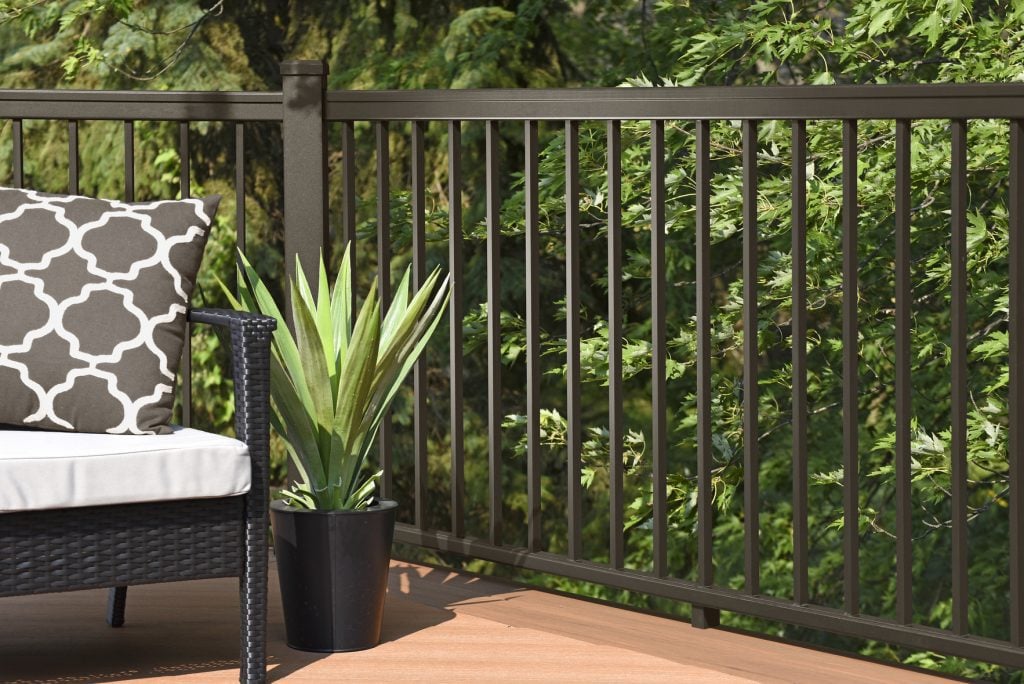
Metal railing has become one of the most popular choices for modern decks.
It’s lightweight, corrosion-resistant, and requires very little maintenance. Powder-coated finishes resist fading and eliminate the need for painting or staining.
Aluminum also pairs well with cable railing or glass panels for a contemporary appearance.
Best for:
- Modern homes
- Low maintenance
- Long-lasting performance
Composite Railing
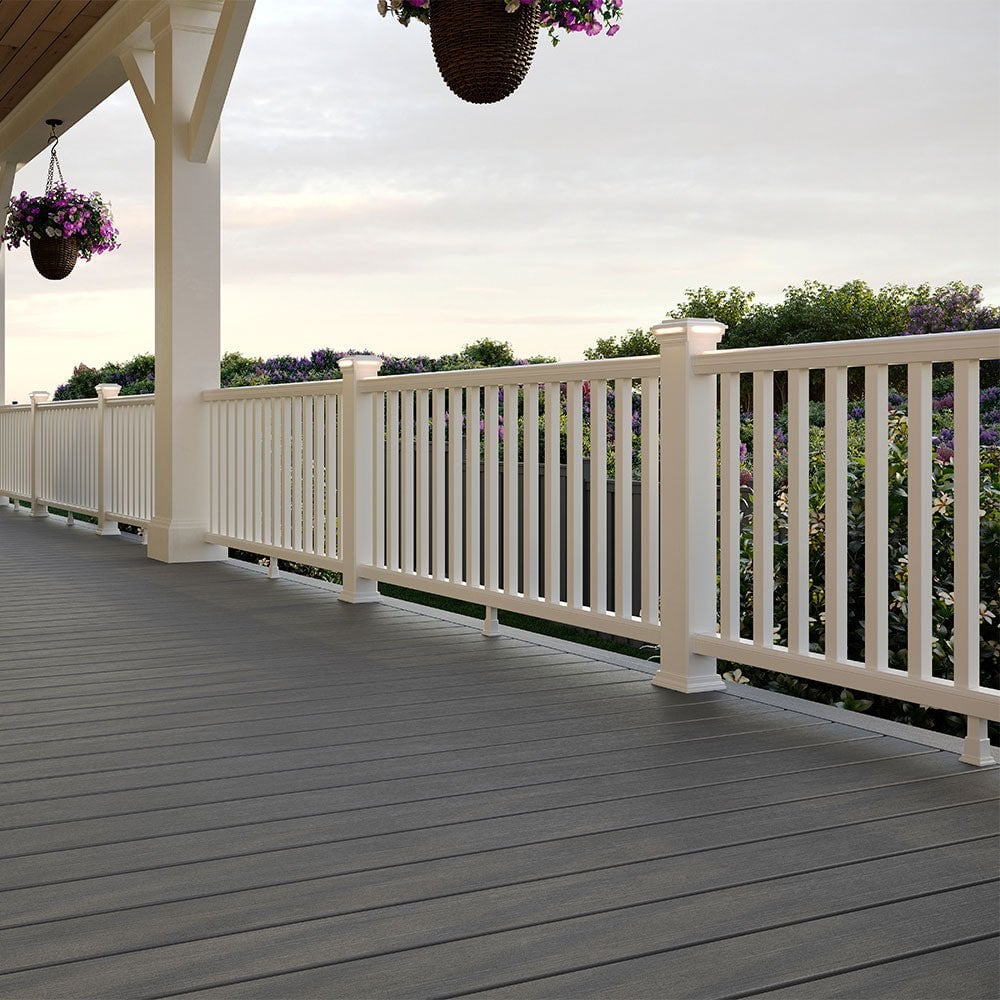
Composite railing offers the appearance of painted wood without the regular upkeep.
Many systems coordinate with composite decking colors, making it easy to create a cohesive outdoor living space.
Best for:
- Homeowners who want minimal maintenance
- Matching composite decking
- Traditional or transitional designs
PVC (Vinyl) Railing
PVC railing remains a popular option for homeowners looking for an affordable, low-maintenance solution.
It won’t rot, peel, or require painting, making it especially attractive in wet climates.
Best for:
- Budget-conscious projects
- Easy maintenance
- Bright, clean appearance
Cable and Glass Railing
If preserving your view is a priority, cable or glass railing may be worth considering.
Cable railing creates an open, modern appearance while glass panels provide the least visual obstruction.
Keep in mind that glass requires more frequent cleaning to maintain its clear appearance, while cable railing should always comply with local building codes.
Think About Maintenance Before You Buy
One of the biggest differences between railing materials is how much maintenance they’ll require over the years.
| Material | Maintenance |
|---|---|
| Hardwood | Occasional cleaning and oiling to maintain original color |
| Aluminum | Virtually maintenance-free |
| Composite | Occasional soap-and-water cleaning |
| PVC | Occasional washing |
| Glass | Regular cleaning to remove fingerprints, pollen, and water spots |
Consider Long-Term Value Instead of Initial Cost
It’s tempting to focus on the upfront price, but deck railing is a long-term investment.
Lower-cost materials may require more maintenance or replacement over time, while premium materials often provide decades of reliable performance.
When comparing options, think about:
- Expected lifespan
- Maintenance costs
- Warranty coverage
- Appearance over time
- Overall value
Sometimes spending a little more initially can save money over the life of your deck.
Questions to Ask Before Choosing a Deck Railing
Before making your final decision, ask yourself these questions:
- How much maintenance am I willing to do?
- Do I want to preserve my backyard view?
- Does this railing complement my home’s architecture?
- Will it coordinate with my decking material?
- Does it meet my local building codes?
- How long do I expect this deck to last?
Answering these questions can quickly narrow your choices and help you select a railing system you’ll be happy with for years to come.
Final Thoughts
The best deck railing is one that balances safety, durability, maintenance, and style.
If you love the timeless beauty of natural wood, hardwood railing offers unmatched character and longevity. For homeowners seeking a low-maintenance solution, aluminum, composite, and PVC railing systems all provide excellent performance with minimal upkeep. And if your backyard view is the star of the show, cable or glass railing can help you enjoy it without obstruction.
Taking the time to compare your options now will help ensure your new deck looks great, functions safely, and complements your home for many years.
Frequently Asked Questions
What is the best material for deck railing?
The best material depends on your priorities. Hardwood offers unmatched natural beauty and durability, aluminum provides excellent strength with minimal maintenance, composite delivers a wood-like appearance without regular upkeep, and PVC is an affordable, low-maintenance option.
What is the lowest maintenance deck railing?
Powder-coated aluminum railing is one of the lowest-maintenance options available. It resists rust, corrosion, fading, and insect damage, requiring little more than occasional cleaning.
Should my deck railing match my decking?
Not necessarily. While matching materials creates a cohesive appearance, many homeowners mix materials for added visual interest. For example, hardwood decking pairs beautifully with black aluminum railing, while composite decking often looks great with coordinating composite or aluminum railing systems.
Ready to Upgrade Your Deck?
Explore Advantage Lumber‘s selection of premium hardwood railing components, aluminum railing systems, and other deck railing options to find the perfect fit for your next outdoor project.
