
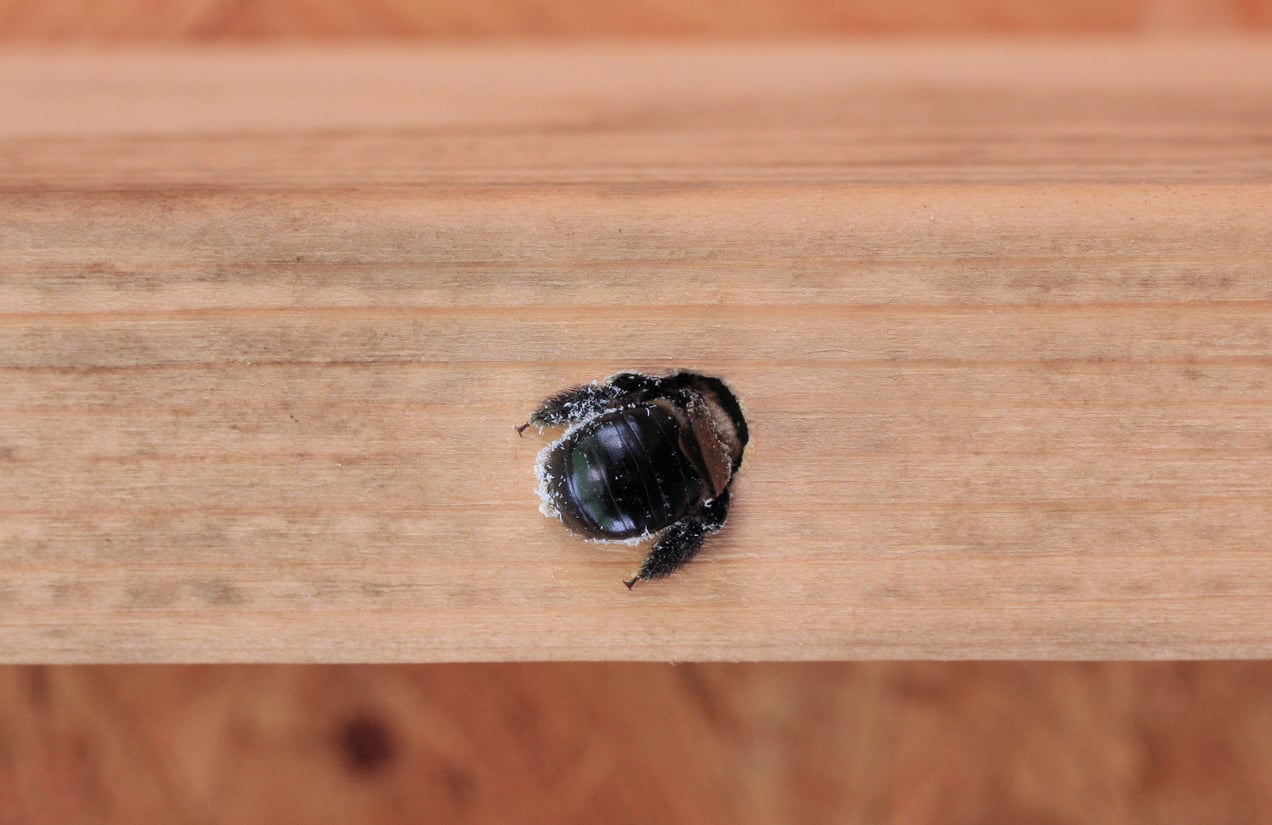
If you’ve walked out onto your deck this spring and noticed perfectly round holes drilled into the wood, there’s a good chance carpenter bees have moved in. If you’re wondering how to deter carpenter bees from deck areas, it’s important to know they can cause significant issues. While bees are an important part of our ecosystem and deserve recognition on World Bee Day, carpenter bees can create serious damage to decks, railings, pergolas, and other outdoor wood structures when left untreated.
Unlike termites, carpenter bees don’t eat wood. Instead, they tunnel into it to create nesting galleries where they lay eggs. Over time, repeated nesting can weaken wood, create unsightly damage, attract woodpeckers, and shorten the lifespan of your deck.
The good news? There are several ways to prevent carpenter bee damage without harming beneficial pollinators unnecessarily. Even better, there are alternative framing, decking and railing materials available from AdvantageLumber.com that carpenter bees simply cannot chew through.
What Do Carpenter Bee Holes Look Like?
Carpenter bee damage is easy to identify because the holes are almost perfectly round and usually about the diameter of a dime.
Common signs include:
- Round entry holes in exposed wood
- Yellowish staining beneath holes
- Sawdust-like material under nesting areas
- Buzzing around deck railings and overhead structures
- Woodpecker damage caused by birds searching for larvae
Once inside the wood, carpenter bees create tunnels that can extend several inches and branch out over time.
The Most Vulnerable Parts Of A Deck
Carpenter bees typically target areas that are:
- Exposed to direct sunlight
- Protected from heavy rain
- Easy to access from below or from the sides
- Made from softer woods
The most common attack points on a deck include:
Deck Railings
Railings are one of the biggest targets because they are elevated, exposed, and often made from softer wood species.
Stair Stringers & Stair Rails
These areas provide sheltered locations where carpenter bees can easily drill and nest.
Joists & Deck Framing
Exposed framing underneath the deck is especially vulnerable if left unfinished or untreated.
Pergolas & Shade Structures
Horizontal beams and overhead framing are favorite nesting areas because they stay relatively dry.
Fascia Boards
Carpenter bees frequently target fascia boards because they offer long uninterrupted surfaces for tunneling.
The Most Vulnerable Wood Species
Not all wood is equally attractive to carpenter bees. Softer woods are typically more susceptible because they are easier to drill into.
Woods Most Commonly Attacked
- Cedar
- Redwood
- Pine
- Fir
- Cypress
- Pressure Treated Lumber
Pressure treated wood may resist rot, but it does not stop carpenter bees from tunneling into it.
Why Softwoods Are More Vulnerable
Carpenter bees prefer woods with:
- Lower density
- Softer grain structure
- Minimal finishes or coatings
- Weathered surfaces
Older decks that have not been stained or sealed are especially vulnerable.
How To Prevent Carpenter Bee Damage
Fortunately, homeowners have several effective treatment and prevention options available.
1. Seal & Stain Your Deck
One of the best ways to discourage carpenter bees is by properly sealing and maintaining the wood.
Carpenter bees prefer unfinished or weathered wood surfaces. Applying a high quality sealer or stain can make the wood less attractive and harder for bees to drill into.
A penetrating wood sealer such as DeckWise WiseCoat® can help reduce moisture intrusion while protecting the surface from weathering that makes wood more appealing to carpenter bees.
2. Paint Vulnerable Areas
Carpenter bees strongly prefer bare wood and stained wood over painted surfaces.
Painting vulnerable areas such as:
- Fascia boards
- Railings
- Pergolas
- Trim boards
can significantly reduce carpenter bee activity.
3. Fill Existing Holes
If carpenter bee holes already exist, they should be repaired quickly to discourage future nesting.
Homeowners can:
- Treat the hole if active bees are present
- Fill the cavity with wood filler or dowels
- Sand smooth
- Seal or paint the repaired area
Leaving old holes untreated encourages future generations to reuse the same nesting locations.
4. Apply Carpenter Bee Deterrents
There are several non-lethal deterrent methods homeowners use successfully, including:
- Citrus oil sprays
- Almond oil
- Bee-repelling essential oil blends
- Hanging decoy wasp nests
- Bee traps
These methods may help reduce activity without widespread pesticide use.
5. Use Pesticides Carefully & Responsibly
In severe infestations, homeowners sometimes resort to insecticidal dusts or sprays specifically labeled for carpenter bees.
However, on World Bee Day, it’s important to remember that bees play a critical role in pollination and environmental health. Whenever possible, prevention and material selection are better long-term solutions than repeated pesticide applications.
The Best Long-Term Solution: Materials Carpenter Bees Can’t Damage
One of the smartest ways to avoid carpenter bee problems entirely is by choosing decking and framing materials they cannot chew through.
At AdvantageLumber.com, several alternative decking and railing products are available that are naturally resistant to carpenter bee attack.
Metal Deck Framing: No Wood For Bees To Tunnel Into
Galvanized Steel Deck Framing
Traditional pressure treated deck framing is highly vulnerable to carpenter bee damage because much of it remains exposed underneath the deck.
Galvanized steel deck framing systems eliminate this problem completely because carpenter bees cannot bore into steel.
Benefits include:
- No carpenter bee damage
- No rot
- Superior structural strength
- Straighter framing
- Longer lifespan than wood framing
Aluminum Deck Framing
Aluminum deck framing is another excellent alternative.
Advantages include:
- Completely resistant to carpenter bees
- Lightweight yet extremely strong
- Rust resistant
- Won’t warp, crack, or split
- Low maintenance
Using metal framing can dramatically reduce long-term maintenance and eliminate one of the primary nesting areas carpenter bees target.
Hardwood Decking: Naturally Dense & Resistant
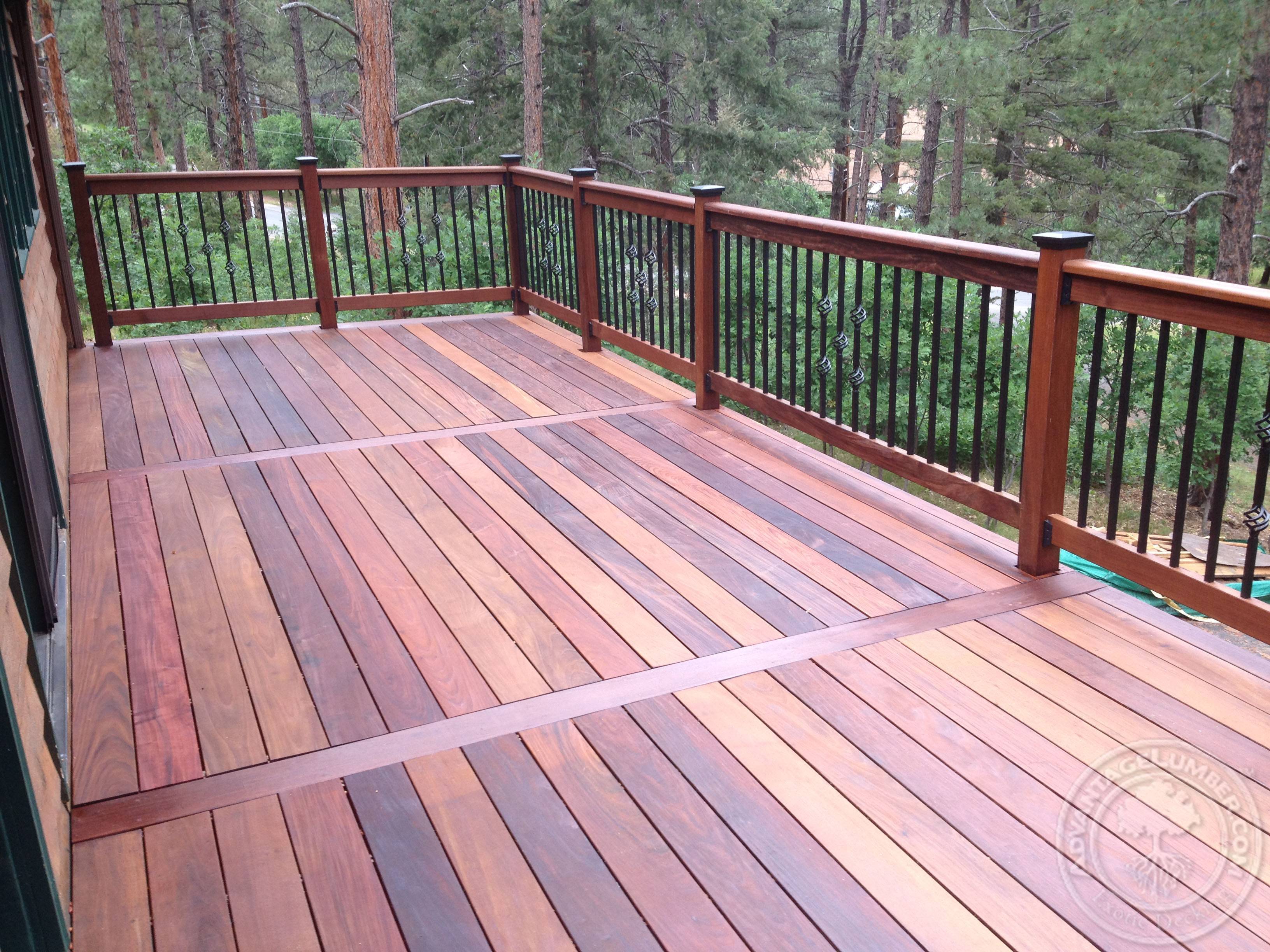
Not all wood decking is equally vulnerable.
Dense tropical hardwood decking species sold by AdvantageLumber.com are far less susceptible to carpenter bee damage compared to softwoods like cedar or pine.
Ipe Decking
Ipe is one of the densest hardwoods in the world. Its extreme hardness makes it very difficult for carpenter bees to drill into.
Additional benefits:
- Exceptional durability
- Naturally rot resistant
- Long lifespan
- Minimal maintenance
Cumaru Decking
Cumaru offers similar density and hardness characteristics that help resist insect damage, including carpenter bees.
Tigerwood & Other Hardwood Decking
Hardwood decking species such as Tigerwood, Garapa, and Brazilian Redwood are all significantly harder than traditional softwoods commonly attacked by carpenter bees.
Composite & PVC Deck Boards: Zero Carpenter Bee Damage
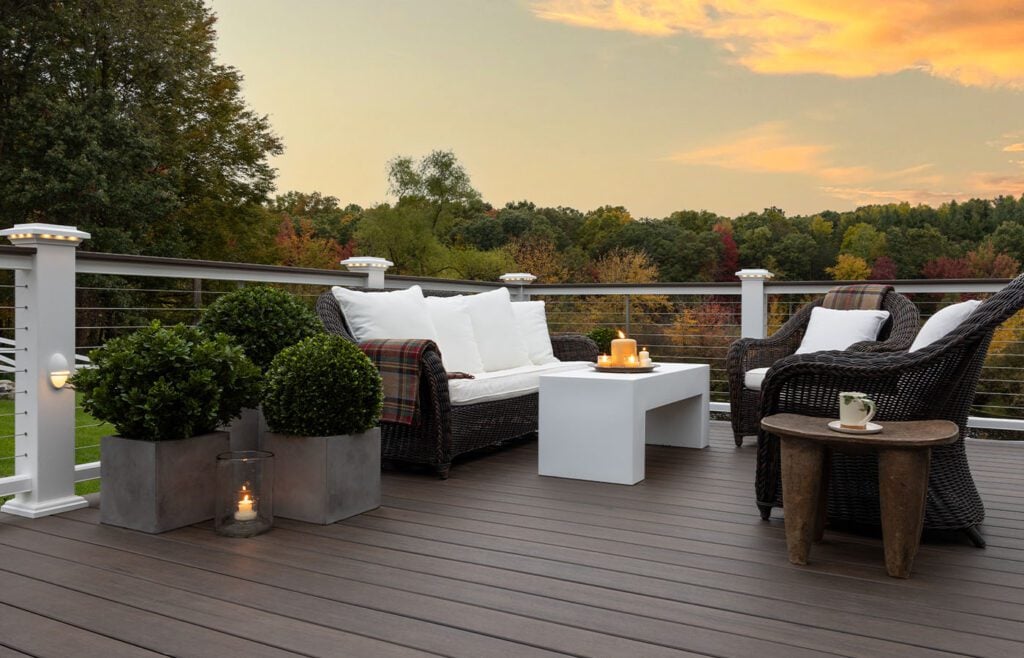
Composite and PVC decking are among the best choices for homeowners who want to eliminate carpenter bee concerns altogether.
Because these products contain no exposed natural wood fibers that bees can tunnel into, carpenter bees cannot create nesting galleries in them.
AdvantageLumber.com offers premium decking brands including:
Benefits include:
- No carpenter bee holes
- No sealing or painting required
- Low maintenance
- Long warranties
- Excellent durability
PVC decking is especially resistant because it contains no organic wood material at all.
Aluminum & Composite Deck Railing
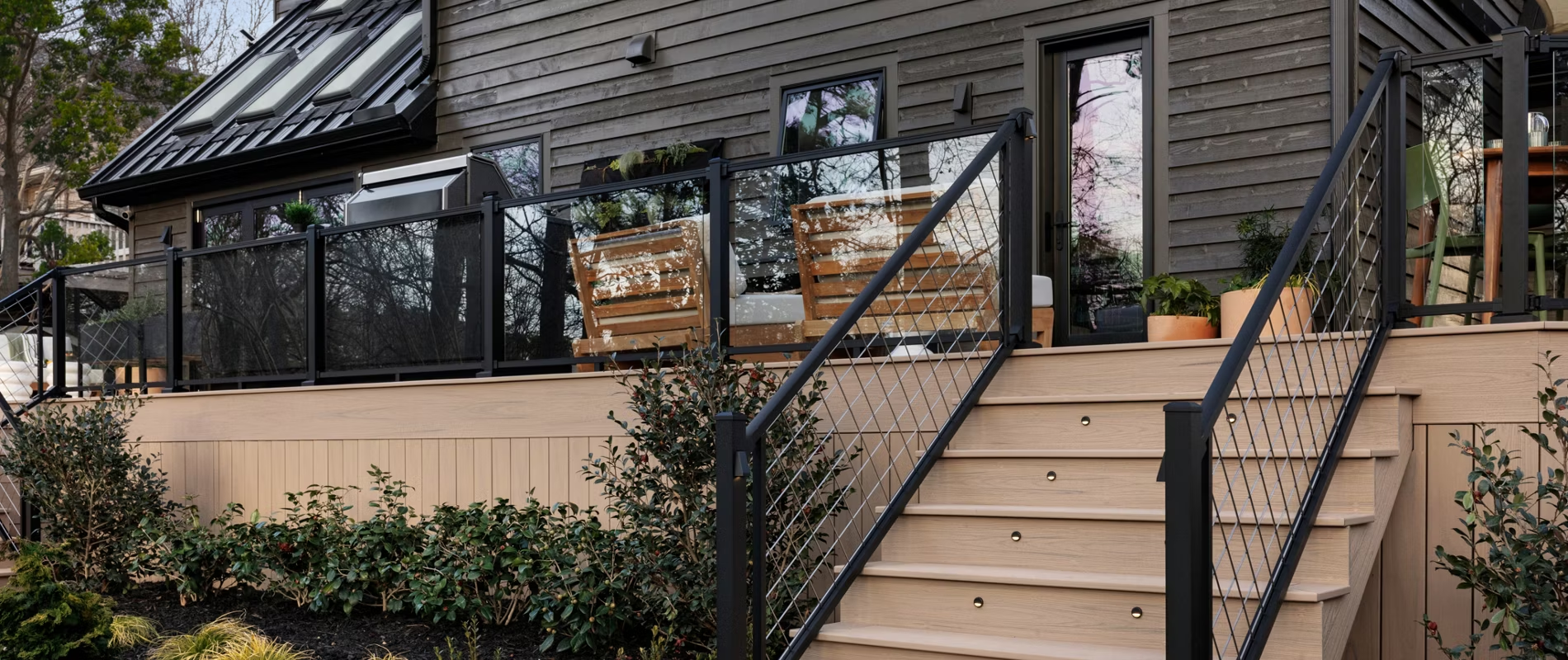
Wood railings are one of the biggest carpenter bee targets on any deck.
Replacing wood railings with aluminum or composite railing systems can greatly reduce bee damage while lowering maintenance requirements.
Aluminum Railing
Aluminum deck railing is completely impervious to carpenter bees.
Benefits include:
- Slim modern appearance
- Excellent durability
- No rot or insect damage
- Minimal upkeep
Composite Railing
Composite railing systems provide another low-maintenance alternative to traditional wood railings while resisting carpenter bee tunneling far better than softwoods.
World Bee Day: Protect Bees Without Destroying Your Deck
World Bee Day is a great reminder that bees are essential to our environment and food supply. But that doesn’t mean homeowners should allow carpenter bees to destroy their decks and outdoor living spaces.
By choosing more durable building materials that carpenter bees cannot damage, homeowners can:
- Reduce pesticide use
- Lower maintenance costs
- Extend deck lifespan
- Protect pollinators responsibly
Whether you’re building a new deck or replacing damaged materials, AdvantageLumber.com offers long-lasting alternatives including:
- Hardwood decking
- Composite decking
- PVC decking
- Aluminum railing
- Composite railing
- Galvanized steel deck framing
- Aluminum deck framing
Choosing carpenter bee-resistant materials is one of the smartest long-term investments you can make for your deck — and for the environment.
