
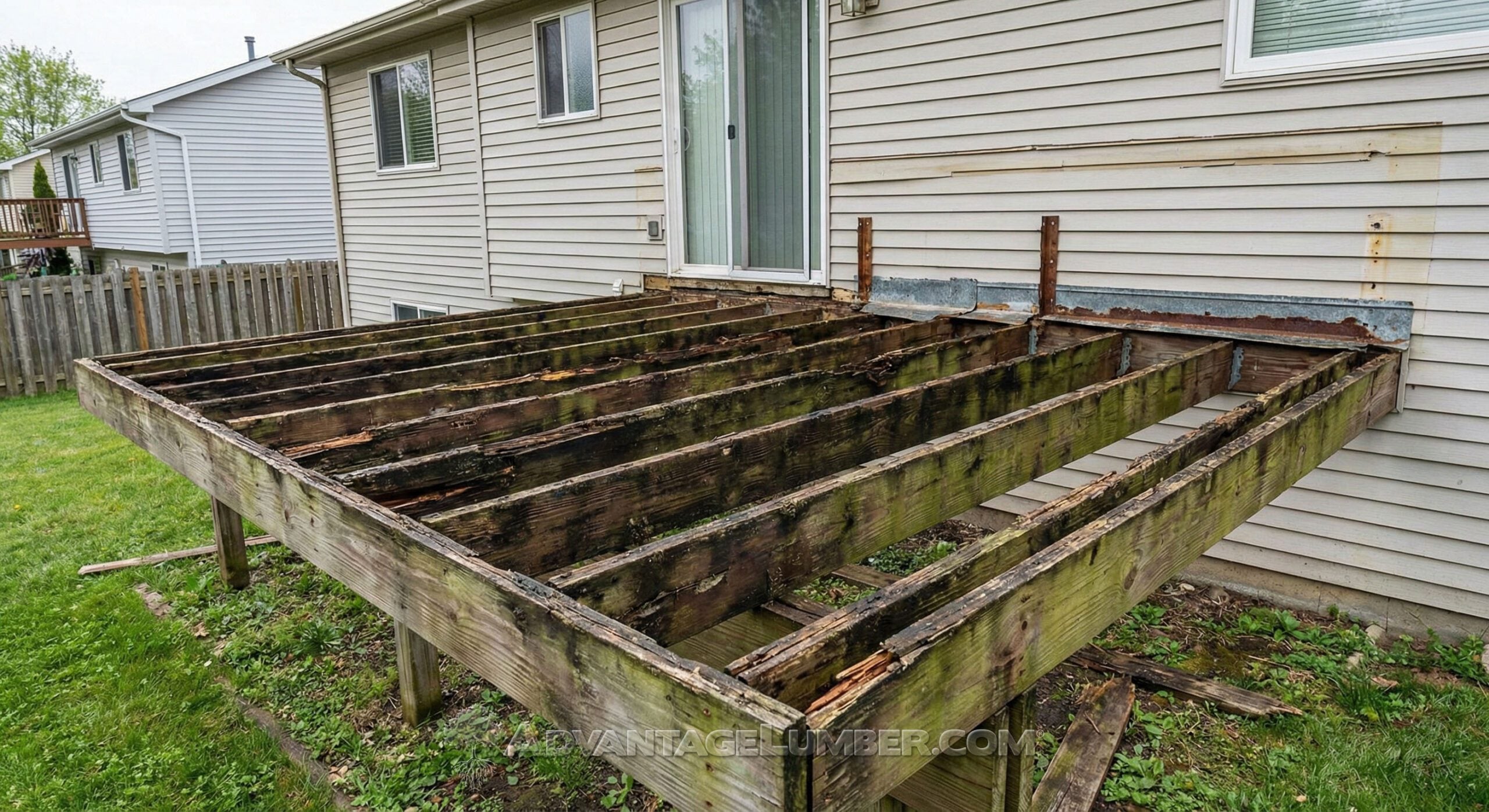
Pressure treated lumber is a popular, affordable choice for deck framing because of its built in resistance to rot, insects, and decay. However, even the best pressure treated wood isn’t invincible. Over time, exposure to moisture, UV rays, temperature swings, poor drainage, and fastener corrosion can cause the hidden structural frame posts, beams, joists, and ledger board to weaken or fail.
A failing deck frame is dangerous. It can lead to sagging, bouncy surfaces, or even collapse. The good news? Many problems give clear warning signs if you know what to look for. Regular inspections (ideally every spring) can catch issues early.
Why Pressure Treated Framing Still Fails
Pressure treatment protects against biological decay, but it doesn’t make wood waterproof or immune to physical stress. Water can still penetrate cuts, cracks, end grains, and areas around fasteners. In ground contact or high moisture spots, rot can start from the inside out. Older decks (especially pre-2000s or 10–20+ years old) are at higher risk as the treatment chemicals lose effectiveness over decades.
Key Signs Your Pressure Treated Deck Frame Is Failing
1. Soft, Spongy, or Crumbling Wood
This is the most common and telling sign of rot. Use a screwdriver, ice pick, or awl to probe suspicious areas (especially ends of boards, near fasteners, and where wood meets concrete or ground).
- If the tool sinks in easily (¼ inch or more) or the wood feels mushy, flakes, or crumbles, rot is present.
- Look for dark discoloration, water stains, or a musty smell.
2. Sagging, Bouncy, or Uneven Deck Surface
Walk across the deck and notice any sponginess, excessive bounce, or visible slope. This often indicates weakened joists, beams, or settling posts/footings. Check from underneath for bowing or cracking in structural members.
3. Ledger Board Problems (The #1 Failure Point)
The ledger attaches the deck to your house. Failures here are especially hazardous.
- Gaps between the ledger and house siding.
- Water stains or rot where it meets the home.
- Loose, rusted, or missing bolts/screws.
- Rust streaks or pulled away flashing.
- Improper fastening of the ledger board to the house.
4. Cracks, Splits, or Warping in Posts, Beams, and Joists
Pressure treated wood can check (small surface cracks) naturally, but large structural splits, twisting, or bowing signal trouble. Pay extra attention to posts near the ground and areas where water collects.
5. Rusted, Loose, or Popping Fasteners and Connectors
Corroded joist hangers, nails backing out, or screws that won’t tighten indicate the wood around them is losing holding power. This is common with incompatible fasteners on treated lumber.
6. Leaning or Shifting Posts and Footings
Posts that are out of plumb, sinking, or have visible rot at the base (especially ground contact areas) compromise the entire structure. Cracked or heaving concrete footings are another red flag.
7. Other Clues
- Mold, mildew, or heavy algae growth (indicates chronic moisture).
- Insect damage (small holes or sawdust).
- Deck boards that are loose or separating, hinting at issues below.
How to Perform a Thorough Inspection
- Tools needed: Screwdriver/awl, flashlight, hammer, level, gloves, and optionally a moisture meter.
- Inspect from both above and below the deck.
- Probe high risk areas: ledger, post bases, joist ends, and around hardware.
- Test railings and stairs for stability.
- Do this annually, especially after harsh winters.
What to Do If You Find Problems
- Minor issues: Replace affected boards, tighten/replace fasteners, improve drainage, or apply joist tape and sealant.
- Major rot or structural weakness: Stop using the deck and consult a professional inspector or builder. Repairs or full replacement may be needed.
- For long-term prevention on new or repaired decks, consider upgrading to rot resistant tropical hardwoods, composites, PVC, or even steel/aluminum framing systems that eliminate wood decay concerns entirely.
Prevention Tips for Pressure Treated Frames
- Ensure proper slope and flashing for water drainage away from the house.
- Use high quality, corrosion resistant fasteners (stainless steel preferred).
- Apply joist tape or flashing tape on tops of joists and ledger.
- Keep debris cleared from under the deck.
- Clean and seal/stain the deck regularly to reduce overall moisture exposure.
At Advantage Lumber, we offer premium deck framing such as aluminum deck framing and steel deck framing alongside durable decking like Ipe, Cumaru, composite decking, and PVC decking to help your deck last for decades. Whether you’re building new or repairing existing framing, choosing the right materials and following best practices makes all the difference.
Don’t wait for a scary bounce or visible failure inspect your deck frame today. A few minutes now can prevent major headaches (or worse) later. Have questions about materials or need expert advice? Visit AdvantageLumber.com or contact our team for guidance and high quality products built to last.
Stay safe and enjoy your outdoor space!
