
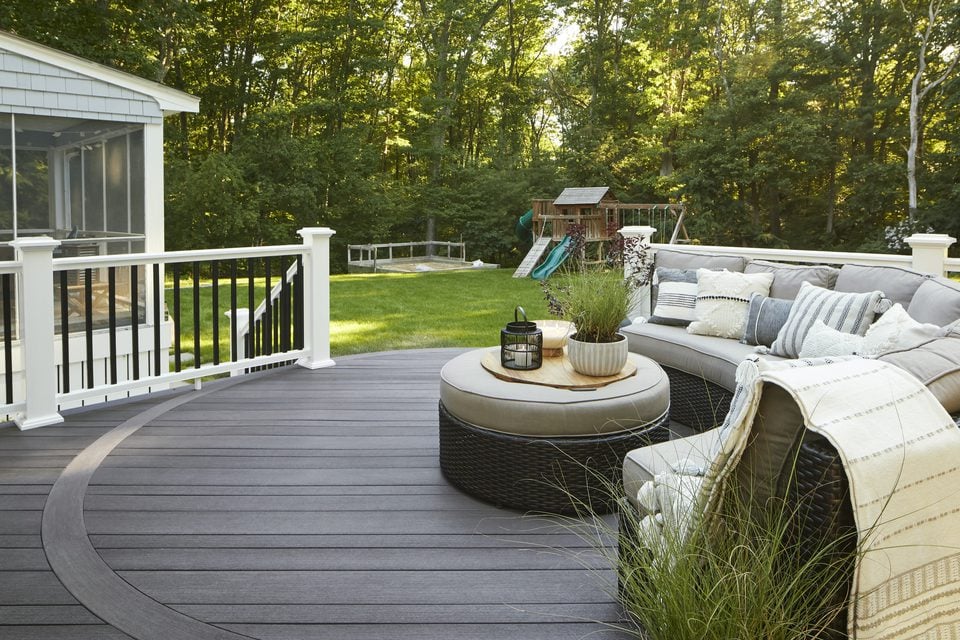
When planning a new deck, most homeowners focus on color and material first. But one of the most important decisions you will make is often overlooked: the size of your deck boards and how they are laid out.
Board width, thickness, and layout pattern all play a major role in how your deck looks, feels, and performs over time. The right combination can elevate your project from standard to standout, while the wrong one can lead to unnecessary seams, extra labor, or even structural issues.
Here is how to choose the right deck board size and layout for your project.
Start with Deck Board Size
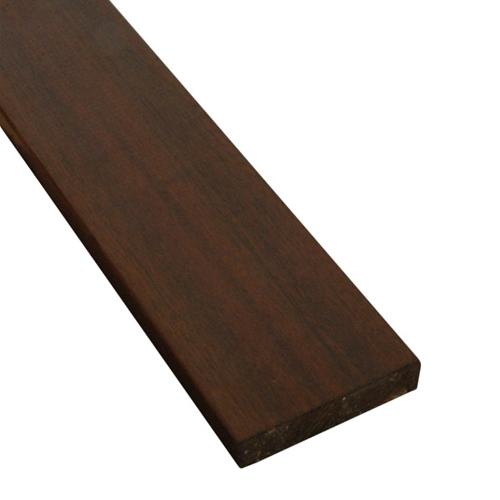
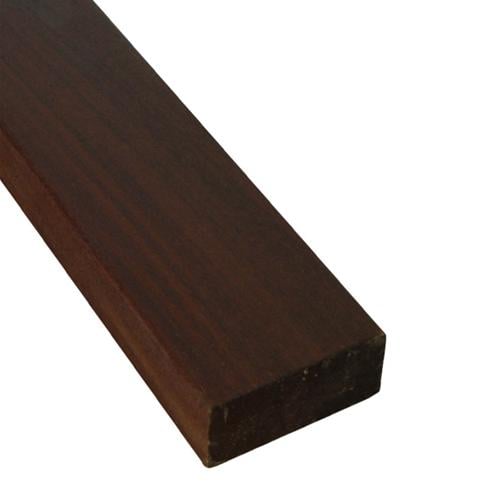
Deck boards are defined by their width and thickness, and both impact appearance, performance, and installation.
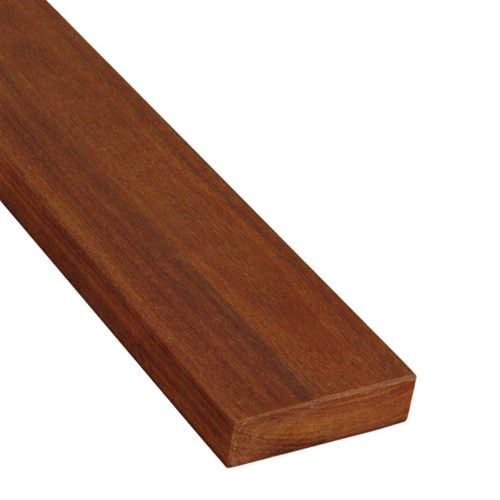
Choosing the Right Width
Most decking falls into three general categories:
Narrow Boards (3 ½”–4”)
Narrow boards create a more traditional, detailed look. They are ideal for smaller decks or designs where you want a more refined appearance. However, they require more boards to cover the same space, which means more fasteners and more labor.
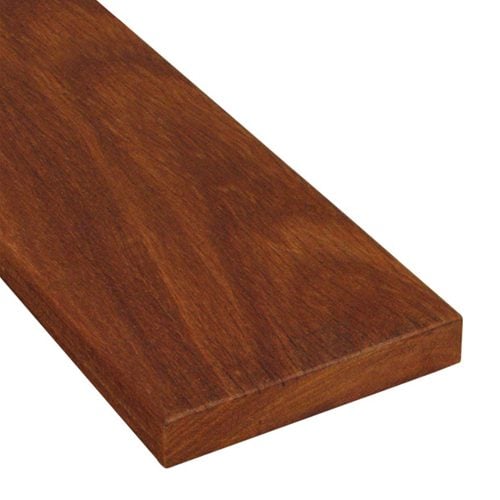
Standard Width Boards (5 ¼”–5 ½”)
This is the most common and versatile option. Standard-width boards strike the right balance between appearance and efficiency, making them a go-to choice for most residential decks.
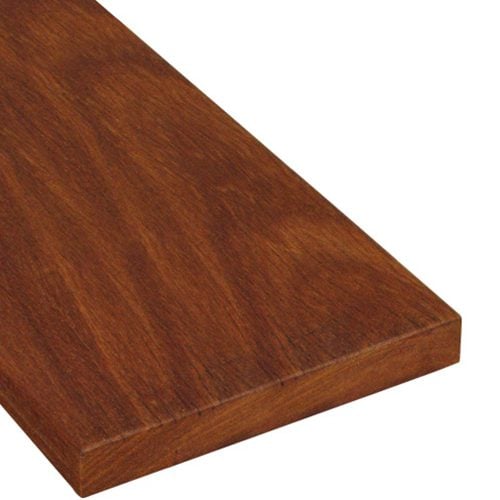
Wide Boards (7” and wider)
Wide boards create a more modern, open look with fewer seams. They can also speed up installation since each board covers more surface area. That said, wider boards can show more natural expansion and contraction, so proper spacing and installation are critical.
Choosing the Right Thickness
Thickness affects both structural performance and how your deck feels underfoot.
1x Boards (Actual ~¾”)
Common in residential applications, but they require tighter joist spacing (typically 16” on center).
5/4 Deck Boards (Actual ~1”)
The most popular choice for decking. They provide a sturdier feel and work well across a wide range of materials.
2x Boards (Actual ~1½”)
Heavier and more rigid, these boards are ideal for high-traffic areas, commercial applications, or decks with wider joist spacing.
How Board Size Impacts Performance
Choosing the right size is not just about aesthetics. It directly affects how your deck performs over time.
- Strength: Thicker boards reduce flex and allow for wider spans
- Stability: Narrow boards help minimize visible movement
- Efficiency: Wider boards install faster but require careful spacing
- Comfort: Thicker boards provide a more solid feel underfoot
Choosing the Right Deck Layout
Once you have selected your board size, your layout is what brings the design together.
Straight (Parallel) Layout
This is the most common and cost-effective option. Boards run perpendicular to the joists, creating a clean, straightforward look.
- Minimal waste
- Faster installation
- Works with any deck size
Best for: Classic designs and efficient builds
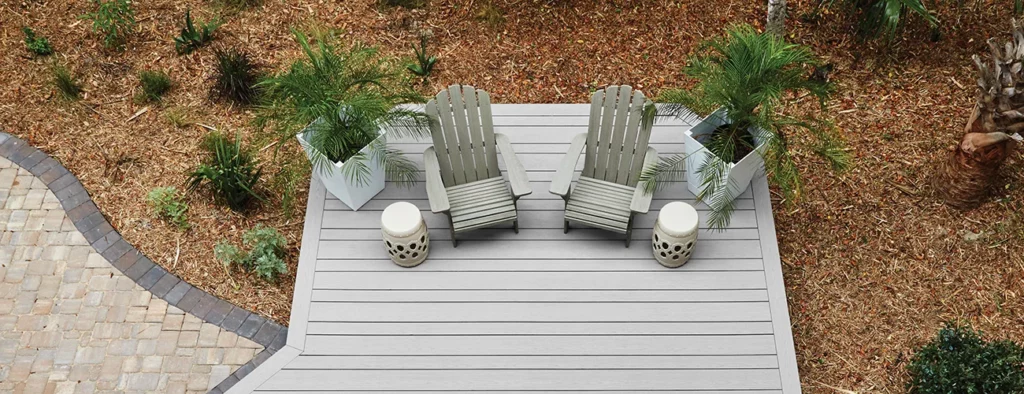
Picture Frame Border
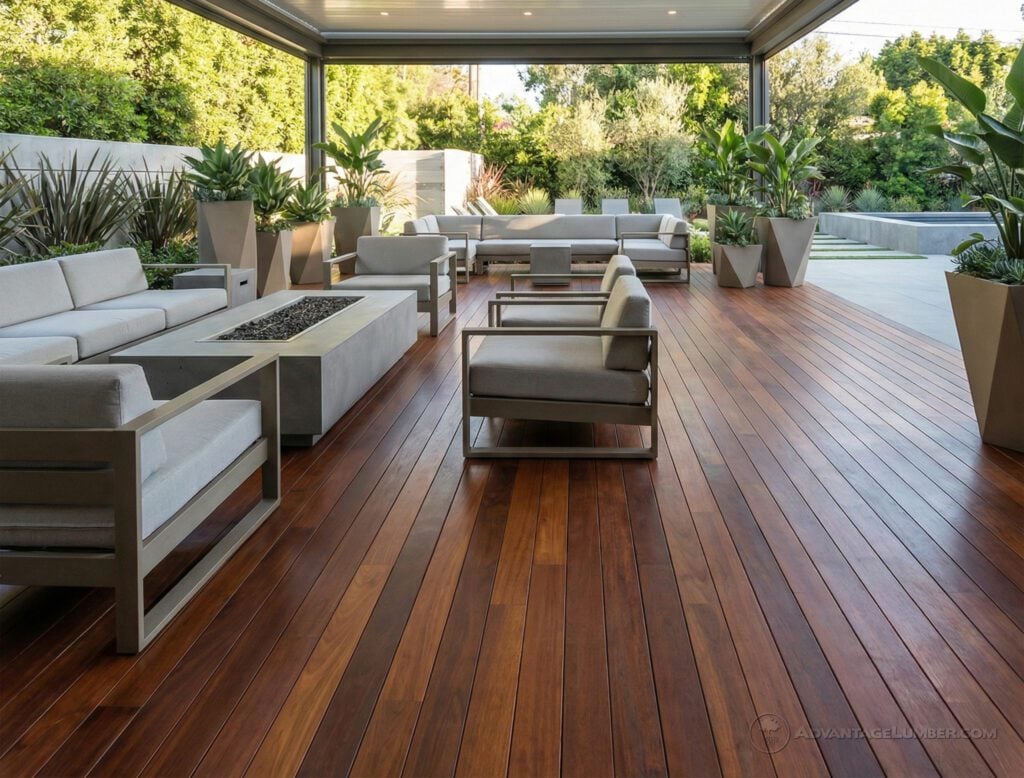
A picture frame layout adds a border around the perimeter of your deck for a more finished appearance.
- Hides cut board ends
- Adds contrast and definition
- Elevates the overall look
Best for: A polished, high-end finish
Diagonal Layout
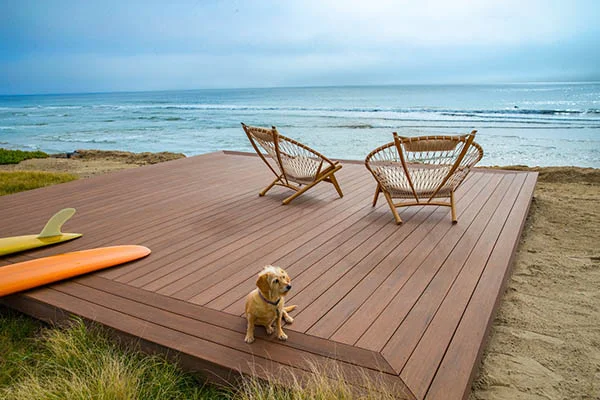
Running boards at a 45-degree angle adds visual interest and can make a space feel larger.
- Enhances visual flow
- Feels slightly more solid underfoot
Trade-offs: More labor and increased material waste
Best for: Adding dimension to standard deck designs
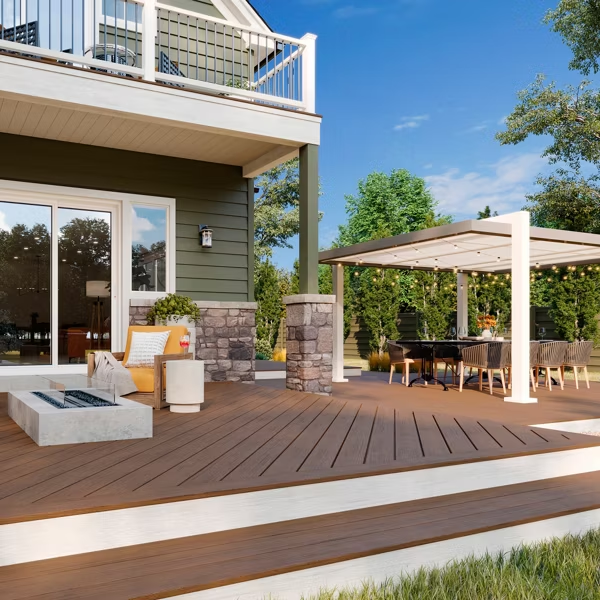
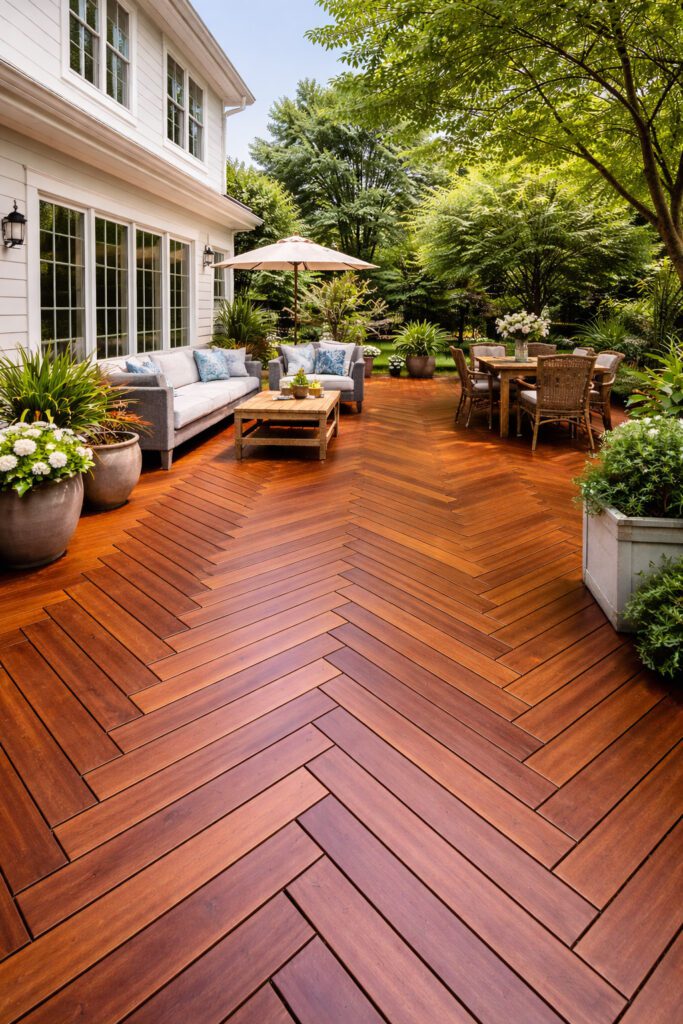
Herringbone or Chevron Patterns
These layouts create a bold, custom look that immediately stands out.
- High-end, architectural appeal
- Ideal for focal areas or large decks
Trade-offs: More complex framing, cuts, and labor
Plan for Board Length and Seams
Board length has a major impact on the finished appearance of your deck.
Longer Boards
- Fewer seams
- Cleaner, more continuous look
Shorter Boards
- Easier to work with on large decks
- Require thoughtful seam placement
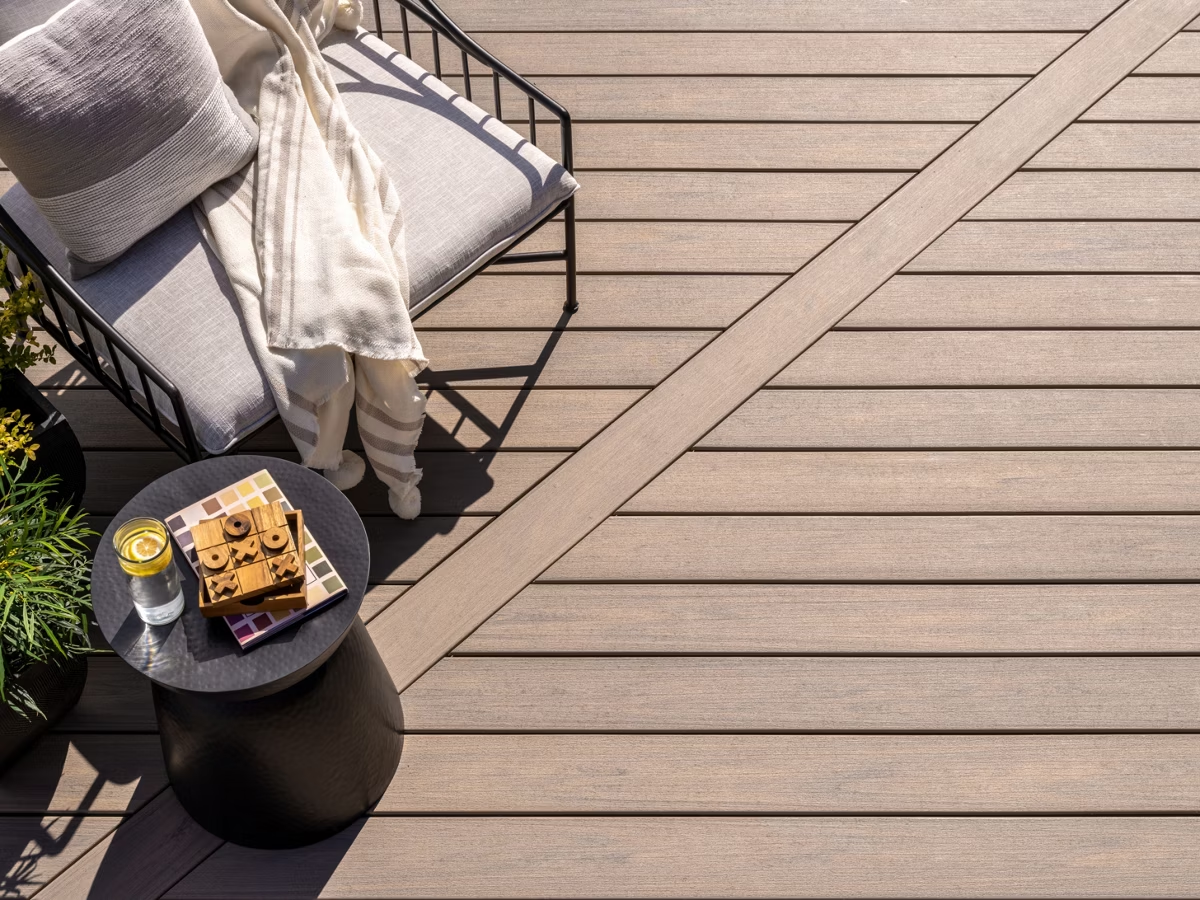
Using Breaker Boards
Breaker boards run perpendicular to your main decking boards and help organize seams.
- Creates a clean visual break
- Reduces the appearance of random joints
- Adds a subtle design detail
Plan for Material Waste
Your layout choice directly affects how much extra material you will need.
- Straight layout: Plan for about 10% extra
- Diagonal layout: Plan for about 15% extra
- Herringbone/Chevron: Plan for 20–25% extra
Factoring this in early helps avoid surprises during installation.
Do Not Forget About Spacing
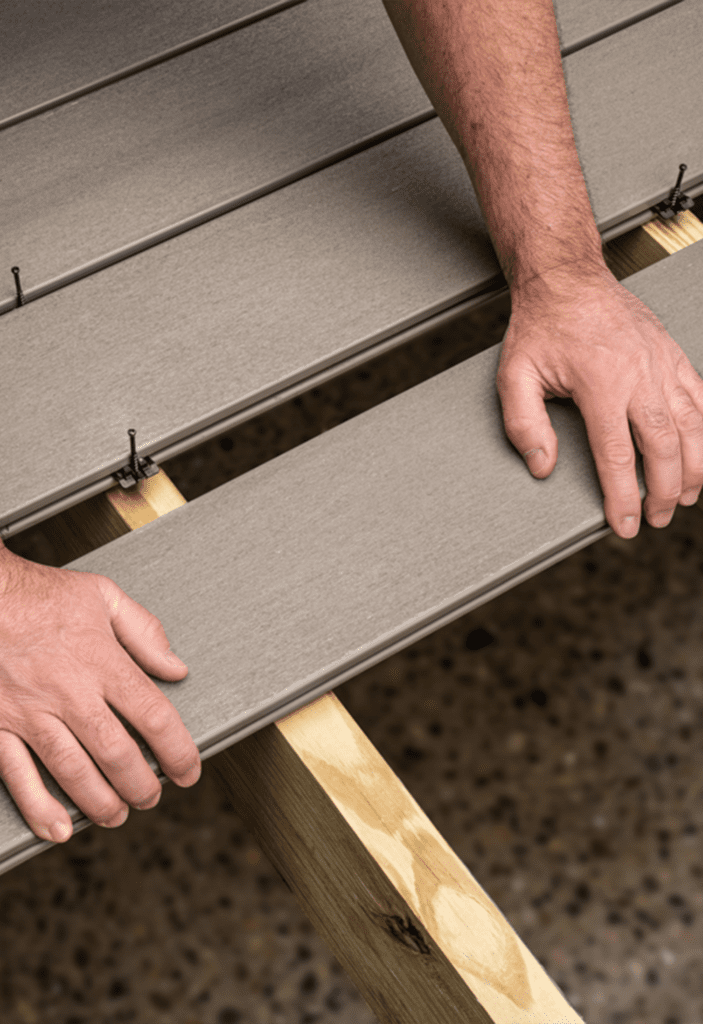
Proper spacing between deck boards is essential for both performance and longevity.
- Typical spacing: ⅛” to ¼”
- Allows for drainage and airflow
- Helps accommodate expansion and contraction
- Follow manufacturer recommendations for spacing
In wetter climates, slightly wider gaps can help prevent moisture buildup.
Matching Your Layout to Your Deck Size
Different deck sizes benefit from different approaches:
- Small decks: Straight layouts with narrow or standard boards keep the space from feeling crowded
- Medium decks: Standard boards with a picture frame border offer a balanced look
- Large decks: Wide boards, diagonal layouts, or breaker boards help break up the space visually
Material Matters
Your decking material should always factor into your decisions.
Hardwood Decking (Ipe, Cumaru, Tigerwood)
Hardwoods are dense, durable, and stable. They perform exceptionally well in longer lengths and a variety of layouts.
Pressure-Treated Wood
More prone to movement over time. Narrower boards can help reduce visible shrinking and swelling.
Composite and PVC Decking
Low-maintenance and consistent, but require strict adherence to manufacturer guidelines for spacing and joist spans.
Quick Guide: Choosing the Right Setup
If you are still deciding, here are a few simple ways to narrow it down:
- Looking for the easiest, most cost-effective option?
- Choose standard-width boards in a straight layout
- Want a timeless, versatile look?
- Go with standard boards in a straight or diagonal pattern
- Trying to create a more custom design?
- Add a picture frame border or combine it with a diagonal layout
- Working with a smaller space or tighter budget?
- Keep it simple with a straight layout
- Need extra strength or wider spans?
- Consider thicker 2x boards
Final Thoughts
Choosing the right deck board size and layout is about more than aesthetics. It is about building a deck that looks great, performs well, and lasts for years.
If you want a safe starting point, standard-width boards in a straight layout are hard to beat. If you are looking to elevate your design, adding borders, angles, or custom patterns can make a big impact.
And if you are working with premium hardwood decking, you have the flexibility to get creative while maintaining long-term durability.
Not sure which option is right for your project?
Our team is here to help you choose the right board size, layout, and material based on your deck design, framing, and budget so you can move forward with confidence.
