
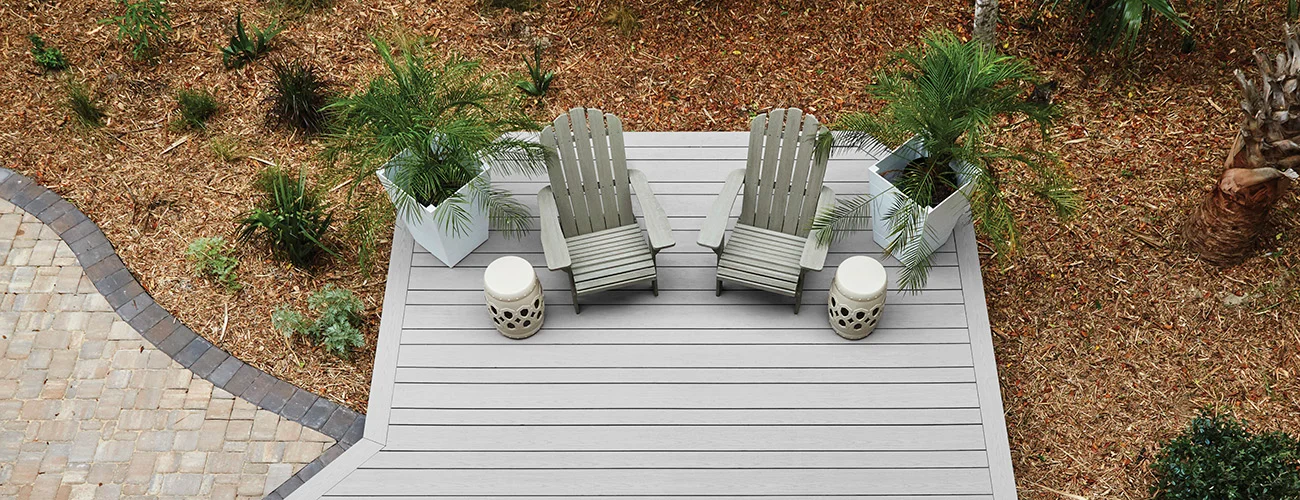
When planning a deck, most homeowners focus on board species, color, and layout. One design detail that can significantly elevate the finished look is picture framing a deck. This popular decking pattern adds definition, protects exposed board ends, and gives a deck a clean, polished appearance.
What Is Picture Framing a Deck?
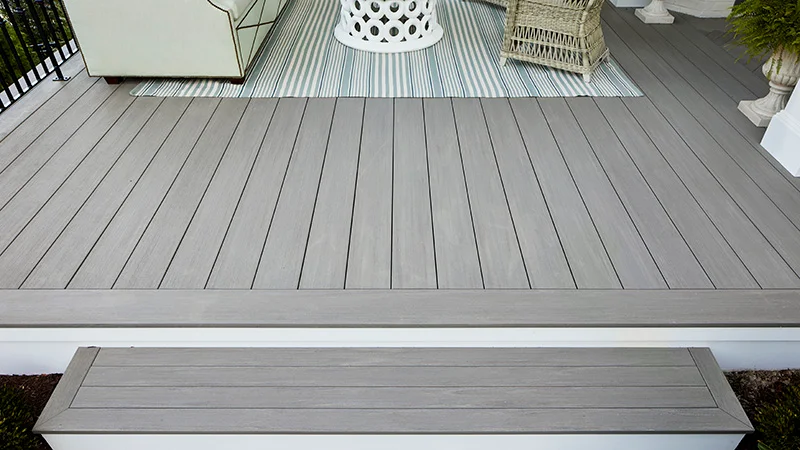
Picture framing a deck is a design technique where decking boards are installed around the perimeter of the deck, forming a border that runs perpendicular to the main field boards. The result is a “frame” effect similar to a picture frame around artwork.
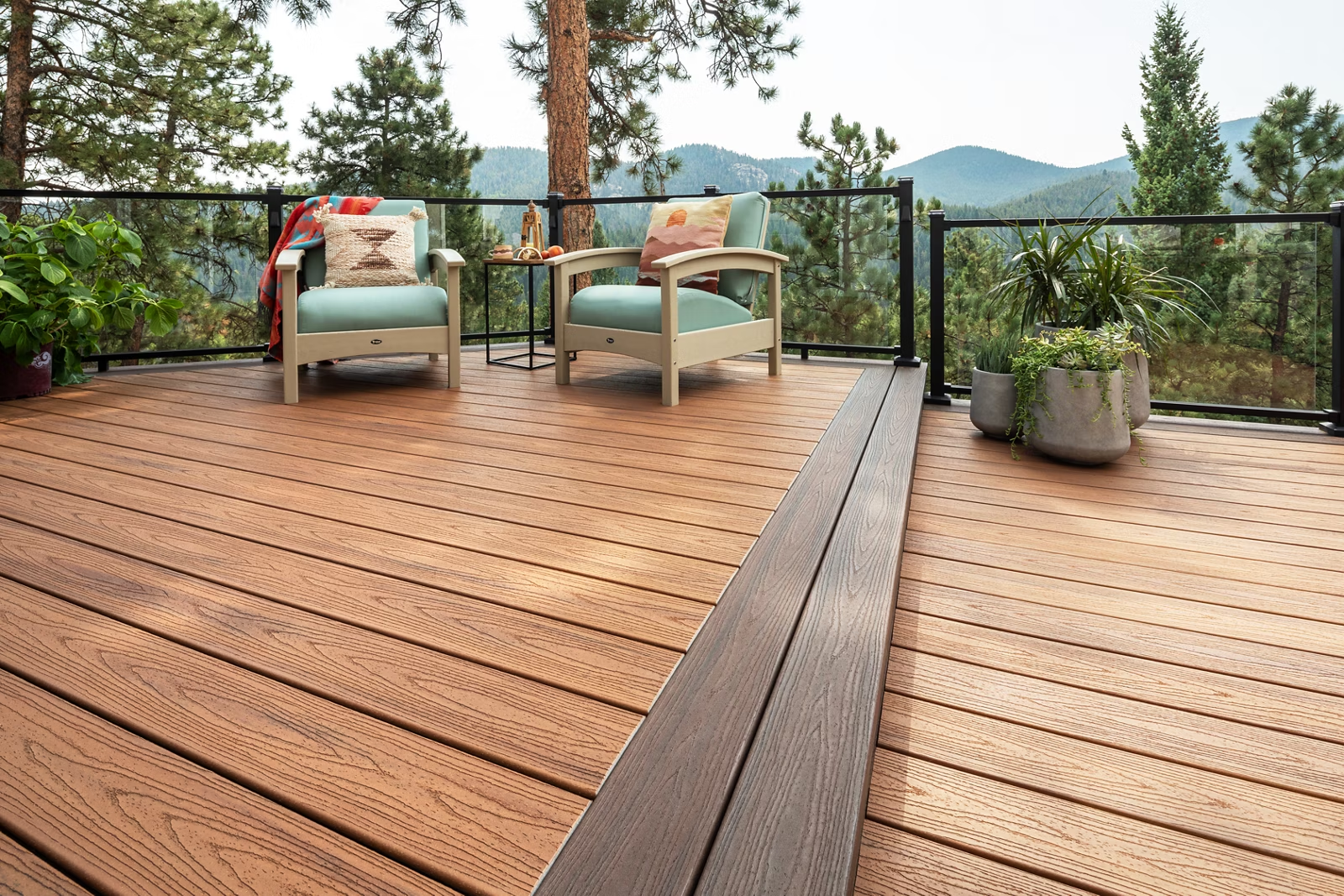
The border can match the main decking for a subtle look or use a contrasting color or species to create visual definition. While not structural, picture framing is one of the most popular design upgrades for both real wood and composite decks.
How Picture Framing Works
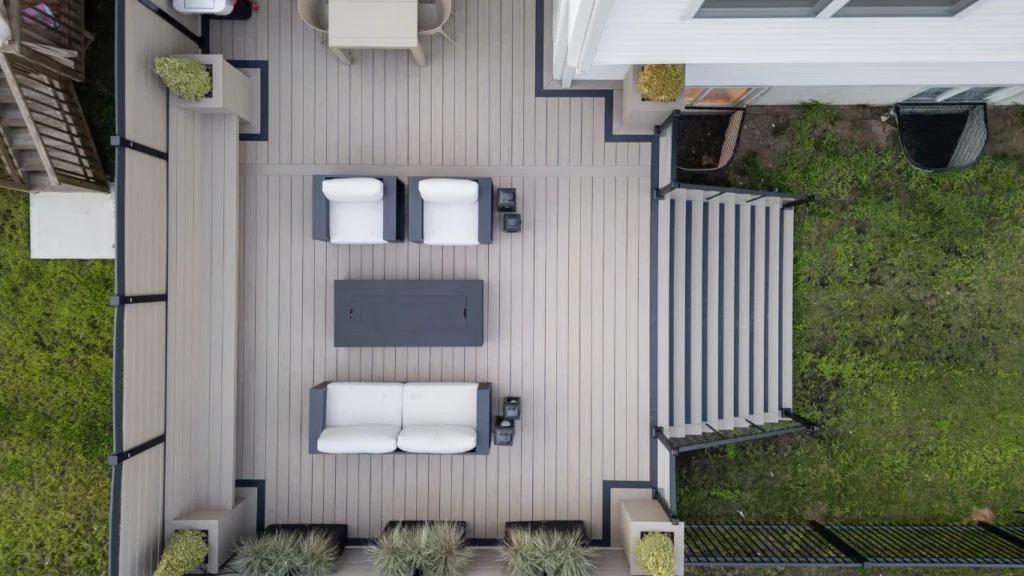
With picture framing, the main deck boards are installed first, followed by a border around the outer edges. The border boards run parallel to the deck’s perimeter, while the interior boards run in the opposite direction.
This change in orientation creates a clean transition at the edges and covers the exposed end grain of the field boards. Since end grain is more vulnerable to moisture, covering it helps improve long-term durability especially with natural wood decking.
Single vs. Double Picture Frame Borders
Picture framing can be done with one board or multiple boards around the perimeter.
- A single picture frame border offers a clean, subtle finish and works well when deck edges may be partially hidden by railings.
- A double or triple border creates a wider accent, making the frame more noticeable and giving the deck a stronger design presence. Using multiple boards can also make board layout more flexible.
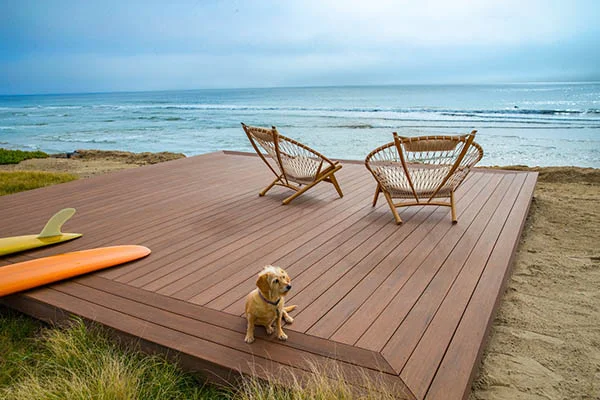
Wider borders are often used on larger or more visible decks where the perimeter is meant to stand out.
Why Picture Framing Is So Popular
Picture framing remains one of the most requested deck patterns because it:
- Hides exposed board ends
- Creates a clean, finished appearance
- Works with straight or diagonal layouts
- Helps define the deck as a dedicated outdoor living space
On real wood decks, picture framing highlights craftsmanship and attention to detail.
Best Applications for Picture Framing
Picture framing works well for many deck styles, but it is especially effective for:
- Tropical hardwood decks, such as Ipe, Cumaru, and Tigerwood, where craftsmanship and detail matter
- Composite decks, where a border adds visual contrast and a more refined finish
- Decks with stairs, landings, or multiple exposed edges
- Highly visible decks where appearance is a priority
Pros and Cons of Picture Framing a Deck
Pros
- Enhances visual appeal with a clean, refined finish
- Protects exposed end grain from moisture
- Clearly defines the deck’s boundaries
- Adds perceived value and curb appeal
Cons
- Requires additional decking material
- Involves more layout and installation time
- May be less noticeable on small or furniture-covered decks
Final Thoughts
Picture framing is not required, but it is one of the most effective ways to elevate the appearance of a deck—whether it is built with tropical hardwoods or composite materials. By hiding exposed board ends and adding visual definition, picture framing helps create a cleaner, more intentional outdoor space.
If you are still deciding between tropical hardwood decking and composite decking, picture framing is a design detail that works well with both. The right approach often comes down to visibility, layout, and how much emphasis you want to place on the deck’s perimeter.
For homeowners planning a new deck, considering details like picture framing early in the design process can make a noticeable difference in the final result.
If you are planning a new deck and exploring layout or material options, Advantage Lumber offers resources and product information to help you make informed design decisions. You can explore our tropical hardwood and composite decking options or contact our team with questions as you plan your project.
