
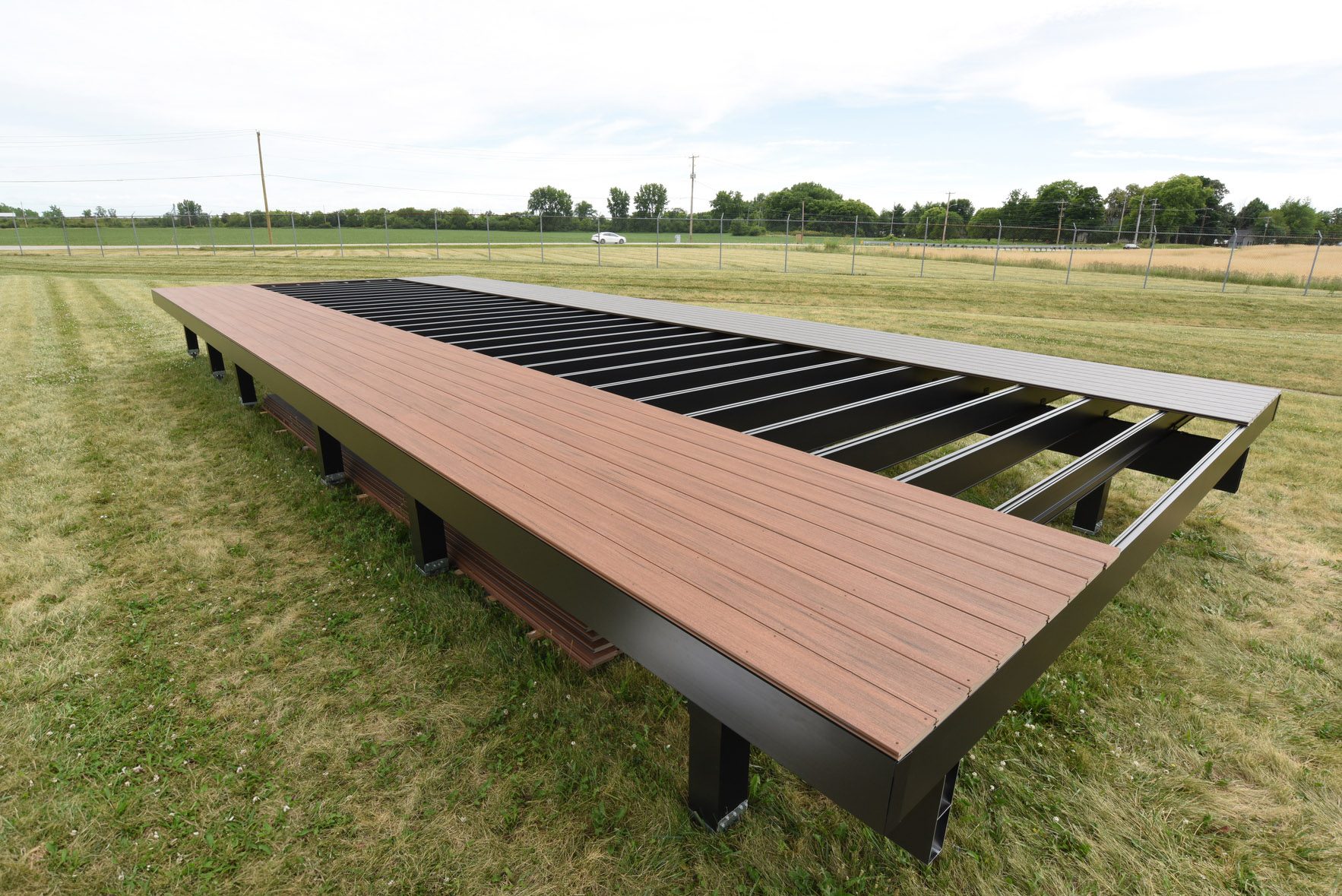
When homeowners plan a new deck, most of the focus is on the deck boards. But the real backbone of any deck is the framing underneath. Traditionally, pressure-treated lumber has been the standard go to material for deck framing. However, in recent years aluminum deck framing has been gaining serious momentum.
Why? Because homeowners are starting to think beyond short-term costs and are looking for longer-lasting, low-maintenance structural systems that can handle harsh environments like waterfront properties.
So the big question is: Is aluminum deck framing the future of deck construction?
Let’s take a closer look at the cost, structural strength, and major advantages—especially near water.
Why Deck Framing Matters More Than Most People Think
A deck can only last as long as the structure supporting it. While many decking materials like composite, PVC, or hardwood can last decades, pressure-treated deck frames often deteriorate much sooner due to moisture, rot, and insect damage.
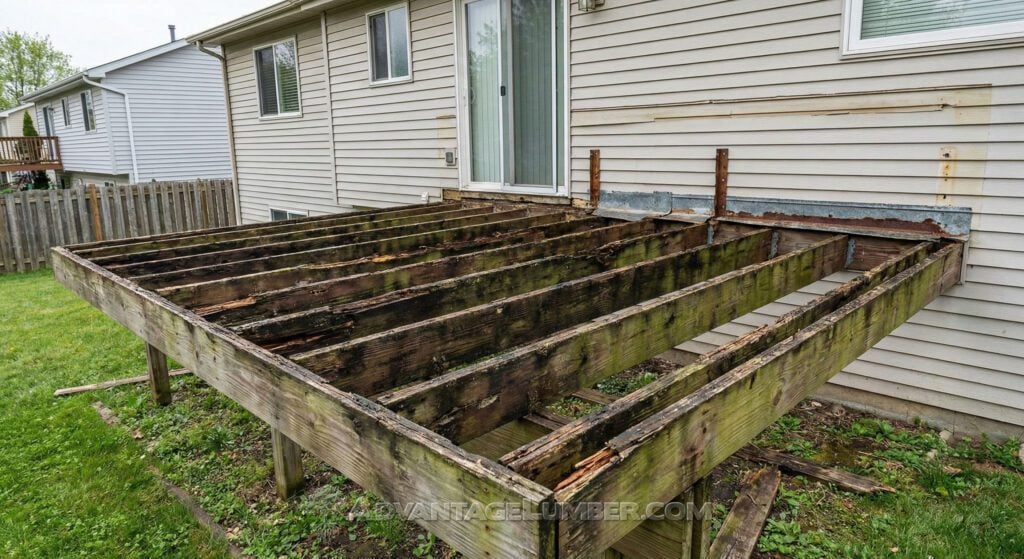
Wood framing can:
- Warp or twist as it dries
- Rot from moisture exposure
- Attract insects
- Shift over time due to seasonal changes
These issues can lead to squeaky decks, uneven surfaces, or expensive structural repairs.
Aluminum framing offers a very different approach.
The Strength Advantage of Aluminum Deck Framing
Aluminum framing systems are engineered structural components designed to provide consistent strength and stability.
Unlike wood, aluminum:
- Does not rot, warp, crack, or attract insects
- Maintains its shape over time
- Provides a stable platform for decking materials
Because aluminum doesn’t change shape with moisture or temperature swings, it often outlasts the deck boards installed on top of it.
Many aluminum framing systems are designed to handle heavy loads and large spans, making them suitable for:
- Large outdoor living spaces
- Rooftop decks
- Elevated decks
- Decks supporting hot tubs or outdoor kitchens
Aluminum also has a high strength-to-weight ratio, meaning it is strong but significantly lighter than steel, making installation easier.
Aluminum Framing vs Wood Framing
Here’s a simple comparison of how the two materials perform:
| Feature | Pressure-Treated Wood | Aluminum Framing |
|---|---|---|
| Lifespan | 10–20 years typical | 50+ years possible |
| Rot & Insects | Vulnerable | Completely resistant |
| Warping & Movement | Common | Does not warp |
| Maintenance | Requires inspection & repair | Minimal maintenance |
| Structural Consistency | Varies board-to-board | Precision engineered |
Wood remains popular because of its low initial cost, but aluminum provides much greater structural stability and long-term reliability.
The Cost Question: Is Aluminum Deck Framing Worth It?
One of the biggest concerns homeowners have about aluminum framing is cost.
Upfront Cost
Aluminum framing costs more than pressure-treated lumber initially. However, it is comparable to or slightly higher than steel framing systems.
For example, depending on the project size and materials used, metal deck framing systems (including aluminum) can range roughly from $2,000 to $14,000 for materials, plus labor.
Long-Term Value
While aluminum costs more upfront, it can save money over time because it:
- Requires little to no maintenance
- Eliminates rot-related repairs
- Does not need replacement as often as wood
- Less labor to install (Aluminum joists are 100% flat opposed to treated lumber which should be planed and leveled.)
In many cases, aluminum framing lasts 50 years or longer, significantly reducing lifecycle costs.
When you factor in repairs, labor, and replacements, aluminum framing can actually be more cost-effective over the life of the deck.
Why Aluminum Framing Is Ideal for Waterfront Decks
One of the biggest reasons aluminum framing is gaining popularity is its performance in wet environments.
Decks built near:
- Lakes
- Oceans
- Rivers
- Pools
- Coastal climates
are constantly exposed to moisture.
Traditional wood framing struggles in these environments because:
- Water leads to rot
- Salt air accelerates corrosion of fasteners
- High humidity promotes mold and decay
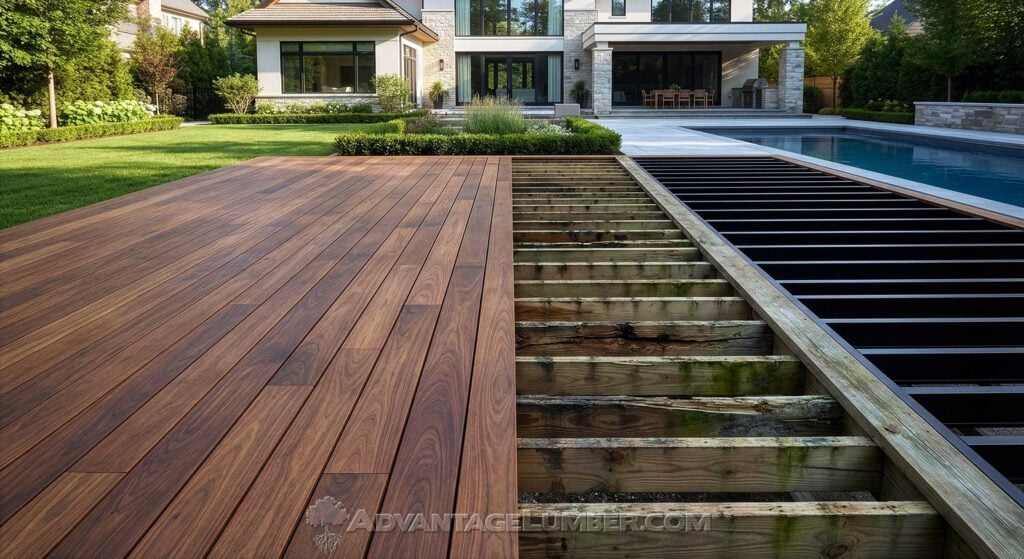
Aluminum framing is naturally corrosion resistant, making it ideal for waterfront applications. It won’t rust, rot, or degrade in wet conditions.
That’s why many builders are now using aluminum framing for:
- Dockside decks
- Coastal homes
- Pool decks
- Low-to-ground decks where airflow is limited
For these projects, aluminum can dramatically extend the lifespan of the entire structure.
Faster Installation and More Predictable Builds
Another benefit of aluminum framing is installation efficiency.
Wood joists often require extra time during construction because:
- Boards may be twisted or crowned
- Contractors must sort through lumber to find straight pieces
- Additional labor is needed to level joists by planing all the high spots.
Aluminum framing components arrive perfectly straight and engineered for assembly, which can reduce installation time and improve construction accuracy.
This consistency can reduce labor costs and eliminate many structural issues that show up later with wood framing.
Sustainability Benefits
Aluminum is also an environmentally responsible building material.
It is:
- Highly recyclable
- Long-lasting
- Often manufactured from recycled materials
Because aluminum framing lasts decades longer than wood, it can also reduce the number of structural replacements over time.
Is Aluminum Deck Framing the Future?
Pressure-treated wood framing isn’t going away anytime soon—it’s still the lowest upfront cost option.
But as homeowners become more focused on:
- Longevity
- Low maintenance
- Structural safety
- Waterfront durability
aluminum framing is becoming a very attractive alternative.
For high-end decks, waterfront homes, and long-term investments, aluminum framing provides a stronger, more stable foundation that can last for decades.
In many ways, it represents a shift in how decks are built: from short-term construction to long-term structural performance.
Bottom Line
Aluminum deck framing offers major advantages:
- Exceptional durability
- Resistance to rot, insects, and corrosion
- Ideal performance in waterfront environments
- Long lifespan with minimal maintenance
While the upfront cost is higher, the long-term value and structural reliability make aluminum framing an increasingly popular choice for modern deck construction.
Where to Buy Aluminum Deck Framing
If you’re looking for aluminum deck framing that is not something you are going to find at your local building material supplier. These specialty deck framing products can be found from specialty building material suppliers like AdvantageLumber.com.
At Advantage Lumber we sell two leading brands of aluminum framing: Outdure Aluminum Framing and TimberTech Aluminum Framing.
If you’re planning a new deck or resurfacing an old one, choosing the right framing system is just as important as choosing the decking material—and aluminum framing may be one of the smartest investments you can make.