
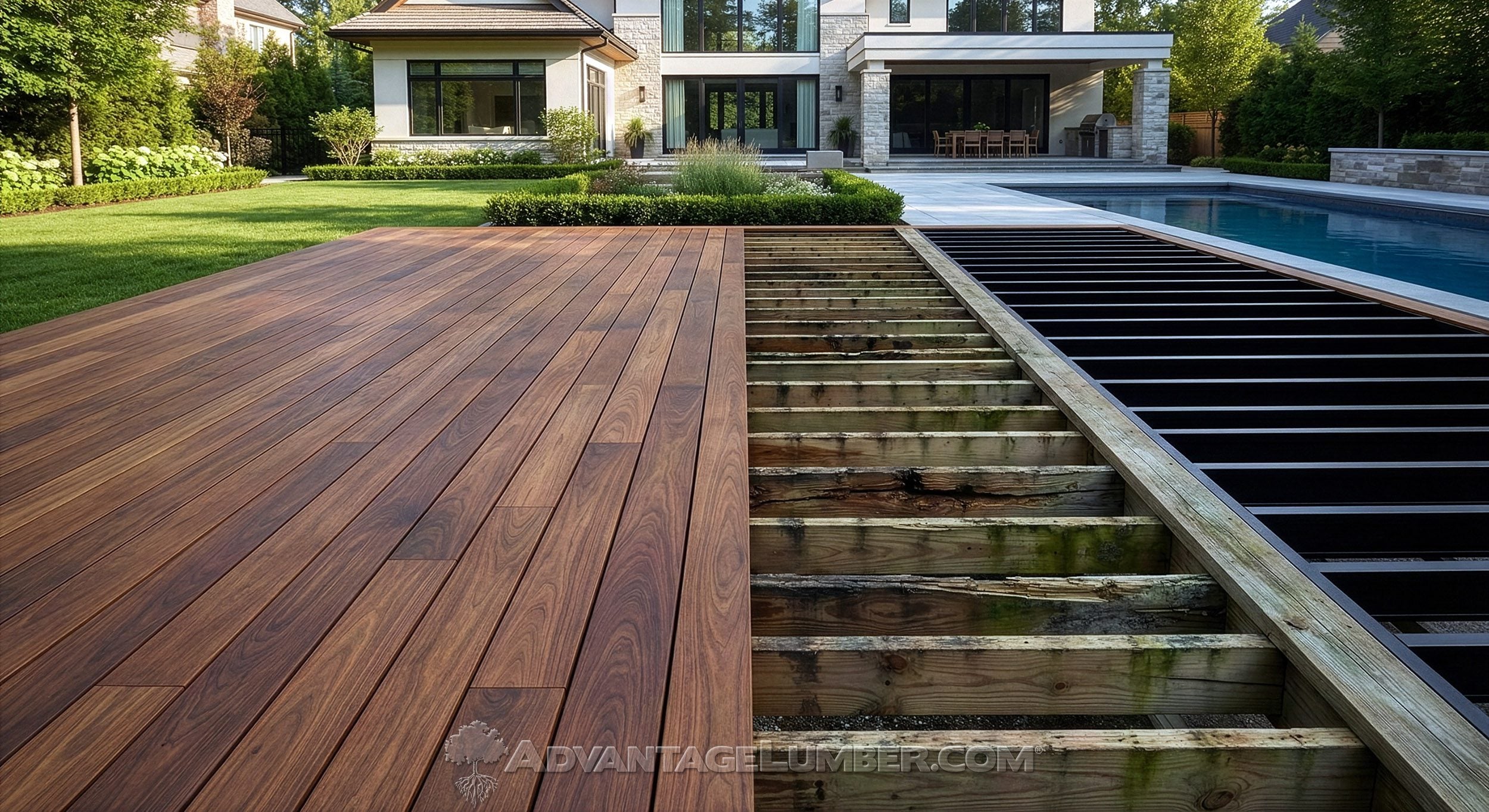
When planning your dream deck, the framing material you choose forms the literal foundation of your outdoor oasis. It’s not just about aesthetics—it’s about balancing upfront costs with long-term durability.
Read on for a head-to-head comparison of aluminum and wood deck framing, focusing on cost and longevity. At AdvantageLumber.com, we’re proud to offer top-tier aluminum framing solutions from Outdure and TimberTech, designed to elevate your deck-building experience.
Understanding Wood Deck Framing
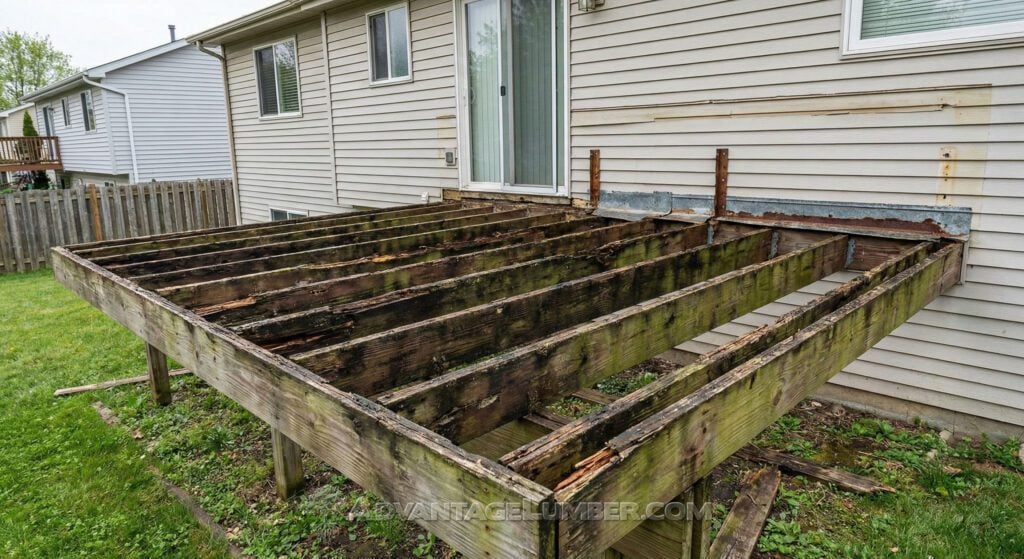
Traditional wood framing, often made from pressure-treated lumber, has been a go-to choice for decades due to its accessibility and familiarity. It’s strong when new but can weaken over time due to moisture and age.
- Initial Cost: Typically the lowest upfront option, ranging from $15 to $25 per square foot, including materials and installation.
- Longevity: Averages 10 to 20 years, depending on maintenance and environmental factors like humidity or pests.
- Pros: Affordable, easy to work with, and widely available.
- Cons: Requires regular maintenance, and inspections to prevent rot, warping, or insect damage. Over time, these maintenance costs can add up significantly. Pressure treated deck boards require sealing to help prevent early rot and decay. However most people never seal their pressure treated deck framing so it’s prone to faster rot and decay.
While wood offers short-term savings, its vulnerability to the elements often leads to repairs or full replacements sooner than you’d like.
Exploring Aluminum Deck Framing
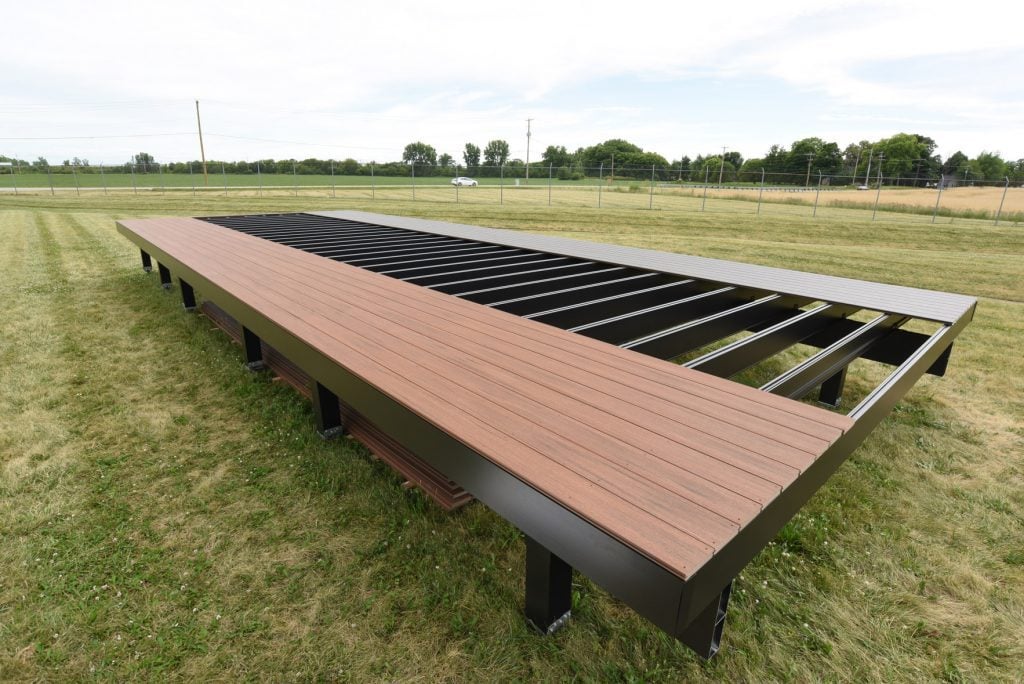
Aluminum framing represents a modern upgrade, engineered for resilience against the harshest conditions. Unlike wood, it doesn’t decay, rust, or require ongoing treatments, making it ideal for coastal or high-moisture areas.
- Initial Cost: Higher than wood, typically $30 to $50 per square foot for materials and installation, though framing components can start lower depending on the system.
- Longevity: Impressive 40 to 50+ years with minimal upkeep, outlasting wood by decades.
- Pros: Corrosion-resistant, lightweight yet strong, and often fire-resistant with a Class A flame spread rating. It allows for longer spans and fewer supports, opening up creative design possibilities.
- Cons: The premium price tag upfront, but this is offset by virtually no maintenance costs over time.
Aluminum’s superior performance makes it a smart investment for those prioritizing durability and peace of mind.
Cost vs. Longevity: The Breakdown
To make the decision clearer, let’s compare the two materials side by side. While wood wins on initial affordability, aluminum shines in long-term value through reduced maintenance and extended lifespan.
| Category | Wood Framing | Aluminum Framing |
|---|---|---|
| Initial Cost | $15–$25 per sq ft | $30–$50 per sq ft |
| Longevity | 10–20 years | 50+ years |
| Maintenance | High (staining, sealing, repairs) | Low (none required) |
| Total Cost Over 20 Years | Higher due to upkeep and potential replacements and repairs | Lower overall, with savings on repairs |
| Strength & Durability | Prone to rot, insects, and warping | Resistant to elements, no decay |
| Warranty | None | Lifetime Limited Warranty |
Data sourced from industry comparisons show that while aluminum may cost more initially, its longevity can lead to significant savings—potentially offsetting the difference in as little as 10–15 years through avoided maintenance and replacements. For example, pressure-treated wood might need resealing every 1–2 years, adding hundreds annually, whereas aluminum requires none.
If your deck is a long-term addition to your home, aluminum’s extended lifespan often makes it the more economical choice in the grand scheme.
Spotlight on Our Aluminum Brands: Outdure and TimberTech
At AdvantageLumber.com, we carry two exceptional aluminum framing brands: Outdure and TimberTech. Both deliver high-quality, durable solutions, but they cater to slightly different needs.
Outdure QwickBuild®
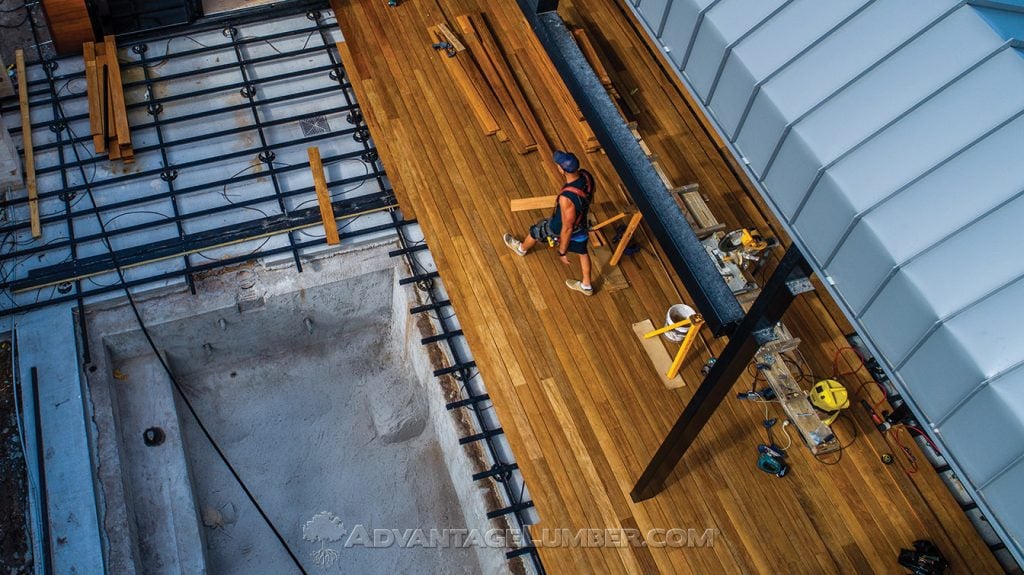
Outdure’s QwickBuild system is a modular, aluminum deck framing solution that’s moisture-proof and engineered for straight, level installation. It’s versatile for low-height floating decks over membranes or elevated structures on various substrates.
Key features include adjustable heights, compatibility with multiple surfaces (like hardwood, composites, tiles, or turf), and easy-to-assemble components that speed up installation. Pricing starts at around $350+ for a 2″ x 8″ x 20′ joist-beam.
TimberTech Aluminum Framing
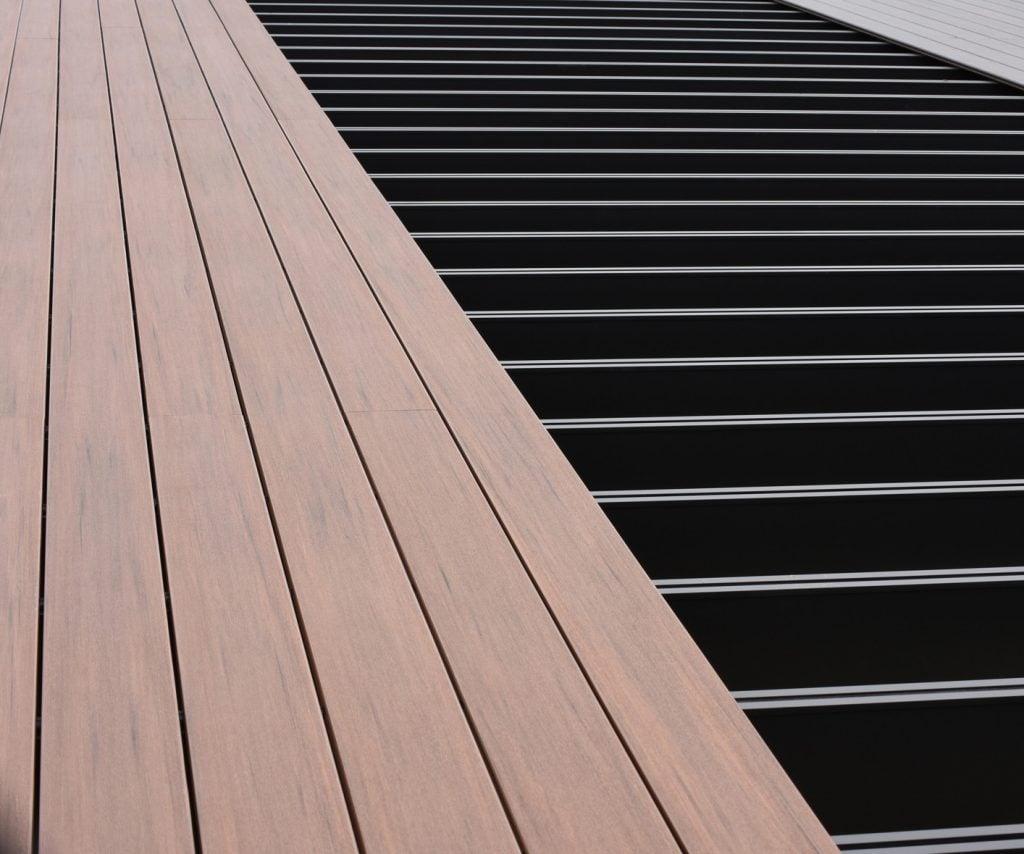
TimberTech offers a complete framing system with joists, beams, ledgers, and posts, all designed to stay incredibly flat and strong over time. A 2×8 aluminum joist matches the strength of a 2×12 wood joist, enabling longer spans and fewer posts. It’s fire-resistant, sustainable (made from recycled aluminum), and backed by a Lifetime Limited Warranty on major components. Pricing includes field joists at $232, beams at $404, and posts at $323.
How They Differ: Outdure excels in modularity and adaptability for diverse projects, including ultra-low or multi-surface decks, making it ideal for custom or complex layouts. TimberTech, on the other hand, emphasizes integrated strength, fire safety, and seamless compatibility with their decking lines, suiting those seeking a robust, all-in-one system. Both outperform wood in longevity and low maintenance, but your choice depends on project specifics.
Final Thoughts: Invest in the Future of Your Deck
If you’re weighing cost against longevity, aluminum deck framing often emerges as the winner for homeowners looking beyond the immediate budget. While wood provides an economical start, aluminum’s durability, low maintenance, and extended lifespan deliver true value over time. At AdvantageLumber.com, our Outdure and TimberTech options ensure you get premium quality backed by expert support.
Ready to build a deck that lasts? Browse our aluminum deck framing collections today and transform your outdoor space. Contact us for personalized advice or quotes!
