
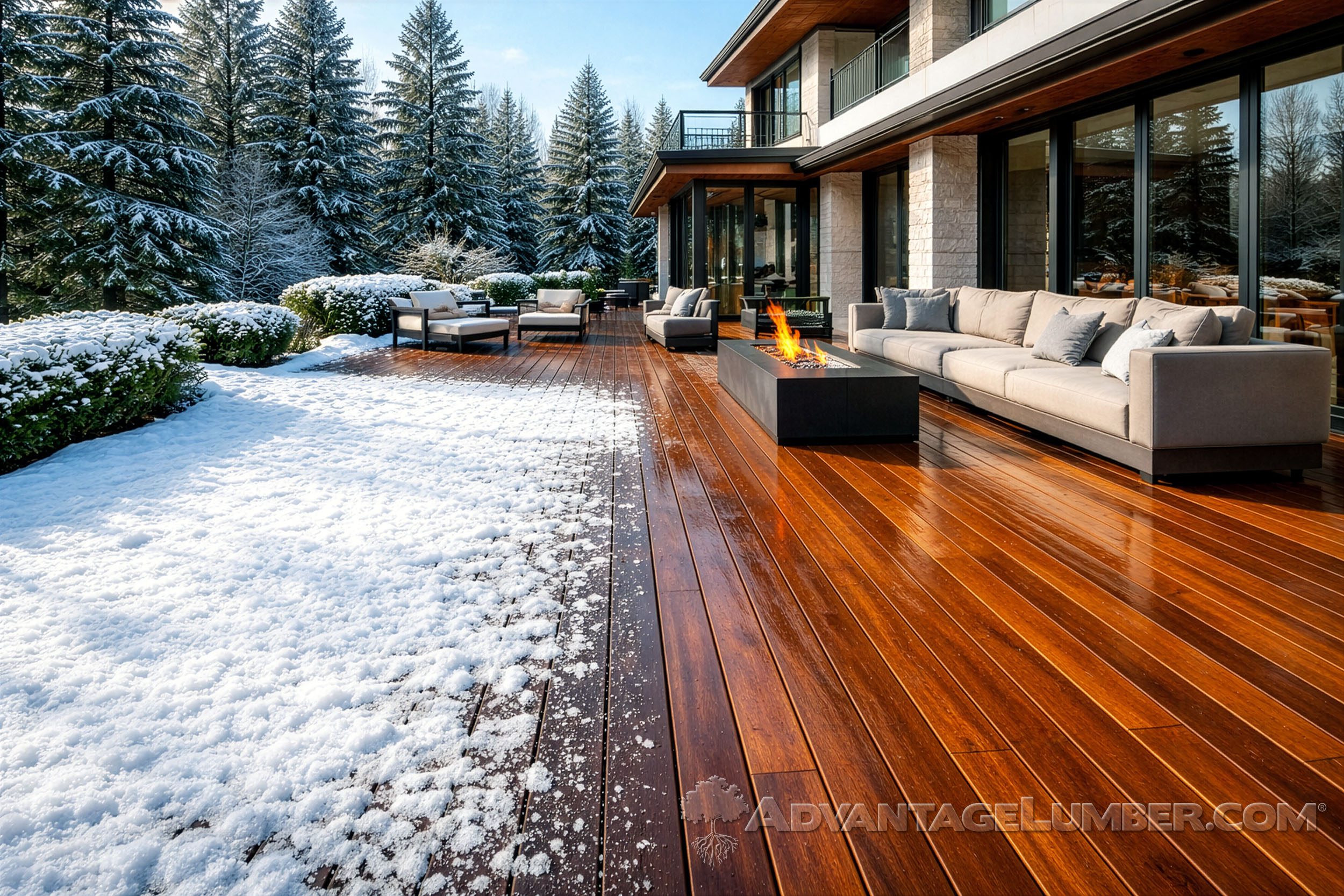
Winter can be tough on outdoor decks—especially when snow and ice are allowed to build up. Ice doesn’t just make deck boards and stairs slippery and unsafe; it can also cause long-term damage to wood and composite decking if not handled correctly.
The good news? With the right products and a few smart winter maintenance tips, you can protect your deck and keep it looking great for years to come.
Prevent Ice Before It Forms
One of the best ways to protect your deck is to stop ice from forming in the first place. Using a deck-safe ice melt before freezing rain or snow events can make all the difference.
Use a Deck-Safe Ice Melt
Traditional rock salt and harsh ice-melting chemicals can damage deck boards, fasteners, railings, and even the surrounding landscaping. Instead, use a product specifically designed for decks, such as DeckWise® Deck Ice-Melt.
DeckWise® Deck Ice-Melt benefits include:
- Safe for wood, composite, and PVC decking
- Won’t corrode fasteners or hardware
- Less harsh on pets and plants compared to standard salts
- Helps prevent ice from bonding to deck boards and stairs
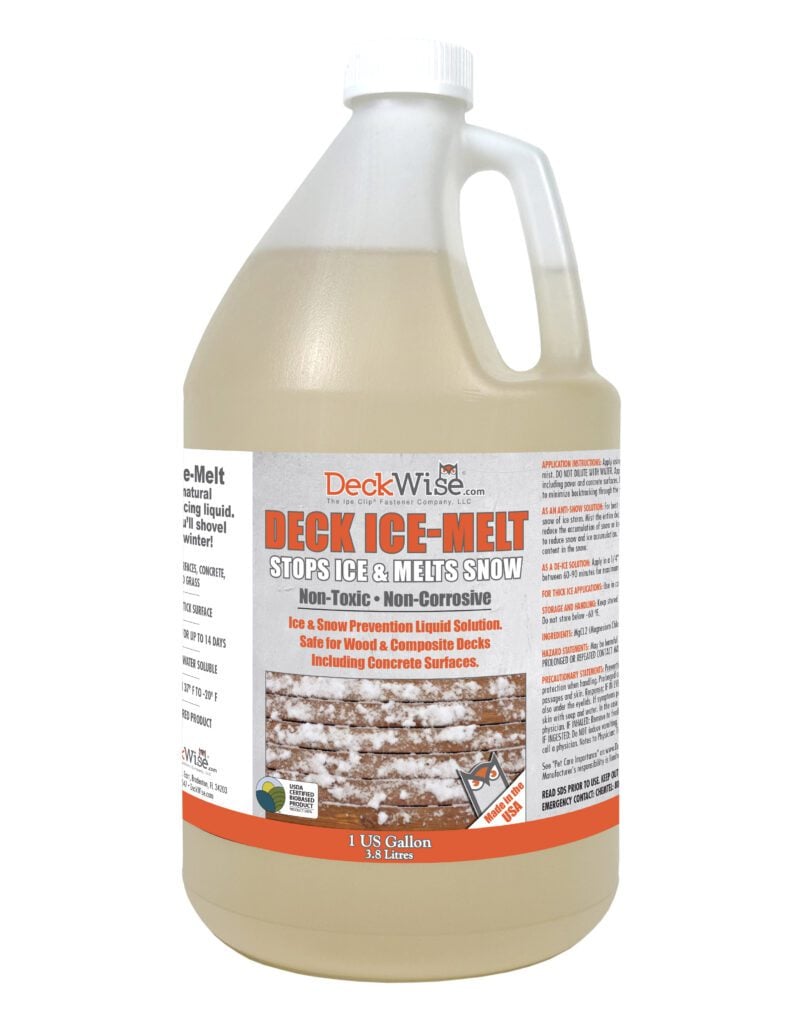
Applying a deck-safe ice melt prior to ice forming reduces the chance of thick ice buildup, making snow and ice easier to remove and significantly lowering slip hazards.
Additional Tips to Avoid Snow and Ice Damage to Your Deck
1. Shovel Early and Often
Don’t let snow pile up and compact into ice. Shovel your deck and stairs as soon as possible after snowfall.
Pro tip:
Use a plastic shovel or one with a rubber edge. Metal shovels can scratch composite decking and gouge wood surfaces.
2. Avoid Using Rock Salt
Rock salt (sodium chloride) is one of the biggest culprits of winter deck damage. It can:
- Cause surface degradation
- Accelerate corrosion of fasteners
- Leave white residue and stains on decking
Always opt for a decking-safe ice melt instead.
3. Clear Deck Stairs First
Deck stairs are often the most dangerous area in winter. Ice tends to form faster on stairs due to foot traffic and shading. Keep them clear and treated to prevent slips and falls.
4. Improve Drainage
Standing water is a major contributor to ice formation. Make sure:
- Deck boards are properly spaced
- Gutters and downspouts aren’t dumping water onto the deck
- Snow is cleared away from areas where meltwater can refreeze
5. Don’t Chip or Hammer Ice
Chipping ice with sharp tools may seem effective, but it can cause permanent damage to deck boards, especially wood and capped composite decking. Let ice melt naturally or use a deck-safe ice melt to loosen it.
6. Oil and Protect Wood Decking
For natural wood decks—such as Ipe, Cumaru, Tigerwood, or other hardwood decking—proper oiling with Ipe Oil can help reduce moisture absorption. Less moisture means less expansion, contraction, and ice-related damage during freeze-thaw cycles.
7. Inspect Your Deck After Winter
Once winter is over, take time to inspect:
- Deck boards
- Stair treads
- Fasteners
- Railings
Catching small issues early prevents costly repairs later.
Protect Your Investment All Winter Long
Your deck is a major investment, and winter doesn’t have to shorten its lifespan. By preventing ice buildup with deck-safe products like DeckWise® Deck Ice-Melt, avoiding harsh chemicals, and practicing smart winter maintenance, you can keep your deck safer, stronger, and better looking—even in harsh winter conditions.
For premium decking materials, deck care products, and expert advice, AdvantageLumber.com is here to help you protect your outdoor living space year-round.
