
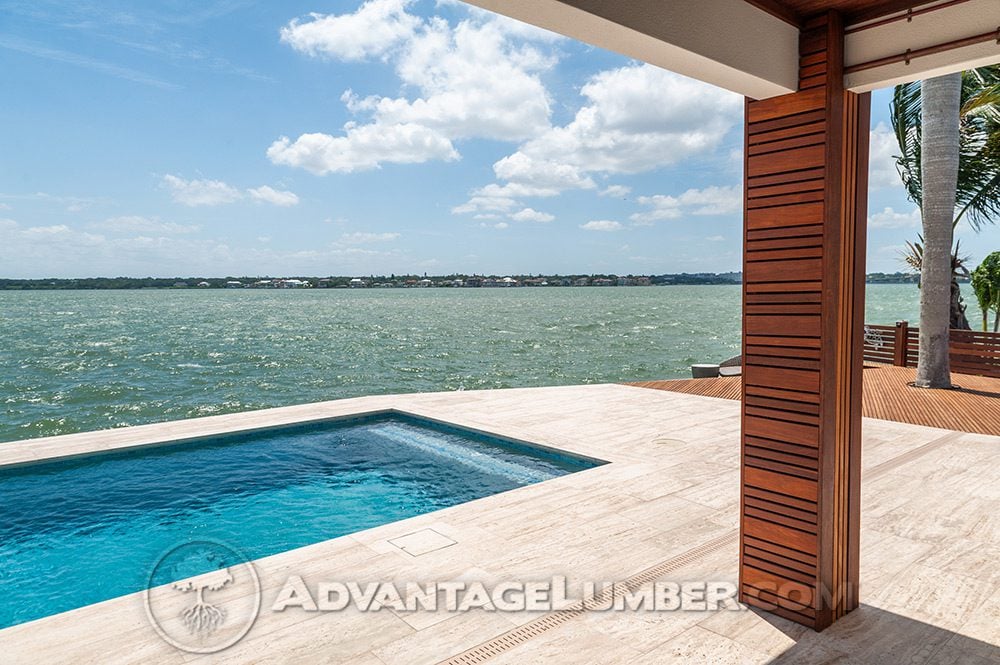
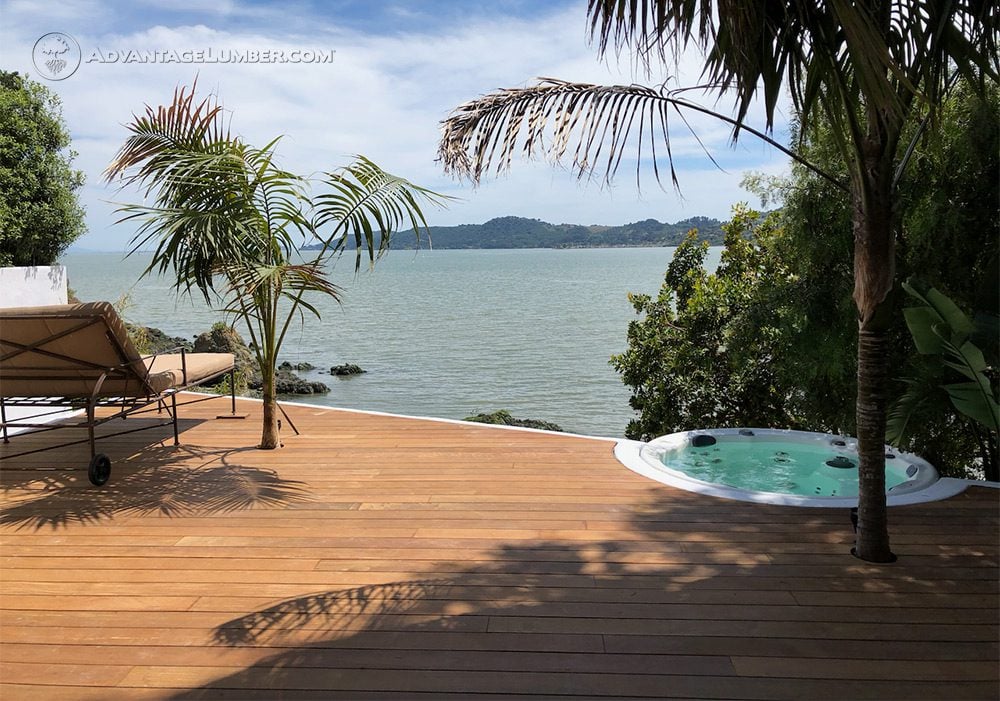
Homes near lakes, rivers, marshes, and coastal areas offer incredible views—but they also place higher demands on decking materials. Constant moisture, humidity, UV exposure, and, in coastal regions, salt air can accelerate wear and shorten the lifespan of a poorly chosen deck.
Selecting the right decking material is not just about appearance. It is about long-term performance, structural stability, and how well the material holds up in wet, demanding environments. For waterfront homes, tropical hardwood decking remains the gold standard for homeowners seeking maximum durability, structural strength, and natural beauty, with composite and PVC providing alternative solutions for different priorities.
Why Waterfront Decks Require Special Materials
Decks near water are exposed to conditions that inland decks rarely face:
- Persistent moisture and humidity
- Increased risk of rot, mold, and mildew
- UV exposure reflecting off water surfaces
- Salt air corrosion in coastal environments
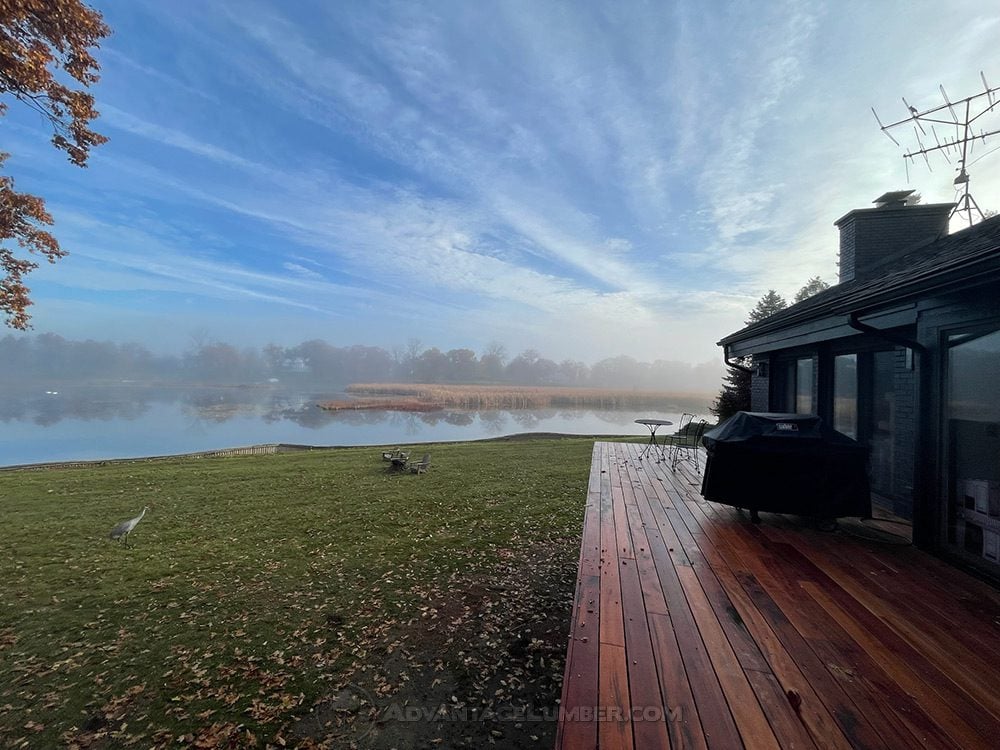
Materials that perform well in dry climates may deteriorate quickly when installed near water. Durability, density, and natural resistance to decay become critical factors.
Tropical Hardwood Decking: The Best Choice for Waterfront Homes
Tropical hardwoods have been used for decades in marine, coastal, and high-exposure environments for one key reason: they naturally withstand moisture better than almost any other decking material while maintaining exceptional strength.
Why Tropical Hardwoods Excel Near Water
Exceptional Density
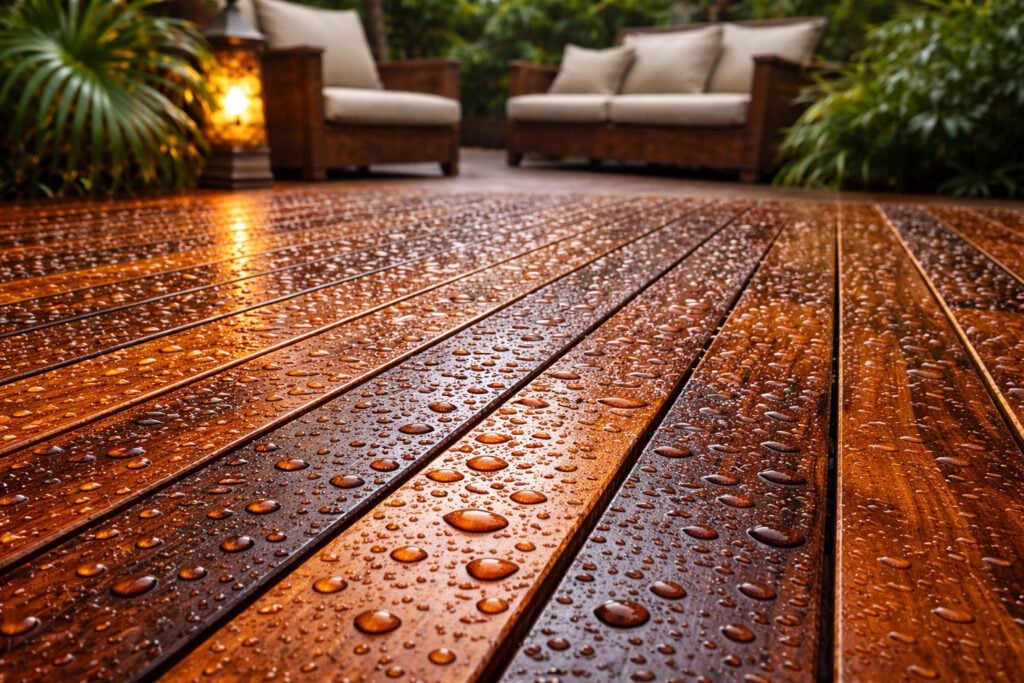
Woods like Ipe, Cumaru, Garapa, and Tigerwood are extremely dense, which limits water absorption, reduces movement, and contributes to long-term stability in wet environments.
Natural Resistance to Rot and Insects
The natural oils and tight grain structure of tropical hardwoods protect against decay and insect damage without the need for chemical treatment.
Long Lifespan
When properly installed, tropical hardwood decks can last 40 years or more, even in wet or coastal settings. Ongoing maintenance is primarily cosmetic rather than structural.
Superior Structural Strength
The high load ratings of tropical hardwoods make them well suited for docks, boardwalks, and elevated waterfront decks where strength and stiffness matter.
Timeless Natural Appearance
Rich color variation and distinctive grain patterns provide a premium, architectural look that synthetic materials cannot fully replicate.
Popular Tropical Hardwoods for Waterfront Decks
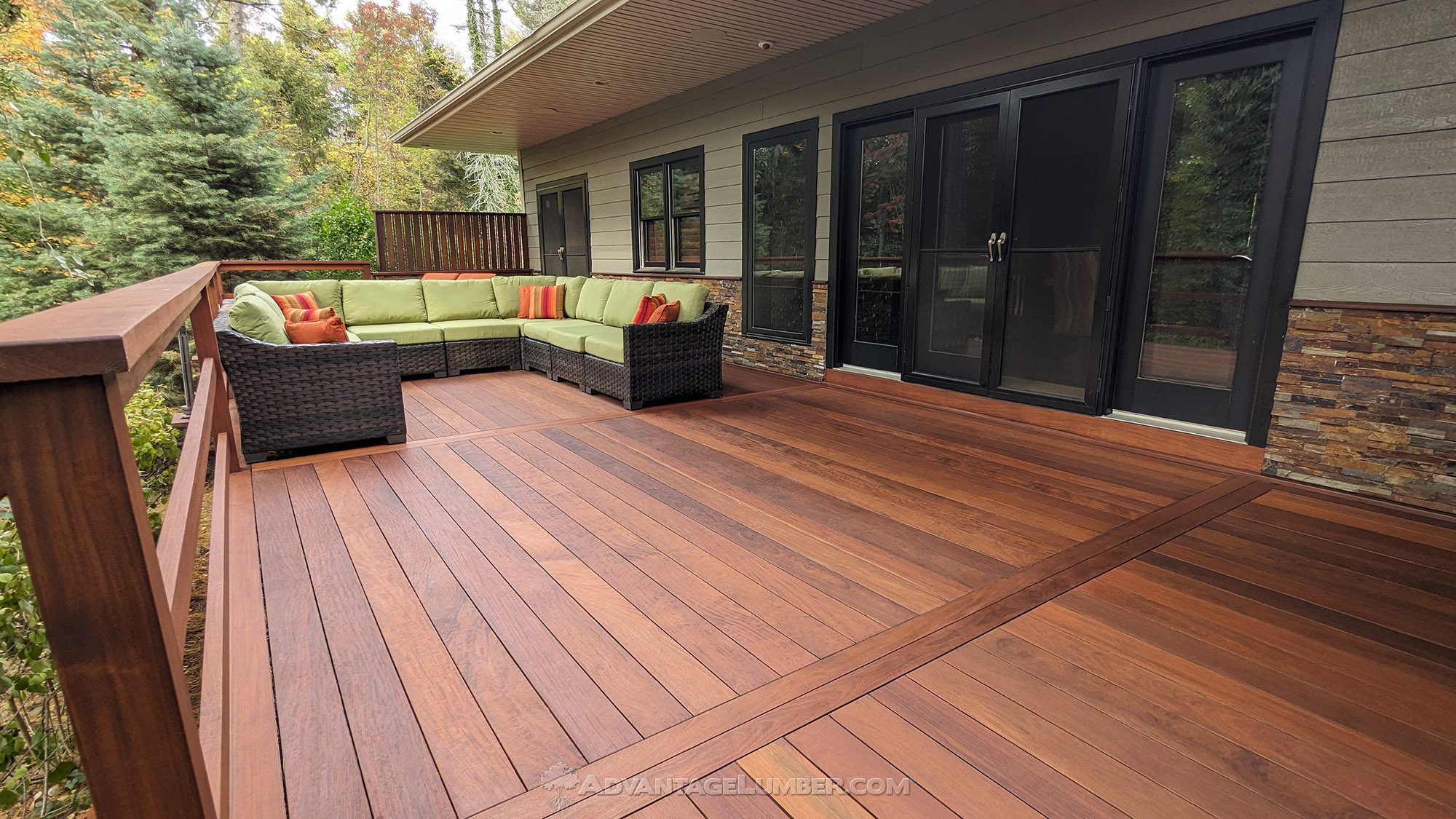

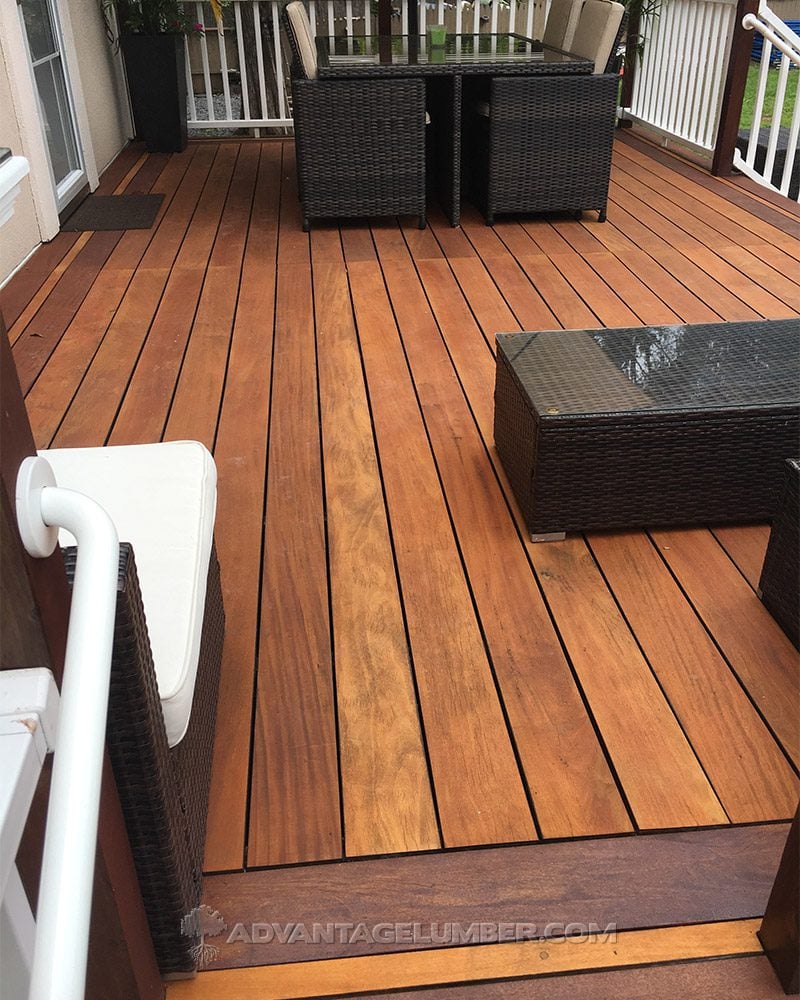
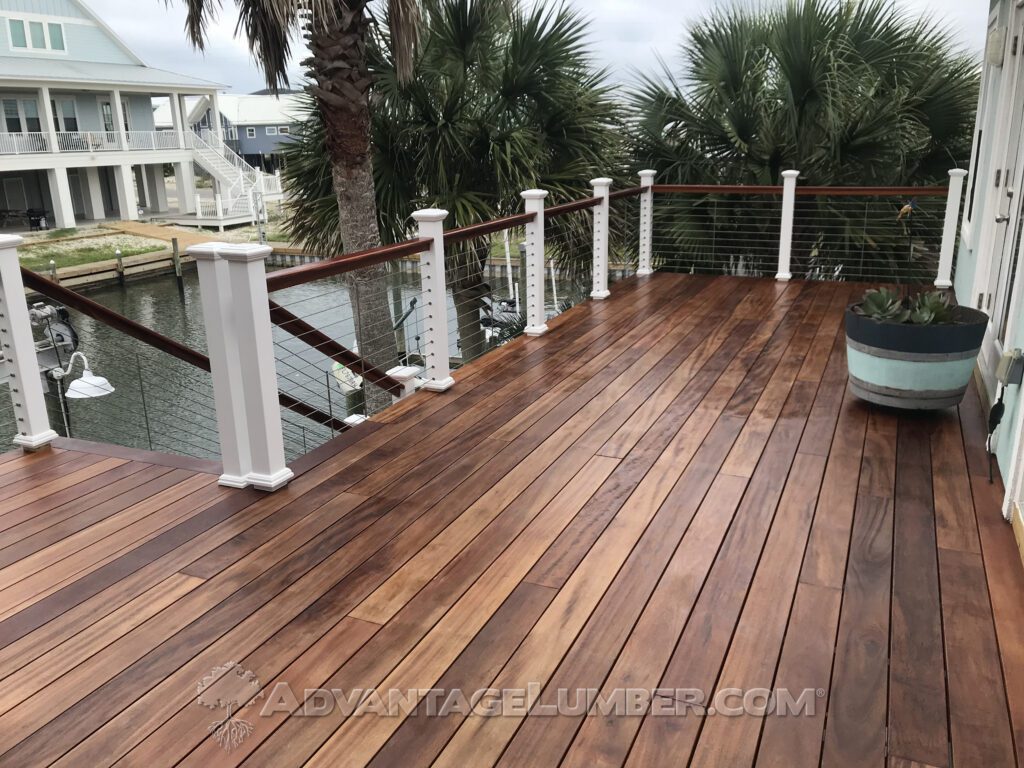
- Ipe – One of the most durable decking woods available, known for exceptional resistance to moisture, wear, and decay
- Cumaru – Comparable durability to Ipe with warmer color tones
- Garapa – A lighter-colored hardwood offering excellent stability near water
- Tigerwood – Striking grain patterns combined with strong resistance to moisture and rot
For homeowners who want maximum longevity, strength, and authentic wood aesthetics, tropical hardwood decking remains the top-performing option for waterfront applications.
Composite Decking: A Low-Maintenance Alternative
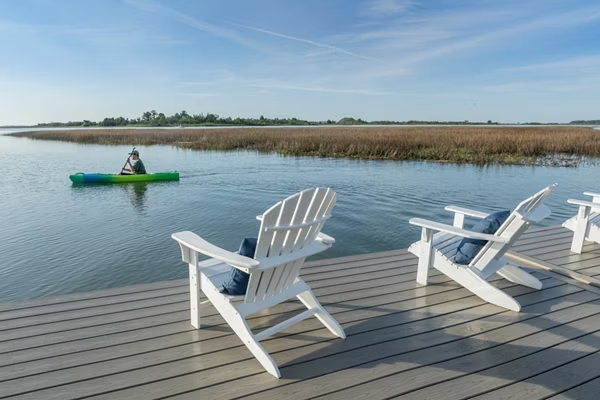
Composite decking offers a balance between durability and reduced upkeep, making it a practical option for some waterfront projects.
Benefits of Composite Near Water
- Resists rot, splintering, and insect damage
- Does not require regular staining or sealing
- Maintains a consistent appearance over time
Considerations
- Depending on construction, composite boards may retain small amounts of moisture over time
- Surface temperatures can be higher in direct sunlight
- While composite decking meets standard span and load requirements, it does not match the long-term wear resistance or structural strength of dense tropical hardwoods
Composite decking is often chosen by homeowners who prioritize lower maintenance over natural wood character, particularly in non-marine waterfront environments.
PVC Decking: Maximum Moisture Resistance with Minimal Upkeep
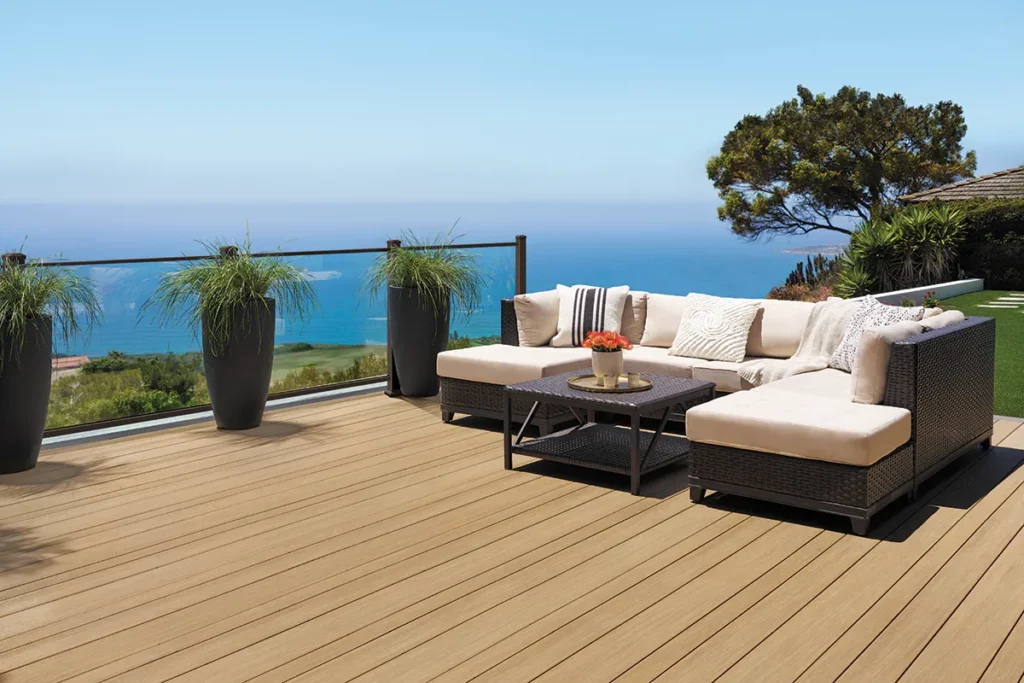
PVC decking is a fully synthetic material designed to perform in high-moisture and salt-air environments.
Benefits of PVC Decking
- Will not absorb water, rot, or decay
- Highly resistant to mold, mildew, and salt air exposure
- Requires minimal ongoing maintenance
Considerations
- Experiences more expansion and contraction than natural wood
- Offers a more uniform, manufactured appearance
- While it meets decking span requirements, PVC does not provide the same rigidity or long-term wear characteristics as dense hardwood decking
PVC decking is best suited for homeowners who prioritize maximum moisture resistance and minimal maintenance, particularly in coastal or poolside settings.
Choosing the Right Decking for Your Waterfront Home
The best deck material depends on your performance priorities:
- For maximum durability, strength, and natural beauty: Tropical hardwood decking
- For reduced maintenance with a wood-like appearance: Composite decking
- For complete moisture resistance and minimal upkeep: PVC decking
Regardless of material choice, proper installation details are critical for waterfront decks. Adequate ventilation, effective drainage, and the use of corrosion-resistant stainless steel fasteners are essential—especially in coastal and salt-air environments.
Final Thoughts
Waterfront decks demand materials that can withstand constant moisture exposure without compromising performance or appearance. Tropical hardwoods continue to set the benchmark for long-term waterfront decking, offering unmatched durability, strength, and natural appeal. Composite and PVC decking provide reliable alternatives when maintenance concerns or design preferences take priority.
At Advantage Lumber, we specialize in premium tropical hardwood decking, along with high-quality composite and PVC options to support a wide range of waterfront projects. Choosing the right material ensures your deck remains safe, beautiful, and structurally sound for decades.
