
At AdvantageLumber.com, we know that building or upgrading your deck is an exciting project, but sometimes life gets in the way, and your decking materials might need to sit for a while before installation.
Proper storage is key to keeping your investment in top shape—whether you’re working with premium hardwoods like Ipe, Cumaru, or Tigerwood, or durable synthetics such as composite, PVC, HDPE, or mineral-based options.
Improper storage can lead to warping (bending or twisting), mold growth from moisture, or other movements like cupping or cracking. In this guide, we’ll walk you through best practices for storing both hardwood and synthetic decking, plus tips on acclimating your materials before installation to ensure a flawless finish.
Why Proper Storage Matters
Decking materials are designed to withstand outdoor elements once installed, but when left unused, they’re vulnerable to environmental factors like humidity, temperature fluctuations, direct sunlight, and pests. Hardwoods are natural products that can absorb or release moisture, leading to dimensional changes.
Synthetics, while more stable, can still expand, contract, or degrade if exposed to extreme conditions. By following these storage guidelines, you’ll prevent costly issues and extend the life of your deck. At AdvantageLumber.com, we source only the highest-quality materials, but even the best decking benefits from smart handling.
General Storage Tips for Most Decking Types
Before diving into specifics, here are universal rules to follow:
- Choose a suitable location: Store indoors if possible, in a dry, well-ventilated area like a garage or shed. If outdoor storage is unavoidable, use a covered space protected from rain and direct sun. (Hardwood decking should not be stored indoors unless consulting Advantage Lumber staff first).
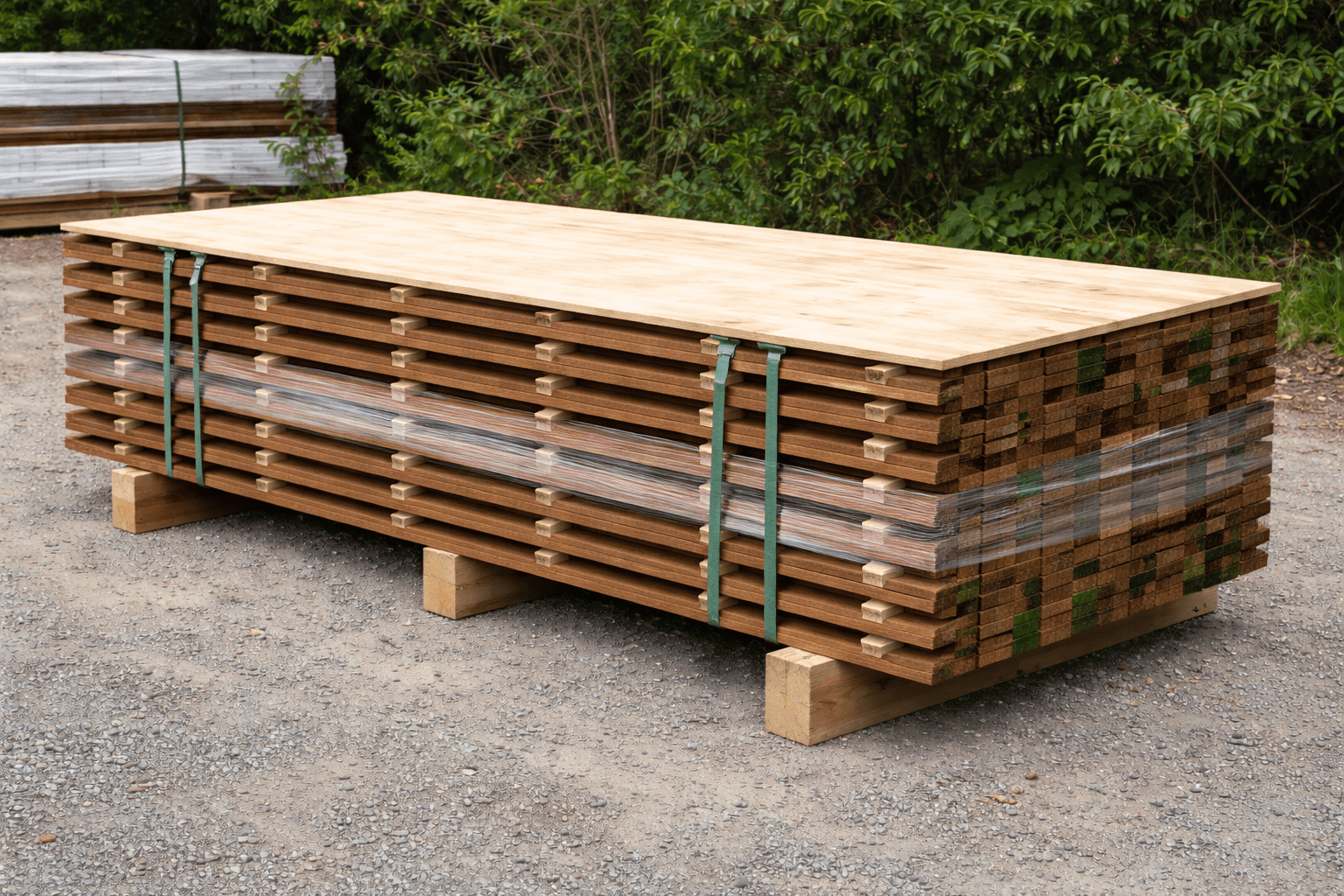
- Elevate off the ground: Use pallets, blocks, or racks to keep boards at least 12 inches off the floor. This prevents moisture wicking from concrete or soil.
- Cover properly: Use plywood to shield from rain, debris, and UV rays, but avoid airtight plastic that traps moisture. You want the sides of the bundle of deck boards to be able to get air flow. Do not tarp the entire bundle as it creates a sauna effect and adds extra moisture to your deck boards!
- Stack neatly: Keep stacks level and supported every 2 feet to prevent sagging. Limit stack height to 3-4 feet for safety and stability.
- Monitor conditions: Aim for consistent temperatures (40-80°F) and humidity (30-50%). Check periodically for signs of mold, pests, or damage.
- Handle with care: Wear gloves to avoid oils from your skin affecting the wood, and move boards carefully to prevent scratches or dents.
Storing Hardwood Decking
Hardwood decking, such as exotic species from AdvantageLumber.com, is prized for its beauty and durability but requires extra attention due to its organic nature. Moisture is the biggest enemy, as it can cause warping, mold, or splitting.
- Sticker the boards: For optimal airflow, insert thin wooden spacers (stickers) every 16-24 inches between layers of boards. This allows even drying and prevents mold by promoting ventilation. Stickers should be dry and uniform in thickness (about 3/4 inch).
- Avoid direct contact with moisture: Never store on damp surfaces. If storing outdoors, ensure the cover slopes to shed water and leave sides open for air circulation.
- Protect from sunlight: UV exposure can cause fading or uneven drying, leading to cupping (edges curling up). Keep covered and away from windows or open areas.
- Long-term storage: If storing for months, re-stack periodically to ensure even exposure and check for any movement. For premium hardwoods like those we offer, this maintains their rich color and strength.
- Don’t Tarp: Never tarp the entire bundle of deck boards. This traps moisture and creates a humid green house effect which will raise the moisture level of your deck boards. Then when you go to install them they will shrink significantly and experience other undesirable movement such as cupping, twisting etc.
By storing hardwoods this way, you’ll minimize undesirable movement—think of it as giving your decking a stable “rest” before it becomes the star of your outdoor space.
Storing Synthetic Decking
Synthetic decking options—composite (wood-plastic blend), PVC (polyvinyl chloride), HDPE (high-density polyethylene), and mineral-based composite—are engineered for low maintenance and resistance to rot, but they aren’t invincible. They can expand with heat, attract dirt, or warp if stacked improperly. Fortunately, their storage needs are similar across types, with minor variations.
- Composite decking: Made from wood fibers and plastic, it’s somewhat moisture-sensitive. Store flat and supported to prevent bowing. Avoid extreme heat (above 100°F), as it can cause softening or expansion. Use breathable covers to prevent mold on any exposed wood content.
- PVC decking: Fully plastic-based, PVC is highly resistant to moisture and mold but can become brittle in cold or warp in direct sun. Store in a temperature-controlled area, stacked evenly with supports every 1-2 feet. Cover to block UV rays, which can cause chalking or discoloration.
- HDPE decking: Similar to PVC, HDPE is durable and recyclable but sensitive to thermal expansion. Keep stacks low and level, with padding between layers to avoid scratches. Indoor storage is ideal to prevent dust buildup, which can embed into the surface.
- Mineral-based composite: These use minerals like calcium carbonate for added stability. They’re less prone to warping but can absorb heat quickly. Store away from direct sunlight and heat sources, using spacers if stacking multiple layers to allow air flow and prevent sticking.
For all synthetics, avoid tight wrapping that could trap heat or moisture. If outdoor storage is necessary, elevate on pallets and use UV-resistant tarps. These materials from AdvantageLumber.com are built tough, but proper storage keeps them looking factory-fresh.
Acclimating Decking Before Installation
If your decking has been in storage for more than a few weeks—especially if conditions differed from your installation site—acclimation is crucial. This process allows the material to adjust to local temperature and humidity, reducing post-installation issues like gaps, buckling, or cracking. A garage has very different conditions than where your deck will be built. Proper acclimation is required before installing deck boards that have been stored indoors in a garage.
- For hardwood decking: Remove from storage and place the boards in the installation area (or a similar environment) for 7-14 days. Lay them flat with stickers for airflow, uncovered but protected from rain. This equalizes moisture content to match your local climate—aim for 6-12% moisture, which you can check with a meter. Install during mild weather for best results.
- For synthetic decking: Synthetics need less time—typically 7 days—but still benefit from acclimation. Unpack and lay boards flat in the shade near the deck site. This minimizes thermal expansion surprises during installation. For PVC and HDPE, avoid direct sun during this period to prevent uneven heating. Composite and mineral-based types may require slightly longer if stored in very dry or humid conditions.
Always follow manufacturer guidelines (check our product pages at AdvantageLumber.com for specifics), and consult a professional if unsure. Acclimation ensures your deck performs as expected, with minimal movement over time.
Final Thoughts
Storing your unused decking properly is a small step that pays big dividends in longevity and aesthetics. Whether you’re choosing the timeless appeal of hardwood or the hassle-free vibe of synthetics, AdvantageLumber.com has the premium materials and expert advice to make your project shine. If you have questions or need supplies like storage racks or covers, visit our site or contact our team—we’re here to help you build better. Happy decking!
