
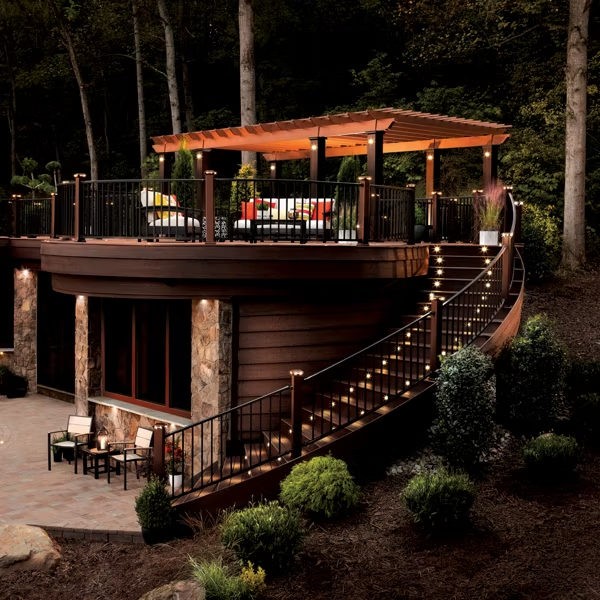
Deck lighting works best when it is designed with intention. Rather than choosing fixtures first and figuring out placement later, a more effective approach is to think about how you actually use your deck. Is it a space for entertaining? A quiet place to unwind in the evening? A pathway between the house and yard?
When deck lighting is planned around real-world use, it feels natural, improves safety, and enhances the overall experience of the space without becoming distracting or excessive.
Lighting for Safe Movement and Navigation
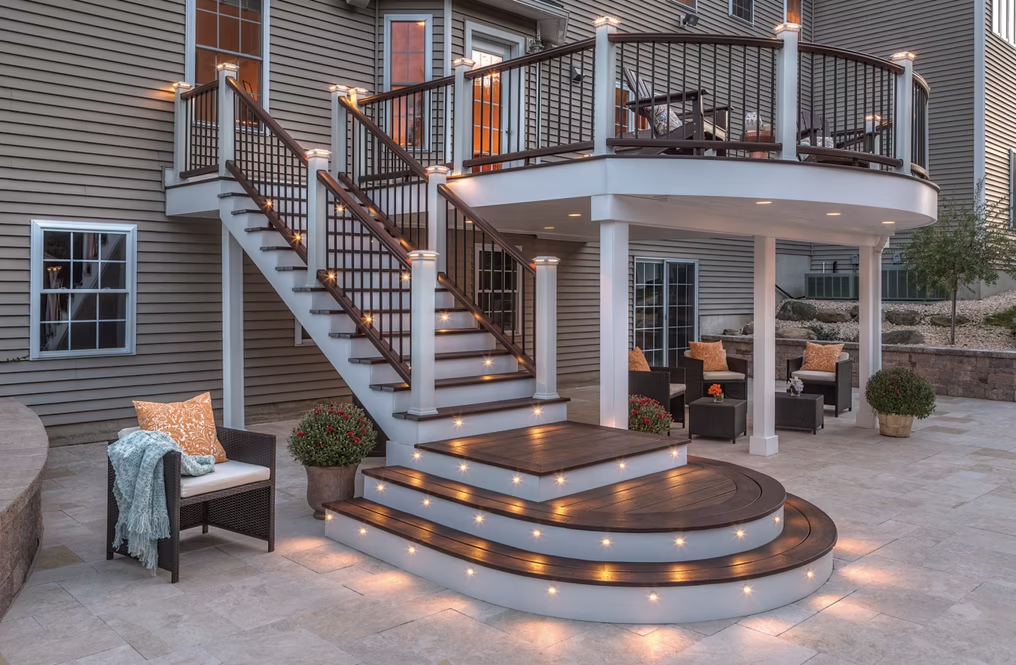
One of the most important functions of deck lighting is helping people move safely after dark. Steps, changes in elevation, and deck edges can be difficult to see at night without proper lighting.
Lighting in these areas should be functional and evenly spaced, providing clear visibility without creating glare. The goal is not to flood the deck with light, but to define where people walk and where transitions occur.
Common areas to focus on include:
- Stair risers
- Deck perimeters
- Entry and exit points
Lighting for Entertaining and Dining
If your deck is often used for hosting guests or enjoying meals outdoors, lighting should feel comfortable and welcoming. People should be able to see one another easily without harsh brightness or deep shadows.
This type of lighting often works best when layered. Softer ambient lighting creates an inviting atmosphere, while subtle accent lighting helps define the space without overpowering it.
When designing lighting for entertaining areas, consider:
- Even light distribution
- Warm light tones
- Avoiding direct light at eye level

Lighting for Relaxation and Ambiance
Many homeowners use their decks as a place to relax at the end of the day. In these spaces, lighting should enhance the mood rather than draw attention to itself.
Hidden or low-profile lighting is often ideal for relaxation areas. By keeping fixtures discreet and light levels low, the focus remains on the surroundings, whether that is a view, landscaping, or a seating area.
This approach helps create a calm, inviting environment that still provides enough light to move around comfortably.

Lighting to Highlight Deck Design and Structure
Deck lighting can also be used to highlight architectural details and define the overall layout of the deck. Posts, railings, and clean lines can be subtly emphasized with well-placed lighting, adding visual interest after dark.
When lighting is used as a design element, consistency is key. Using similar fixture styles and color temperatures helps the deck feel cohesive rather than cluttered.
This type of lighting works especially well when it complements the materials and craftsmanship of the deck itself.

Lighting for Under-Deck Living Spaces
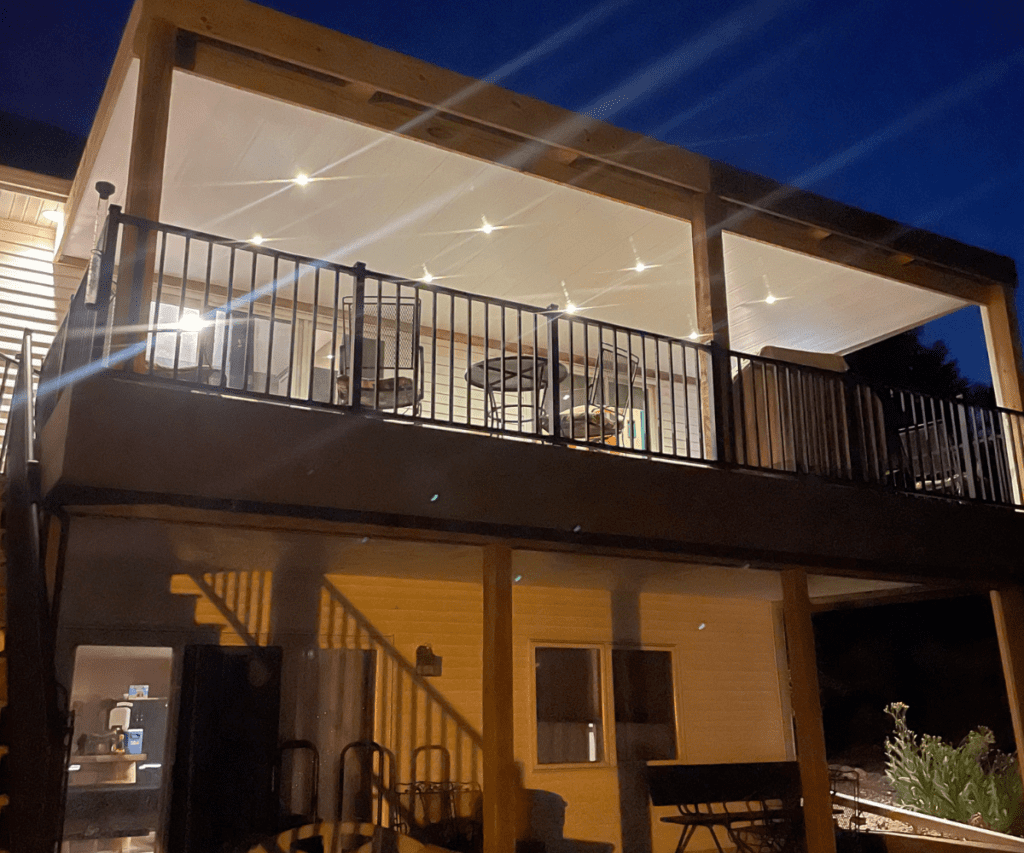
For elevated or second-story decks, lighting should not stop at the surface level. Adding lighting beneath the deck can transform what might otherwise be a dark, unused area into a functional extension of the outdoor space.
Under-deck lighting can improve safety, increase usability, and create a more finished appearance for patios, walkways, or storage areas below.
Bringing the Lighting Plan Together
Most decks benefit from more than one type of lighting. By layering lighting for safety, usability, and ambiance, you can create a space that works well throughout the evening without feeling over-lit.
The most successful deck lighting plans are those that consider how the space is used day to day. Whether lighting is planned during construction or added later, a thoughtful approach makes a noticeable difference in both function and appearance.
Deck lighting should support how you live outdoors, not compete with it. If you are unsure where to start or how to balance different lighting needs, the team at AdvantageLumber.com can help you think through lighting options and placement to create a setup that fits your deck, your style, and how you use the space.
