
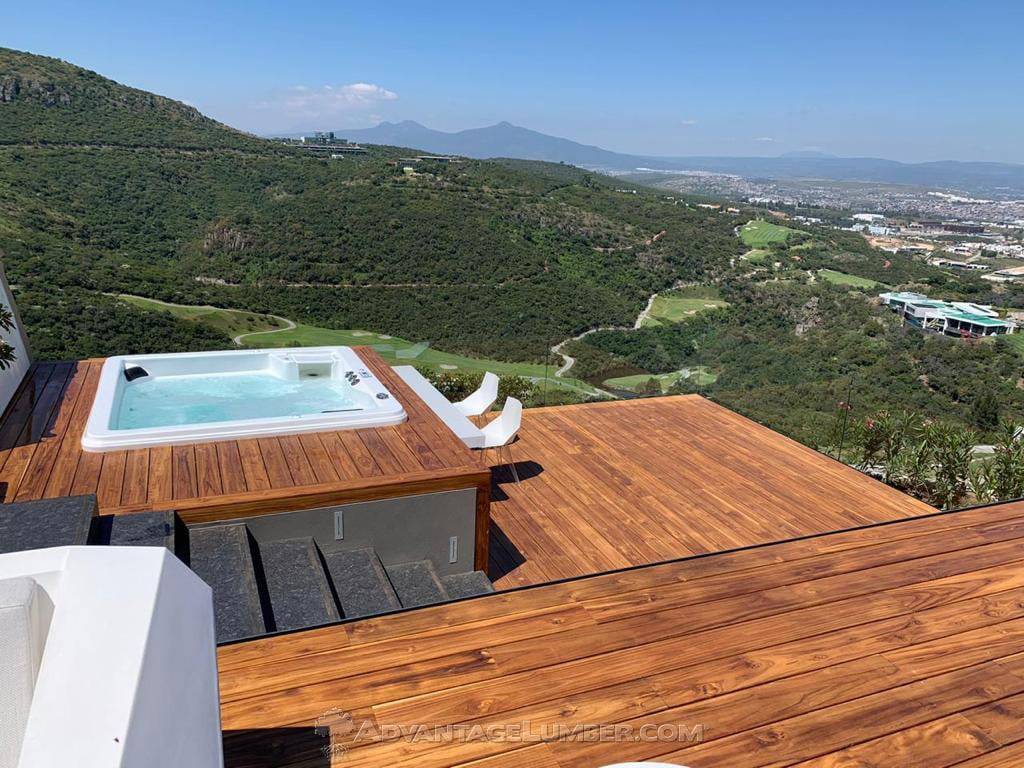
At AdvantageLumber.com, as the largest importer of both Ipe and Teak, we hear one question daily: Is Ipe better than Teak? Both are exceptional hardwoods renowned for their durability and beauty, but the answer depends on your project’s specific needs.
To help you decide, let’s look at a comparison of these two top-tier woods, focusing on their durability, weight, color, and ideal applications.
Durability: Ipe’s Strength vs. Teak’s Resilience
Ipe is widely regarded as one of the most durable exterior hardwoods on the planet. Its Janka hardness rating of 3,680 lbf (pounds-force) makes it incredibly dense and resistant to wear, weather, insects, and even fire. Ipe’s interlocking grain and natural oils contribute to its longevity, often lasting 50+ years with minimal maintenance when used in outdoor applications like decking, siding, or furniture.
Teak, while slightly less dense with a Janka rating of around 1,000 lbf, ranks among our top 5 most durable wood species. Its natural oils, particularly its high silica content, make it exceptionally resistant to moisture, rot, and pests. Teak has been a favorite for centuries in marine environments—think boat decks and yacht railings—because it withstands harsh, wet conditions beautifully. With proper care, Teak can last 40+ years outdoors.
Verdict: Ipe takes the crown for raw durability and strength, making it ideal for high-traffic areas or extreme climates. Teak, however, is no slouch and excels in environments where moisture resistance is critical.
Weight: Teak’s Lightweight Advantage
One of Teak’s standout benefits over Ipe is its lighter weight. Ipe is incredibly dense, weighing approximately 69 lbs per cubic foot, which contributes to its durability but can make it challenging for applications where weight is a concern. For example, installing Ipe on a rooftop deck may require additional structural reinforcement due to its heft.
Teak, by contrast, weighs about 40 lbs per cubic foot, making it significantly lighter. This quality makes Teak an excellent choice for rooftop decks, balconies, or other projects where minimizing load is essential. The lighter weight also simplifies handling and installation, potentially reducing labor costs.
Verdict: If weight is a concern for your project, Teak is the clear winner.
Color and Aesthetics: Ipe’s Rich Tones vs. Teak’s Golden Glow
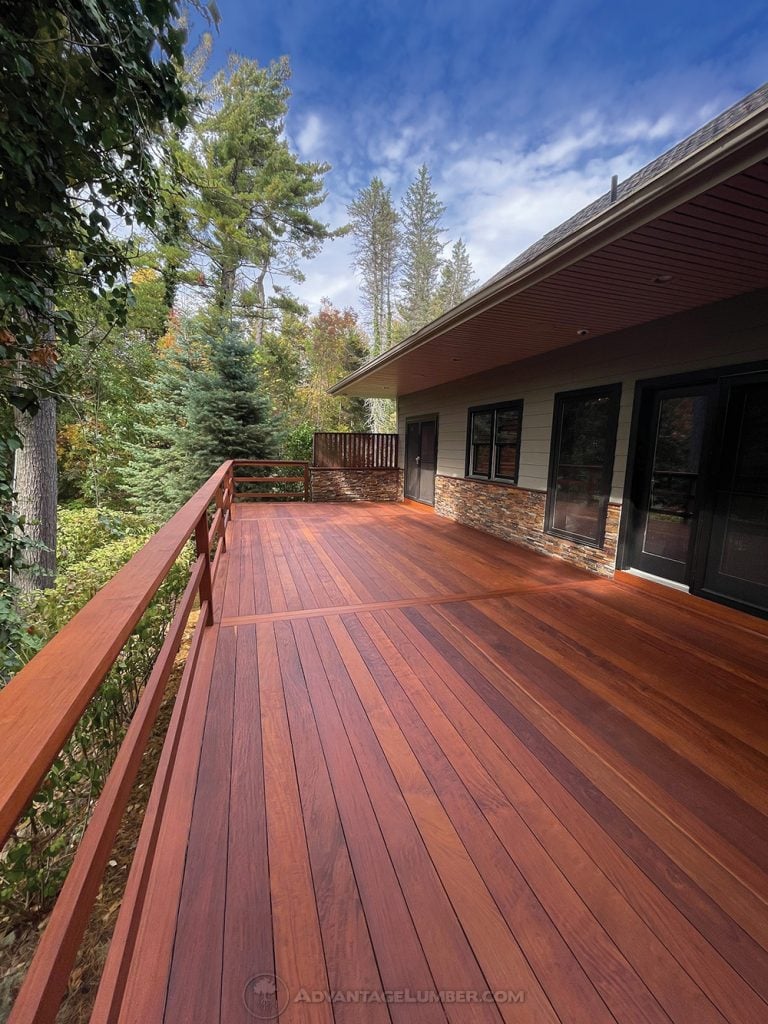
Ipe’s deep, reddish-brown to dark brown hues give it a luxurious, dramatic look that many homeowners love for modern or rustic designs. Over time, Ipe weathers to a silver-gray patina if left untreated, though regular sealing can maintain its rich color.
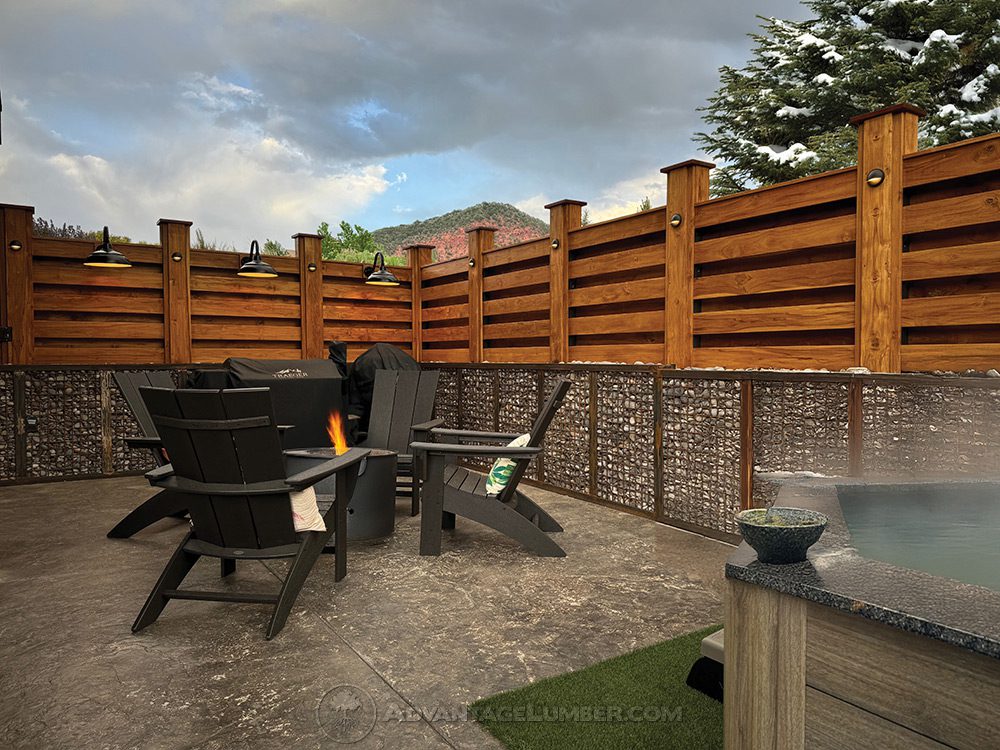
Teak, on the other hand, boasts a warm, golden-brown tone that’s lighter and more inviting, especially in sunny climates. Its lighter color reflects more sunlight, making Teak surfaces noticeably cooler underfoot compared to Ipe—perfect for barefoot-friendly spaces like pool decks or patios. Like Ipe, Teak develops a silver-gray patina over time unless sealed, but its initial lighter tone gives it a unique aesthetic appeal.
Verdict: Ipe’s bold, dark tones suit those seeking a striking, upscale look, while Teak’s lighter, golden hue is ideal for a softer, cooler aesthetic.
Applications: Where Each Wood Shines
- Ipe: Its unmatched durability makes Ipe the go-to choice for heavy-duty applications like commercial boardwalks, high-traffic residential decks, or outdoor furniture that needs to withstand years of abuse. Its density also makes it a top pick for siding and cladding in harsh climates.
- Teak: Teak’s lighter weight and moisture resistance make it perfect for rooftop decks, marine applications, or furniture where portability is a factor. Its cooler surface temperature is a bonus for barefoot-friendly spaces, and its classic look suits traditional or coastal designs.
Maintenance: A Similar Approach
Both Ipe and Teak are low-maintenance hardwoods thanks to their natural oils. Regular cleaning and occasional sealing (every 1-2 years) can preserve their vibrant colors and extend their lifespan. Without sealing, both will gracefully weather to a silver-gray patina, which many homeowners embrace for its low-maintenance charm.
Cost Considerations
As premium hardwoods, Ipe comes with a higher price tag than softer woods like pressure-treated pine. Teak is significantly more affordable than Ipe and in some cases more affordable than Cedar. However, their longevity and minimal maintenance needs often make them cost-effective over time. At AdvantageLumber.com, we offer competitive pricing on both species, and our team can provide detailed quotes tailored to your project.
So, Is Ipe Better Than Teak?
The answer depends on your priorities:
- Choose Ipe if you need maximum durability, a bold aesthetic, and a wood that can handle extreme conditions or heavy foot traffic.
- Choose Teak if weight is a concern, you prefer a lighter color, or you’re designing a barefoot-friendly space like a rooftop deck or pool area.
At AdvantageLumber.com, we’re proud to offer the highest-quality Ipe and Teak as the largest importer of these exceptional hardwoods. Not sure which is right for your project? Contact our expert team today at [insert contact info] or visit our website to explore samples and get a custom quote. Let us help you bring your vision to life with the perfect hardwood!