
Composite decking is popular for a good reason. It looks great, lasts for decades, and doesn’t need the sanding, staining, or sealing that traditional wood decks often require. However, there’s one thing homeowners sometimes discover after installing their beautiful new deck: composite decking can still get scratched.
Maybe someone dragged a heavy patio chair across the deck. Perhaps your dog likes to race around the backyard, digging its nails into the boards. Or maybe a contractor accidentally scraped the surface while moving a ladder.
Whatever caused the damage, you’re probably wondering if there’s a way to make those scratches disappear.
The good news? Some scratches can be cleaned up or made less noticeable. Others may require replacing a board. The trick is knowing what type of composite decking you have and choosing the right repair method.
After more than 20 years in the decking industry, we’ve seen plenty of scratched deck boards. Let’s go over what actually works, what doesn’t, and how to keep your deck looking its best.
Can You Remove Scratches From Composite Decking?
The short answer is sometimes.
Unlike natural hardwood decking, most modern composite deck boards have a protective outer layer called a cap or shell. This layer gives the decking its color, texture, and resistance to stains, moisture, and fading.
Unfortunately, it also makes scratch repairs a little tricky.
With natural hardwoods like Ipe or Cumaru, you can often sand away a scratch and refinish the surface. Composite decking doesn’t work the same way.
Sanding a capped composite board can permanently damage its protective surface. You might remove the scratch, but you’ll also remove the color and texture surrounding it.
That can leave you with a much bigger eyesore than the original scratch.
Before attempting any repair, identify your decking brand and collection. Manufacturers such as Trex, TimberTech, and Deckorators use different materials and surface technologies, so their repair recommendations can vary.
Step 1: Clean the Scratched Area First
Before reaching for a repair kit, grab a bucket of warm water, mild dish soap, and a soft bristle brush. You’d be surprised how often something that looks like a scratch is actually a scuff mark.
Metal patio furniture, rubber feet, and even shoes can leave marks on composite decking without cutting into the surface.
Start by rinsing the affected area with water. Next, gently scrub along the grain using soapy water and your soft brush. Rinse thoroughly and allow the board to dry. Take another look once the surface is completely dry.
Did the mark disappear? Great! You probably had a surface scuff rather than an actual scratch. If you can still see or feel a groove in the decking, the damage may be deeper.
One important tip: Avoid steel wool, stiff wire brushes, and abrasive cleaning pads. These can create additional scratches, making the problem worse.
Step 2: Determine How Deep the Scratch Is
Not all scratches are created equal. A faint mark on the surface is very different from a deep gouge that cuts through the protective cap. Here’s a simple way to evaluate the damage.
Light Surface Scratches
These are shallow marks that haven’t penetrated the protective outer layer. You may notice them when sunlight hits the deck at a certain angle.
Fortunately, minor scratches often become less noticeable over time as the surface experiences normal weathering and use.
Cleaning may also help if dirt has collected inside the scratch.
Moderate Scratches
A moderate scratch may be deep enough to catch your fingernail when you run it across the surface.
Although the board may still be structurally sound, the damage could be difficult to hide.
Some manufacturers offer approved touch up products or repair procedures for specific decking collections. However, these solutions aren’t universal.
Always check with the decking manufacturer before applying anything.
Deep Scratches and Gouges
Deep scratches are a different story.
If the damage cuts through the outer cap and exposes the composite core, you may notice a different color underneath.
Unfortunately, there usually isn’t a reliable way to restore the original factory finish.
In these situations, replacing the damaged board is often the best solution.
Step 3: Check Your Decking Manufacturer’s Repair Recommendations
This is probably the most important step in the entire process.
Different composite decking brands use different manufacturing technologies. A repair method that works on one board could permanently damage another.
Let’s look at three popular decking brands.
How to Fix Scratches on Trex Decking
Trex offers several composite decking collections, including Trex Enhance, Select, Transcend, and Transcend Lineage.
Most modern Trex decking uses a protective shell designed to resist stains, fading, and everyday wear.
If your Trex decking has a light scratch, start by cleaning the area with mild soap and water.
For actual scratches in the protective shell, don’t automatically reach for sandpaper or a heat gun.
Trex generally advises against sanding its capped decking because doing so can damage the protective surface and change the board’s appearance.
Minor marks may become less noticeable as the deck weathers naturally.
However, if a scratch is deep enough to expose the core material, replacing the board may provide the best appearance.
Before attempting a repair, check the care and cleaning instructions for your specific Trex collection.
How to Fix Scratches on TimberTech Composite Decking
TimberTech manufactures both composite and Advanced PVC decking, and it’s important to understand the difference.
TimberTech composite collections, such as Legacy, Reserve, and Terrain, have protective caps.
These surfaces shouldn’t be sanded or aggressively buffed unless TimberTech specifically approves the procedure.
Start with a gentle cleaning to remove any dirt or transferred material.
For deeper scratches, contact TimberTech or your decking supplier to determine whether an approved repair option exists for your particular product.
Keep in mind that TimberTech Advanced PVC decking uses a different material than its composite collections. Don’t assume a repair method recommended for PVC will work on composite decking.
How to Fix Scratches on Deckorators Composite Decking
Deckorators offers several decking products, including traditional composite boards and its mineral based Surestone technology.
These materials have different properties, so scratch repair recommendations can vary.
For example, Deckorators Voyage decking uses mineral based composite technology rather than the traditional wood plastic composite construction found in many other products.
If your Deckorators decking gets scratched, begin with a gentle cleaning.
For deeper marks, consult the manufacturer’s instructions for your exact collection before trying fillers, abrasives, or heat.
Some damage may be cosmetic, while more severe gouges could require replacing the affected board.
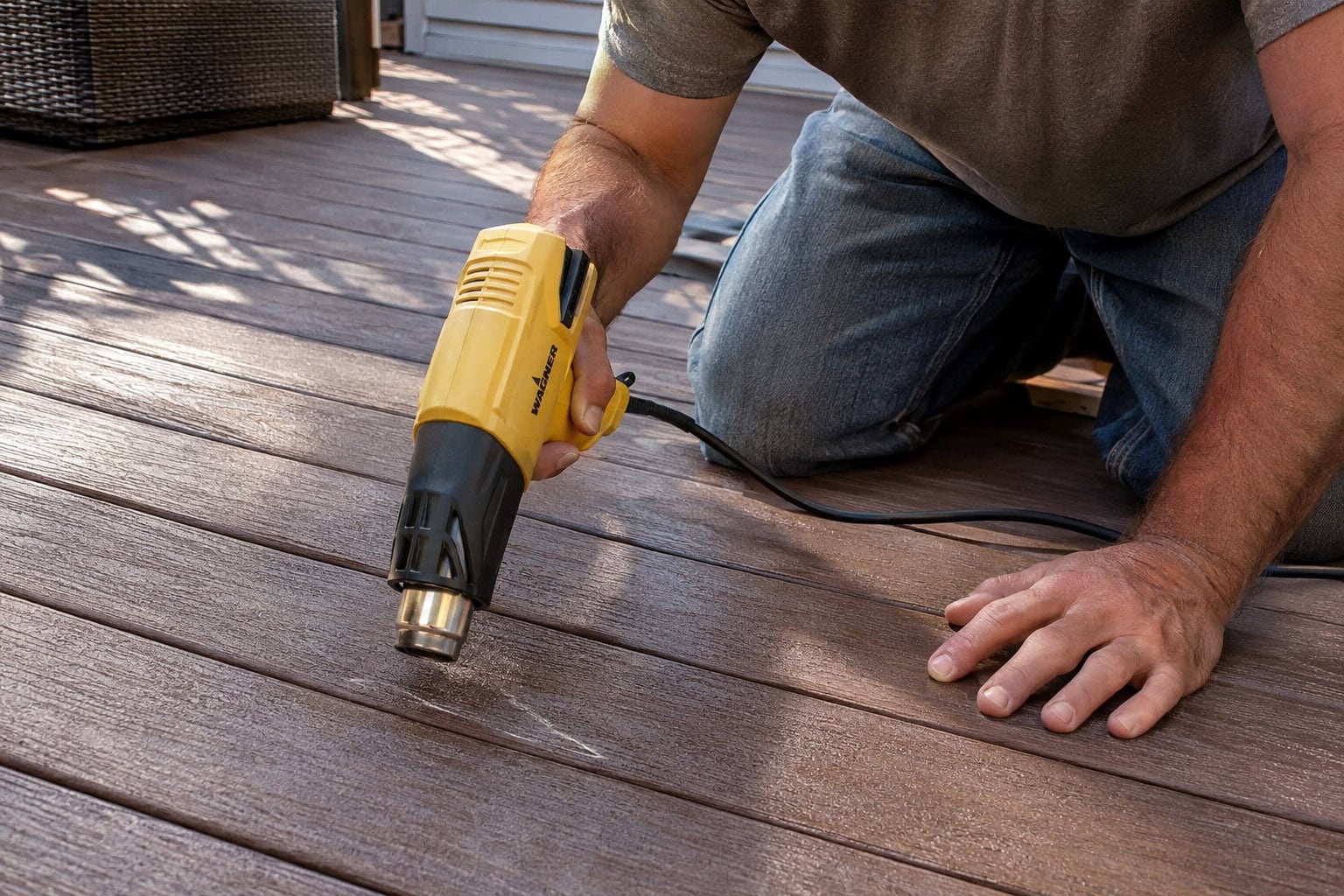
Can You Use a Heat Gun to Remove Scratches From Composite Decking?
Here’s a repair trick you’ll occasionally see online: Someone takes a heat gun, warms the scratched area, and claims the scratch disappears. Sounds easy, right?
Unfortunately, this method can cause more problems than it solves.
Composite decking contains polymers that react to heat. Applying too much heat can soften, distort, discolor, or permanently damage the surface.
Even worse, a heat gun can leave a shiny patch that looks completely different from the surrounding boards.
I’ve seen plenty of DIY repair ideas over the years, and this is one I’d be especially careful with.
Never use a heat gun on composite decking unless the manufacturer specifically recommends it for your exact product and provides instructions.
Now that we’ve told you that, the heat gun method can work but you should try this as a last resort. Meaning if your last option is replacing the board anyway then it can be worth a shot. But you do need to be careful with this method for all the reasons listed above.
Can You Sand Scratches Out of Composite Decking?
For most modern capped composite decking, the answer is no.
Sanding removes material from the surface. Unfortunately, the protective cap is part of what gives composite decking its durability, color, and stain resistance.
Once you sand through that layer, you can’t simply put it back. The sanded area may also have a different texture or sheen than the surrounding decking.
Older, uncapped composite decking is a different story. Certain older products may have manufacturer approved methods for reducing scratches.
Still, don’t assume sanding is safe just because the boards are older. Check the manufacturer’s recommendations first.
Do Composite Deck Scratch Repair Kits Work?
If you search online, you’ll find products advertised as composite decking scratch repair kits.
Some contain colored fillers, waxes, markers, or other materials intended to disguise surface damage.
While these products might make certain scratches less visible, there are a few things worth considering.
First, matching the exact color of a composite board can be difficult. Many decking collections feature multiple colors and realistic wood grain patterns.
A solid colored filler might actually make the scratch stand out more.
Second, the repair material needs to withstand outdoor exposure, including rain, sunlight, temperature changes, and foot traffic.
Finally, applying an unapproved filler or coating could affect your decking warranty.
For those reasons, I’d recommend contacting your decking manufacturer or supplier before purchasing a scratch repair kit.
When Should You Replace a Scratched Composite Deck Board?
Sometimes replacing a board is simply the smartest option. If a deep gouge exposes the composite core, the damage may remain visible no matter what you try.
Replacement is also worth considering when a board has several large scratches, chipped edges, or damage that affects its safe use. The good news is that replacing one composite deck board is often much less expensive than replacing an entire deck.
However, there is one potential challenge: color matching.
Composite decking manufacturers occasionally change colors, textures, and collections. Even if you find the same product, a brand new board may look slightly different from boards that have been exposed to sunlight for several years.
That’s one reason we often recommend keeping a few extra decking boards after completing a project. You never know when you’ll need one.
If your deck uses hidden fasteners, replacing a single board may require special removal tools or temporarily loosening nearby boards. Follow the fastener manufacturer’s instructions rather than forcing the board out.
How to Prevent Scratches on Composite Decking
Let’s face it. Preventing scratches is a lot easier than repairing them.
Although composite decking is designed for outdoor living, a few simple habits can make a big difference.
1. Add Protective Pads to Patio Furniture
Patio chairs and tables are among the biggest causes of scratched composite decking.
Metal furniture legs can scrape the surface whenever someone pulls out a chair or moves a table.
Adding outdoor rated protective pads or glides to the bottom of furniture legs can help prevent this damage.
Just make sure the pads are clean and won’t trap abrasive dirt underneath.
2. Never Drag Heavy Objects Across the Deck
Moving a large grill or heavy planter?
Pick it up instead of dragging it.
If the object is too heavy, use a suitable dolly or get someone to help lift it. Protect the decking from wheels and sharp edges during the move.
Even a small piece of gravel trapped beneath a planter can leave a surprisingly deep scratch.
3. Keep Your Deck Clean
Dirt, sand, and small stones can act like sandpaper when people walk across the deck or move furniture.
Regular sweeping helps reduce this type of wear.
This is especially important around pools, outdoor kitchens, and deck entrances where people frequently track debris onto the boards.
4. Be Careful When Removing Snow and Ice
Winter can be tough on outdoor decks, especially in northern states.
Metal snow shovels, ice chippers, and aggressive snow removal equipment can scratch composite decking.
Instead, use a plastic shovel with a nonmetal edge and push gently along the board direction when possible.
Avoid chopping or scraping ice off the decking surface.
Also, check your manufacturer’s recommendations before applying ice melting products.
5. Choose Scratch Resistant Decking From the Start
Not all composite decking products have the same scratch resistance.
Some decking collections feature more durable surfaces designed to handle heavy foot traffic, patio furniture, and everyday outdoor use.
If you have large dogs, children, or frequently entertain guests, scratch resistance should be one of the factors you consider when shopping for decking.
At Advantage Lumber, we carry decking from Trex, TimberTech, and Deckorators, along with natural hardwood options such as Ipe, Cumaru, and Tigerwood.
Each material has its own advantages, so it’s worth comparing samples before making a decision.
Is Composite Decking More Scratch Resistant Than Wood?
This is a question we hear quite often.
The answer depends on the type of wood and the composite decking you’re comparing.
Softwoods such as pressure treated pine and cedar can scratch or dent relatively easily.
Dense tropical hardwoods, including Ipe and Cumaru, are considerably harder and resist many types of surface damage.
However, one of the biggest advantages of natural hardwood decking is its ability to be refinished.
If an Ipe deck develops scratches, you can often sand the affected area and apply an appropriate hardwood decking oil to help blend the repair.
Composite decking doesn’t offer the same flexibility, particularly when it has a protective cap.
On the other hand, composite decking generally requires less routine maintenance than natural wood and doesn’t need regular oiling to maintain its manufactured color.
Neither material is completely scratch proof.
The best choice depends on how you use your deck and what type of maintenance you’re comfortable performing.
Frequently Asked Questions About Composite Deck Scratches
Will scratches on composite decking disappear over time?
Minor surface scratches may become less noticeable as the decking weathers and experiences normal use. However, deep scratches and gouges generally won’t disappear on their own.
Can I use a Magic Eraser on scratched composite decking?
Be careful. Magic Erasers are mildly abrasive and can alter the finish of certain composite decking surfaces. Check your decking manufacturer’s cleaning recommendations before using one.
Can you paint over scratches on composite decking?
Painting over scratches usually isn’t recommended for modern capped composite decking. Paint may not bond properly to the protective surface, and the repaired area could peel, fade, or look noticeably different.
Do dog nails scratch composite decking?
Yes, dog nails can scratch some composite decking surfaces, particularly when dogs run, stop suddenly, or turn sharply. Keeping your dog’s nails trimmed and choosing decking with good scratch resistance can help reduce damage.
Are scratches covered under a composite decking warranty?
Most decking warranties don’t cover ordinary scratches, scuffs, or damage caused by furniture, pets, or improper use. Coverage varies by manufacturer and product, so review your specific warranty for details.
Can you buff scratches out of composite decking?
Buffing is generally not recommended for capped composite decking unless the manufacturer approves it. Abrasive polishing can change the texture or sheen of the protective surface, leaving a visible patch.
Final Thoughts: What’s the Best Way to Fix Scratched Composite Decking?
If you’ve discovered scratches on your composite deck, don’t panic.
Start by cleaning the area. You might find that the mark is nothing more than dirt or a surface scuff.
For shallow scratches, leaving them alone may actually be your best option. Over time, minor marks can become less noticeable.
Deeper scratches are more challenging. Since most modern composite decking has a protective cap, sanding, heating, or filling the damaged area can make things worse.
When the damage is severe, replacing the affected board is often the most reliable way to restore your deck’s appearance.
And remember, the best scratch repair is preventing scratches in the first place.
A few furniture pads, regular sweeping, and some care when moving heavy objects can go a long way toward keeping your composite deck looking beautiful.
Need Help Choosing the Right Composite Decking?
At AdvantageLumber.com, we’ve spent more than 30 years helping homeowners and contractors choose high quality decking materials.
We stock popular composite decking brands, including Trex, TimberTech, and Deckorators, along with some of the world’s most durable natural hardwood decking.
With four warehouse and manufacturing locations across the United States, we can help you compare decking options, find replacement boards, and choose materials for your next project.
Whether you’re building a brand new deck or trying to match an existing one, our decking specialists can help.
Visit AdvantageLumber.com to explore our decking collections, request samples, or get a free decking material estimate.
