
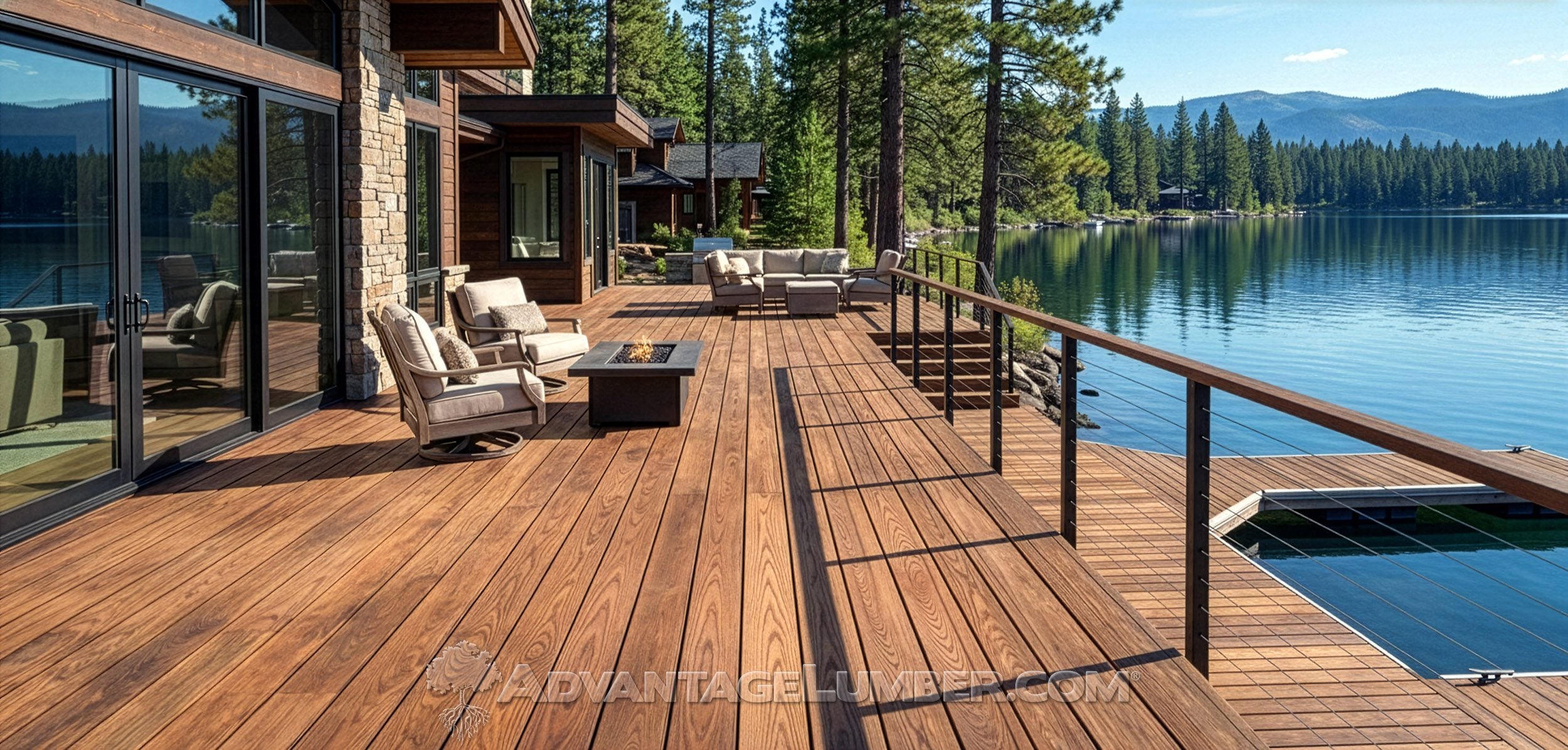
When building or upgrading an outdoor deck, patio, or structure, choosing the right wood is critical. In this post, we’ll take a closer look at Ipe vs. Thermally Modified Wood to help you make an informed decision.
Two premium options frequently compared are Ipe (a dense tropical hardwood) and Thermally Modified Wood (TMW), which undergoes a heat and steam treatment to enhance its natural properties.
At AdvantageLumber.com, we proudly supply high quality versions of both because each excels in different ways outdoors. There’s no universal “winner” performance depends on your priorities like traffic levels, climate, maintenance preferences, budget, and sustainability goals.
What Is Ipe Wood?
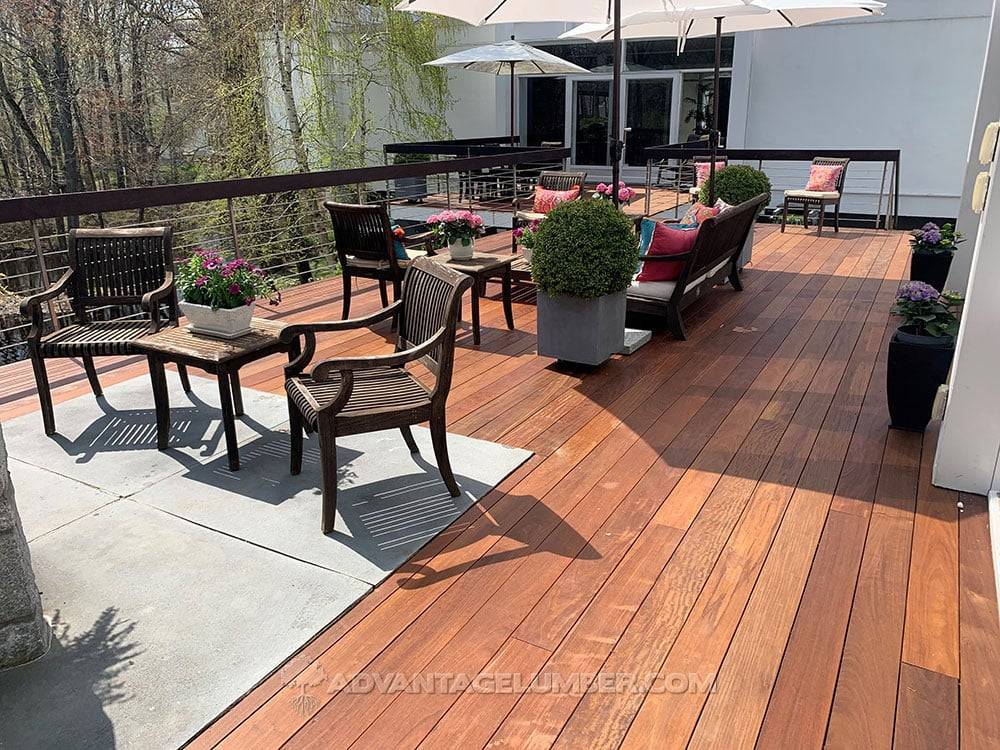
Ipe (pronounced “ee-pay”) is a dense tropical hardwood native to Central and South America. It’s renowned for its natural oils, tight grain, and exceptional strength.
Key outdoor strengths:
- Extremely high density and hardness.
- Natural resistance to rot, decay, insects, and moisture.
- Proven track record in harsh environments (boardwalks, commercial decks, coastal areas).
What Is Thermally Modified Wood?

Thermally Modified Wood is typically made from sustainable species like ash or pine. It’s heated to high temperatures (usually 180–260°C) in a low oxygen environment with steam and no chemicals involved. This process permanently alters the wood’s cell structure.
Key outdoor strengths:
- Dramatically improved dimensional stability.
- Enhanced resistance to moisture absorption, decay, and insects.
- Rich, uniform darkened color throughout the board.
Head to Head Comparison: Outdoor Performance
Here’s how they stack up across the metrics that matter most for decks and outdoor structures:
| Feature | Ipe | Thermally Modified Wood | Edge? |
|---|---|---|---|
| Durability & Longevity | Exceptional. Proven 40–75+ years in many real-world applications with minimal maintenance. | High. Typically 20–50+ years depending on species, installation, and maintenance. | Ipe (longer proven track record) |
| Dimensional Stability | Very good due to density. Can experience some movement in extreme humidity swings. | Superior. Significantly less warping, cupping, shrinking, or swelling. | TMW |
| Hardness & Wear Resistance | Outstanding (Janka hardness ~3,680 lbf). Resists dents, scratches, and heavy foot traffic exceptionally well. | Good to very good (varies by species; often 600–1,400 lbf). May show wear faster in high traffic areas. | Ipe |
| Rot, Decay & Insect Resistance | Natural Class 1 durability thanks to density and oils. | Excellent (achieves high durability ratings/Class 1 in many cases) via heat treatment that removes sugars fungi feed on. | Tie (both excellent) |
| Weathering & Aesthetics | Starts deep reddish-brown; weathers gracefully to silver gray. Natural oils help protect. | Starts rich brown (color goes all the way through); weathers to gray. Uniform appearance. | Slight edge to Ipe for color retention without maintenance |
| Maintenance | Very low. Occasional cleaning; optional oiling to retain color. | Low. Periodic sealing/oiling recommended by some manufacturers to maintain appearance. | Ipe (slightly lower long-term effort) |
| Installation | Heavier and very hard requires pre-drilling and carbide tools. | Lighter and easier to work with using standard tools. | TMW |
| Cost (approximate, material only) | Higher ($8–15+/sq ft). | More affordable ($4–8+/sq ft). | TMW |
| Sustainability | Improved with strict regulations and FSC-certified options available. | Often excellent—uses fast growing species, chemical free process, and lower transportation footprint when sourced regionally. | TMW (generally) |
| Fire Resistance | Strong (often Class A rating). | Moderate to good (varies by species). | Ipe |
Which Performs Better Outdoors?
Choose Ipe if you prioritize:
- Maximum hardness and resistance to wear (ideal for high-traffic decks, commercial spaces, or areas with heavy furniture).
- Longest possible lifespan with the least ongoing maintenance.
- A premium, time tested hardwood that has performed reliably for decades in demanding outdoor conditions.
Choose Thermally Modified Wood if you prioritize:
- Superior dimensional stability (less movement in fluctuating weather).
- Easier and faster installation.
- Better upfront value and strong sustainability credentials.
- A modern, eco-friendly alternative that still delivers excellent rot and moisture resistance.
In moderate residential settings with proper installation, both materials perform exceptionally well and far outperform standard pressure treated lumber or many composites in natural beauty and longevity. Ipe generally wins on raw toughness and proven extreme longevity, while TMW often wins on stability, workability, and cost effectiveness.
The Bottom Line
There is no single “best” performer outdoors it depends on your specific project. Many homeowners and builders choose based on a combination of factors rather than one metric alone.
At AdvantageLumber.com, we offer premium grade Ipe and high quality Thermally Modified Wood (including ThermoWood certified options) so you can select the right material for your needs without compromise. Both are responsibly sourced and backed by our expertise in outdoor lumber.
Ready to decide or need samples?
Visit AdvantageLumber.com to explore current inventory, request samples, or speak with our team about your outdoor project. We’re happy to help you compare options side by side for your climate and usage.
Which material are you leaning toward for your next outdoor build? Share your thoughts in the comments!
