
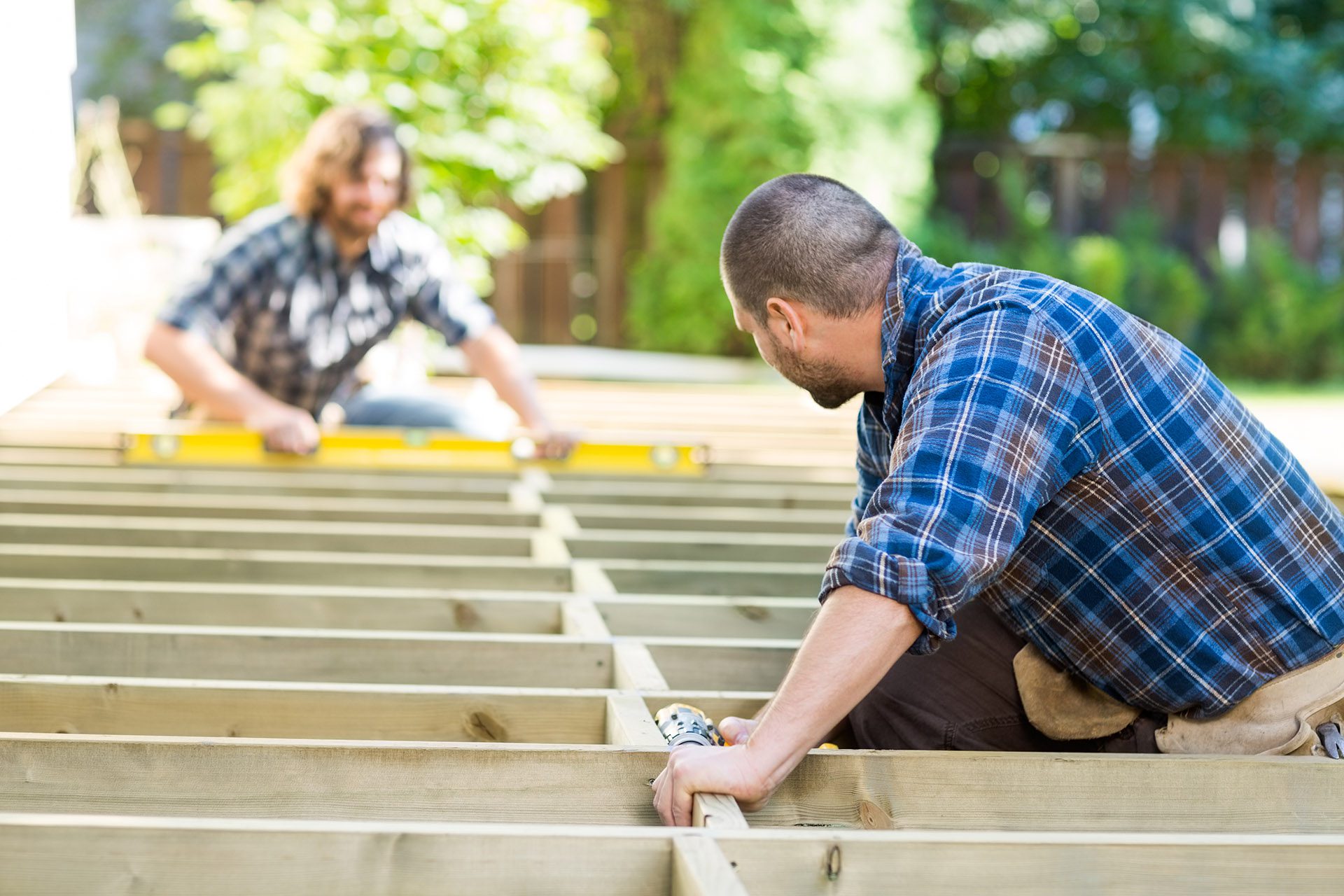
Building or renovating a deck is an exciting project that can enhance your outdoor living space, and at AdvantageLumber.com, we’re here to make sure you get exactly what you need without the guesswork. One of the first steps in planning is calculating how much decking material to buy. Overbuying wastes money, while under buying can delay your project and add extra costs in the long run.
Today we’ll walk you through a straightforward method to determine the amount of decking required for a 100 square foot deck. We’ll use examples for two popular board sizes: 6-inch nominal width (with a finished width of 5.5 inches) and 4-inch nominal width (with a finished width of 3.5 inches). Plus, we’ll emphasize the importance of factoring in extra material for waste and cuts.
Whether you’re using exotic hardwoods like Ipe or Tigerwood, or domestic options like Cedar, this calculation applies across the board (pun intended).
Step 1: Understand the Basics of Decking Calculations
Decking boards are typically sold by the linear foot, but your deck’s size is measured in square feet. To bridge the gap, you’ll need to account for the board’s effective (finished) width—the actual coverage width after accounting for any tongue-and-groove or spacing.
The formula for total linear feet (LF) needed is:
LF = (Deck Area in Square Feet × 12) ÷ Finished Board Width in Inches
- Why multiply by 12? This converts the width from inches to feet, as there are 12 inches in a foot.
- This assumes boards are laid parallel to each other without gaps beyond the standard installation spacing (usually 1/8 inch or less, which is already factored into the finished width for most calculations).
Once you have the linear feet, you can divide by the length of the boards you’re buying (e.g., 8-foot, 10-foot, or longer planks) to find the number of boards. But for simplicity, we’ll focus on linear footage first, as that’s how much material you’ll order.
Pro Tip: Always measure your deck accurately. For a simple 100 square foot deck, it might be 10×10 feet, but irregular shapes require breaking it into sections and summing the areas.
Step 2: Factor in Waste and Cuts
No project is perfect—there will always be cuts for edges, around posts, or to fit angles, plus some waste from imperfect boards or mistakes. We recommend adding 5-10% extra to your total linear footage. For a basic deck, 5% is often enough; for complex layouts with diagonals or curves, go for 10%. This buffer ensures you don’t run short mid-installation.
Example 1: Using 6-Inch Decking Boards (5.5-Inch Finished Width)
6-inch boards are a popular choice for a classic look, offering good coverage and stability. Common species include Ipe, Cumaru, or Garapa from our exotic collection.
- Deck Area: 100 square feet
- Finished Width: 5.5 inches
Calculation:
LF = (100 × 12) ÷ 5.5 = 1,200 ÷ 5.5 ≈ 218.18 linear feet
Add 5-10% for waste:
- 5% extra: 218.18 × 1.05 ≈ 229.09 LF
- 10% extra: 218.18 × 1.10 ≈ 240 LF
So, for a simple deck, order at least 229 linear feet. If your boards come in 10-foot lengths, you’d need about 23 boards (229 ÷ 10 = 22.9, round up to 23).
This size is ideal for larger decks, as fewer boards mean faster installation and fewer seams.
Example 2: Using 4-Inch Decking Boards (3.5-Inch Finished Width)
4-inch boards provide a more refined, narrow-plank aesthetic, often used for modern or intricate designs. They’re great with species like Ipe, Cumaru, Tigerwood or Western Red Cedar.
- Deck Area: 100 square feet
- Finished Width: 3.5 inches
Calculation:
LF = (100 × 12) ÷ 3.5 = 1,200 ÷ 3.5 ≈ 342.86 linear feet
Add 5-10% for waste:
- 5% extra: 342.86 × 1.05 ≈ 360 LF
- 10% extra: 342.86 × 1.10 ≈ 377.14 LF
For a basic setup, aim for 360 linear feet. With 10-foot boards, that’s roughly 36 boards (360 ÷ 10 = 36).
Narrower boards like these require more pieces, which can increase labor time but create a sleek, custom feel.
Additional Tips for Your Decking Project
- Board Length Selection: Choose lengths that minimize cuts. For a 10-foot-wide deck, 10-foot or longer boards reduce waste.
- Spacing and Layout: If you’re adding extra spacing between boards for drainage (beyond the standard), adjust the finished width downward slightly in your formula.
- Tools to Help: Use our online decking calculator at AdvantageLumber.com for more precise estimates, or contact our experts for personalized advice.
- Material Choices: Beyond size, consider durability—our hardwood decking resists rot and insects better than softwoods like pine, cedar and redwood, perfect for long-lasting decks.
- Don’t Forget Accessories: Factor in fasteners, joist tape, and end seals to complete your project.
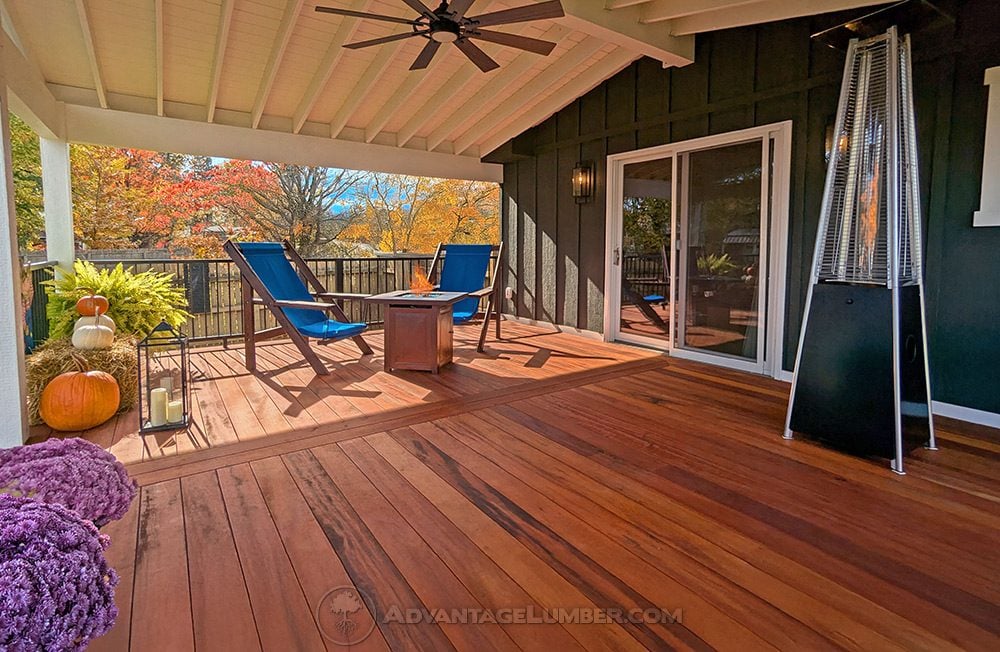
Ready to Build Your Dream Deck?
Calculating your decking needs is easier than you think, and with our examples, you’re set for that 100 square foot space. Remember, adding 5-10% extra keeps things stress-free. At AdvantageLumber.com, we stock premium decking in various widths, species, and lengths, with fast nationwide shipping and competitive prices.
Browse our decking collection today, or give us a call at 1-877-232-3915 for free samples and expert guidance. Let’s turn your vision into reality—start shopping now!
