
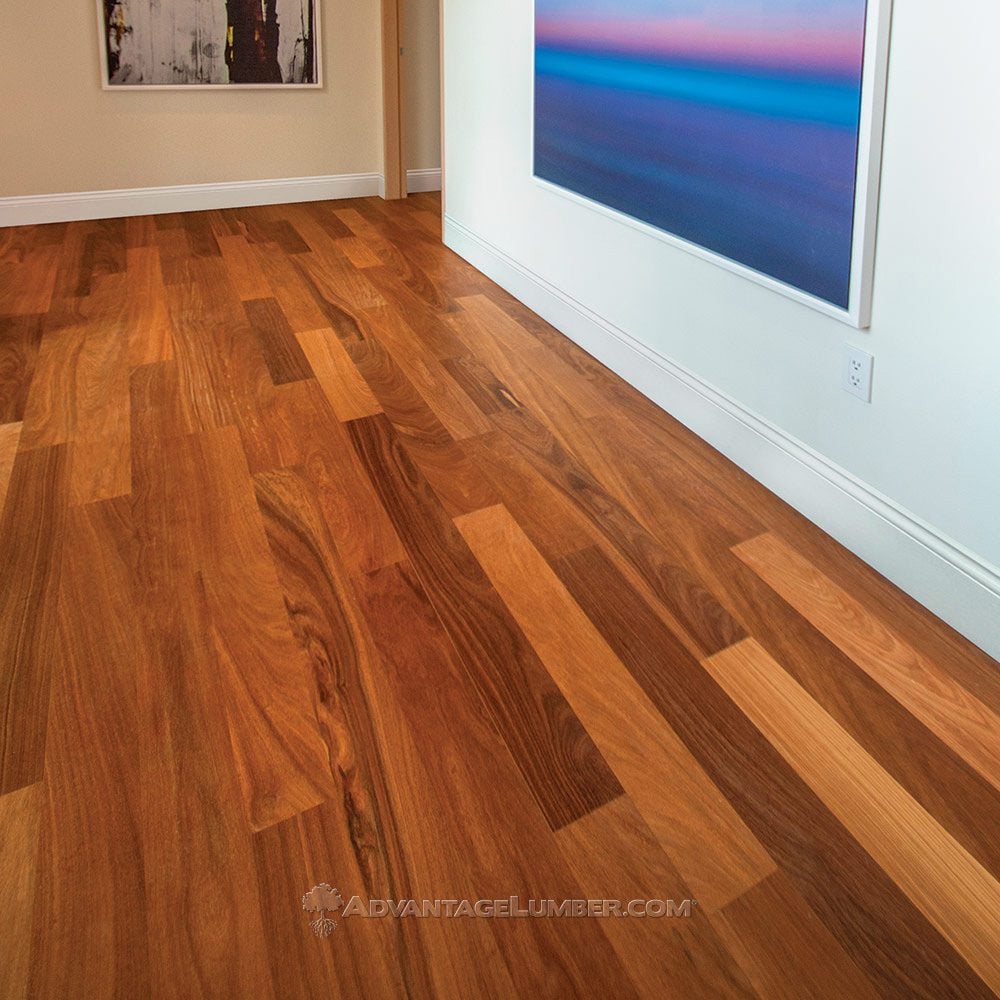
When it comes to selecting flooring that stands the test of time, engineered hardwood has become a go-to choice for homeowners seeking the beauty of real wood without the headaches of solid hardwood’s expansion and contraction issues.
Engineered flooring combines a top layer of genuine hardwood with a stable plywood core, making it ideal for basements, over concrete slabs, or even humid climates. But not all engineered hardwood is created equal—durability is key, especially in high-traffic areas like kitchens, hallways, or homes with pets and kids.
So, what makes one engineered floor more durable than another? Enter the Janka hardness rating and the all-important wear layer. In this post, we’ll break it down and spotlight the toughest options available from AdvantageLumber.com.
Understanding Janka Hardness: The Gold Standard for Wood Durability
If you’ve shopped for hardwood flooring, you’ve likely encountered the Janka hardness scale. Developed in the early 1900s by Austrian researcher Gabriel Janka, this test quantifies a wood’s resistance to denting and wear by measuring the force (in pounds-force, or lbf) required to embed a 0.444-inch steel ball halfway into a sample of the wood. Think of it as a “punch test” for wood: the higher the rating, the tougher the material.
Why does a higher Janka rating translate to more durable flooring? Harder woods simply hold up better against everyday abuse. They resist scratches from furniture legs, dents from dropped pots, and the general scuffs of foot traffic.
For context, softwoods like pine clock in around 380 lbf, while red oak—a common benchmark for domestic hardwoods—rates about 1,290 lbf. Exotic species often soar into the 3,000+ range, offering superior longevity that can mean fewer repairs and refinishes over decades. In engineered flooring, the Janka rating applies to the top wear layer, so prioritizing high-rated species ensures your floor stays pristine longer.
The 5 Hardest Wood Species Sold by AdvantageLumber.com
AdvantageLumber.com specializes in premium exotic hardwoods, sourcing sustainably from around the globe. Based on Janka ratings, here are the top five hardest species we offer for engineered (and solid) flooring. These aren’t just tough—they boast stunning grains and colors that elevate any space.
| Rank | Species | Janka Rating (lbf) | Key Traits |
|---|---|---|---|
| 1 | Curupay (Patagonian Rosewood) | 3,840 | Dark reddish-brown with dramatic interlocking grain; incredibly dense and rot-resistant, perfect for high-wear areas. |
| 2 | Ipe (Brazilian Walnut) | 3,680 | Deep chocolate tones with subtle figuring; renowned for outdoor decks but shines indoors too—ultra-resistant to impacts. |
| 3 | Cumaru (Brazilian Teak) | 3,540 | Warm golden-brown hues that darken over time; offers a luxurious feel with exceptional stability. |
| 4 | Brazilian Chestnut (Sucupira) | 3,540 | Rich chocolate tones with even grain; ties Cumaru in hardness while providing a uniform, elegant look. |
| 5 | Brazilian Cherry (Jatoba) | 2,350 | Vibrant reddish-orange that matures to deep redish brown; still far harder than oak, with bold contrast for dramatic floors. |
These species make for powerhouse engineered options, where the hardwood veneer captures their full beauty and brawn. Curupay takes the crown as the hardest overall, but any of these will outlast softer alternatives by years.
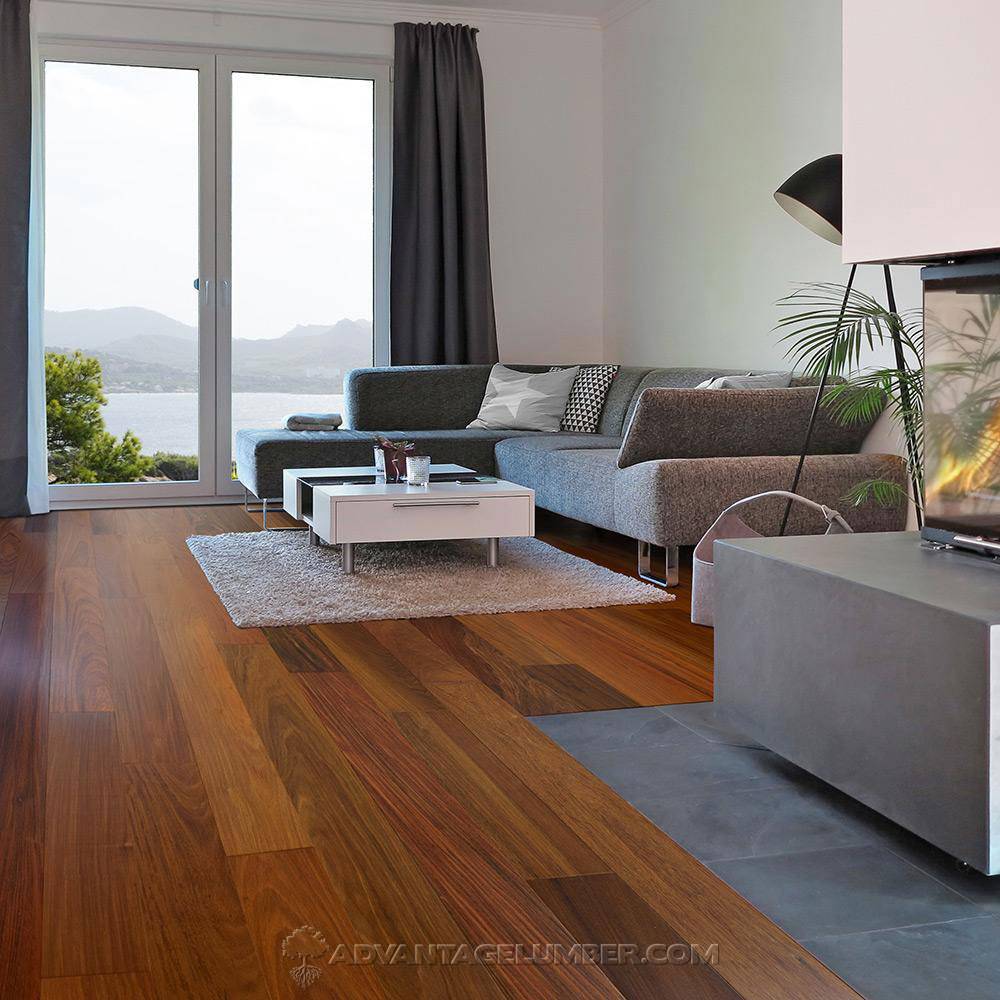
The Wear Layer: Why Thickness Matters in Engineered Hardwood
Engineered hardwood’s magic lies in its layered construction, but the star of the show is the wear layer—that premium veneer of real hardwood glued atop the core. Typically ranging from 1mm to 6mm thick, this is the part you see, touch, and walk on daily. It’s what delivers the authentic wood look, feel, and performance.
So, why prioritize a thicker wear layer? Durability and longevity. A thin 1-2mm layer might look great out of the box, but it limits refinishing—sanding down scratches or wear requires removing material, and once you hit the core, you’re done.
Thicker layers (4mm or more) allow 2-4 refinishes over the floor’s life, potentially adding decades of use. This is crucial in busy households, where floors face constant action. Plus, thicker veneers from quality manufacturers like those at AdvantageLumber.com often use superior cutting techniques (e.g., rift or quarter-sawn) for enhanced stability and grain definition, reducing cupping or gapping.
Investing in a quality engineered floor with a robust wear layer isn’t just about immediate toughness—it’s about future-proofing your home. Cheaper options with skimpy layers may save upfront but cost more in replacements down the line.
Final Thoughts: Choose Durability That Lasts
The most durable engineered hardwood flooring? It’s a combo of sky-high Janka-rated species like Curupay or Ipe, paired with a thick, high-quality wear layer. At AdvantageLumber.com, you can find these exotics in prefinished engineered planks ready to install, backed by expert advice on selection and care. Whether you’re outfitting a forever home or a rental that sees heavy use, opting for these heavy-hitters ensures beauty and resilience for generations. Ready to step up your floors? Browse their collection today and feel the difference underfoot.
