
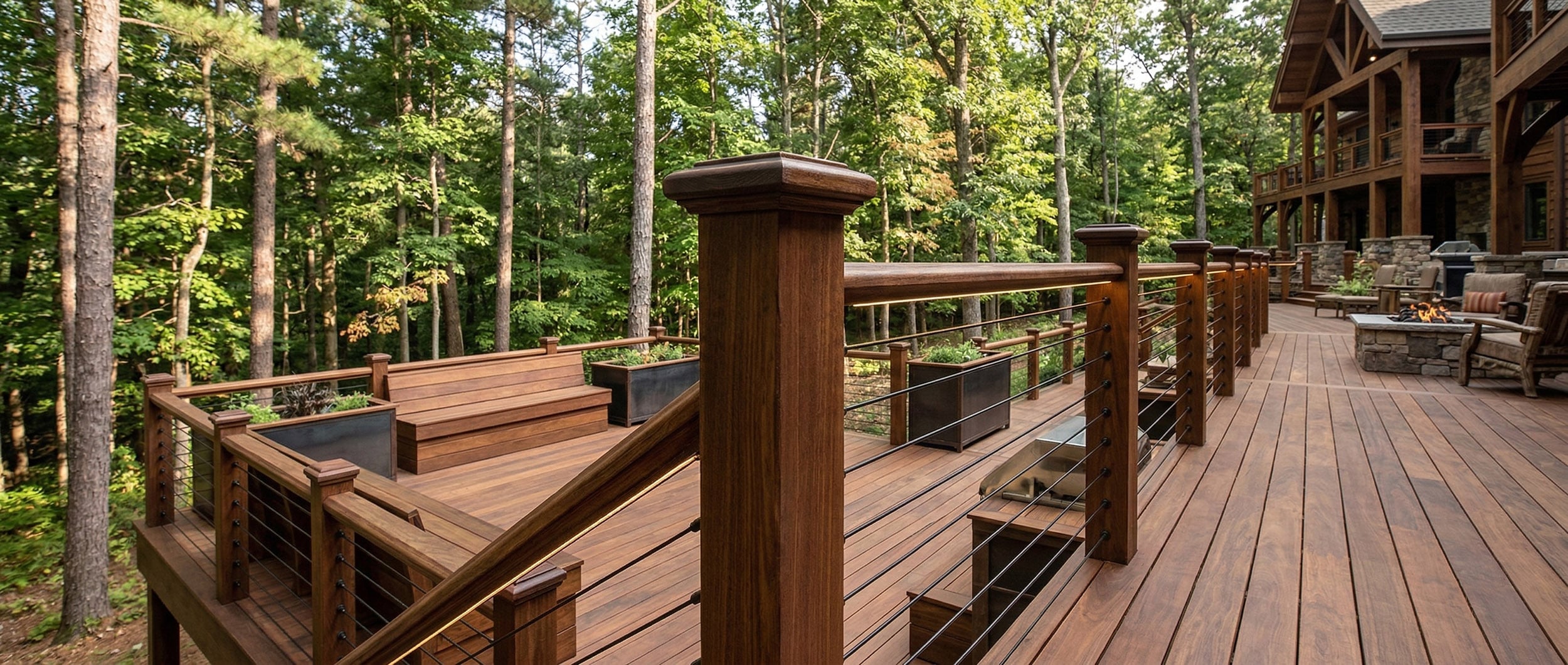
Cable railing has become one of the most popular ways to give a deck a clean, modern look. It’s easy to see why. Instead of thick wood balusters blocking your view, thin stainless steel cables let you enjoy more of your backyard, pool, lake, or mountain scenery.
But once you decide to install cable railing, there’s another choice to make.
Should you install horizontal or vertical cable railing?
Both styles look great, but they have some key differences. The direction of the cables can affect the look of your deck, how the railing gets installed, and even how safe it may be for kids.
After more than 20 years in the decking industry, I’ve seen how the right railing can make a good deck look amazing. I’ve also seen homeowners spend money on a beautiful railing only to find out it doesn’t meet their local building code.
So, before you order your new railing, let’s compare horizontal and vertical cable railing and help you decide which one makes the most sense for your deck.
What Is Horizontal Cable Railing?
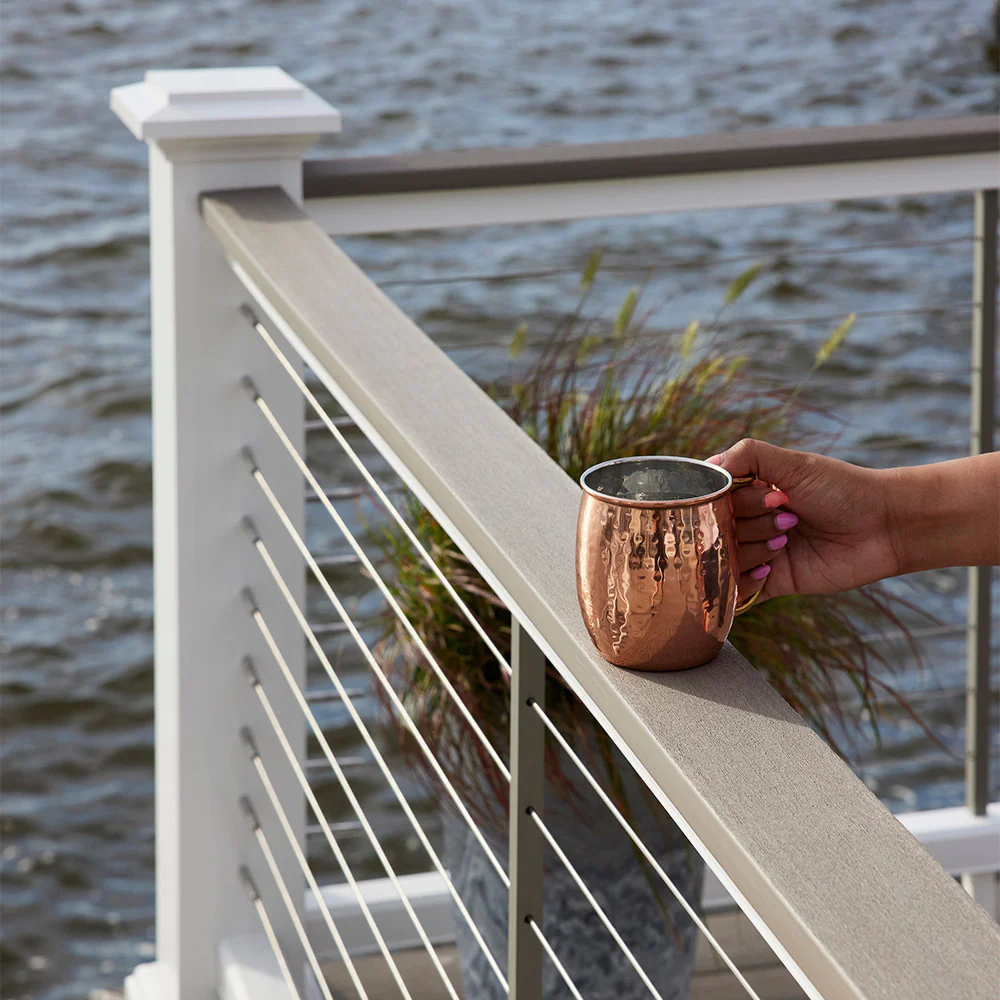
Horizontal cable railing uses thin stainless steel cables that run from one railing post to the next, parallel to the deck surface.
Instead of using wood or metal balusters, the cables stretch across the open space between posts. This creates a clean look with very little blocking your view.
Horizontal cable railing works well with many types of decks, including hardwood decking, composite decking, and PVC decking. It’s especially popular on decks with great views.
Imagine sitting on your Ipe deck overlooking a lake. With traditional wood railing, you might have dozens of balusters breaking up the view. Horizontal cables make those barriers much less noticeable.
That’s one of the biggest reasons homeowners love this style.
Pros of Horizontal Cable Railing
1. Great for Open Views
Horizontal cable railing is one of the best choices when you want to see more of what’s beyond your deck. The thin cables tend to blend into the background, especially when you look out across a yard or open landscape.
2. Clean, Modern Design
Horizontal lines give a deck a sleek look. They also make the railing feel less bulky. This style looks especially good with modern homes, but it can work just as well with traditional houses.
3. Works With Many Railing Materials
You can pair horizontal cables with aluminum, stainless steel, or wood posts. For example, black aluminum posts with stainless steel cables create a sharp, modern look. On the other hand, hardwood posts with cable railing can give a deck a warmer, more natural feel.
4. Often a Cost Effective Cable Railing Option
Horizontal cable railing can cost less than some vertical cable systems. That’s partly because the cables often run through several posts, reducing the number of separate cable sections and fittings. However, the final cost depends on the system, post spacing, corners, and installation.
5. Great for Long, Straight Deck Sections
If your deck has long, straight railing runs, horizontal cables can be a smart choice. Some systems allow cables to pass through several posts before reaching a tensioning fitting. That can help create a neat, smooth appearance.
Cons of Horizontal Cable Railing
1. Kids May Try to Climb It
This is probably the biggest concern homeowners have with horizontal cable railing. Because the cables run sideways, they can look like ladder rungs to a small child.
Now, that doesn’t mean every child will try to climb them. Still, it’s something parents should think about. Some local building rules may also limit horizontal railing designs, especially in certain commercial or public settings.
2. Cable Tension Matters
Horizontal cables must stay tight. If they become loose, the gaps between cables can grow when someone pushes against them. Over time, cables may need to be checked and tightened.
3. Long Runs Need Proper Support
You can’t simply stretch cables between two posts that are far apart and expect everything to work. Cable railing puts a lot of force on the end posts. Without strong posts and the right spacing, the railing may bend or become loose.
4. Installation Can Take Time
Each cable needs to pass through the posts and connect to the proper fittings. Then, the installer must adjust the tension. It’s not especially difficult with the right system, but it does take care and patience.
What Is Vertical Cable Railing?
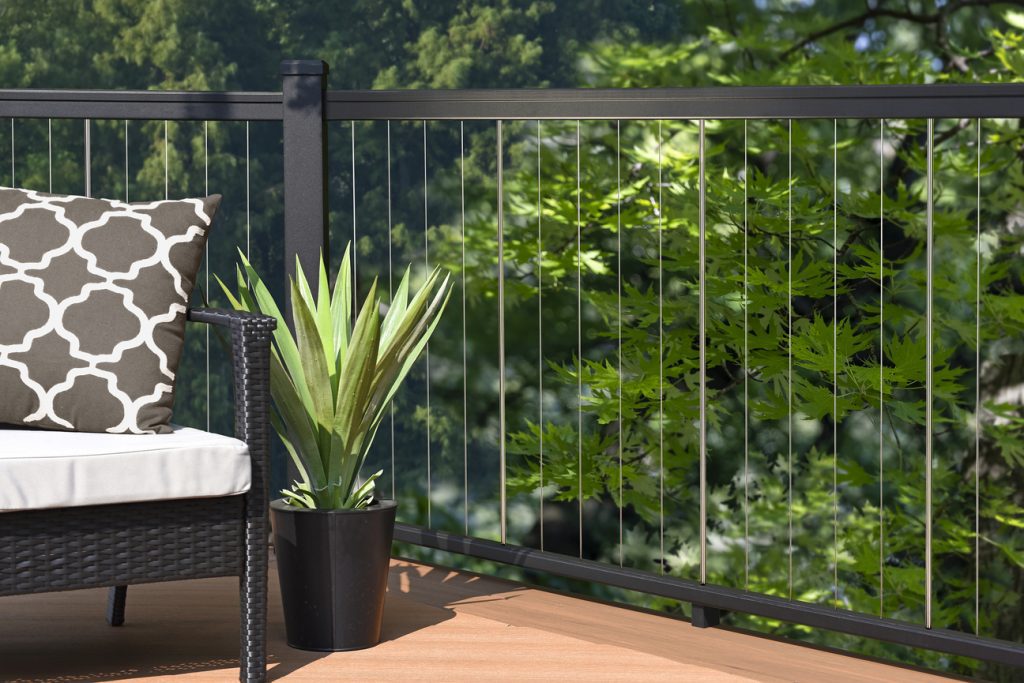
Vertical cable railing uses stainless steel cables that run up and down instead of side to side. The cables stretch between the top and bottom rails. At first glance, vertical cable railing looks more like a traditional railing with metal balusters.
However, the thin cables give it a lighter, more open appearance. Many vertical cable railing systems come as ready made panels. This can make installation easier because much of the work is already done.
Vertical cable railing is a good choice for homeowners who want a modern look without using horizontal cables.
Pros of Vertical Cable Railing
1. Less Tempting for Kids to Climb
One of the biggest benefits of vertical cable railing is its design. Unlike horizontal cables, vertical cables don’t create ladder like steps.
This may make them a better choice for families with young children. Of course, no railing is completely childproof. Kids should still be watched around decks, stairs, and raised areas.
2. Familiar Railing Appearance
Vertical cables have a look similar to traditional balusters. That makes them a nice fit for homeowners who want something modern but not too different from a standard deck railing.
3. Some Systems Are Easier to Install
Many vertical cable railing products come in preassembled sections. Instead of threading long cables through several posts, you may only need to install the panels between the posts.
This can save time, especially on decks with several short railing sections.
4. Works Well With Traditional Homes
Vertical cable railing fits a wide range of house styles. It can look great on a farmhouse, a coastal home, or a more traditional suburban house. The vertical lines also pair nicely with the shape of doors, windows, and house siding.
5. Good for Decks With Several Corners
Decks with many corners or short railing sections can be harder to fit with long horizontal cable runs. Vertical cable panels may make these layouts easier to plan.
Cons of Vertical Cable Railing
1. Can Cost More
Some vertical cable railing systems cost more than basic horizontal cable systems. This is often due to the panel design, extra fittings, and factory assembly. Still, a system that installs faster could help lower labor costs.
2. May Block Slightly More of Your View
Vertical cables are thin, but they cross your field of vision from top to bottom. Depending on the spacing and system, you may notice them more than horizontal cables. This is mostly a matter of personal taste.
3. Fewer Design Choices
Horizontal cable railing has been popular for years, so there are many systems and hardware options. Vertical cable railing is available in fewer styles from some manufacturers. You may have fewer choices for panel sizes, colors, and fittings.
4. Panel Sizes Can Limit Your Layout
Preassembled panels are convenient, but they may come in set lengths. If your deck has odd post spacing, you might need special panels or extra work to make everything fit.
Horizontal vs. Vertical Cable Railing: Side by Side Comparison
Here’s a quick look at how these two railing styles compare.
| Feature | Horizontal Cable Railing | Vertical Cable Railing |
|---|---|---|
| Design | Modern, sleek | Modern, more traditional |
| View | Very open | Very open |
| Child climbing concern | Higher | Lower |
| Installation | Often requires cable tensioning | Some systems use ready made panels |
| Cost | Often less expensive | Can cost more |
| Maintenance | Check cable tension | Depends on panel design |
| Best for | Open views and long runs | Family decks and traditional homes |
| Design options | Many choices | Fewer choices in some systems |
Both styles can look great and last for years when you choose quality materials and install them correctly.
Is Horizontal Cable Railing Safe?
This is one of the most common questions we hear about cable railing. The short answer is yes. Horizontal cable railing can be safe when it meets building code and is installed correctly.
However, there are a few things you need to know.
The 4 Inch Sphere Rule
Most residential deck railing codes use what’s called the 4 inch sphere rule. In simple terms, the openings in your railing generally must be small enough to stop a 4 inch ball from passing through.
This helps reduce the risk of a small child slipping through the railing. With cable railing, spacing is especially important.
You might install cables 3 inches apart and think you’re all set. However, cables can bend when someone pushes on them. That’s why proper cable tension, post spacing, and a strong frame are so important.
Always follow the railing manufacturer’s instructions and your local building code.
What About the Ladder Effect?
You’ve probably heard people say horizontal cable railing isn’t safe because kids can climb it like a ladder. There is some truth to the concern. Horizontal cables can give children a place to put their feet.
However, the model residential building codes used in many areas do not have a general ban on horizontal cable railing simply because it can be climbed.
Local rules can differ, though. Some projects may face extra limits. For homeowners with small children, vertical cable railing may offer more peace of mind.
Railing Height Matters Too
Most residential decks need a guardrail when the walking surface is more than 30 inches above the ground, although local rules can vary.
Guardrails are commonly required to be at least 36 inches high under the International Residential Code. Some states and towns require 42 inch guardrails, and many commercial projects have different rules.
Before you buy any cable railing system, check the requirements for your area. Also, remember that stairs have their own rules. A stair guard isn’t always the same thing as a graspable handrail.
Which Cable Railing Style Gives You the Best View?
If you ask me, this is where horizontal cable railing really shines. When you’re standing on a deck looking out over a lake, wooded backyard, or mountain view, horizontal cables often seem to fade into the background.
Your eyes naturally follow the landscape. Vertical cables create more lines across that view. Now, does that mean vertical cable railing looks bad? Not at all.
In fact, some homeowners prefer the neat, even look of vertical cables. But if your main goal is to keep the view as open as possible, I’d lean toward horizontal cable railing.
One more thing worth mentioning is cable color. Standard stainless steel cables have a silver finish that can reflect sunlight.
Black stainless steel cable railing can offer a different look. The dark cables often blend nicely with black railing posts and shaded backgrounds. The best choice depends on what you’re looking at beyond your deck.
Which Cable Railing Is Easier to Install?
This depends more on the railing system than the direction of the cables. Horizontal cable railing often requires you to measure, cut, thread, and tighten each cable.
You’ll also need the right fittings and tools. For a large deck, that can mean quite a bit of work. Vertical cable railing may be easier if you buy a system with preassembled panels.
With those products, much of the cable work is already complete. However, not every vertical system comes ready to install. Some still require cable tensioning and special fittings. My advice? Don’t choose a railing based only on how easy it looks to install.
Instead, look at the complete system and read the manufacturer’s instructions before ordering. A well designed railing system can save you a lot of headaches.
Which Style Costs Less?
In many cases, horizontal cable railing has a lower material cost. That’s especially true when using a basic stainless steel cable system with properly spaced posts.
Vertical cable railing can cost more because it may use special panels, fittings, or factory built parts. However, there are exceptions.
For example, a premium horizontal cable railing system with custom posts and high end hardware may cost more than a basic vertical cable panel. Labor also plays a big role.
If a contractor spends hours cutting and tightening horizontal cables, installation costs can add up. Meanwhile, preassembled vertical panels may install faster.
The best way to compare costs is to price the entire railing system, including posts, cables, fittings, top rails, and labor.
Don’t compare cable prices alone.
What About Maintenance?
One of the nice things about cable railing is that it doesn’t need much upkeep. Quality stainless steel cables resist rust and corrosion, making them a good choice for outdoor decks.
However, stainless steel isn’t completely maintenance free.
Over time, dirt, salt, and other buildup can collect on the cables and fittings. If you live near the ocean, regular cleaning becomes even more important.
For coastal projects, 316 grade stainless steel is often preferred because it offers better resistance to salt exposure than 304 grade stainless steel.
Both horizontal and vertical cable railing should be inspected from time to time. Check for loose cables, damaged fittings, and movement in the posts.
If a cable needs tightening, follow the manufacturer’s instructions. And here’s a tip from years of working with deck materials: Don’t ignore the railing posts.
Even the best stainless steel cables won’t make up for weak or rotting posts. A railing is only as strong as the structure holding it in place.
What Type of Decking Looks Best With Cable Railing?
One of the things I like most about cable railing is how well it works with different decking materials. You don’t need a modern house or an expensive deck to make it look good.
Still, certain combinations really stand out.
Ipe and Other Hardwood Decking
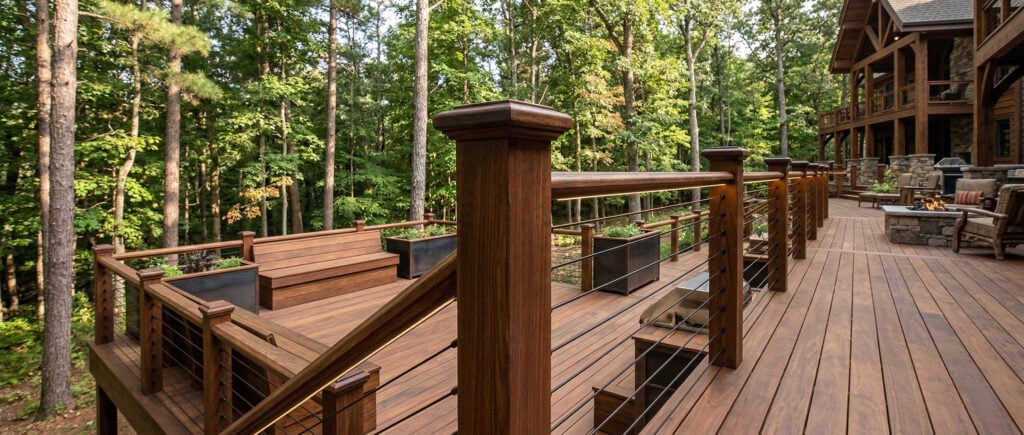
Ipe decking paired with black aluminum posts and stainless steel cables creates a beautiful contrast. The rich brown wood brings warmth, while the thin cables keep the design clean.
Cumaru, Tigerwood, Garapa, and Teak decking also look great with cable railing. For a high end hardwood deck, horizontal cable railing is often my favorite choice.
Trex Composite Decking
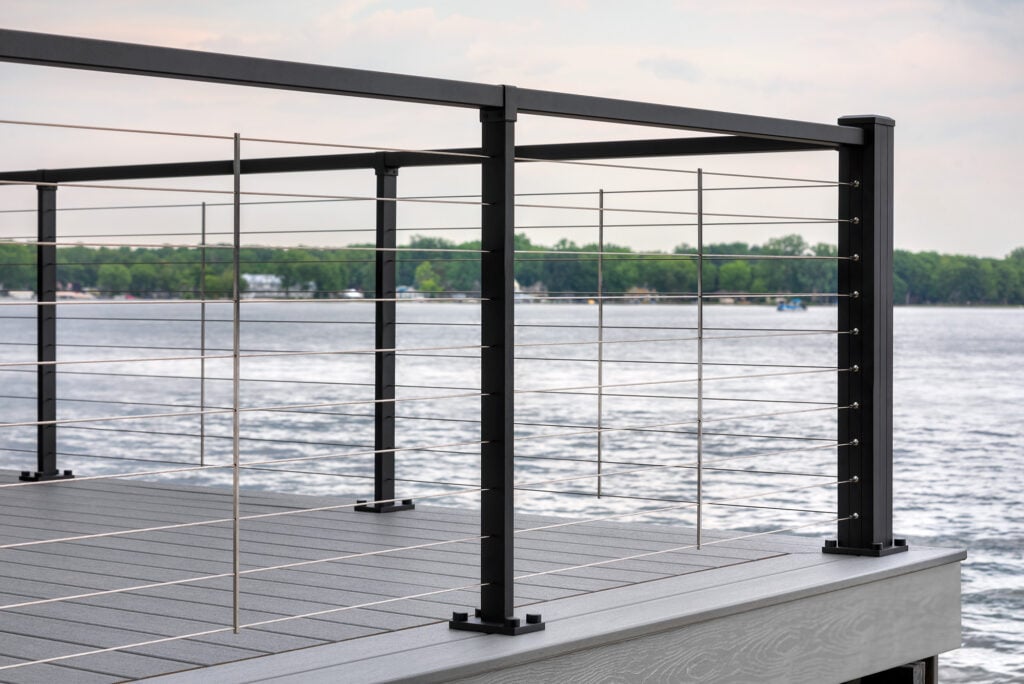
Trex decking comes in many colors, from natural wood tones to modern grays. Black cable railing works well with nearly all of them.
For a more modern look, try horizontal cables with darker decking. If you want something closer to traditional railing, vertical cables may be a better fit.
TimberTech Decking
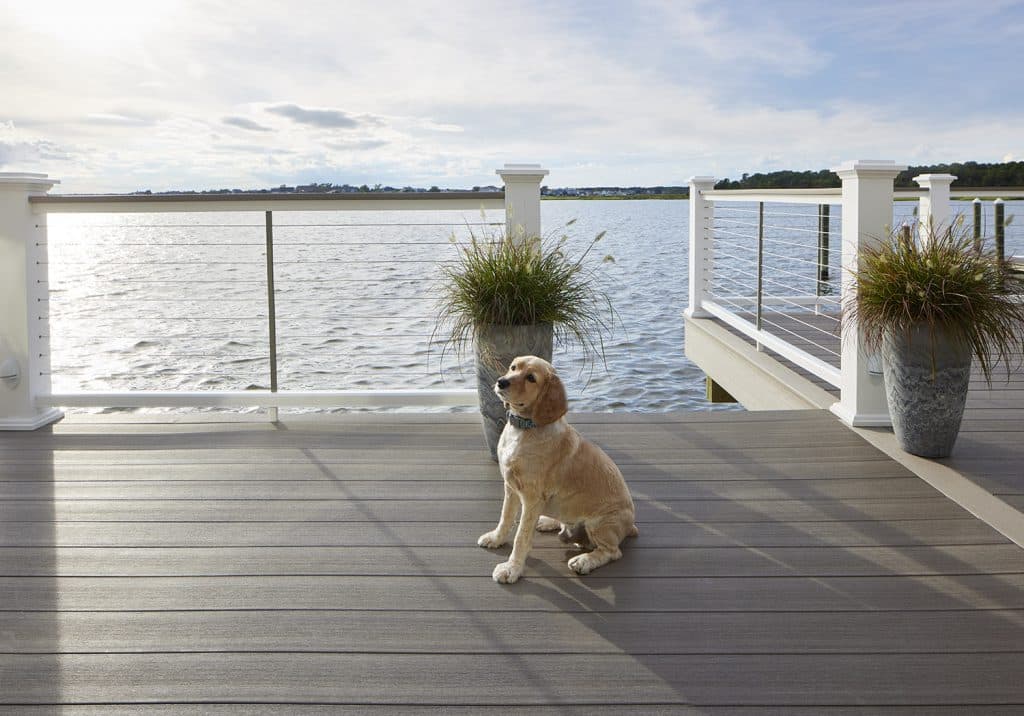
TimberTech composite and Advanced PVC decking also pair nicely with cable railing. A light colored deck with dark aluminum posts can create a sharp contrast.
For coastal homes, stainless steel cables can help keep the view open while matching the clean look of PVC decking.
Deckorators Decking
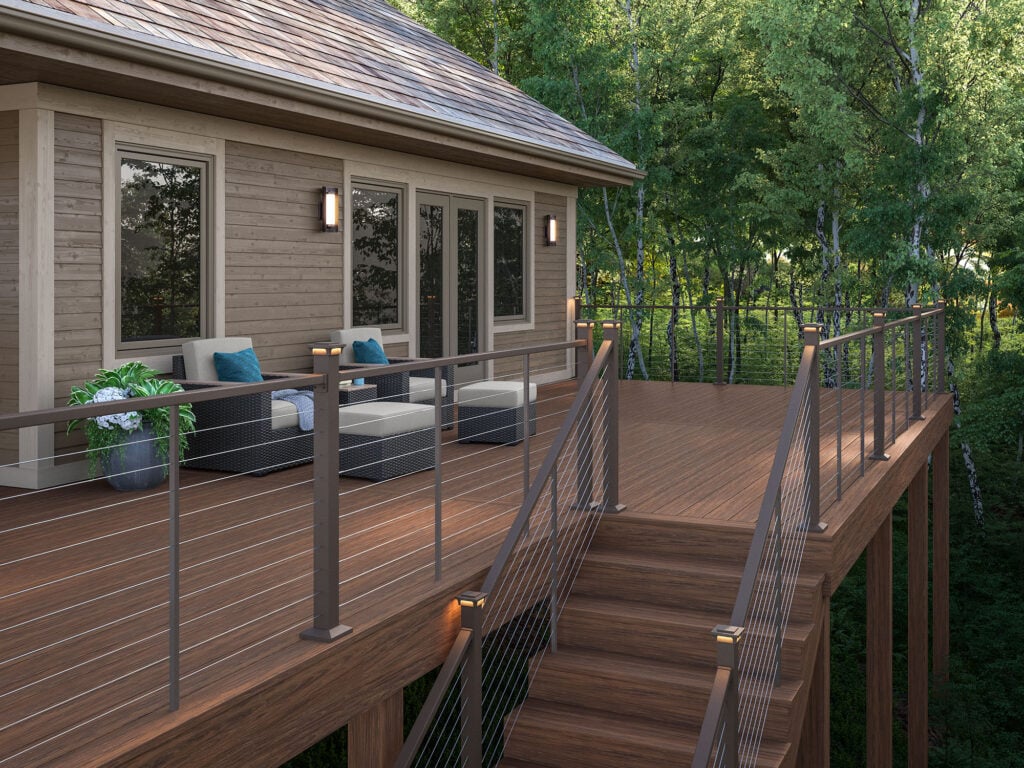
Deckorators decking offers another great match for cable railing. Whether you choose a natural wood look board or a modern gray color, both cable directions can work well.
The key is choosing a railing style that fits your home instead of following a trend.
Should You Choose Wood or Aluminum Posts?
This is another decision you’ll need to make. Both wood and aluminum posts can work with cable railing, but they have different benefits.
Wood Posts
Wood posts offer a warm, natural appearance. They can look especially nice on hardwood decks. However, wood can shrink, swell, or move as the weather changes. That movement can affect cable tension.
Wood posts also need to be strong enough to handle the force from the cables.
Aluminum Posts
Aluminum posts are a popular choice for cable railing. They don’t rot, and they require very little maintenance. Many aluminum cable railing systems also come with posts and fittings designed to work together.
That’s a big plus. Instead of trying to piece together different parts, you can buy a complete system with the proper hardware.
For most homeowners who want a clean look and low maintenance, aluminum posts are worth considering.
Which Cable Railing Is Best for Families With Kids and Pets?
If you have young children, I’d give vertical cable railing a serious look. The vertical cables don’t create the same ladder like pattern as horizontal cables.
That can make climbing less tempting. However, cable spacing and railing strength matter just as much as cable direction.
For pets, either style may work well. A small dog could potentially squeeze through openings if the cables are spaced too far apart or can spread under pressure.
That’s why it’s important to choose a properly designed railing system. If you have a very active dog or small children, you may also want to consider railing with solid balusters or glass panels.
Every family uses its deck differently, so think about how yours will be used before making a decision.
Horizontal vs. Vertical Cable Railing for Stairs
Stairs deserve special attention. Horizontal cable railing can follow the slope of a staircase, creating a smooth look from the deck down to the yard.
However, stair sections often require special fittings, angled holes, and careful measurements. Vertical cable railing may use stair panels designed to follow the slope.
These can look great, but you’ll need a system made for your stair angle. Don’t assume a standard level railing panel will work on stairs.
Also, many stairways need a separate graspable handrail. The top of your cable railing may not meet that requirement. Always check local stair and handrail rules before installing your railing.
So, Which Is Better: Horizontal or Vertical Cable Railing?
After more than 20 years in the decking industry, I’ve learned that there isn’t one railing style that’s perfect for every deck. It really comes down to what matters most to you.
I’d recommend horizontal cable railing if:
- You want the most open looking view.
- You like a sleek, modern design.
- Your deck has long, straight railing sections.
- You want plenty of hardware and design options.
- You’re comfortable checking cable tension as needed.
I’d recommend vertical cable railing if:
- You have young children and want a less climbable design.
- You prefer a look closer to traditional balusters.
- You want to use preassembled railing panels.
- Your deck has several short railing sections.
- You want a modern railing that fits a more traditional home.
Neither style is automatically safer, stronger, or longer lasting. The quality of the system and how it’s installed make a huge difference.
Final Thoughts: Choose the Railing That Fits Your Deck
Cable railing can completely change the look of a deck. It opens up the view, adds a clean finish, and works with almost any decking material.
Horizontal cable railing is a great choice for homeowners who want a modern design with very little blocking their view.
Vertical cable railing offers many of the same benefits while giving the deck a more traditional look and reducing the ladder like climbing concern.
Whichever style you choose, don’t cut corners on the posts, fittings, or cable tension. A beautiful railing isn’t worth much if it isn’t safe.
At AdvantageLumber.com, we help homeowners and contractors choose quality decking and railing materials for projects of all sizes.
Whether you’re building a new Ipe deck, upgrading an older wood deck, or installing Trex, TimberTech, or Deckorators decking, our team can help you find a railing system that fits your design and budget.
We offer decking and railing products, including stainless steel cable railing options, and can help you plan the materials for your project.
Ready to upgrade your deck railing? Contact AdvantageLumber.com for help choosing the right cable railing system for your next project.
