
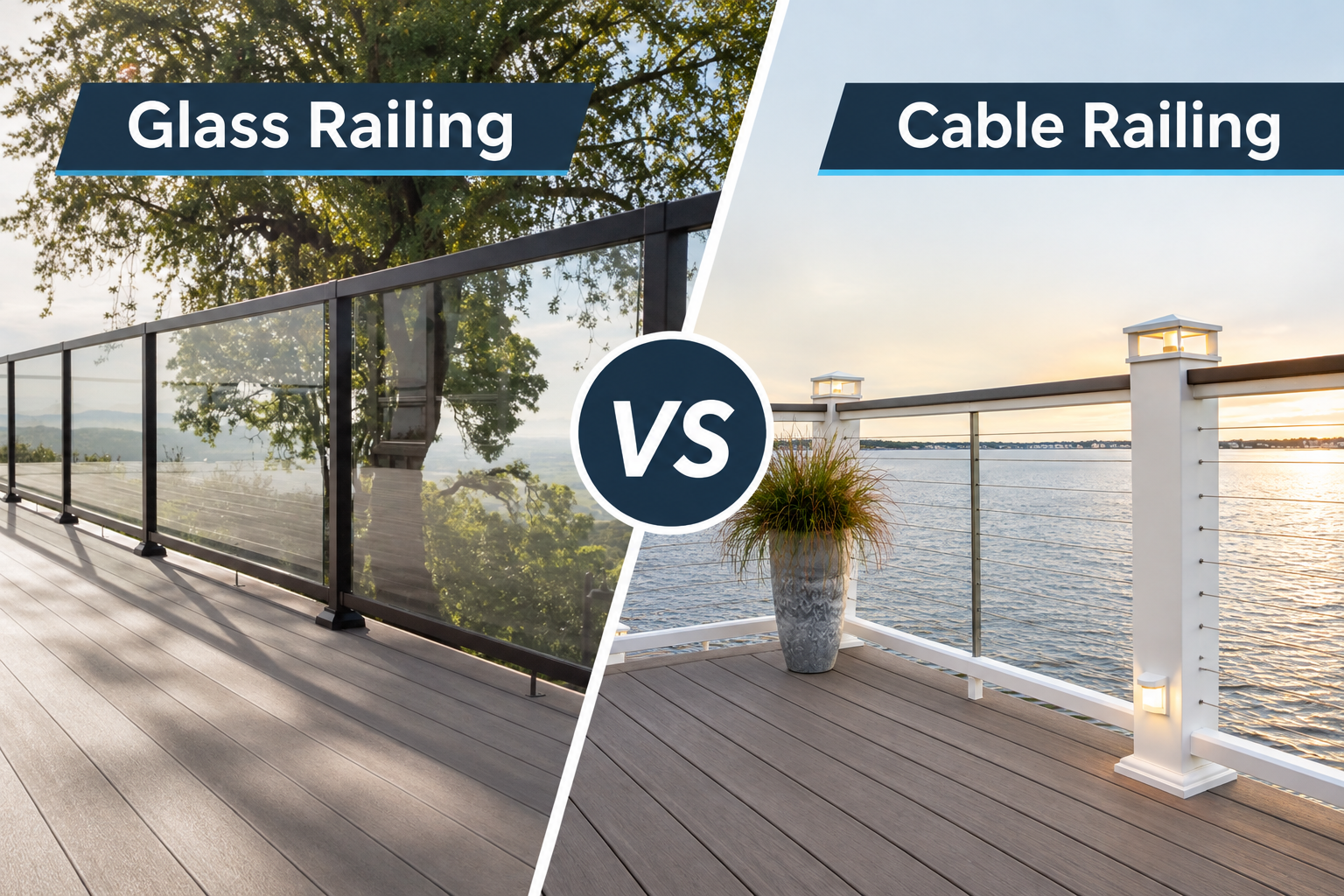
If your deck overlooks a lake, mountain range, wooded backyard, or ocean, the last thing you want is a bulky railing blocking the scenery. That’s one reason cable and glass railing have become popular choices for homeowners who want to enjoy their outdoor space without sacrificing the view.
Both options offer a more open appearance than traditional wood or metal balusters, but they achieve it in different ways. Cable railing uses thin horizontal stainless steel cables that allow you to see through the railing, while glass railing uses transparent panels to create a nearly seamless barrier.
So, which is better for an unobstructed view? Glass railing provides the clearest sightlines, while cable railing offers excellent visibility with better airflow and less frequent cleaning. The right choice depends on your surroundings, maintenance preferences, and budget.
Glass Railing: The Clearest View
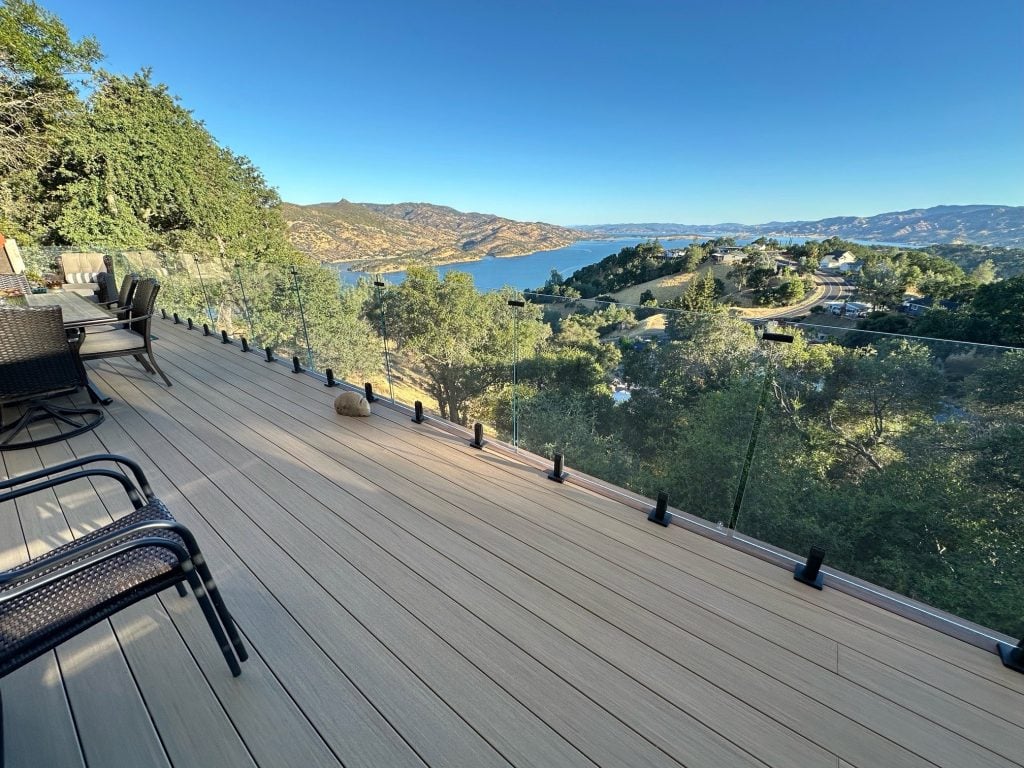
If preserving your view is the top priority, glass railing is hard to beat. Instead of traditional balusters or horizontal cables, glass railing uses large panels of tempered safety glass supported by posts and mounting hardware.
The transparent panels create a barrier without significantly interrupting your sightlines. Whether you’re looking out over a waterfront property or enjoying a scenic backyard, glass railing lets you take in more of the surroundings.
Benefits of Glass Railing
- Unobstructed views: Large transparent panels provide some of the clearest sightlines available in deck railing.
- Wind protection: Glass panels help block wind, making elevated decks and waterfront spaces more comfortable.
- Modern appearance: Glass creates a clean, upscale look that works especially well with contemporary and coastal homes.
- Natural light: Transparent panels allow sunlight to pass through, helping outdoor spaces feel more open.
Glass railing is particularly appealing for lakefront homes, oceanfront properties, and elevated decks where the surrounding scenery is a major part of the experience.
Things to Consider
The biggest drawback is cleaning. Fingerprints, water spots, pollen, and dust can quickly become noticeable, so you’ll need to clean the panels periodically to keep them looking clear.
Glass also blocks much of the airflow. This can be helpful on a windy deck, but it may make an enclosed or particularly sunny space feel warmer.
Another consideration is cost. Glass railing is generally more expensive than cable railing, although the actual price depends on the system, panel size, hardware, and installation.
Cable Railing: Excellent Visibility with Better Airflow
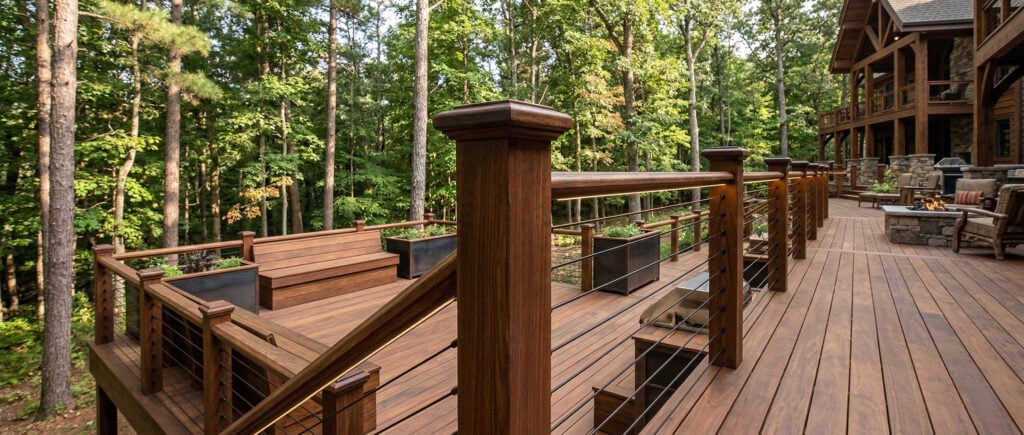
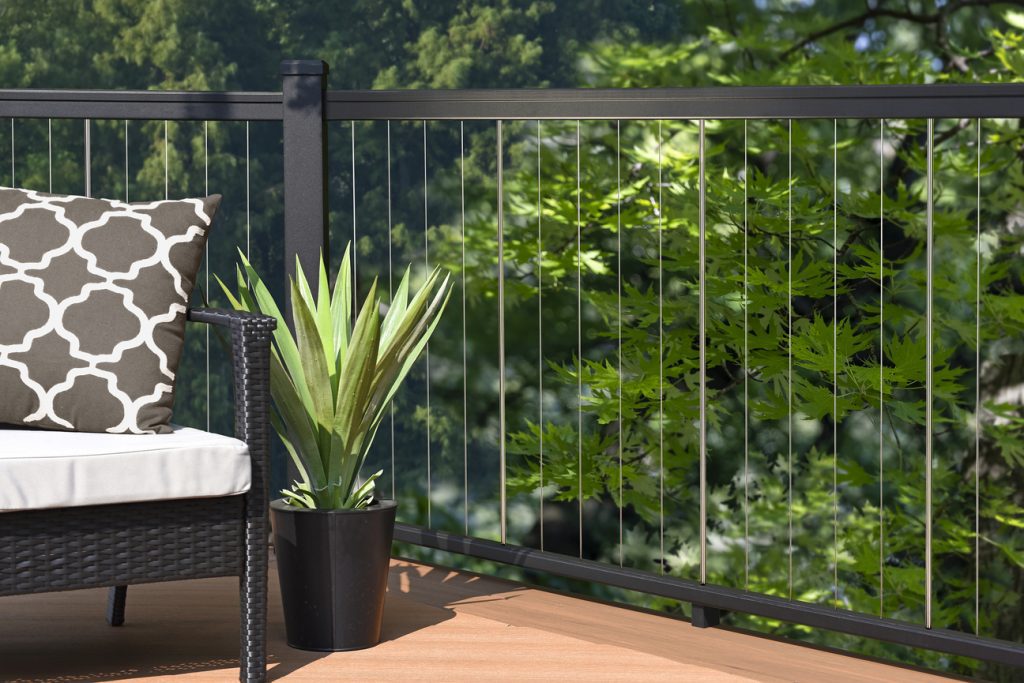
Cable railing takes a different approach to preserving views. Instead of using large glass panels, these systems use thin horizontal stainless steel cables stretched between posts.
Most residential cable railing systems use cables around 1/8 inch in diameter. Because they’re so thin, they tend to fade into the background when viewed from a distance. You can still see the horizontal lines when looking directly at the railing, but they typically don’t interfere much with the surrounding scenery.
Cable railing also allows air to pass through freely, which can make a difference on decks that get plenty of direct sunlight or are located in warmer climates.
Benefits of Cable Railing
- Excellent visibility: Thin cables create minimal visual obstruction while keeping the deck feeling open.
- Better airflow: Unlike glass panels, cable railing allows wind to pass through.
- Low maintenance: Stainless steel cables don’t require painting or staining, although occasional cleaning and tension checks are recommended.
- Modern appearance: Cable railing pairs well with contemporary homes, natural hardwoods, and composite decking.
- Design flexibility: Cable systems can be installed with different post materials and finishes to complement your deck.
Black cable railing has also become increasingly popular. The dark finish tends to recede visually, making the cables less noticeable against the surrounding landscape. It also creates a nice contrast with natural hardwood decking like Ipe, Cumaru, and Tigerwood.
Things to Consider
Cable railing doesn’t provide the same uninterrupted view as glass. The horizontal cables are still visible, particularly when you’re looking straight at them or viewing the railing up close.
Installation also requires some attention. Cables need to be properly tensioned, and the posts and framing must be strong enough to handle that tension. Over time, cables may need occasional adjustments as the system settles or components experience temperature changes.
The tensioning hardware is another consideration. Some systems use larger fittings that can become more noticeable than the cables themselves, so choosing a system with compact hardware can help maintain a cleaner appearance.
Cable Railing vs. Glass Railing: How Do They Compare?
Both systems offer excellent visibility, but there are some important differences to consider before choosing one for your deck.
| Feature | Cable Railing | Glass Railing |
| Visibility | Excellent, with thin visible cables | Clearest, most uninterrupted views |
| Airflow | Allows air to pass through | Blocks most airflow |
| Wind Protection | Minimal | Excellent |
| Maintenance | Occasional cleaning and tension checks | Regular glass cleaning |
| Appearance | Modern, minimalist | Sleek, upscale |
| Privacy | Very little privacy | Clear glass offers little privacy; frosted options provide more |
| Typical Cost | Generally more affordable | Typically more expensive |
Both options can work with hardwood, composite, and PVC decking. Your choice will largely come down to how much visibility you want and which features matter most for your outdoor space
Which Railing Is Better for Different Deck Settings?
The best choice can also depend on where your deck is located and how you plan to use it.
Waterfront Decks: Both options work well for waterfront properties. Glass railing helps block wind while preserving the view, making it a good choice for exposed decks. Cable railing offers better airflow and avoids the need to regularly clean large glass panels. If your property is near saltwater, look for marine-grade stainless steel hardware, such as 316 stainless steel, for better corrosion resistance.
Mountain and Scenic View Decks: Glass railing has a slight advantage when maximum visibility is the goal. With no horizontal cables crossing your sightline, it’s easier to enjoy the scenery from different angles. However, cable railing is still an excellent choice, especially when using black cables that blend into the background.
Sunny or Hot Decks: Cable railing may be the more comfortable option because it allows air to move freely. Glass panels can block wind and may make an enclosed or particularly sunny space feel warmer.
Elevated and Windy Decks: Glass railing can help reduce wind exposure, but its solid panels catch wind and place additional demands on the railing structure. Cable railing allows more wind to pass through, although its posts and connections still need to meet applicable structural requirements.
What About Installation and Maintenance?
Both railing systems have specific installation requirements, so your deck needs to be properly prepared to support them.
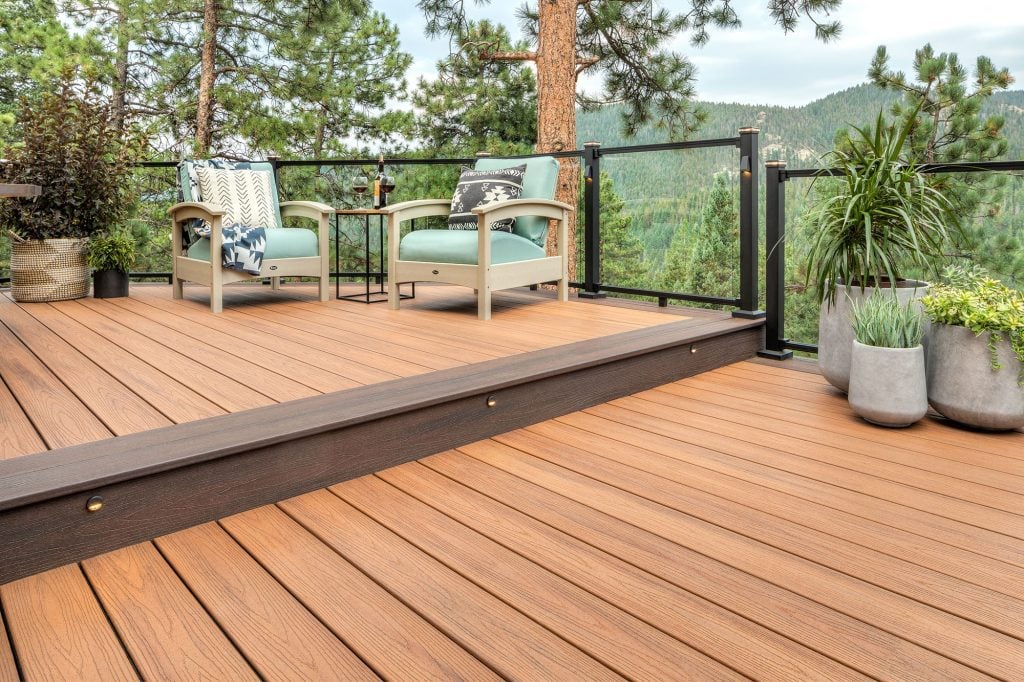
Cable railing places tension on the posts and connections. The posts and framing must be strong enough to prevent excessive movement when the cables are tightened. Glass railing also requires secure mounting points that can support the weight of the panels and account for wind loads.
Maintenance is another difference worth considering. Glass panels need regular cleaning to remove fingerprints, rain spots, pollen, and dust. Cable railing generally requires less frequent cleaning, but you should periodically inspect the cables, fittings, and posts to make sure everything remains secure.
Before choosing either system, check the manufacturer’s installation instructions and local building codes. Requirements for railing height, opening sizes, load resistance, and other safety details can vary by location. Some areas also restrict horizontal cable infill because of climbability concerns.
If you’re replacing an existing railing, don’t assume the current posts and framing will automatically work with a new cable or glass system.
Frequently Asked Questions About Cable and Glass Railing
Which deck railing provides the most unobstructed view?
Glass railing provides the clearest, most uninterrupted view because there are no horizontal cables or traditional balusters crossing your sightline. Cable railing is also an excellent option, but the cables remain slightly visible, especially when viewed up close.
Is cable railing cheaper than glass railing?
Cable railing tends to have a lower upfront cost than glass railing. However, the final price depends on the railing system, materials, post spacing, hardware, and installation requirements.
Is cable railing easier to maintain than glass railing?
Yes. Cable railing generally requires less frequent cleaning because it doesn’t have large transparent panels that show fingerprints, water spots, and dirt. However, stainless steel cables and fittings should still be cleaned and inspected periodically, and cable tension may need occasional adjustment.
Can you mix cable railing and glass railing on the same deck?
Yes. Some homeowners use glass railing in areas where preserving the view is most important and cable railing along other sections of the deck. Mixing the two can also help balance wind protection, visibility, and overall project costs, provided both systems are compatible and properly installed.
So, Which Is Better: Cable Railing or Glass Railing?
Both cable and glass railing are excellent choices for homeowners who want to maximize their outdoor views.
Glass railing is the better choice if you want the clearest possible view. Its transparent panels provide minimal visual interruption while offering wind protection and a clean, modern appearance. Just be prepared for more frequent cleaning and a typically higher upfront cost.
Cable railing is the better choice if you want excellent visibility without the maintenance of large glass panels. It allows airflow, offers a contemporary appearance, and generally costs less than glass railing. The cables are slightly visible, but they tend to disappear into the background when viewed from a distance.
Ultimately, the best railing is the one that complements your home, works with your deck’s surroundings, and fits how you plan to use the space.
Looking for the right railing for your deck? Explore Advantage Lumber‘s selection of cable and glass railing systems to find an option that complements your decking and helps you make the most of your outdoor views.
