
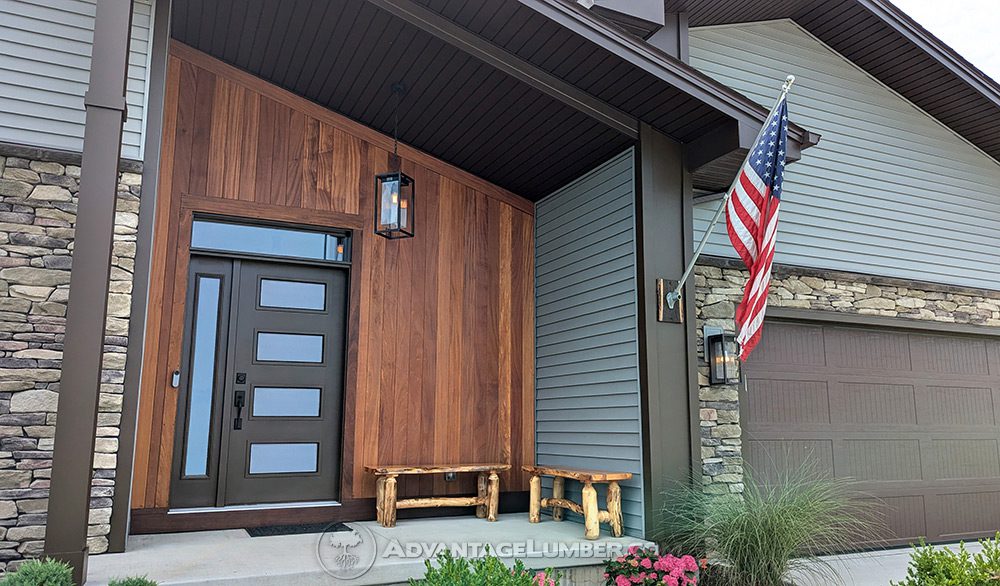
Late summer is one of my favorite times to tackle an exterior siding project, especially if you’re considering hardwood cladding for a beautiful and durable finish.
And I’ll admit, part of that is personal. I’d much rather work on the side of a house in late August than fight spring mud or discover in November that my fingers don’t want to cooperate with a tape measure anymore.
For one thing, spring can bring weeks of unpredictable rain. Then, early summer often fills up fast with decks, porches, additions, and other outdoor projects not to mention working all day in the worst heat is not fun. By late summer, though, you can often count on longer stretches of workable weather while you still have plenty of daylight.
You know how it goes. Everybody wants the deck finished before Memorial Day, and suddenly the first half of summer is gone.
So, if you have been considering new siding or cladding, this window can work especially well for premium wood products such as Accoya, Ipe, Cumaru, Tigerwood, Garapa, Brazilian Redwood, Teak, or Mahogany.
More importantly, you still have time to do the job right before fall rain and winter weather arrive. Why make yourself race the calendar if you don’t have to?
Late Summer Gives You Better Working Conditions
Of course, you can install siding during many times of the year, although some seasons make the job a lot easier.
Late summer, for example, often gives contractors relatively predictable weather, warm temperatures, and enough daylight to handle the details without racing the clock.
And those details matter.
When I look at a siding project, I don’t just look at the boards. Instead, I look at the entire wall. How will water drain? Where can air circulate? How will we flash the windows and doors? And how will we handle corners, penetrations, roof intersections, and transitions between materials?
Those aren’t the glamorous parts of the job. Nobody has ever walked up to a house and said, “Wow, look at that beautiful flashing detail behind the siding.” But those are often the details that determine whether the wall still looks good years later.
After all, a beautiful piece of Ipe won’t fix a bad installation.
Fortunately, late summer gives you enough time to remove the old siding, inspect what lies underneath, fix problems, and install the new cladding properly.
See What Has Been Hiding Behind Your Old Siding
Once you start removing old siding, you can uncover a few surprises.
Sometimes, you find clean sheathing and good flashing.
Other times, you don’t.
And if you’ve done enough remodeling, you already know which one you tend to expect.
For example, you may find rotten sheathing, torn housewrap, insect damage, poor flashing, or areas where water has been getting into the wall for years.
I’ve seen enough exterior projects to know that the little stain somebody thought was “probably nothing” can become a much bigger conversation once the siding comes off.
Either way, fix those problems before you cover the wall again.
If you’re spending the money on Accoya or tropical hardwood, for instance, don’t fasten it over a wall that already has moisture problems. Instead, replace rotten material, correct bad flashing, and give water a clear path to escape.
Caulk certainly helps, though it should never serve as your entire water management plan.
I like caulk as much as the next carpenter, but a tube of sealant isn’t a substitute for understanding where the water will go.
Why Accoya Works So Well for Siding
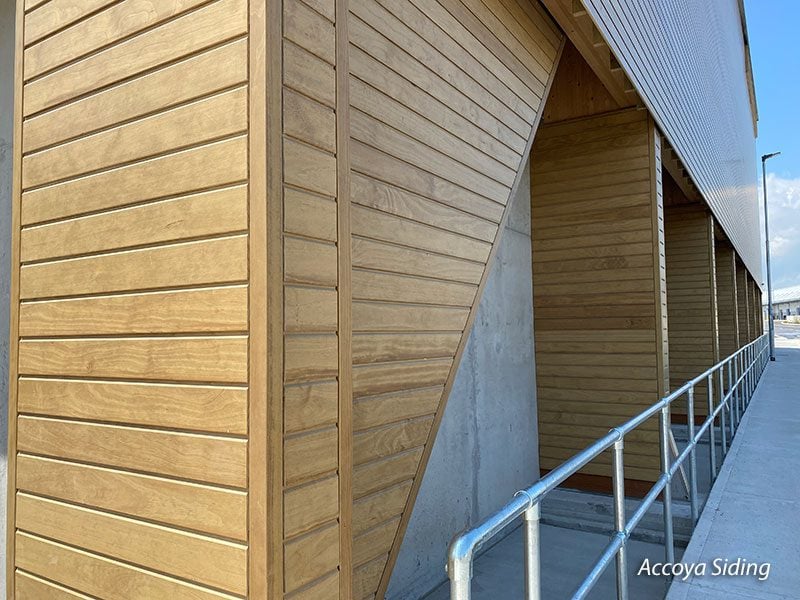
Accoya starts as real wood, although it goes through an acetylation process that changes how readily the wood absorbs water.
For exterior siding, that matters quite a bit.
Normally, wood gains and loses moisture as weather conditions change. As moisture levels change, boards can swell and shrink. Over time, excessive movement can contribute to cupping, checking, open joints, and other problems.
Accoya, however, moves far less than many conventional woods.
And when you’re trying to keep clean lines around windows, corners, and architectural details, who doesn’t want less movement?
As a result, that stability makes it a strong option for exterior cladding, especially on homes where the siding will face changing humidity, rain, sun, and seasonal temperature swings.
At the same time, you still get real wood grain.
That’s important to me. There are plenty of good synthetic exterior products available, but real wood still has a look that is hard to duplicate perfectly.
So, for homeowners who want natural wood but don’t necessarily want a dense tropical hardwood, Accoya offers an interesting middle ground.
Of course, it isn’t perfect for every house. Accoya carries a premium price, and it doesn’t naturally look like Ipe or Cumaru. If you want the rich brown tones and distinctive grain of tropical hardwood, you’ll probably lean in another direction.
For contemporary siding, rainscreen systems, and projects where stability ranks near the top of the priority list, though, Accoya deserves a serious look.
Tropical Hardwood Cladding Offers Something Different
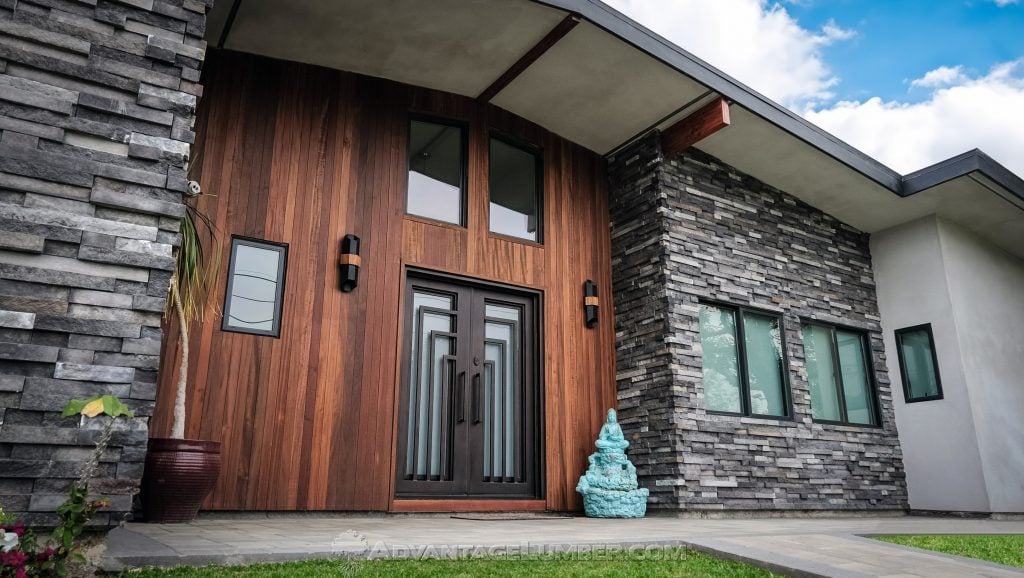
On the other hand, anyone who has worked with Ipe decking already understands much of its appeal.
Ipe is extremely dense, naturally durable, and beautiful. In addition, it can range from medium brown to deep brown with considerable natural variation. Not surprisingly, those characteristics have made it popular for high end decks and other exterior projects for decades.
Pick up an Ipe board and you’ll understand pretty quickly that you’re not dealing with ordinary siding lumber. Your back might understand it before anything else does.
Fortunately, the same qualities work extremely well on a wall.
You also have more choices than Ipe.
For example, Cumaru brings warm brown and reddish tones. Meanwhile, Tigerwood offers dramatic grain and striping. Garapa provides a lighter golden appearance, while Brazilian Redwood, also known as Massaranduba, tends toward rich reddish brown colors.
In other words, each species gives the house a different personality.
And you don’t have to clad the entire house, either.
In fact, hardwood works extremely well as an accent. You might use it around the front entrance, across a covered porch wall, underneath a roof overhang, around an addition, or on another architectural feature.
Sometimes, a relatively small amount of natural wood can completely change the appearance of a house.
I’ve always liked that approach. Instead of trying to make every square foot of the exterior shout for attention, let one really nice material do some of the work.
Don’t Install Hardwood Like Pine or Cedar
That said, dense tropical hardwoods require a different approach from common softwood siding.
Ipe and Cumaru, for example, can be tough on tools. So, you’ll want sharp carbide blades and quality drill bits. Depending on the siding profile and fastening system, you’ll often need to predrill as well.
If you’ve ever tried to force a dull blade or questionable drill bit through Ipe, you probably only needed to learn that lesson once.
Likewise, use corrosion resistant fasteners that suit both the wood species and the exposure.
You also need to think carefully about finishes.
Because dense tropical hardwoods contain natural oils, they don’t always cooperate with coatings that work fine on ordinary softwoods. For that reason, paint and other film forming finishes can cause headaches on species such as Ipe.
Although an experienced carpenter may feel comfortable installing wood siding, experience with pine or cedar alone doesn’t mean every technique transfers directly to tropical hardwood.
So, before you start fastening boards to the wall, learn what the particular species and siding profile require.
It’s a lot easier to spend ten minutes checking an installation detail than spend two days taking boards back off the wall. Ask me how I know.
Consider a Rainscreen
For premium wood cladding, I generally like a wall assembly that gives water somewhere to go and the wood somewhere to dry.
Fortunately, a rainscreen can do both.
Instead of pressing the cladding directly against the weather resistant barrier, you leave a drainage and ventilation space behind the siding. Then, when water gets behind the boards, gravity can carry it downward. At the same time, air can move through the cavity and help moisture dry.
As a result, that’s a much better strategy than hoping no water ever gets behind your siding.
Because really, when has “water will never get in there” been a great long term construction strategy?
After all, rain has a habit of finding places you didn’t invite it.
A rainscreen still needs good flashing, though. In particular, pay close attention around windows, doors, roof intersections, penetrations, and the top and bottom of the wall.
Ultimately, think of siding as one layer in a complete wall system rather than a waterproof shell.
Wood Still Moves
Anyone who has installed hardwood decking knows how much attention board spacing deserves.
Likewise, siding deserves the same thought.
Wood responds to moisture, although different species respond at different rates. In addition, climate, moisture content, board dimensions, exposure, and siding profile can all affect how the material behaves after you put it on the wall.
Accoya offers a big advantage here because it remains exceptionally stable.
Tropical hardwoods, however, require more attention to species, moisture content, and environmental conditions.
So, let the material acclimate when the manufacturer or supplier recommends it. Likewise, follow the requirements for your siding profile and fastening system rather than relying on a universal gap or rule of thumb.
I’ve never been a big fan of universal rules for wood anyway. Wood has an annoying habit of reminding us that it’s a natural material.
After all, wood doesn’t care what worked on your last job.
What Happens When the Wood Weathers?
This question comes up constantly with hardwood decks, and siding follows many of the same rules.
Generally, if you leave many tropical hardwoods unfinished, sunlight and weather will gradually turn the surface silver-gray.
Some homeowners love that appearance.
Personally, I think naturally weathered hardwood can look fantastic on the right house. Put it next to black windows, stone, or a clean modern exterior, and it can look like you planned the gray color from day one.
If you do, then let the wood weather naturally.
If you want to preserve more of the original brown, red, or golden color, however, you’ll need to maintain the finish periodically. In that case, use a product appropriate for exterior hardwood such as Ipe Oil or WiseCoat and expect the maintenance schedule to vary according to exposure.
For example, a south facing wall that gets strong afternoon sun will usually weather differently from siding underneath a deep porch roof.
Although homeowners often ask for a simple refinishing schedule, the wall itself gives you the best answer. So, watch the finish and maintain it when it starts to fade.
Wouldn’t it be nice if every wall weathered at exactly the same rate? Unfortunately, houses don’t work that way.
Accoya or Hardwood: Which Would I Choose?
Both can make excellent siding, though they solve slightly different problems.
Personally, I’d give Accoya a hard look when dimensional stability matters most. After all, it works especially well when you want real wood with much less movement than you would expect from many conventional wood siding products.
On the other hand, I’d lean toward tropical hardwood when appearance, natural density, and the character of the wood drive the project.
For example, Ipe gives you the classic high end dark hardwood look. Cumaru adds warmer reddish and brown tones. Meanwhile, Tigerwood creates a much bolder appearance. Garapa works well when you want something lighter.
Even so, don’t choose from specifications alone.
Instead, stand back and look at the house.
Seriously, walk across the yard or even across the street and look at the whole thing. We spend so much time staring at material samples from twelve inches away that it’s easy to forget nobody will view the finished house that way.
Look at the roof, windows, stone, brick, deck, soffits, trim, and landscaping. Then, choose the wood that works with everything else.
Ultimately, the best material on paper isn’t always the best looking material on the house.
Start Before Late Summer Turns Into Fall
If you work in construction, you already know late summer seems like it lasts about five minutes.
One week, you have daylight well into the evening. Not long after, you’re cleaning up tools in the dark and wondering where August went.
Every year it seems to happen faster. You look at the calendar, think you’ve got plenty of time, and suddenly somebody is talking about frost.
So, if you want to complete an Accoya or hardwood siding project this year, now is a good time to get moving.
First, choose the species. Then, measure the walls. Next, work out your siding profile, corners, trim, fasteners, flashing, and rainscreen details. Finally, order enough material and leave time to deal with anything you uncover when the old siding comes off.
And order carefully. Nobody enjoys discovering late on a Friday afternoon that the project needs three more boards before you can finish the most visible wall on the house.
Although cold weather may still seem a long way off, a siding project can grow quickly once you open up the walls.
For that reason, give yourself enough time to do it correctly.
In the end, premium wood cladding costs too much and lasts too long to rush through the important details just because the weather forecast suddenly starts mentioning frost.
Besides, finishing the siding while the weather is still nice beats spending November on a ladder wondering why you didn’t start in August.
