
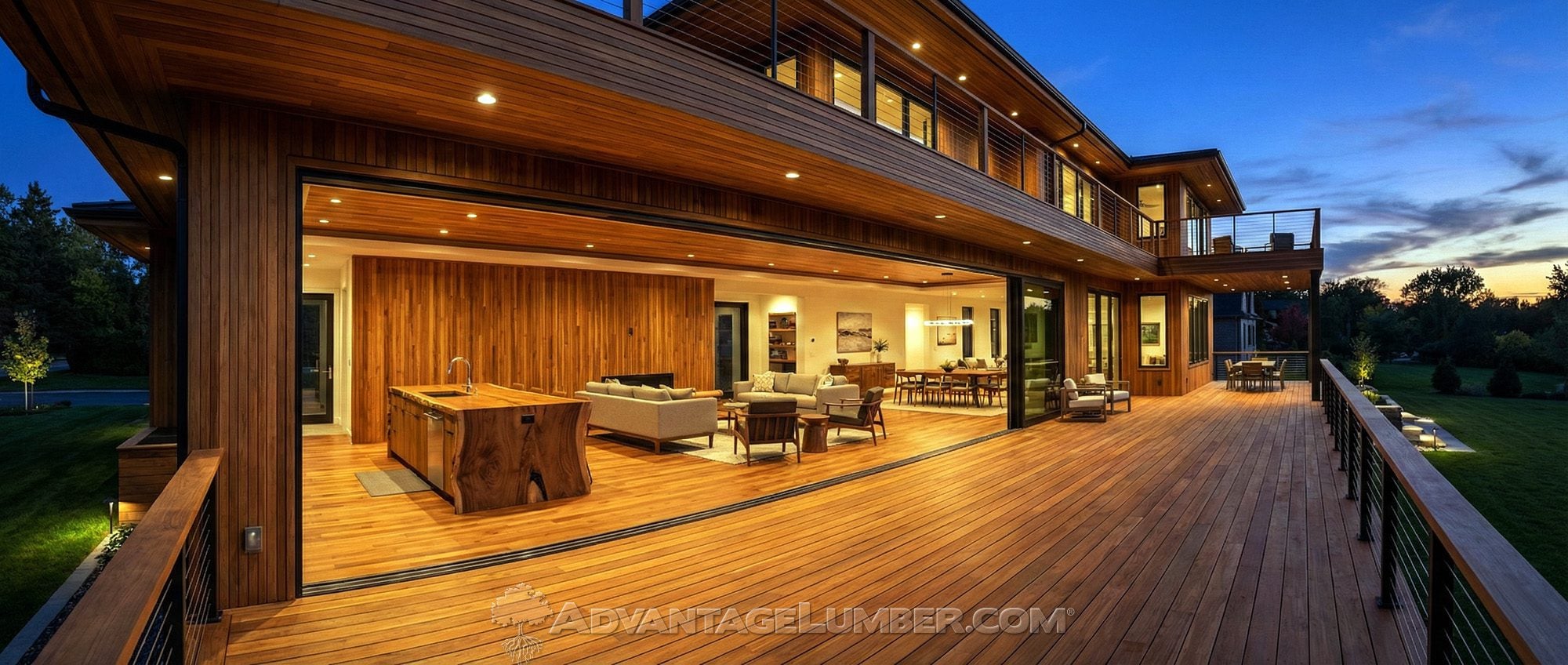
Creating a cohesive transition between your indoor and outdoor spaces is one of the most effective ways to elevate your home’s design. When hardwood flooring and decking work together visually, the result is a continuous living environment that feels larger, more intentional, and more connected to nature.
Rather than treating your deck as a separate space, matching or thoughtfully coordinating, your hardwood materials allows your outdoor area to function as a true extension of your interior.
Do You Need an Exact Match?
An exact match between flooring and decking can create a striking, architectural effect but it is not always necessary or practical.
- Exact match works best when:
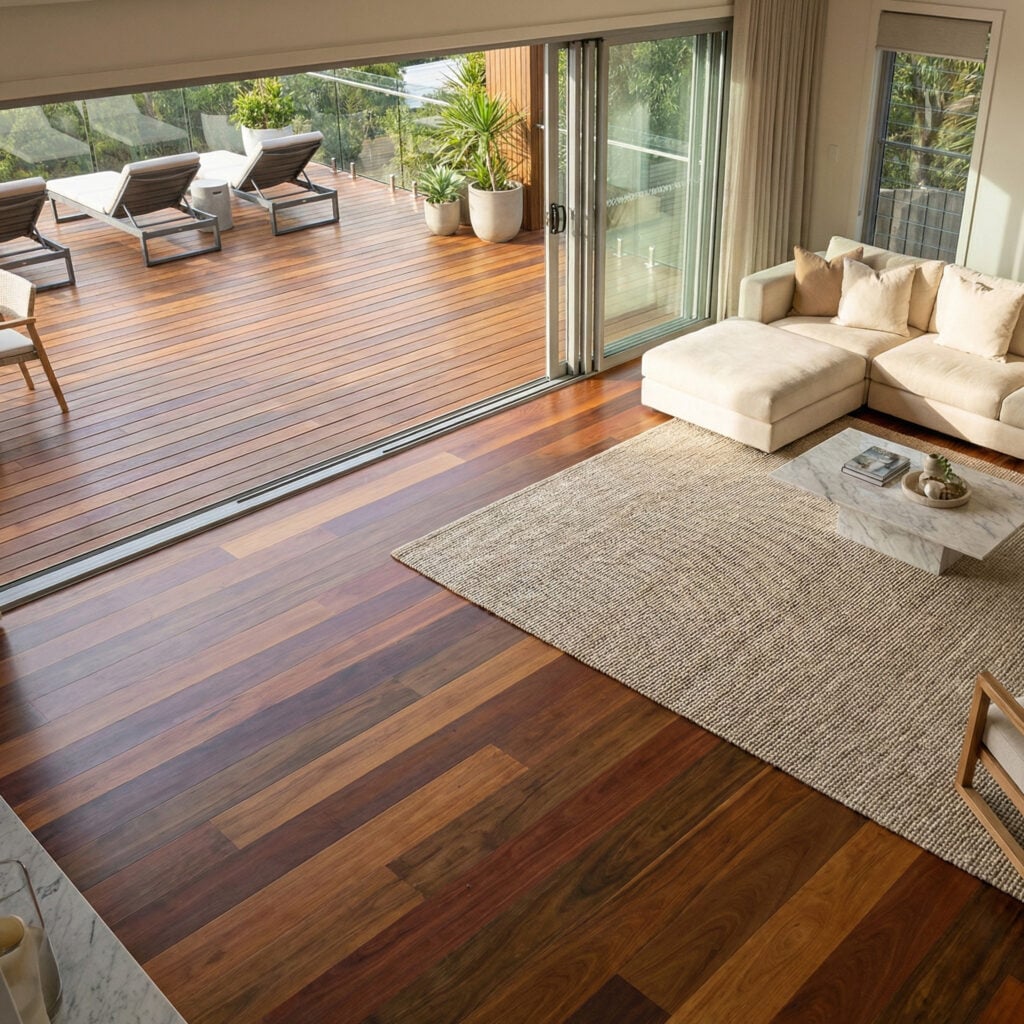
- You have large sliding glass doors or fully open wall systems
- The indoor and outdoor spaces are visually connected at all times
- You want a high-end, resort-style continuous surface look
- Coordinated materials work best when:
- Spaces are partially separated by thresholds or walls
- You want flexibility in tone or lighting variation
- You prefer a more layered, design-driven aesthetic
In most homes, success comes from visual harmony rather than perfect duplication.
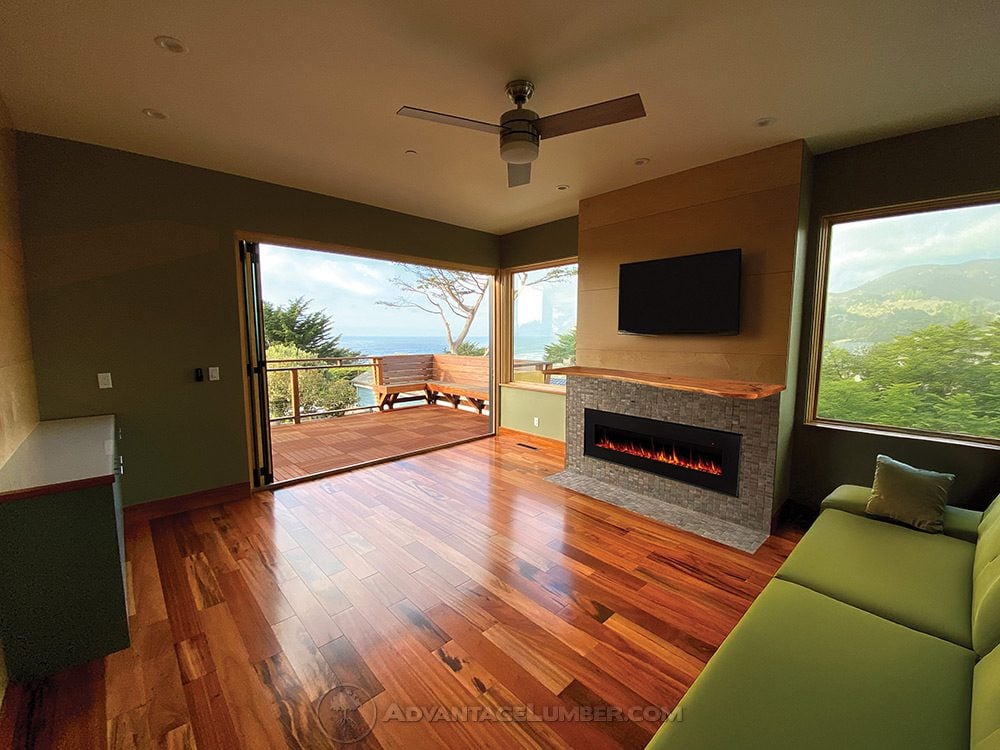
Why Brazilian Hardwoods Work So Well for Indoor–Outdoor Design
Not all hardwoods can transition between interior and exterior environments. Many domestic flooring species are not stable enough for outdoor use, while softer decking materials lack the density needed for interior durability.
This is where Brazilian hardwoods excel.
Species commonly used in this category rank high on the Janka hardness scale, meaning they offer exceptional resistance to dents, wear, and long term structural movement.
Their combination of density, stability, and natural visual richness makes them uniquely suited for both flooring and decking applications, enabling cohesive design across the entire home
Best Hardwood Species for a Seamless Indoor–Outdoor Look
Instead of thinking in terms of “floor colors vs deck materials,” the most effective approach is to select species that naturally support design continuity.
Deep brown tones and minimal grain variation make Ipe one of the strongest choices for seamless transitions between interior flooring and exterior decking.
Design effect: clean, architectural flow with minimal visual interruption
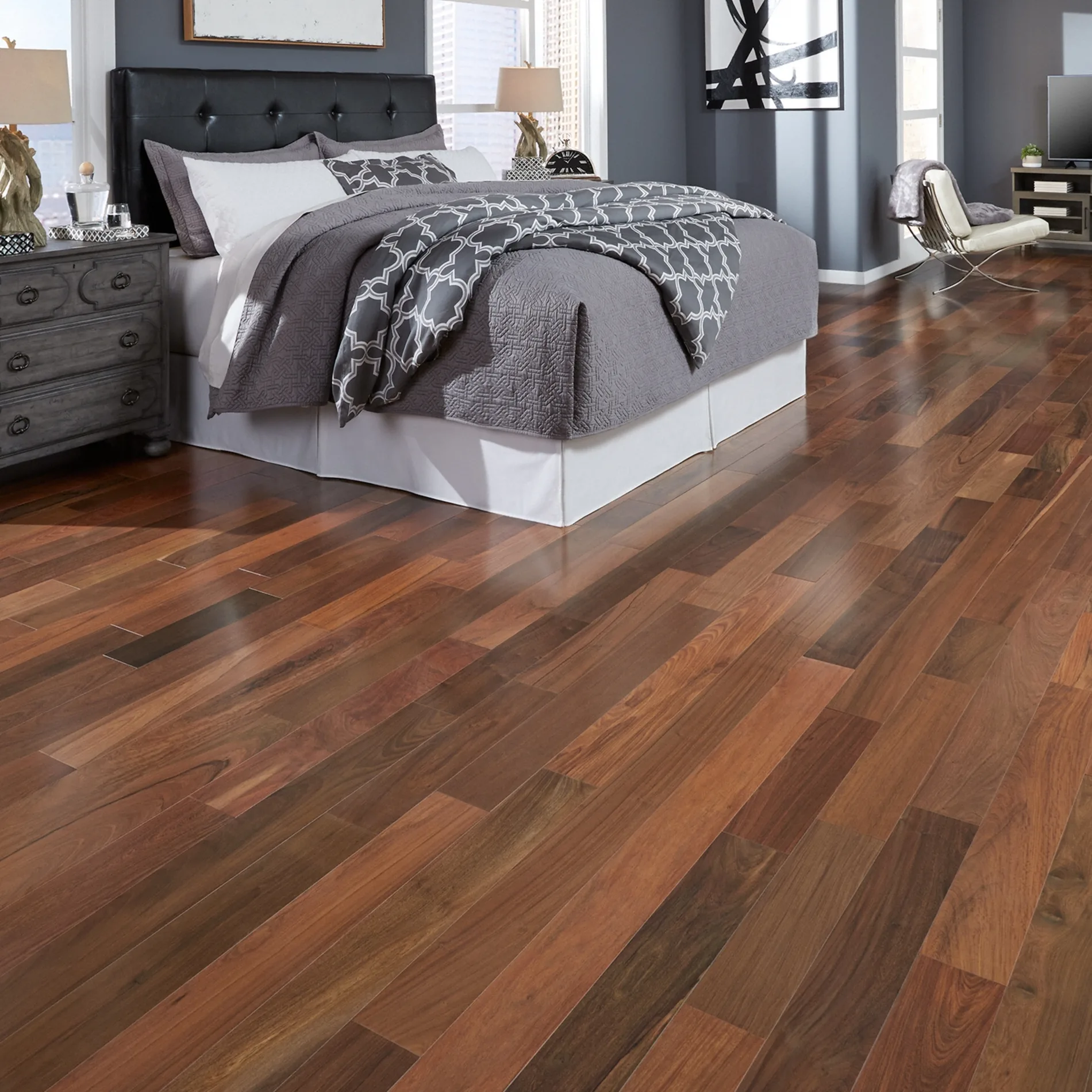
Cumaru – Warm Transitional Design
Cumaru offers rich golden-brown to reddish tones that naturally bridge indoor warmth with outdoor durability.
Design effect: inviting, warm transition between living and outdoor entertainment areas
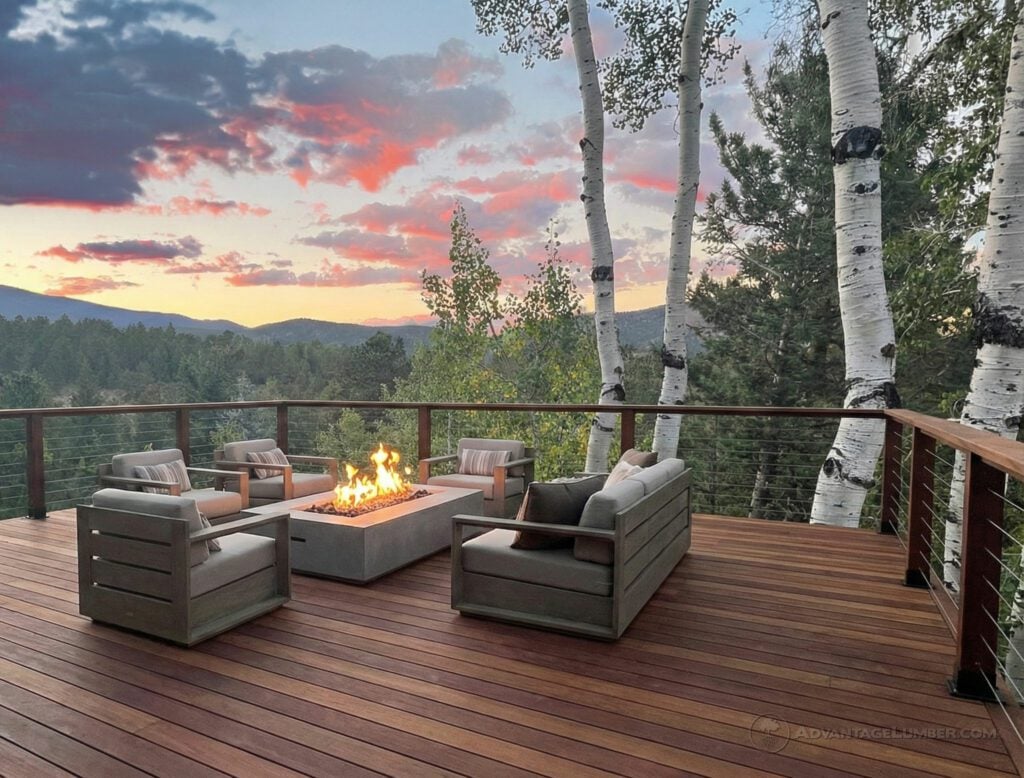
Teak’s golden hues and natural oils create a refined, high-end aesthetic that works equally well indoors and outdoors.
Design effect: resort-style continuity with soft tonal progression over time
Garapa – Bright Modern Minimalism
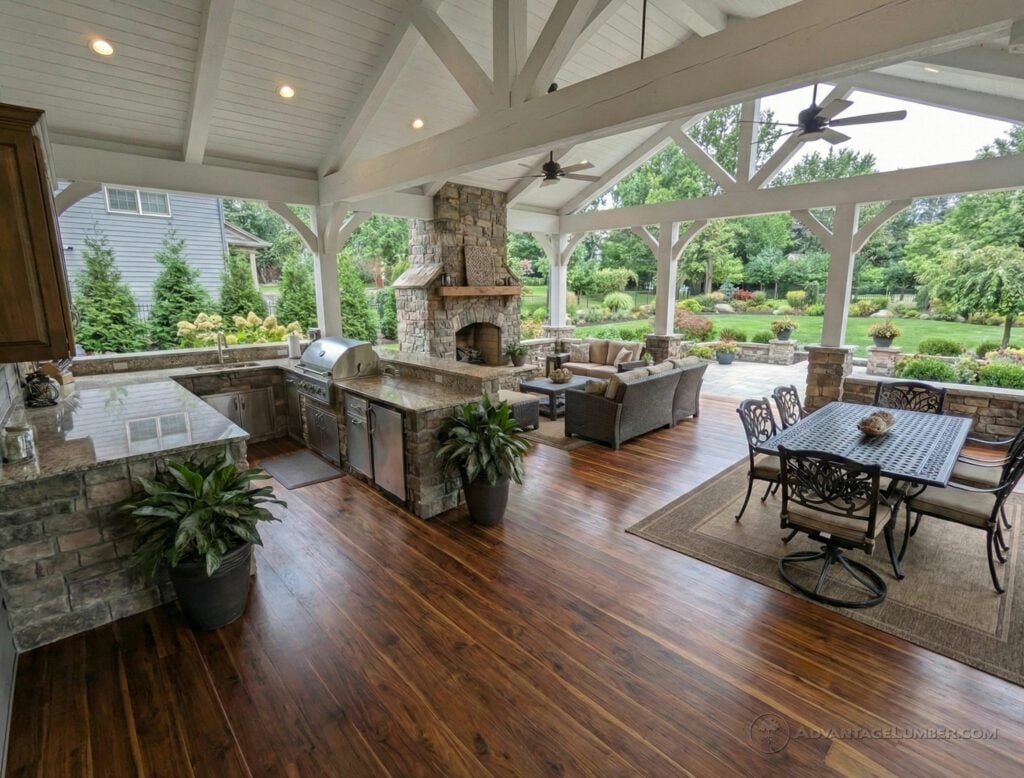
Garapa’s light golden tone creates an airy, contemporary feel that visually expands both interior and exterior spaces.
Design effect: clean, minimalist flow with strong natural light enhancement
Tigerwood – Bold Architectural Statement
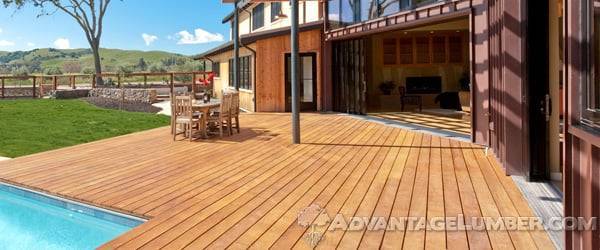
Tigerwood’s dramatic striping creates a high-contrast aesthetic ideal for design-forward homes.
Design effect: intentional visual continuity with strong character and movement
Color, Aging, and Natural Variation
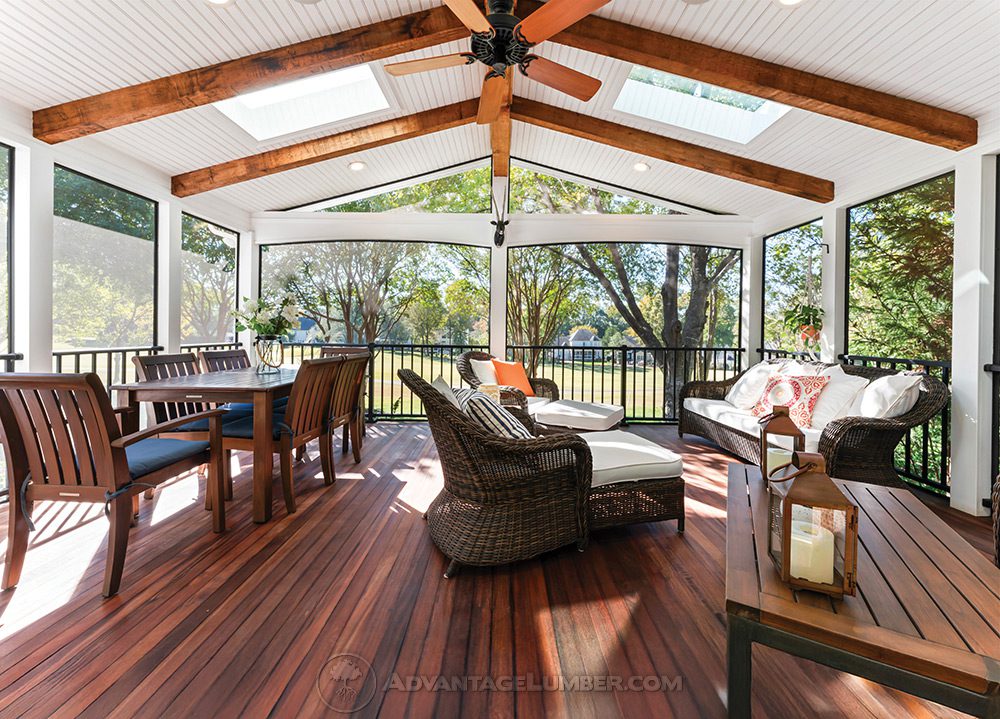
One of the most important factors in achieving a long-term match between flooring and decking is understanding how wood changes over time.
- Exterior hardwoods naturally weather and may turn silver-gray if left untreated
- Interior flooring maintains more stable coloration under controlled lighting
- UV exposure gradually deepens or softens tones depending on species and finish
A UV-protective exterior oil finish can help maintain closer color alignment between indoor and outdoor surfaces. It is also highly recommended to evaluate both fresh and weathered samples side-by-side before final selection.
Lighting Changes Everything
Wood does not look identical under all conditions.
- Interior flooring is influenced by artificial lighting, wall color, and finishes
- Exterior decking is influenced by direct sunlight, shadows, and seasonal variation
Because of this, the same species can appear slightly different indoors versus outdoors even when perfectly matched.
Maintenance: Indoor vs Outdoor Care
While both flooring and decking are highly durable, their maintenance requirements differ due to exposure conditions.
Hardwood Flooring (Interior):
- Regular sweeping or vacuuming
- Occasional damp mopping with hardwood-safe cleaners
- Avoid excessive moisture to prevent movement or cupping
Hardwood Decking (Exterior):
- Routine cleaning to remove debris and organic buildup
- Oil to preserve original color tones
- Designed for weather exposure but benefits from periodic maintenance
Final Thoughts
Matching hardwood flooring and decking is not about achieving identical materials. It is about creating a unified design language across your home.
By selecting species that naturally complement each other, accounting for lighting and aging behavior, and thinking in terms of design continuity rather than strict matching, you can create a space that feels intentional, cohesive, and architecturally complete.
Ready to Bring Your Indoor and Outdoor Spaces Together?
If you are planning a project and want to see how these hardwoods look in real-world applications, visit AdvantageLumber.com to explore photos of our flooring and decking in a variety of settings.
You can also reach out to our customer service team for guidance on choosing the right species for your space. We are happy to help you compare options, answer technical questions, and get samples in your hands so you can see how each wood looks in your own lighting conditions.
Creating a seamless indoor–outdoor design starts with the right materials and the right support to make confident decisions.