
Protecting Your Home in Wildfire-Prone Areas
In an era of increasing wildfire risks, building a deck that’s not just beautiful and functional but also fire-resistant is more important than ever. At AdvantageLumber.com, we specialize in high-quality hardwood decking and complementary materials that meet stringent fire safety standards.
Whether you’re in a wildfire-prone region or simply prioritizing safety, a fire-resistant deck can provide peace of mind while enhancing your outdoor living space.
This guide will walk you through the essentials, including the Wildland-Urban Interface (WUI), key building code requirements, compliant materials like our Class A-rated hardwood decking, PVC options, and metal framing, plus a step-by-step building process.
What is the Wildland-Urban Interface (WUI)?
The Wildland-Urban Interface, or WUI, refers to areas where human development meets or intermingles with wildland vegetation, creating a high risk for wildfires. According to resources from the International Code Council (ICC) and California’s State Fire Marshal, these zones encompass millions of homes across the U.S., particularly in states like California, Colorado, and Texas.
In WUI areas, embers from wildfires can travel miles and ignite structures, making ignition-resistant construction critical. Decks are especially vulnerable because they often accumulate debris underneath and are exposed to radiant heat and flames. Building in compliance with WUI standards not only protects your property but can also lower insurance premiums and increase resale value.
Building Code Requirements for Fire-Resistant Decks
Fire-resistant deck construction is governed by codes like the International Wildland-Urban Interface Code (IWUIC) and California’s Chapter 7A of the Building Code. These regulations focus on reducing ignition risks through material selection and design. Key requirements include:
- Flame Spread Ratings: Materials must achieve a Class A (0-25 flame spread index) or Class B (26-75) rating per ASTM E84 testing. Class A is the highest level of resistance, slowing flame spread significantly.
- Ignition-Resistant Construction: Decks in high-risk WUI zones must use non-combustible or ignition-resistant materials for decking, framing, and undersides. This includes enclosing the deck’s underside to prevent ember intrusion.
- Defensible Space: Maintain a 5-foot non-combustible zone around the deck, free of vegetation or stored flammables.
- Specific Standards: For example, California’s SFM 12-7A-4 requires decking to withstand heat flux and ember exposure without igniting. Local jurisdictions may adopt these or similar codes, so always check with your building department before starting.
Non-compliance can lead to fines or denial of permits, but using approved materials ensures your deck meets or exceeds these standards.
Choosing Compliant Decking and Framing Materials
Selecting the right materials is the foundation of a fire-resistant deck. At AdvantageLumber.com, we offer options that combine natural beauty, durability, and top-tier fire performance.
Hardwood Decking with Class A Ratings
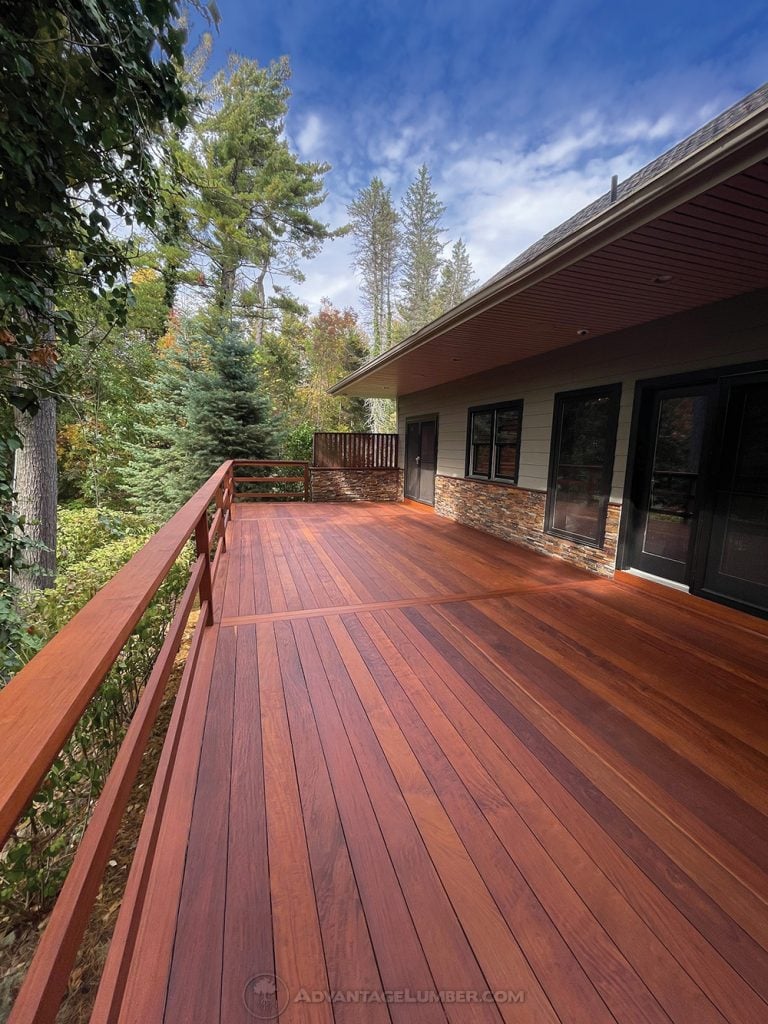
Exotic hardwoods are naturally dense and resistant to fire, rot, and insects, making them ideal for WUI compliance. Our premium selections include:
- Ipe Decking: Known as “Ironwood,” Ipe achieves a Class A flame spread rating and is naturally ignition-resistant. It’s up to 8 times harder than redwood, with a lifespan up to 75+ years. Perfect for high-risk areas, Ipe resists mold, fungi, and slips, and we stock lengths up to 20 feet.
- Cumaru Decking: Another Class A-rated hardwood, Cumaru offers rich reddish-brown tones and exceptional density. It’s WUI-compliant and provides a cost-effective alternative to Ipe without sacrificing fire resistance.
- Garapa Decking: With a Class B rating, Garapa is a golden-hued hardwood that’s naturally resistant to decay and insects. It’s a great entry-level option for moderate-risk zones.
These hardwoods surpass many composites in fire testing and add timeless elegance to your deck. Shop our full range at AdvantageLumber.com for kiln-dried, FSC-certified options.
PVC Decking for Enhanced Fire Performance
For a low-maintenance alternative, PVC decking like TimberTech® PVC lines excel in fire resistance:
- TimberTech Advanced PVC (Vintage and Landmark Collections): These boast a Class A flame spread rating, Ignition Resistant designation, and full WUI compliance. They stay cooler underfoot (up to 30% cooler than competitors) and mimic wood grains without the fire risks of traditional lumber. Ideal for California’s Chapter 7A requirements.
PVC options are non-combustible, won’t warp or splinter, and come with warranties up to 50 years.
Metal Deck Framing for Ultimate Durability
Traditional wood framing can fuel fires, but metal alternatives provide non-combustible support:
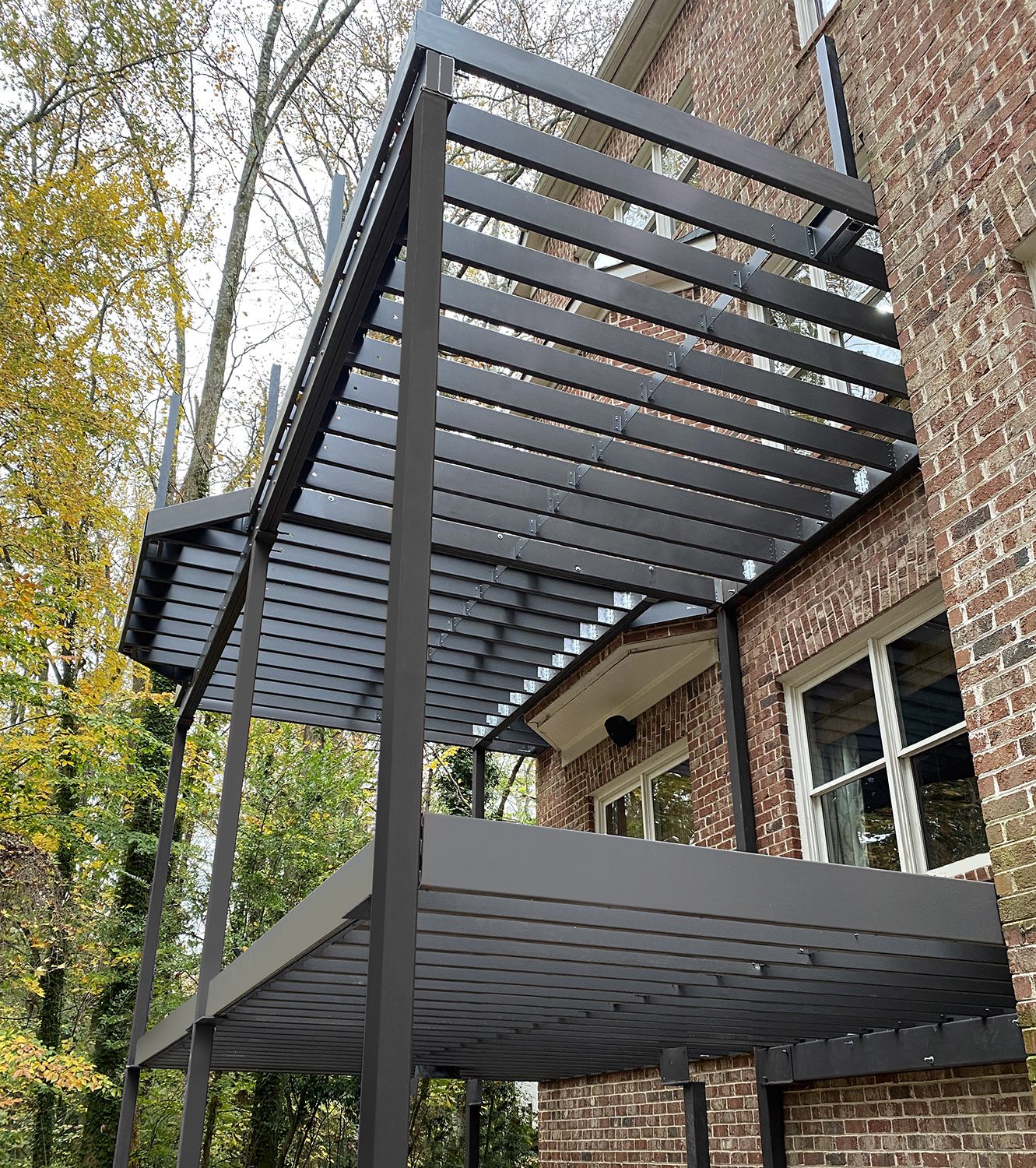
- Steel Deck Framing (e.g., New Castle Steel): Achieves Class A ratings and is inherently fire-resistant. Steel won’t burn, warp, or weaken in heat, making it code-compliant for WUI zones. It’s also rust-resistant with proper coatings.
- Aluminum Deck Framing (e.g., TimberTech Aluminum): Lightweight yet strong, with a Class A rating. It’s moisture-proof, sustainable, and pairs perfectly with our decking for a fully fire-resistant structure.
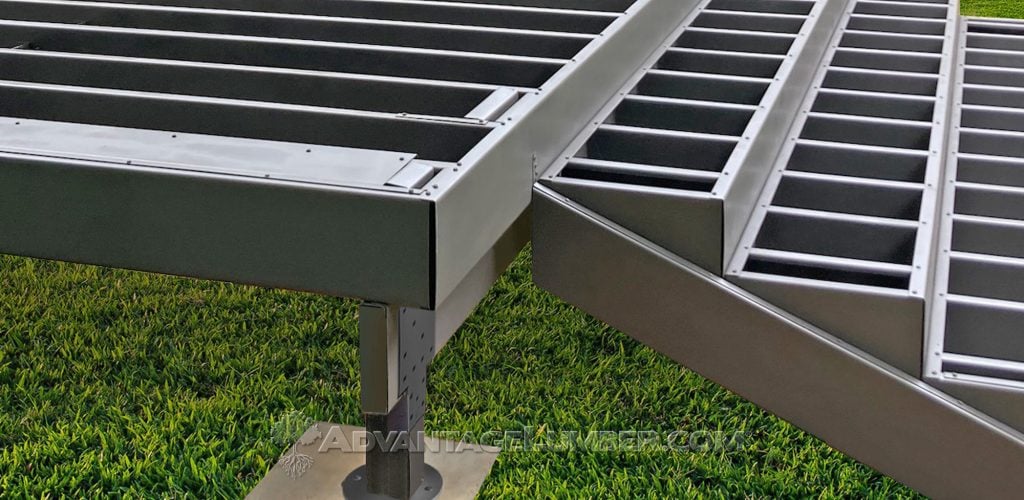
Using metal framing under hardwood or PVC decking creates a robust, long-lasting system that meets NFPA 1144 and ICC standards.
Step-by-Step Guide to Building Your Fire-Resistant Deck
Follow these steps to construct a safe, compliant deck. Always consult professionals for complex projects.
- Plan and Permit: Assess your site’s WUI status using local maps. Design with at least 16-inch joist spacing and ensure 5 feet of defensible space. Obtain permits and verify codes.
- Prepare the Site: Clear vegetation, level the ground, and install concrete footings or piers for stability. Create a non-combustible base with gravel or pavers.
- Install Framing: Use metal deck joists and beams (e.g., steel or aluminum) spaced per code. Secure with corrosion-resistant fasteners. Enclose the underside with fire-resistant skirting like fiber-cement panels or metal mesh to block embers.
- Lay the Decking: Install Class A-rated boards like Ipe or TimberTech PVC. Use hidden fasteners for a clean look and maintain 1/8- to 3/16-inch gaps for drainage and expansion. Apply foil-faced bitumen tape on joists for extra protection.
- Add Railings and Features: Choose ignition-resistant railings (metal, tempered glass, or thick hardwood). Install vents with 1/8-inch mesh to prevent ember entry.
- Finish and Inspect: Have a professional inspect for code compliance.
The total cost for a 300 sq ft deck using our materials might range from $5,000–$15,000, depending on size and features—often comparable to non-resistant builds but with superior longevity.
Maintenance Tips for Long-Term Fire Resistance
- Clear debris regularly, especially under the deck.
- Reapply sealants to hardwoods annually.
- Inspect for damage and repair promptly.
- Maintain defensible space by trimming vegetation.
With proper care, your deck from AdvantageLumber.com will remain safe and stunning for decades.
Conclusion: Invest in Safety and Style
Building a fire-resistant deck is a smart way to safeguard your home while enjoying the outdoors. By incorporating WUI principles, adhering to codes, and using materials like our Class A-rated hardwoods, PVC decking, and metal framing, you create a resilient space. Visit AdvantageLumber.com today to explore our inventory, get free samples, or consult our experts. Protect what matters—build with advantage.