
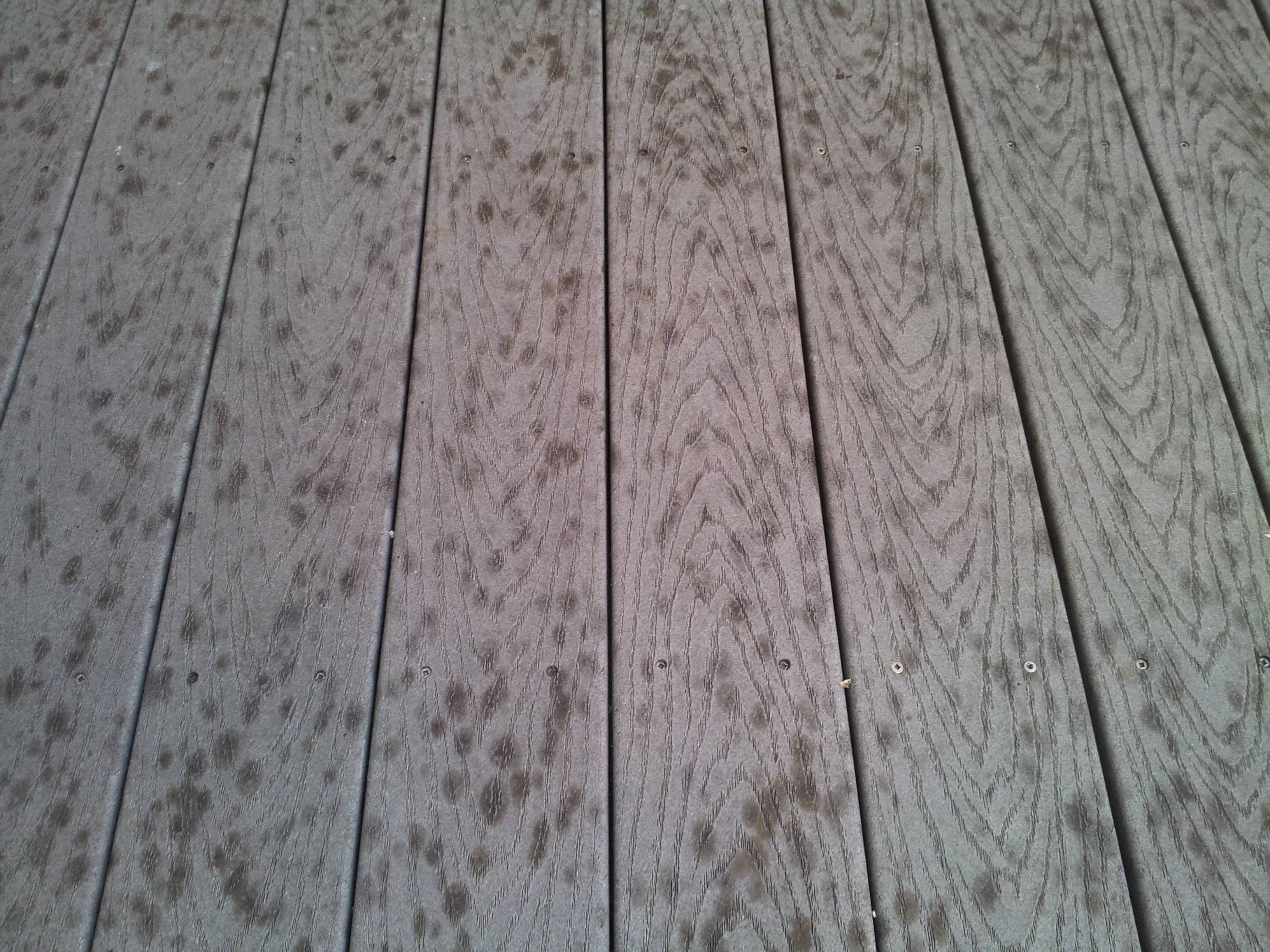
Composite decking has come a long way since it first entered the market. Early composite deck boards earned a reputation for mold, mildew, and staining problems, leading many homeowners to question whether composite decking is truly resistant to these issues.
While modern composite decking is significantly more resistant to mold and mildew than earlier generations, not all composite decking products perform equally. Understanding how composite decking is made and how different materials react to moisture can help you choose the best decking for your climate.
Why Mold and Mildew Can Be a Concern
Mold and mildew thrive in damp, humid environments where organic material is present. Traditional composite decking is manufactured by combining recycled plastics with wood fibers or wood flour. While the plastic component helps protect the board from moisture, the wood content remains an organic material.
Because wood is organic, it can support mold and mildew growth when moisture, dirt, pollen, and other organic debris accumulate on the deck surface. Mold and mildew are usually not feeding on the deck board itself, but on the organic material trapped on or near the surface.
This is why mold and mildew were more common problems with the earliest generations of composite decking. Those products often absorbed more moisture and had less effective protective caps than today’s offerings.
How Modern Composite Decking Has Improved
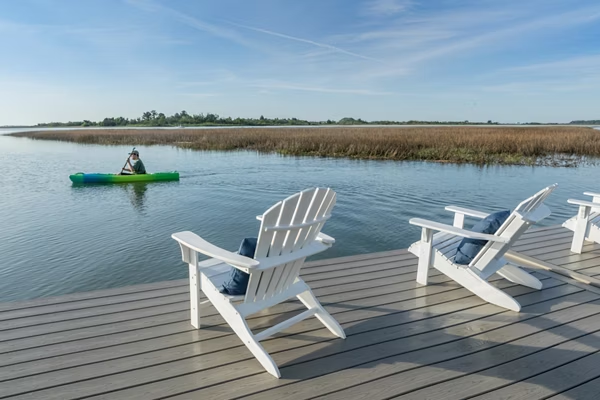
Today’s leading composite decking manufacturers have made significant improvements in both formulation and manufacturing processes.
Many modern composite deck boards feature:
- Protective polymer caps that resist moisture absorption
- Better stain resistance
- Enhanced UV protection
- Improved surface technology that reduces the likelihood of mold growth
- More consistent manufacturing processes
As a result, mold and mildew are typically not major issues for most homeowners who properly maintain their decks.
Regular cleaning to remove dirt, leaves, pollen, and other organic debris remains important, especially in shaded areas where moisture tends to linger.
Climate Matters More Than Marketing
While modern composite decking performs much better than older products, your local climate still plays a major role in long term performance.
If you live in a region with:
- High humidity
- Frequent rainfall
- Dense tree coverage
- Heavy shade
- Limited sunlight exposure
you may experience more mold and mildew growth on outdoor surfaces in general including decks, siding, fences, patios, and walkways.
In these environments, even the best traditional wood plastic (WPC) composite decking may require more frequent cleaning to maintain its appearance.
The AdvantageLumber.com Recommendation
At AdvantageLumber.com, we believe it’s important to match the decking material to the environment where it will be installed.
For homeowners in climates that are particularly prone to mold and mildew growth, we often recommend considering decking materials that contain no wood fiber at all.
Two excellent options include:
Mineral Based Composite Decking
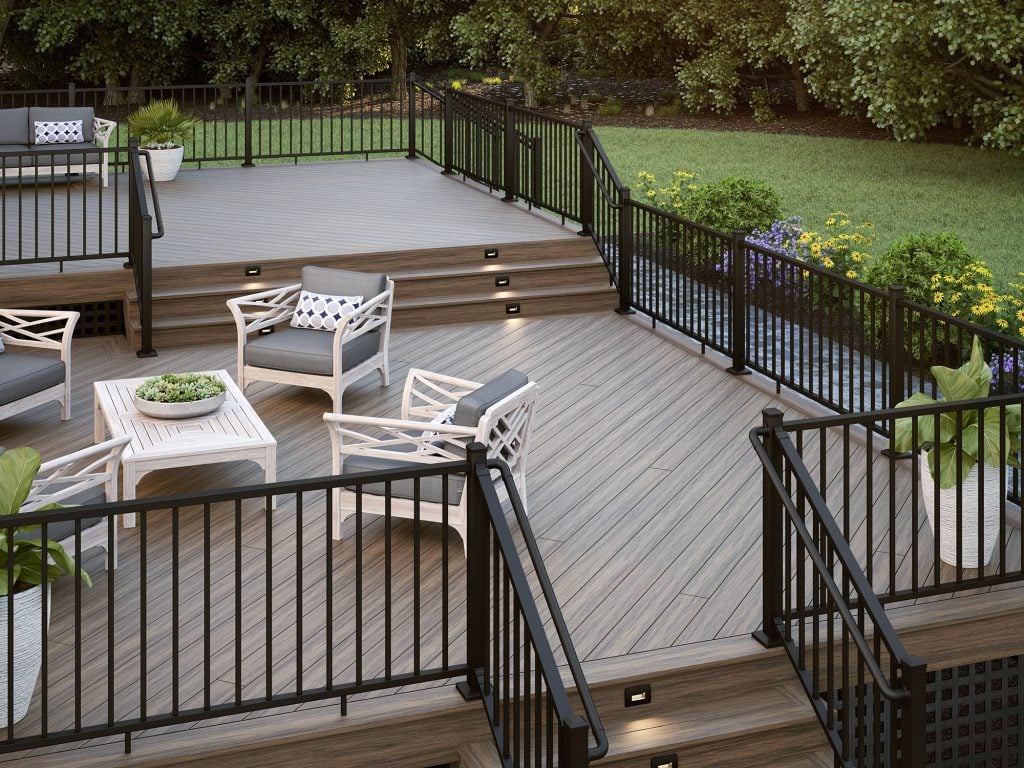
One of the most innovative products on the market is Deckorators® decking featuring Surestone® technology.
Unlike traditional wood plastic composites, Surestone® decking is made using a mineral based composite material. Because it contains virtually no wood fiber, it eliminates many of the concerns associated with organic materials.
Benefits include:
- Exceptional moisture resistance
- Excellent dimensional stability
- Reduced risk of mold and mildew issues
- Lightweight yet strong construction
- Superior traction
For homeowners in humid climates, mineral based composite decking can be a smart long term investment.
PVC Decking
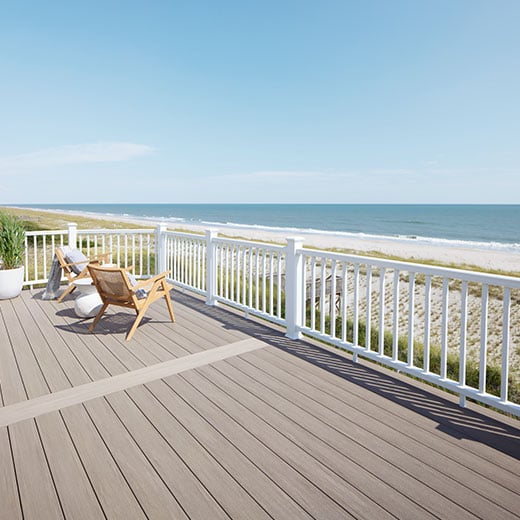
PVC decking is another excellent choice for moisture-prone environments.
Unlike traditional composite decking, PVC boards contain no wood content. Because they are manufactured entirely from synthetic materials, they cannot absorb water the way wood-containing products can.
Benefits of PVC decking include:
- No wood fibers
- Outstanding mold and mildew resistance
- Excellent moisture performance
- Easy cleaning and maintenance
- Long term durability
Popular PVC decking options include products from TimberTech® Advanced PVC and other premium manufacturers.
Mold and Mildew Prevention Tips for Any Deck
Regardless of the decking material you choose, a few simple maintenance practices can help minimize mold and mildew growth:
- Keep leaves and debris off the deck surface
- Trim back vegetation to improve airflow
- Clean pollen and dirt buildup regularly
- Ensure proper drainage around the deck
- Avoid allowing standing water to remain on the deck
- Periodically wash the deck according to the manufacturer’s recommendations
Final Verdict
The idea that all composite decking is prone to mold and mildew is largely outdated. Modern composite decking products are far more resistant than the early generations that gave the category a bad reputation.
However, traditional composite decking still contains wood fiber, which means it may not be the ideal choice for every environment.
If you live in a humid, heavily shaded, or moisture prone climate, you may want to consider decking materials that contain no wood pulp at all. Mineral based composite decking such as Deckorators® Surestone® or premium PVC decking products can provide an extra layer of protection against mold and mildew concerns.
By choosing the right decking material for your climate, you can enjoy a beautiful, low maintenance deck for decades to come.
