
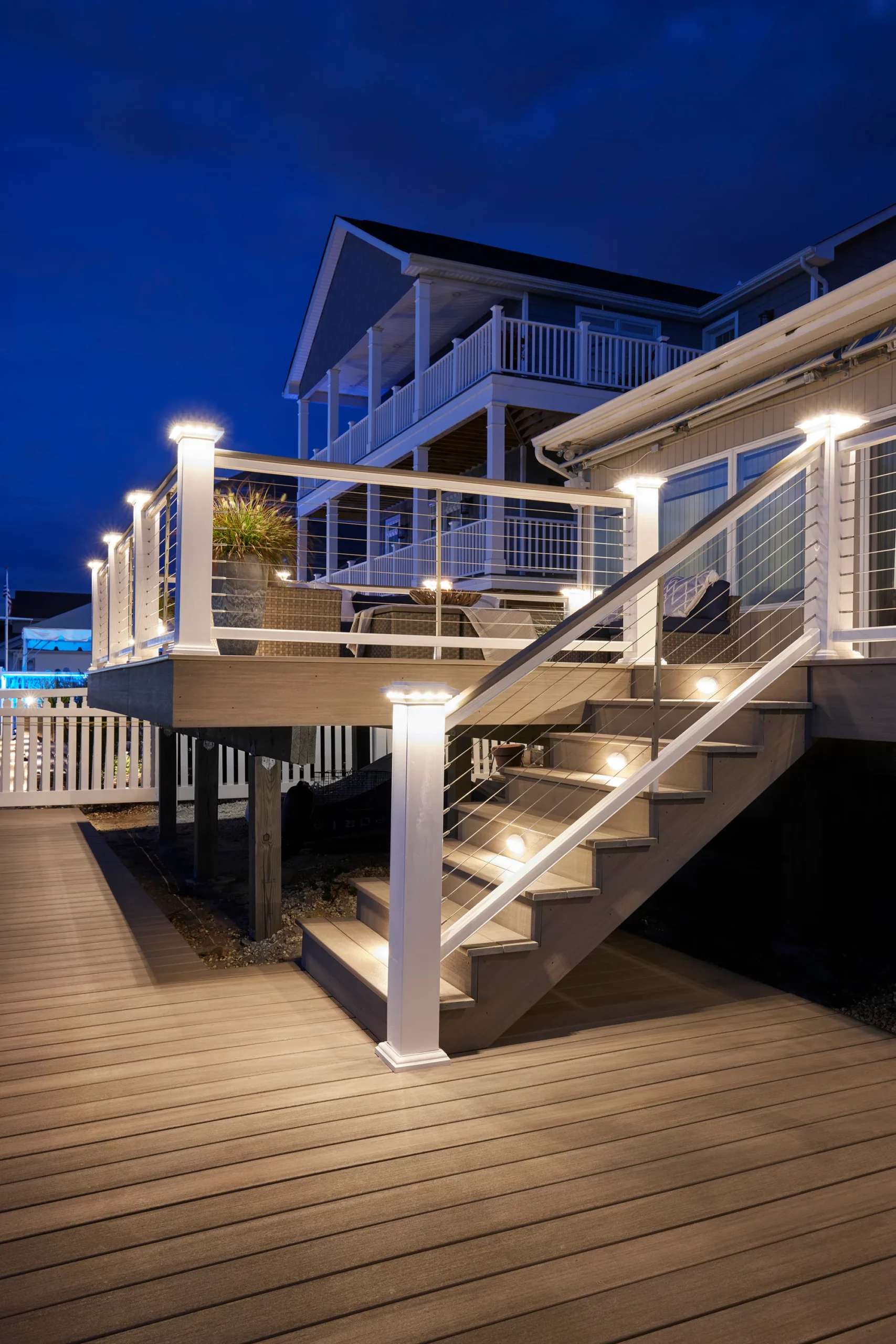
Deck lighting does much more than improve the appearance of an outdoor space. It also plays a major role in preventing trips, falls, and nighttime accidents.
Once the sun goes down, stairs become harder to see, deck edges fade into the background, and elevation changes can become difficult to judge. Even a well-built deck can become hazardous if key walking areas are not properly illuminated.
The good news is that a smart lighting plan can dramatically improve nighttime safety while also making your deck more comfortable and enjoyable to use after dark.
The key is not simply adding brighter lights everywhere. In many cases, softer layered lighting creates safer visibility than a few overly bright fixtures. Excessive brightness can create glare and harsh shadows that actually make navigation more difficult.
Why Deck Lighting Matters for Safety
Most deck accidents at night happen in predictable locations:
- Stairs
- Deck edges
- Transition zones
- Entry points
- Cooking and entertainment areas
Proper lighting helps define these spaces clearly so people can move around the deck more confidently and safely.
Instead of flooding the deck with light, the goal should be to create balanced visibility that helps the eye naturally recognize walking surfaces, elevation changes, and boundaries.
Stairs Are One of the Most Common Nighttime Hazards
Deck stairs are one of the most common areas where nighttime falls occur. Poor visibility makes it difficult to judge tread depth and elevation changes, especially on larger staircases.
Stair riser lights are one of the most effective ways to improve deck safety because they help define each individual step. Even subtle lighting can significantly improve visibility without overwhelming the space.
For the best results:
- Keep lighting placement consistent
- Avoid overly bright fixtures that create glare
- Make sure the top and bottom steps are clearly visible
If your deck stairs are older or showing wear, replacing damaged stair treads or loose railing components before installing lighting is always recommended for long-term safety

Transition Zones Need Lighting Too
Some of the easiest places to trip are areas where the walking surface changes unexpectedly.
Common transition zones include:
- Doorways leading onto the deck
- Deck-to-patio connections
- Changes between deck levels
- Walkways connecting outdoor spaces
These areas often get overlooked during lighting installation, but they are some of the most important places to improve visibility.
In-deck lights and small post accent lights work well here because they help guide movement naturally without creating harsh hotspots of light.

Entry Points and Cooking Areas Should Stay Well Lit
Moving from indoor lighting to outdoor darkness takes time for your eyes to adjust. That makes entry points especially important to illuminate properly.
Lighting near doors, stairs, and railings helps create a smoother transition when stepping outside at night.
Cooking and entertainment areas also benefit from additional lighting. Grills, outdoor kitchens, furniture, and seating layouts can all create obstacles that are harder to navigate in low light.
A combination of task lighting and softer ambient lighting helps improve both safety and usability.
The Best Types of Deck Lighting for Safety
A well-designed deck usually combines multiple types of lighting to improve visibility throughout the space.
- Stair Riser Lights – Illuminate individual steps to improve stair visibility and reduce nighttime missteps.
- Post Cap Lights – Add soft perimeter lighting while improving visibility around deck edges and railings.
- Post Accent Lights – Provide targeted lighting near entry points, corners, and transitions.
- Railing Lights – Create continuous low-profile lighting along stairs, walkways, and elevated sections.
- In-Deck Lights – Help define walkways and transitions with a clean, flush-mounted appearance.
- Under-Deck Lighting – Adds subtle ambient lighting beneath the deck for improved nighttime visibility while also helping create a more usable space below the deck itself.
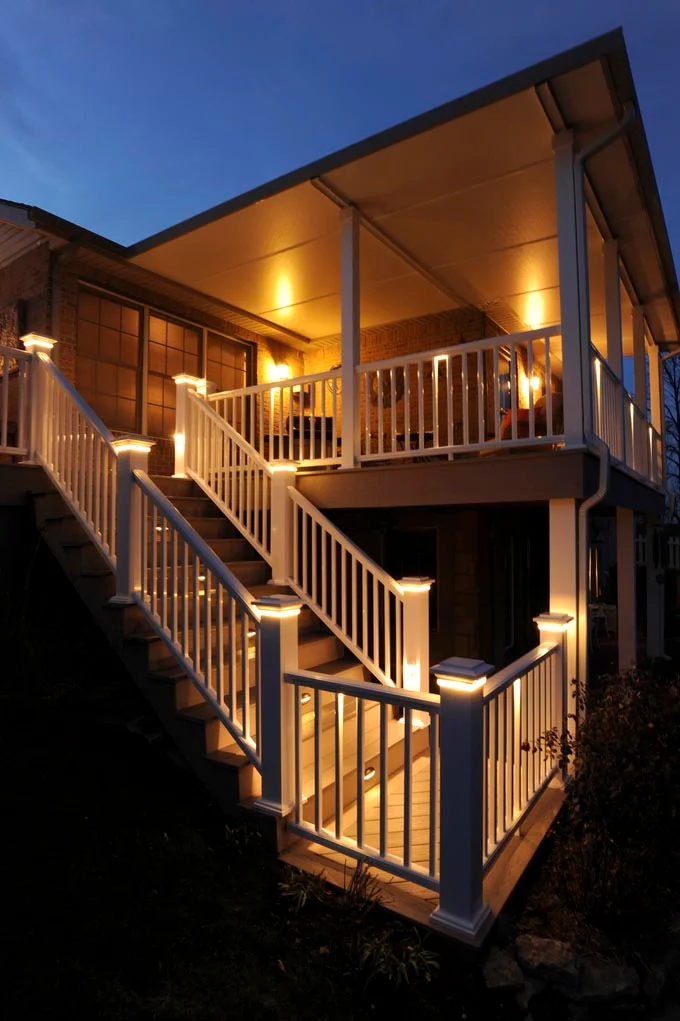
Lighting Should Look Good During the Day Too
Modern deck lighting systems are designed to stay subtle during the day while providing valuable visibility at night. Many fixtures are available in black, white, bronze or brown finishes. These color options help lighting components blend naturally with decking and railing systems for a cleaner overall appearance.
Durable Decking Materials Help Lighting Systems Last Longer
Outdoor lighting systems are constantly exposed to moisture, UV exposure, temperature swings, and changing weather conditions. That is why the materials surrounding the lighting matter just as much as the fixtures themselves.
Using high-quality decking and railing materials helps create a more stable, long-lasting installation.
For example:
- Hardwood decking provides excellent strength and durability
- Composite and PVC decking resist moisture damage and rot, making them a durable option around lighting installations
- Quality railing systems provide secure mounting locations for lighting components
If you are upgrading an older deck, replacing worn boards, damaged stairs, or loose railing sections before adding lighting can help improve both safety and long-term performance.

Safe Deck Lighting Is About Balance
The best deck lighting designs do not feel overly bright or distracting. Instead, they use layers of subtle lighting to improve visibility while maintaining a comfortable atmosphere.
A properly lit deck should:
- Clearly define stairs
- Improve visibility around deck edges
- Illuminate transition zones
- Provide safe entry points
- Reduce harsh shadows and dark areas
When lighting is thoughtfully planned, the deck simply feels safer and easier to navigate after dark.
Ready to Upgrade Your Outdoor Space?
AdvantageLumber offers premium hardwood decking, composite decking, PVC decking, and railing products that pair beautifully with modern deck lighting systems for long-lasting durability, performance, and safety.
