
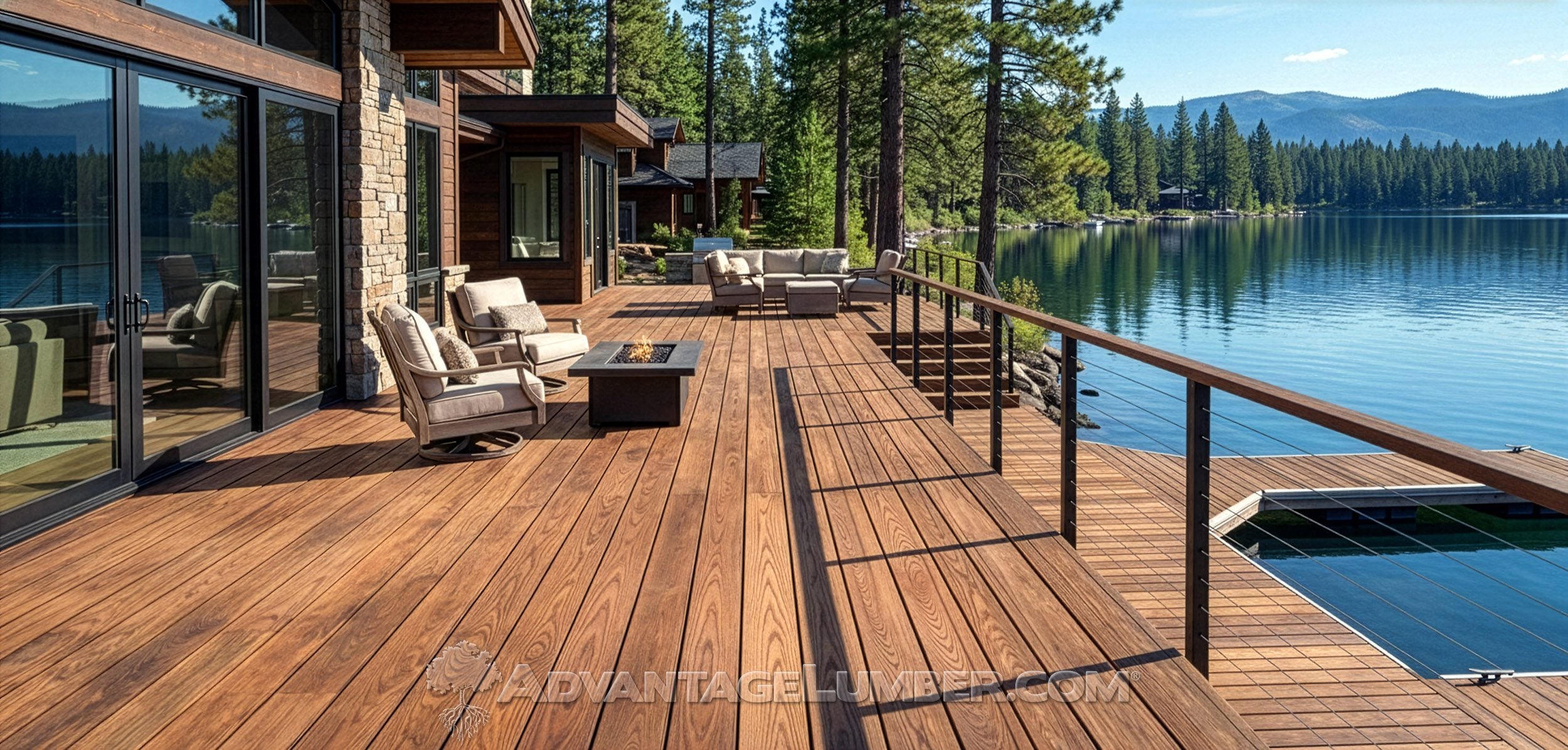
If you’re planning a new deck, porch, siding, or outdoor structure, one of the biggest questions is: How long will it actually last? For decades, pressure treated lumber was the go to choice for outdoor projects. But times have changed and so has the performance of today’s pressure treated wood. Many homeowners and builders are now turning to thermally modified wood as a longer lasting, more stable, and eco-friendly alternative.
At AdvantageLumber.com, we specialize in premium thermally modified wood (including our own Advantage Thermal Pine and Ash lines) because it delivers real world durability without the drawbacks of chemical treatments. Let’s break down the comparison so you can decide which material is right for your next project.
The Evolution (and Decline) of Pressure Treated Lumber
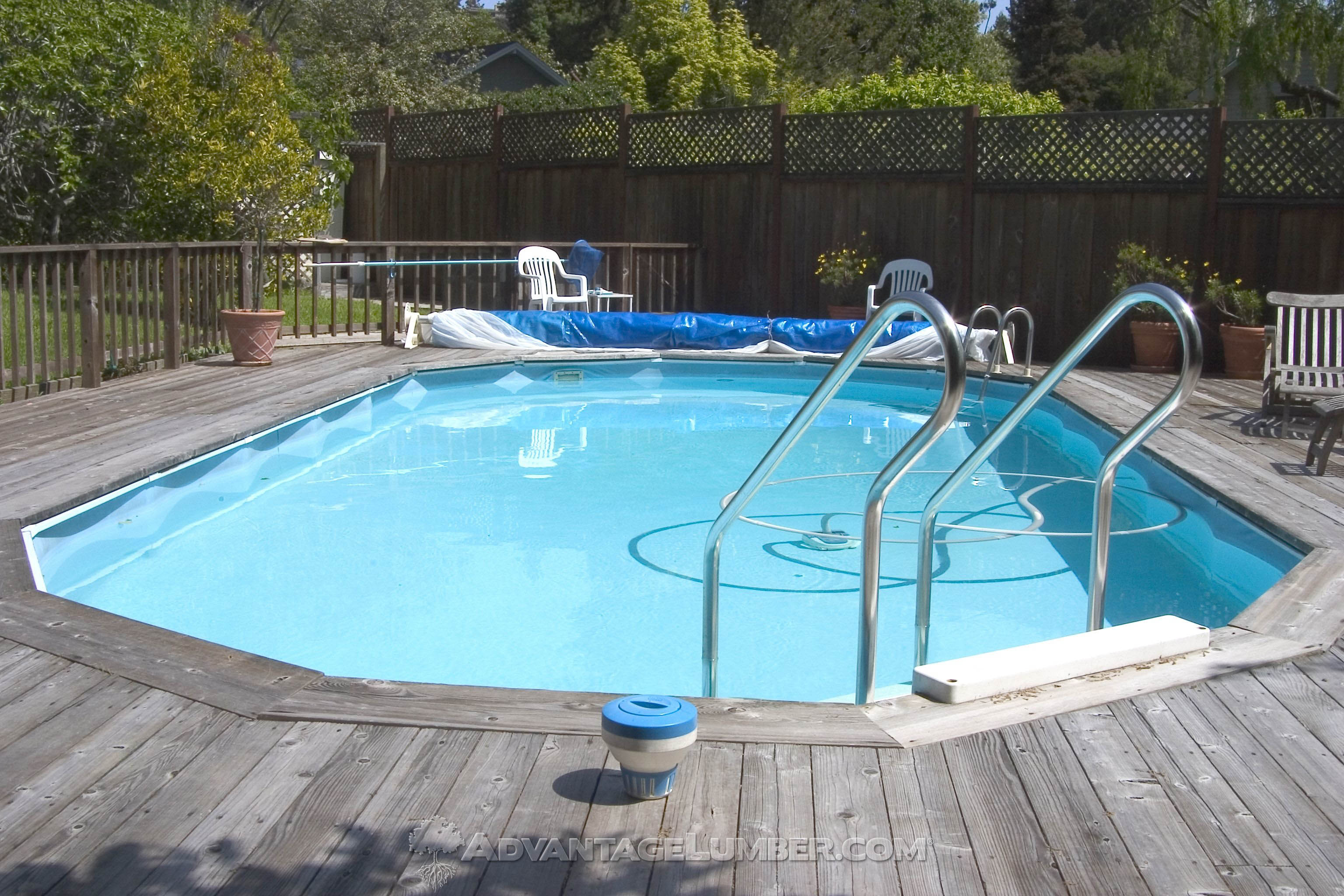
Pressure treated lumber has been a staple for outdoor construction since the mid 20th century. The wood is infused with preservatives under high pressure to resist rot, insects, and fungal decay.
Here’s what changed:
- Pre-2004: Most residential pressure treated lumber used Chromated Copper Arsenate (CCA). The arsenic component made it extremely effective against insects and decay. Properly installed CCA treated posts and lumber routinely lasted 25-40+ years in many applications.
- 2003–2004 EPA phase-out: Due to health and environmental concerns about arsenic leaching into soil (and potential exposure for children and pets), the industry voluntarily stopped using CCA for most residential uses. It was replaced by safer copper based alternatives like Alkaline Copper Quaternary (ACQ), Copper Azole (CA), and Micronized Copper Azole (MCA).
These new formulas are much better for the environment and safer to handle but they don’t protect the wood as effectively or as long as the old arsenic based treatments. Combine that with today’s faster grown, less dense plantation pine (which absorbs moisture more readily and holds treatment less consistently), and the result is clear: modern pressure treated lumber often begins to show decay, warping, and checking within 8-15 years in many climates.
Pros of today’s pressure-treated lumber:
- Excellent for ground contact applications (posts, beams, framing)
- Relatively affordable
- Widely available
Cons:
- Shorter lifespan than older CCA versions
- Can warp, cup, and check as the chemicals and wood dry out
- Greenish tint that fades over time (often requires staining or sealing)
- Some chemical leaching could still occur
What Is Thermally Modified Wood?

Thermally modified wood (also called thermowood) uses a completely different approach no chemicals at all. High quality lumber (like the sustainably sourced pine and ash we use at Advantage Lumber) is heated in a controlled, low oxygen kiln environment (typically 300+°F) with steam. This process permanently alters the wood’s internal structure:
- Hemicelluloses (the “sugars” that fungi and insects love) are broken down.
- The wood’s ability to absorb moisture drops dramatically.
- Dimensional stability improves by up to 60% meaning far less shrinking, swelling, warping, or cracking.
The result? A beautiful, rich caramel to dark brown color that highlights the natural grain, plus enhanced resistance to rot, insects, and decay throughout the entire piece of wood not just the surface.
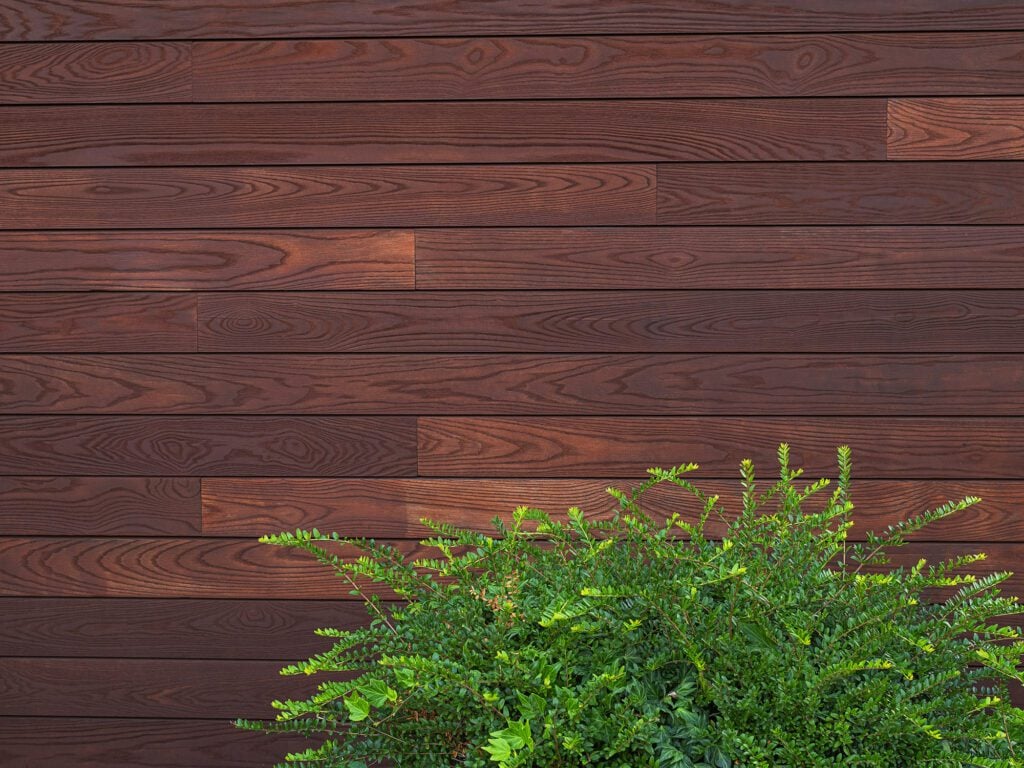
Typical lifespan for thermally modified wood: 25-30+ years (and in many cases significantly longer) in above ground applications like decking, siding, and cladding. Some species and processes are rated for 40+ years of service life with proper installation and maintenance.
Pros of thermally modified wood:
- Superior dimensional stability (stays flat and straight)
- No chemical preservatives or leaching
- Naturally resistant to rot, insects, and mold
- Rich, elegant appearance right out of the box
- Lighter weight and easier to work with in many cases
- Eco-friendly and sustainable
Cons:
- Higher upfront cost than standard pressure treated
- Not ideal for direct ground contact or heavy structural load bearing (use PT or concrete for posts)
- Surface will naturally gray over time if left unsealed (optional coatings extend the rich color)
- The wood is brittle after treatment. Special care is needed when fastening tongues on a T&G profile.
Head to Head: Which Lasts Longer?
| Feature | Modern Pressure Treated Lumber | Thermally Modified Wood (Advantage Thermal) |
|---|---|---|
| Expected Lifespan | 10-20 years (above ground) | 25-30+ years (often longer) |
| Treatment Method | Copper based chemicals | Heat + steam only (chemical-free) |
| Rot & Insect Resistance | Good initially, but protection fades | Excellent and permanent throughout the board |
| Dimensional Stability | Prone to warping, cupping, checking | Outstanding minimal movement |
| Appearance | Green tint, needs staining/sealing | Rich natural brown tones, beautiful grain |
| Maintenance | Frequent sealing/staining recommended | Low maintenance; optional coating for color. Water sealers like WiseCoat can help repel water and increase lifespan. |
| Environmental Impact | Some chemical leaching | None 100% natural process |
| Best Uses | Ground contact, structural framing | Decking, siding, porch ceilings, trim |
Bottom line: In most above ground outdoor applications (decks, porches, siding), thermally modified wood can last longer than today’s pressure treated lumber. The heat treatment process creates a permanent change that doesn’t degrade over time the way chemical preservatives can.
Why Choose Thermally Modified Wood from Advantage Lumber?
At AdvantageLumber.com, we’ve seen first hand how the shift away from arsenic based treatments has affected outdoor projects. That’s why we developed our Advantage Thermal line premium thermally modified pine and ash that deliver the longevity and beauty your outdoor living space deserves.
Our thermally modified wood is:
- Responsibly sourced from well managed forests
- Milled in house for consistent quality
- Available in decking, siding, dimensional lumber, and custom profiles
Whether you’re building a backyard deck that will host family gatherings for decades or installing beautiful, low maintenance siding, thermally modified wood gives you peace of mind that your project will look great and perform reliably for years to come.
Ready to build something that lasts?
Shop our full selection of Thermally Modified Wood at AdvantageLumber.com or contact our team for expert advice on the best species and profiles for your project.
Your outdoor space is an investment make it one that stands the test of time.
