
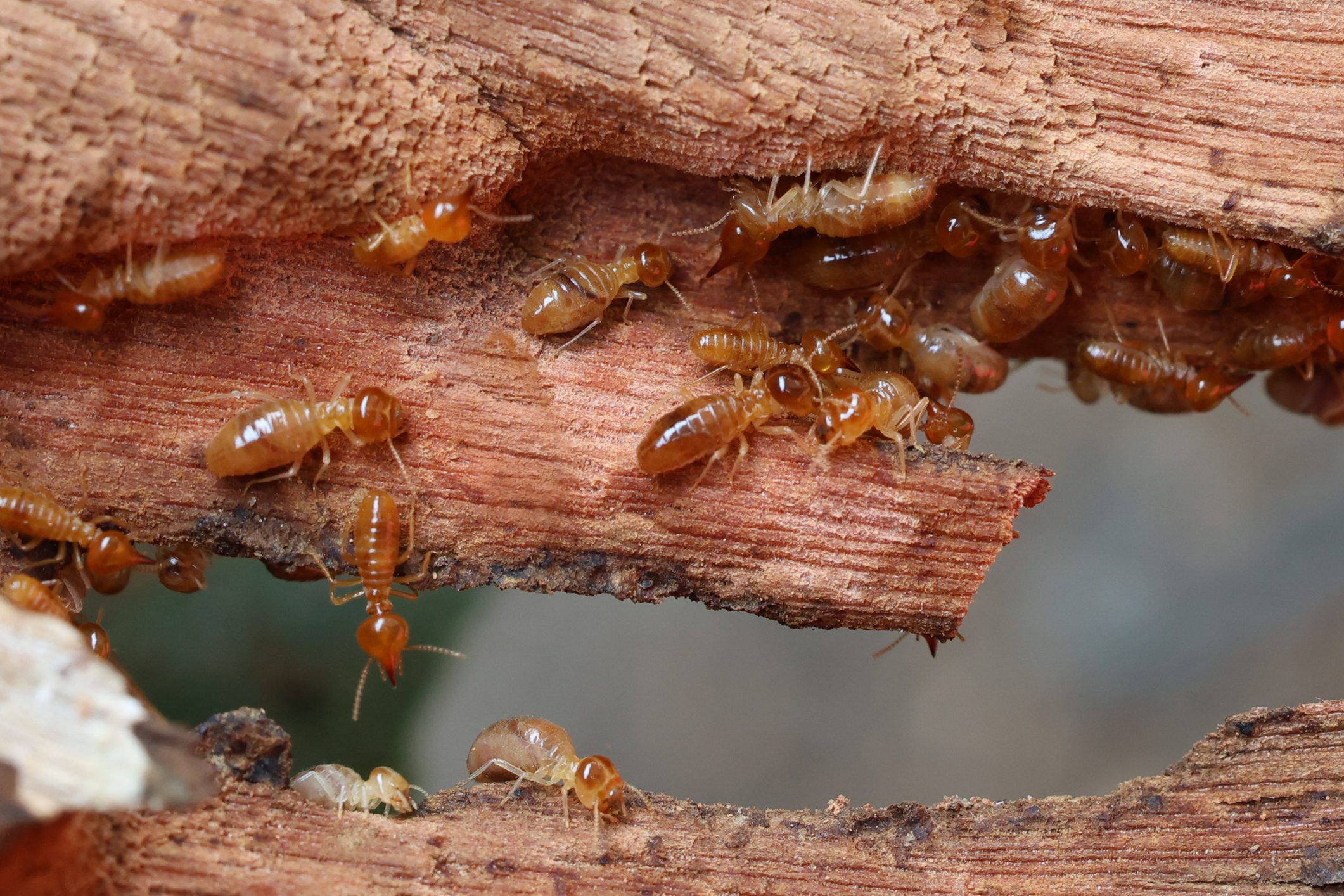
At AdvantageLumber.com, we’re often asked, “Do termites eat Redwood?” The answer is yes, but it’s not the full story. While Redwood has a reputation for durability, its termite resistance depends on the type of wood and its age. Let’s dive into the details and explore why Redwood’s termite resistance isn’t absolute, along with the best termite-resistant wood options for your projects.
Redwood and Termites: The Heartwood vs. Sapwood Difference

Redwood, particularly its heartwood (the darker, central part of the tree), is naturally resistant to termites due to its high tannin content and density. Termites often avoid Redwood heartwood because these compounds make it less palatable. However, the white-colored sapwood—the outer, less dense part of the tree—is far more vulnerable. Termites will readily target sapwood, as it lacks the protective qualities of heartwood.
Historically, old-growth Redwood, harvested decades ago, was denser with tighter growth rings and typically free of sapwood. This made it highly resistant to pests, including termites. However, most Redwood available today comes from faster-growing trees, which often include sapwood in many pieces. As a result, modern Redwood is less consistently termite-resistant than its old-growth counterparts, making it crucial to select heartwood-heavy pieces if termite resistance is a priority.
The 7 Best Termite-Resistant Woods
For projects where termite resistance is critical, consider these seven naturally durable hardwoods, known for their exceptional resistance to termites and other pests. Available at AdvantageLumber.com, these woods are ideal for outdoor applications like decking, siding, and furniture:
- Ipe: Often called “ironwood,” Ipe is one of the densest and most durable hardwoods available. Its tight grain and natural oils make it nearly impervious to termites.
- Cumaru: Known as Brazilian Teak, Cumaru’s extreme density and natural resins provide excellent termite resistance, making it a top choice for outdoor projects.
- Brazilian Redwood (Massaranduba): Not to be confused with California Redwood, Brazilian Redwood is a dense, durable hardwood with strong termite resistance due to its natural oils.
- Teak: Renowned for its weather resistance, Teak’s high oil content makes it highly unappealing to termites, ideal for furniture and marine applications.
- Tigerwood: This striking hardwood’s density and natural oils offer robust termite resistance, paired with its unique grain for aesthetic appeal.
- Garapa: A golden-hued hardwood, Garapa’s density and natural properties provide solid termite resistance, perfect for decking and outdoor structures.
- Mahogany: With its tight grain and natural oils, Mahogany resists termites effectively, making it a favorite for furniture and exterior applications.
Choosing the Right Wood for Termite-Prone Areas
While Redwood can be a beautiful and durable choice, its termite resistance is not guaranteed, especially with modern, faster-growth stock that includes sapwood. For maximum protection in termite-prone areas, opt for heartwood-only Redwood or consider one of the seven termite-resistant hardwoods listed above. At AdvantageLumber.com, we offer premium-grade hardwoods and can help you select the best material for your project’s needs.
Ready to build with termite-resistant wood? Explore our selection of Ipe, Cumaru, Teak, and more at AdvantageLumber.com or contact our team for expert guidance. Protect your investment and enjoy long-lasting beauty with the right wood choice!
